Ryan Cole
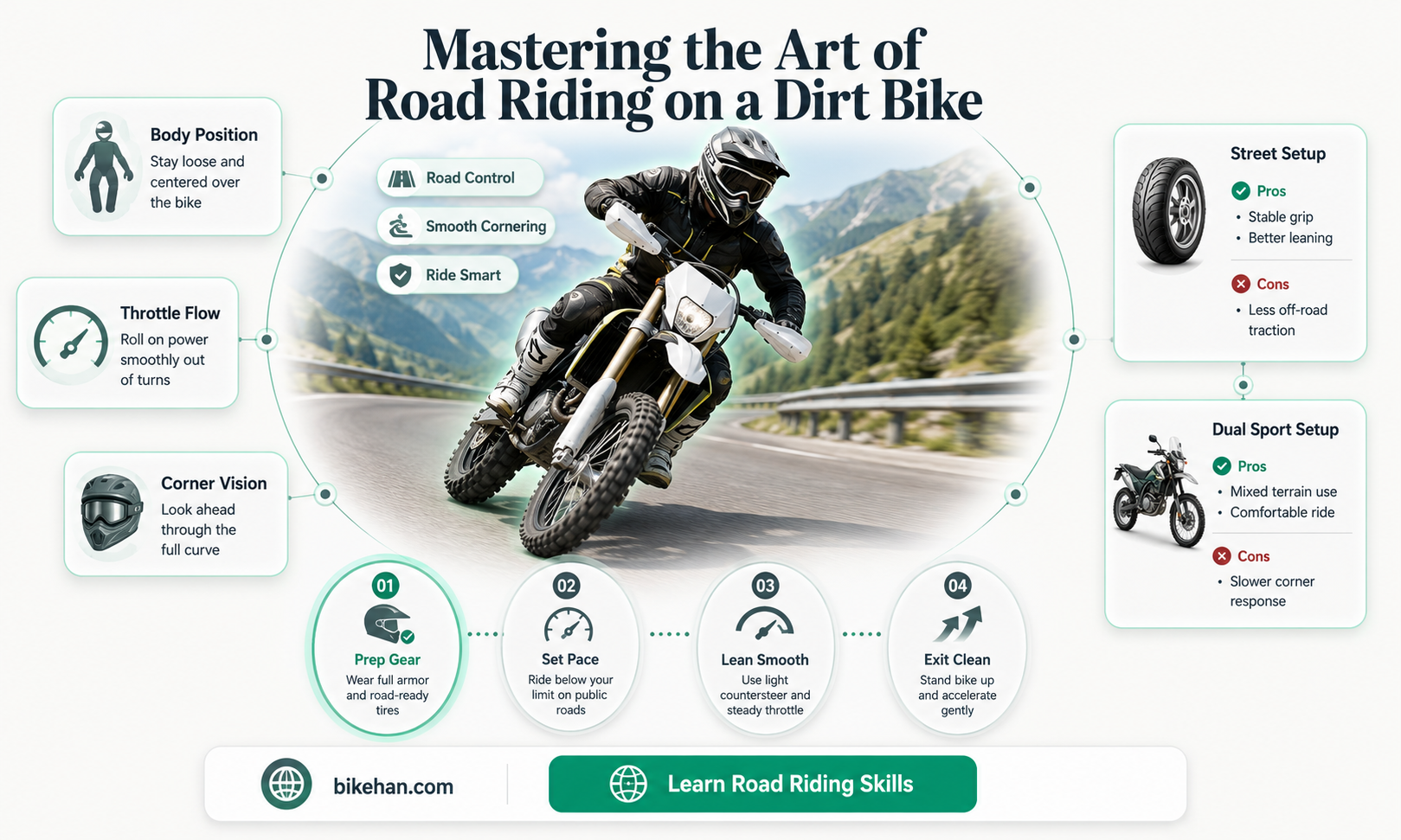
Driving a dirt bike on the road requires a unique set of skills and precautions. Unlike off-road riding, where the terrain is rugged and unpredictable, road riding demands an understanding of traffic rules, road signs, and the ability to navigate alongside other vehicles. It's crucial to ensure your dirt bike is street legal, equipped with necessary lights, mirrors, and a license plate. Riders should wear appropriate protective gear, including a helmet, gloves, and sturdy clothing. Familiarize yourself with local laws regarding dirt bike riding on public roads, as regulations can vary significantly by region. Additionally, practicing defensive riding techniques and maintaining a safe following distance are essential for a smooth and secure road riding experience.
Explore related products


What You'll Learn
- Choose the Right Gear: Select a helmet, gloves, boots, and protective clothing suitable for dirt biking
- Inspect Your Bike: Check tire pressure, brakes, chain tension, and lights before hitting the road
- Master Basic Controls: Familiarize yourself with throttle, clutch, brakes, and gear shifting
- Ride Defensively: Be aware of traffic, maintain a safe distance, and use turn signals
- Practice Off-Road Skills: Develop balance, cornering, and obstacle navigation skills on dirt trails

Choose the Right Gear: Select a helmet, gloves, boots, and protective clothing suitable for dirt biking
Selecting the appropriate gear is crucial for ensuring safety and comfort while dirt biking on the road. A helmet is the most critical piece of equipment, as it protects your head in case of an accident. Look for a helmet that meets safety standards, fits snugly, and has a visor to shield your eyes from debris.
Gloves are essential for maintaining a firm grip on the handlebars and protecting your hands from blisters and abrasions. Choose gloves made of durable materials like leather or synthetic fabrics, with reinforced palms and fingers for added protection.
Boots designed specifically for dirt biking provide ankle support, protect your feet from impacts, and offer better control over the bike. They should fit comfortably, cover your ankles, and have a sturdy sole with good traction.
Protective clothing, such as a riding jacket and pants, can help prevent injuries in case of a fall. Opt for gear made of abrasion-resistant materials like Cordura or Kevlar, with built-in armor at critical points like the elbows, shoulders, knees, and hips. Make sure the clothing fits well and allows for freedom of movement.
When selecting gear, consider the specific conditions you'll be riding in. For example, if you'll be riding in wet or muddy conditions, choose waterproof and breathable materials to stay dry and comfortable. Additionally, consider the level of experience you have and the type of dirt biking you'll be doing, as different styles may require different types of gear.
Remember, investing in high-quality gear can make a significant difference in your safety and overall riding experience. Don't skimp on essential items, and always prioritize safety over style or cost. By choosing the right gear, you can minimize the risk of injuries and enjoy your dirt biking adventures on the road with confidence.
Mastering the Art of Drifting on a Dirt Bike: A Beginner's Guide
You may want to see also
Explore related products




Inspect Your Bike: Check tire pressure, brakes, chain tension, and lights before hitting the road
Before taking your dirt bike on the road, it's crucial to perform a thorough inspection to ensure your safety and the bike's performance. Start by checking the tire pressure, as underinflated or overinflated tires can significantly affect handling and stability. Use a tire pressure gauge to verify that the pressure matches the manufacturer's recommendations, typically found in the bike's manual or on a sticker near the rear wheel.
Next, inspect the brakes by squeezing the brake levers and checking for any signs of wear or damage on the brake pads and discs. Ensure that the brake fluid level is adequate and that there are no leaks in the brake lines. If you notice any issues, such as spongy or unresponsive brakes, it's essential to address them before riding.
The chain tension is another critical aspect to examine. A loose or overly tight chain can lead to poor performance and even damage to the bike. To check the chain tension, apply slight pressure to the chain with your finger and observe the movement. The chain should have a small amount of slack but should not be excessively loose. If necessary, adjust the chain tension according to the manufacturer's instructions.
Finally, check the lights and signals to ensure they are functioning correctly. This includes the headlight, taillight, brake lights, and turn signals. If any of these components are not working, it's important to fix them before riding on the road, as they are essential for visibility and communication with other road users.
By following these steps and regularly inspecting your dirt bike, you can help ensure a safe and enjoyable riding experience on the road. Remember, proper maintenance and preparation are key to preventing accidents and prolonging the life of your bike.
Mastering the Art of Wheelies on Your Dirt Bike
You may want to see also
Explore related products


Master Basic Controls: Familiarize yourself with throttle, clutch, brakes, and gear shifting
To master the basic controls of a dirt bike, it's essential to start with the throttle. The throttle controls the engine's speed and power output. When riding on the road, you'll need to smoothly roll on and off the throttle to maintain a consistent speed and avoid sudden jerks that could destabilize the bike. Practice finding the optimal throttle position for different speeds and road conditions.
Next, familiarize yourself with the clutch. The clutch engages and disengages the engine from the transmission, allowing you to shift gears smoothly. When approaching a stop, gradually disengage the clutch while applying the brakes. This will help prevent the bike from stalling and allow for a smoother transition when accelerating again.
Brakes are crucial for safe riding, especially on the road. Dirt bikes typically have a front disc brake and a rear drum brake. Learn to use both brakes effectively, applying them gradually and avoiding sudden stops. When braking, lean slightly forward to maintain balance and control.
Finally, gear shifting is an essential skill for riding a dirt bike on the road. Most dirt bikes have a manual transmission, so you'll need to learn how to shift gears smoothly and efficiently. Start by practicing in a stationary position, then gradually progress to shifting gears while riding at slow speeds. Remember to use the clutch and throttle in conjunction with the gear shift to ensure a smooth transition between gears.
Mastering these basic controls will provide a solid foundation for safe and enjoyable dirt bike riding on the road. Practice regularly and focus on developing muscle memory for each control. As you become more comfortable, you can progress to more advanced techniques and tackle more challenging road conditions.
Mastering the Art of Donuting on a Dirt Bike: A Step-by-Step Guide
You may want to see also
Explore related products




Ride Defensively: Be aware of traffic, maintain a safe distance, and use turn signals
When navigating the unpredictable terrain of public roads on a dirt bike, defensive riding is not just a skill—it's a necessity. This approach demands constant vigilance and a proactive mindset to anticipate and react to the myriad of potential hazards that come with sharing the road with larger, faster vehicles.
Awareness of traffic is paramount. Unlike on a closed track, the road presents a dynamic environment where cars, trucks, and other motorcycles can appear suddenly, change lanes without warning, or stop abruptly. To stay safe, riders must keep their eyes scanning the road ahead, checking mirrors frequently, and being prepared to react to the unexpected. This means maintaining a safe following distance, allowing ample time to respond to any sudden changes in traffic flow.
Using turn signals is another critical aspect of defensive riding. Even though dirt bikes may not have the same turn signal setup as street bikes, using hand signals or any available indicators can communicate intentions to other road users, reducing the risk of collisions. Riders should signal well in advance of any turn or lane change, ensuring that their movements are predictable to others.
Defensive riding also involves being visible. Wearing high-visibility gear, using reflective materials, and ensuring that the bike's lights (if equipped) are functioning properly can make a significant difference in how easily other drivers can see the rider. Additionally, riders should avoid blind spots of larger vehicles and position themselves on the road where they are most likely to be seen.
Lastly, defensive riders must be prepared for the road conditions. This includes being aware of potential hazards like potholes, debris, or slippery surfaces, and adjusting riding techniques accordingly. It also means being cautious at intersections, where the majority of motorcycle accidents occur, and always being ready to take evasive action if necessary.
By adopting a defensive riding strategy, dirt bike riders can significantly reduce their risk of accidents on the road. This approach requires a combination of awareness, preparation, and proactive communication with other road users, ensuring a safer and more enjoyable riding experience.
Mastering the Art of Downshifting on Your Dirt Bike
You may want to see also
Explore related products


Practice Off-Road Skills: Develop balance, cornering, and obstacle navigation skills on dirt trails
To develop off-road skills for dirt biking, it's essential to start with the basics of balance. This involves understanding how to distribute your weight effectively while maneuvering the bike. A good starting point is to practice standing on the foot pegs with the bike stationary, shifting your weight from side to side to get a feel for how the bike responds. Once comfortable with this, you can progress to riding slowly and standing up on the pegs, which will help improve your balance and control.
Cornering is another critical skill to master for off-road dirt biking. The key to successful cornering is to lean into the turn while maintaining throttle control. Start by practicing slow, wide turns and gradually work your way up to tighter, faster corners. Remember to keep your body positioned over the bike and your eyes focused on the direction you want to go. It's also important to use your legs to grip the bike and help maintain stability during turns.
Obstacle navigation is a challenging but essential part of off-road dirt biking. When approaching obstacles such as rocks, ruts, or logs, it's important to maintain a steady speed and avoid sudden movements. Look ahead and plan your route, choosing the path that will be easiest for both you and the bike. When navigating obstacles, stand up on the pegs to allow the bike more freedom of movement and use your body weight to help guide the bike over or around the obstacle.
Practicing these skills on dirt trails will not only improve your off-road abilities but also enhance your overall dirt biking experience. Remember to always wear appropriate safety gear, including a helmet, gloves, and protective clothing, and to ride within your skill level to avoid injury. With time and practice, you'll find yourself becoming more confident and proficient in handling various off-road conditions.
Dirt Bike Drag Racing 101: Tips and Techniques to Get You Started
You may want to see also
Frequently asked questions
The legality of driving a dirt bike on public roads varies by country and jurisdiction. In many places, dirt bikes are not street legal because they lack necessary equipment like headlights, taillights, and turn signals. Additionally, they may not meet emissions standards. Always check local laws before riding a dirt bike on public roads.
When riding a dirt bike on the road, it's crucial to wear appropriate safety gear. This includes a DOT-approved helmet, gloves, long-sleeved shirt, long pants, and over-the-ankle boots. Protective gear such as a chest protector, knee pads, and elbow pads is also recommended to minimize injury in case of a fall.
To ensure your dirt bike is visible to other road users, equip it with a headlight, taillight, and turn signals. Wear bright and reflective clothing to increase your visibility, especially during low-light conditions. Additionally, consider adding reflective tape to your bike.
Riding a dirt bike on the road requires adherence to traffic laws, maintaining a consistent speed, and being aware of other vehicles. Off-road riding involves navigating rough terrain, obstacles, and varying conditions. On the road, you need to focus on visibility and signaling, while off-road emphasizes balance, throttle control, and bike handling skills.
Maintaining control of your dirt bike at high speeds on the road involves proper body positioning, throttle control, and brake usage. Keep your body centered over the bike, use the throttle smoothly, and apply brakes gradually. Be aware of road conditions and adjust your speed accordingly to ensure safety.