Matthew Brooks
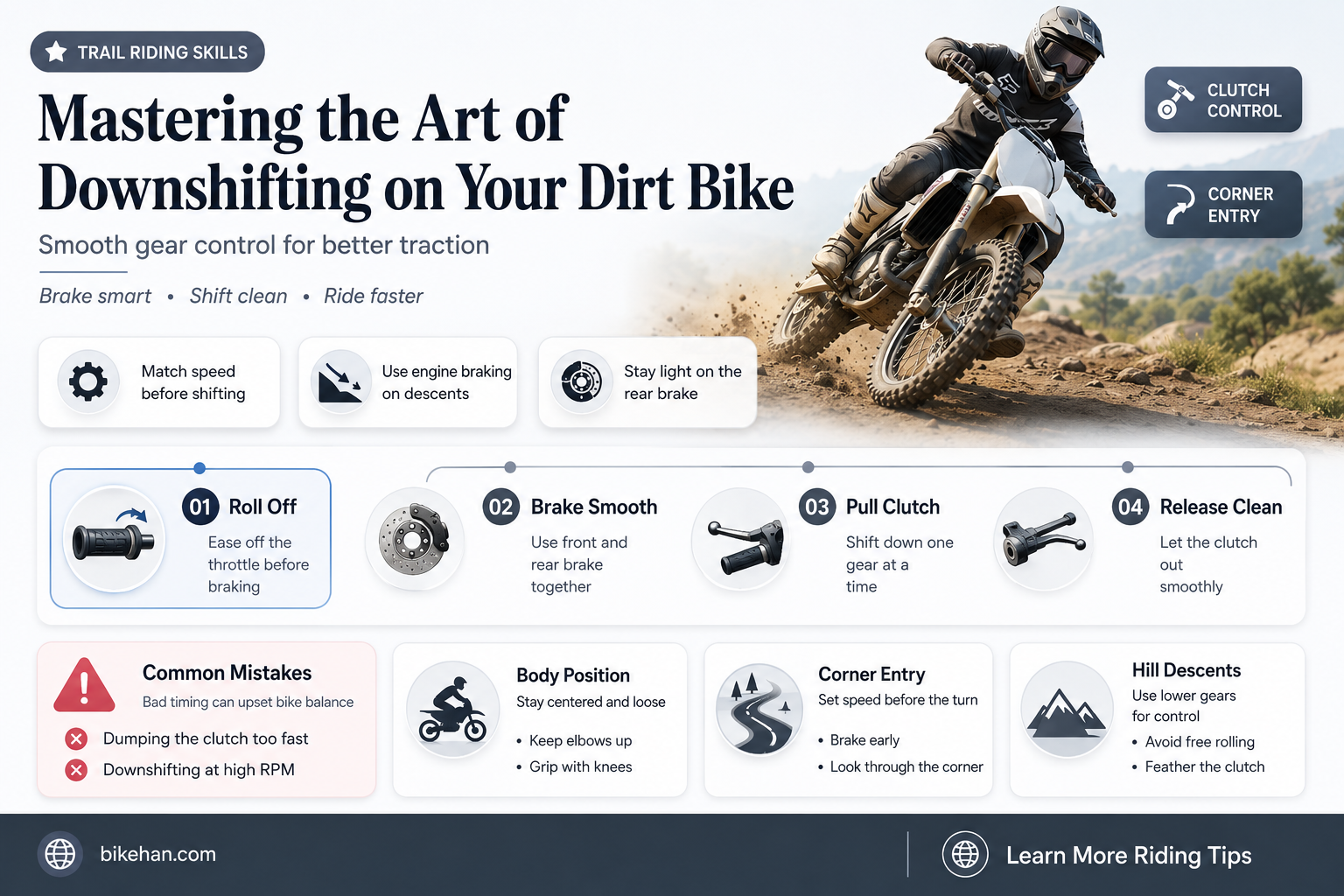
Downshifting a dirt bike is a crucial skill for riders to master, especially when navigating challenging off-road terrain. It involves shifting the bike's gears to a lower setting, which provides more power and control at slower speeds. This technique is essential for tackling steep inclines, tight corners, and other obstacles commonly encountered in dirt biking. To downshift effectively, riders must understand the mechanics of their bike's transmission and practice the correct technique to ensure smooth and efficient gear changes.
Explore related products


What You'll Learn
- Throttle Control: Gradually release the throttle while shifting gears to avoid sudden jerks
- Clutch Operation: Squeeze the clutch lever firmly before shifting to disengage the engine from the transmission
- Body Positioning: Lean back slightly and stand on the foot pegs to allow the bike to shift smoothly
- Gear Selection: Use the gear shift lever to select the desired gear, ensuring it aligns with the bike's speed
- Brake Management: Apply the brakes gently to control speed while downshifting, especially on descents or turns

Throttle Control: Gradually release the throttle while shifting gears to avoid sudden jerks
Gradually releasing the throttle while shifting gears is a crucial technique in dirt bike riding, as it helps to ensure smooth transitions and maintain control of the bike. When downshifting, it's important to avoid sudden jerks, which can cause the bike to lose traction or become unstable. By slowly rolling off the throttle, you allow the engine to decelerate naturally, which in turn helps the transmission to engage the lower gear more smoothly.
One common mistake that riders make when downshifting is to abruptly close the throttle, which can cause the bike to lurch forward or even stall. To avoid this, try to anticipate the need to downshift and begin to release the throttle gradually as you approach the shift point. This will help to reduce the sudden change in engine speed and make the gear change feel more seamless.
In addition to helping with smooth gear changes, throttle control is also important for maintaining traction and stability when riding on uneven terrain. By modulating the throttle, you can help to keep the bike's weight balanced and prevent the rear wheel from spinning out. This is especially important when riding on loose surfaces like dirt or mud, where sudden changes in throttle can cause the bike to lose grip.
To practice throttle control, try riding on a flat surface and gradually increasing and decreasing the throttle while maintaining a steady speed. This will help you to develop a feel for how the throttle affects the bike's acceleration and deceleration. Once you're comfortable with this, you can begin to incorporate throttle control into your gear shifting technique.
Remember, the key to successful throttle control is to make smooth, gradual changes rather than sudden, jerky movements. By mastering this technique, you'll be able to downshift your dirt bike more smoothly and maintain better control over your ride.
Mastering the Art of Double Jumping on Your Dirt Bike
You may want to see also
Explore related products


Clutch Operation: Squeeze the clutch lever firmly before shifting to disengage the engine from the transmission
To effectively downshift a dirt bike, mastering clutch operation is crucial. The clutch lever must be squeezed firmly before shifting to disengage the engine from the transmission. This action allows the rider to change gears smoothly without causing damage to the bike or losing control.
Firmly squeezing the clutch lever ensures that the clutch plates are fully separated, preventing any engagement between the engine and the transmission. This separation is essential for a clean gear change, as it prevents the gears from grinding or catching, which can lead to mechanical issues or even accidents.
The timing of the clutch operation is also important. The rider should begin squeezing the clutch lever just before reaching the desired gear shift point. This timing ensures that the bike is in the correct gear for the terrain and speed, allowing for optimal performance and control.
In addition to the clutch operation, the rider should also use their body weight to help facilitate the gear change. By shifting their weight slightly towards the back of the bike, the rider can help to reduce the load on the transmission, making it easier to shift gears.
Overall, mastering clutch operation is a key component of downshifting a dirt bike. By squeezing the clutch lever firmly and timing the gear shift correctly, riders can ensure a smooth and controlled transition between gears, enhancing their overall riding experience.
Mastering the Art of Donuting on a Dirt Bike: A Step-by-Step Guide
You may want to see also
Explore related products


Body Positioning: Lean back slightly and stand on the foot pegs to allow the bike to shift smoothly
To effectively downshift a dirt bike, mastering the correct body positioning is crucial. Leaning back slightly and standing on the foot pegs is a technique that allows the bike to shift smoothly. This position helps to distribute the rider's weight more evenly, reducing the strain on the bike's transmission and making it easier to engage the lower gears.
When leaning back, it's important to maintain a slight bend in the knees and elbows to absorb any bumps or shocks from the terrain. This will help to keep the rider stable and in control while the bike adjusts to the new gear. Standing on the foot pegs, rather than sitting on the seat, also helps to shift the rider's weight back, which is essential for smooth downshifting.
One common mistake riders make is to lean forward while downshifting, which can cause the bike to lurch or stall. By leaning back and standing on the pegs, the rider can avoid this issue and ensure a smoother transition between gears. Additionally, this position allows the rider to use their body weight to help engage the clutch and shift lever, making the process more efficient and controlled.
In summary, the key to smooth downshifting on a dirt bike is to lean back slightly and stand on the foot pegs. This technique helps to distribute the rider's weight more evenly, reducing strain on the transmission and making it easier to engage the lower gears. By maintaining a slight bend in the knees and elbows, and avoiding the common mistake of leaning forward, riders can ensure a smoother and more controlled downshifting experience.
Mastering the Art of Whoops on Your Dirt Bike: A Step-by-Step Guide
You may want to see also
Explore related products


Gear Selection: Use the gear shift lever to select the desired gear, ensuring it aligns with the bike's speed
To effectively downshift a dirt bike, precise gear selection is crucial. The gear shift lever, typically located on the right side of the bike, must be manipulated with care. Start by ensuring the bike is in motion and the throttle is slightly open to facilitate smooth gear changes. As you prepare to downshift, gently press the gear shift lever down with your foot, feeling for the distinct clicks that indicate each gear change. It's essential to align the gear selection with the bike's current speed to avoid abrupt changes that could destabilize the bike or cause it to stall.
One common mistake riders make is attempting to downshift too aggressively, which can lead to the bike bucking or losing traction. Instead, focus on making gradual and controlled gear changes. If the bike is equipped with a clutch, use it in conjunction with the gear shift lever to smooth out the transition between gears. Remember to always keep your body weight centered and balanced over the bike to maintain stability during gear changes.
In addition to proper gear selection, it's important to be aware of the bike's RPM (revolutions per minute) and adjust your downshifting accordingly. If the bike is running at a high RPM, you may need to downshift more frequently to maintain control and prevent the engine from redlining. Conversely, if the bike is running at a lower RPM, you may be able to downshift less frequently.
Practice makes perfect when it comes to gear selection and downshifting. Spend time on a controlled course or in a safe environment to get a feel for how your bike responds to different gear changes. As you become more comfortable with the process, you'll be able to make smoother and more precise downshifts, enhancing your overall riding experience and control.
Mastering the Art of Wheelies on Your Dirt Bike
You may want to see also
Explore related products


Brake Management: Apply the brakes gently to control speed while downshifting, especially on descents or turns
Effective brake management is crucial when downshifting a dirt bike, particularly during descents or turns. The key is to apply the brakes gently to control speed without causing the bike to skid or lose traction. This requires a delicate balance between the front and rear brakes, as well as an understanding of how the bike's weight distribution changes during different maneuvers.
When approaching a descent, it's important to shift your weight towards the back of the bike to maintain traction on the rear wheel. This allows you to apply the rear brake more effectively, slowing the bike down without causing the front wheel to lift. As you begin to downshift, gradually release the rear brake while applying the front brake to help control the bike's speed. This should be done smoothly and progressively to avoid any sudden changes in speed or direction.
During turns, the dynamics of brake management change slightly. When entering a turn, it's essential to apply the front brake gently to help the bike lean into the turn without losing traction. Once the bike is in the turn, you can shift your weight towards the inside of the turn and apply the rear brake to help maintain speed and control. As you exit the turn, gradually release the rear brake and apply the front brake to help the bike accelerate out of the turn smoothly.
One common mistake riders make is to apply the brakes too harshly, which can cause the bike to skid or lose traction. To avoid this, it's important to practice gentle and progressive brake application, as well as to develop a feel for how the bike responds to different brake inputs. Additionally, it's crucial to ensure that the brakes are well-maintained and functioning properly, as worn or damaged brakes can compromise the bike's handling and safety.
In summary, effective brake management is essential for safe and controlled downshifting on a dirt bike. By applying the brakes gently and understanding how the bike's weight distribution changes during different maneuvers, riders can maintain speed and control while minimizing the risk of skidding or losing traction.
Frequently asked questions
To downshift a dirt bike, you should first press the clutch lever with your left hand, then use your left foot to shift the gear lever down one position. Release the clutch slowly while simultaneously applying the throttle to match the engine speed with the new gear.
It's generally recommended to downshift after braking on a dirt bike. This allows you to maintain better control and stability while slowing down. Downshifting before braking can cause the bike to lurch or become unstable.
You should downshift on a dirt bike when you need to slow down or when approaching a turn. Pay attention to the terrain and your speed, and downshift to a lower gear to maintain control and prevent the bike from stalling or losing power.
Some common mistakes to avoid when downshifting a dirt bike include:
- Not pressing the clutch fully before shifting gears
- Shifting gears too quickly or abruptly
- Not releasing the clutch slowly and smoothly
- Not applying the throttle to match the engine speed with the new gear
- Downshifting before braking, which can cause instability