Samantha Lee
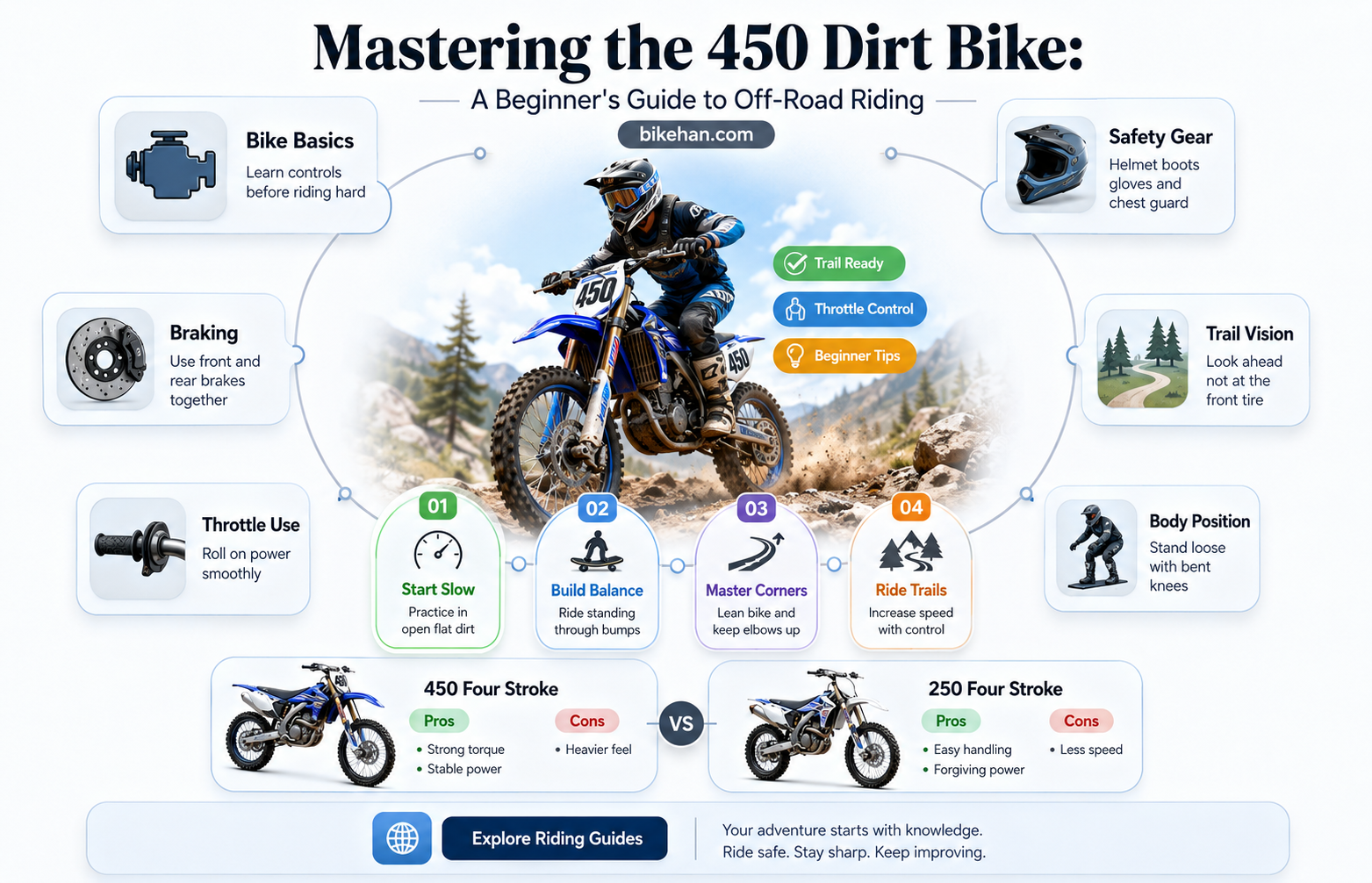
Driving a 450 dirt bike requires a combination of skill, balance, and practice. These bikes are designed for off-road use and can handle a variety of terrains, from dirt tracks to rocky trails. To get started, you'll need to familiarize yourself with the bike's controls and features. This includes understanding the throttle, brakes, clutch, and gear shifter. It's also important to wear proper safety gear, such as a helmet, gloves, and protective clothing. Once you're comfortable with the basics, you can begin to practice riding on different types of terrain. Start with flat, open areas and gradually work your way up to more challenging trails. Remember to always ride within your skill level and never attempt stunts or jumps without proper training and experience. With time and practice, you'll be able to confidently navigate any off-road terrain on your 450 dirt bike.
Explore related products



What You'll Learn
- Getting Started: Familiarize yourself with the bike's controls, seating position, and basic safety gear requirements
- Throttle Control: Learn to smoothly operate the throttle for acceleration and deceleration, ensuring consistent power delivery
- Braking Techniques: Master front and rear braking, understanding when to use each for optimal stopping power and control
- Cornering Skills: Develop the ability to navigate turns effectively, balancing speed and stability on varied terrain
- Off-Road Safety: Recognize potential hazards, learn to read the terrain, and practice emergency maneuvers for unexpected situations

Getting Started: Familiarize yourself with the bike's controls, seating position, and basic safety gear requirements
Before you even start the engine of a 450 dirt bike, it's crucial to get acquainted with its controls and seating position. This isn't just about comfort; it's about safety and control. The throttle, brakes, clutch, and gear shift are all within easy reach, but you need to know where they are and how to use them instinctively. Spend some time sitting on the bike, finding the balance point, and understanding how your body weight affects the bike's handling.
Safety gear is non-negotiable when it comes to dirt biking. At a minimum, you should have a helmet that meets safety standards, goggles to protect your eyes from debris, gloves for grip and hand protection, and sturdy boots that cover your ankles. Depending on the terrain and your experience level, you might also consider additional gear like a chest protector, knee pads, or a neck brace. Remember, the goal is to minimize the risk of injury in case of a fall or collision.
One of the most overlooked aspects of getting started with a dirt bike is understanding the importance of body positioning. How you sit on the bike can drastically affect its handling and stability. For instance, leaning forward can help with acceleration and control on steep inclines, while sitting back can provide better traction and stability on flat surfaces. Take the time to experiment with different seating positions and find what works best for you and the type of riding you'll be doing.
Familiarizing yourself with the bike's controls and safety gear requirements isn't just a one-time task. It's an ongoing process that should be revisited regularly, especially as you gain more experience and confidence on the bike. As you progress, you may find that your riding style changes, or you may encounter new challenges that require adjustments to your gear or riding position. By staying informed and adaptable, you can ensure a safer and more enjoyable dirt biking experience.
Yamaha Dirt Bike Gas Drainage: A Step-by-Step Guide
You may want to see also
Explore related products


Throttle Control: Learn to smoothly operate the throttle for acceleration and deceleration, ensuring consistent power delivery
To master throttle control on a 450 dirt bike, it's essential to understand the mechanics of how the throttle affects the bike's performance. The throttle is directly connected to the carburetor or fuel injection system, which regulates the amount of fuel and air entering the engine. When you twist the throttle, you're essentially opening a valve that allows more fuel and air to flow into the engine, increasing its power output and causing the bike to accelerate. Conversely, closing the throttle restricts the fuel and air flow, leading to deceleration.
One of the key aspects of smooth throttle control is learning to modulate the throttle input to achieve consistent power delivery. This is particularly important on a 450 dirt bike, which has a high power-to-weight ratio and can be prone to sudden acceleration or deceleration if the throttle is not managed properly. To practice this, start by finding a flat, open area where you can safely experiment with different throttle inputs. Begin by slowly rolling on the throttle, paying attention to how the bike responds. Gradually increase the throttle input, noting the point at which the bike starts to accelerate more rapidly.
As you become more comfortable with the throttle, try incorporating different riding techniques to improve your control. For example, when accelerating out of a turn, use a smooth, progressive throttle input to maintain traction and avoid wheel spin. When decelerating, use a combination of throttle control and braking to ensure a smooth transition. Remember to always look ahead and anticipate changes in terrain or obstacles, adjusting your throttle input accordingly.
Another important aspect of throttle control is learning to use the throttle to maintain momentum and control during jumps and other off-road maneuvers. When approaching a jump, use a steady throttle input to build up speed and maintain control in the air. When landing, gradually roll off the throttle to absorb the impact and maintain stability.
Finally, it's crucial to practice throttle control in a variety of riding conditions to become proficient. This includes riding on different types of terrain, such as mud, sand, and rocks, as well as in varying weather conditions. By mastering throttle control in these diverse scenarios, you'll be better equipped to handle any situation that arises while riding your 450 dirt bike.
Mastering the Art of Whoops on Your Dirt Bike: A Step-by-Step Guide
You may want to see also
Explore related products




Braking Techniques: Master front and rear braking, understanding when to use each for optimal stopping power and control
Mastering the braking techniques on a 450 dirt bike is crucial for both safety and performance. The front and rear brakes serve different functions and must be used judiciously to achieve optimal stopping power and control. The front brake, typically operated by the right hand, is responsible for the majority of the bike's stopping force. It works by clamping down on the front wheel's rotor, slowing the bike's forward momentum. However, over-reliance on the front brake can lead to the wheel locking up, resulting in a loss of control.
The rear brake, operated by the right foot, plays a supporting role in the braking process. It works by applying pressure to the rear wheel's rotor, helping to slow the bike down and stabilize its trajectory. The rear brake is particularly useful in slippery or loose conditions, where it can help prevent the rear wheel from spinning out.
To achieve optimal braking performance, it's essential to understand when to use each brake and how to modulate their application. In general, the front brake should be used for initial deceleration and the rear brake for fine-tuning speed and maintaining control. When approaching a turn, for example, a rider should first apply the front brake to slow down, then gradually shift to the rear brake as they enter the turn. This helps to maintain traction and prevent the bike from sliding out.
One common mistake riders make is to apply too much pressure to the front brake, causing the wheel to lock up. To avoid this, riders should focus on using a smooth, progressive braking technique, gradually increasing pressure until the desired speed is reached. It's also important to avoid using the brakes too late, as this can lead to a loss of control and increased stopping distances.
In addition to proper braking technique, regular maintenance of the brakes is essential for optimal performance. This includes checking the brake pads for wear, ensuring the brake fluid is at the correct level, and inspecting the rotors for any signs of damage or wear. By taking the time to master the braking techniques and maintain the brake system, riders can significantly improve their safety and control on a 450 dirt bike.
Dirt Bike Drag Racing 101: Tips and Techniques to Get You Started
You may want to see also
Explore related products


Cornering Skills: Develop the ability to navigate turns effectively, balancing speed and stability on varied terrain
Mastering cornering skills on a 450 dirt bike requires a delicate balance between speed and stability, especially when navigating varied terrain. To develop this ability, riders must first understand the dynamics of a turn and how their body positioning and bike handling play crucial roles.
When approaching a turn, it's essential to slow down gradually, allowing the bike to transition smoothly from a straight path to a curved one. Riders should lean into the turn, shifting their body weight towards the inside of the curve. This helps to lower the bike's center of gravity, increasing stability and allowing for a tighter turn radius.
Throttle control is also vital during cornering. Riders should avoid abrupt acceleration or deceleration, as this can cause the bike to lose traction or become unstable. Instead, they should maintain a steady throttle, using subtle adjustments to modulate speed and maintain balance.
Another key aspect of cornering is looking ahead and anticipating the turn's exit. This helps riders to plan their line through the curve and prepare for any obstacles or changes in terrain. By focusing on the exit, riders can also ensure they're not caught off guard by sharp turns or unexpected obstacles.
Finally, practice is essential for developing cornering skills. Riders should spend time on different types of terrain, practicing turns of varying tightness and speed. This will help them to build muscle memory and confidence, allowing them to navigate turns more effectively and safely.
Mastering the Art of Donuting on a Dirt Bike: A Step-by-Step Guide
You may want to see also
Explore related products


$0.99 $11.99


Off-Road Safety: Recognize potential hazards, learn to read the terrain, and practice emergency maneuvers for unexpected situations
Navigating off-road terrain on a 450 dirt bike requires a keen eye for potential hazards. One of the most critical skills you can develop is the ability to read the terrain effectively. This involves scanning the ground ahead for obstacles such as rocks, ruts, and uneven surfaces that could pose a risk. By anticipating these hazards, you can adjust your speed and riding technique accordingly, reducing the likelihood of accidents.
In addition to reading the terrain, it's essential to practice emergency maneuvers for unexpected situations. For instance, if you suddenly encounter a large rock or a deep rut, you need to know how to react quickly and safely. This might involve learning how to perform a controlled skid or how to lift the front wheel over an obstacle. Practicing these maneuvers in a controlled environment can help you build the confidence and skills needed to handle them in real-world situations.
Another important aspect of off-road safety is wearing appropriate protective gear. This includes a helmet, gloves, boots, and body armor. While this might seem obvious, it's surprising how many riders neglect to wear proper gear, putting themselves at risk of serious injury. Always make sure your gear is in good condition and fits properly to ensure maximum protection.
Finally, it's crucial to maintain your 450 dirt bike regularly to ensure it's in top working condition. This includes checking the brakes, tires, and suspension system before each ride. A well-maintained bike is less likely to experience mechanical failures, which can be dangerous when riding off-road. By following these safety tips and practicing good riding habits, you can enjoy the thrill of off-road riding while minimizing the risks involved.
Mastering the Art of Riding a 4-Stroke Dirt Bike
You may want to see also
Frequently asked questions
Essential safety gear includes a helmet, goggles, gloves, boots, and protective clothing such as a chest protector and knee pads. Precautions include ensuring the bike is well-maintained, checking tire pressure, and being aware of your surroundings.
Proper positioning involves standing on the foot pegs with your knees slightly bent, keeping your weight centered over the bike, and holding the handlebars firmly but not too tightly. This stance allows for better control and maneuverability.
When accelerating, gradually roll on the throttle to avoid wheel spin, and shift your weight slightly forward. When braking, use both the front and rear brakes simultaneously, and shift your weight slightly backward to maintain balance and control.