Lauren Kennedy
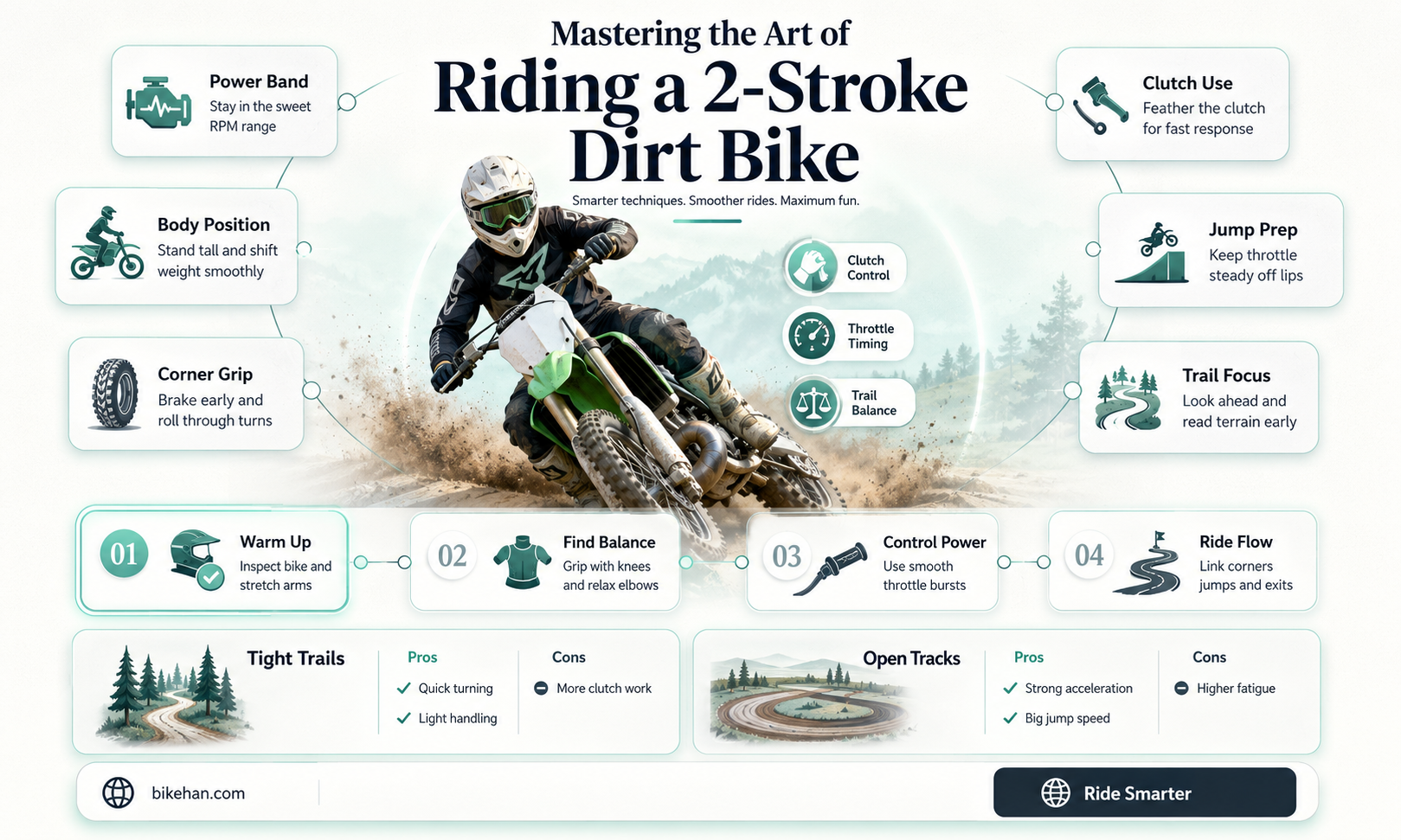
Driving a 2-stroke dirt bike requires a unique set of skills and knowledge compared to other types of motorcycles. These bikes are known for their lightweight design and high power-to-weight ratio, making them popular for off-road racing and trail riding. To effectively operate a 2-stroke dirt bike, riders must understand the specific characteristics of these engines, such as their need for a precise fuel-oil mixture and their tendency to produce more exhaust smoke than 4-stroke engines. Additionally, mastering the correct riding techniques, including throttle control, clutch operation, and body positioning, is crucial for maintaining balance and control on rough terrain. Proper maintenance and preparation of the bike before each ride are also essential to ensure optimal performance and safety.
Explore related products


What You'll Learn
- Understanding the Basics: Learn about the bike's controls, such as throttle, clutch, and brakes. Familiarize yourself with the layout
- Starting the Engine: Locate the ignition switch and key. Ensure the bike is in neutral, then turn the key to start
- Shifting Gears: Master the clutch and gear shifter. Practice shifting up and down smoothly while maintaining throttle control
- Throttle Control: Learn to modulate the throttle for acceleration and deceleration. Avoid abrupt movements for better control
- Braking Techniques: Understand the front and rear brakes. Practice using both brakes effectively for safe and controlled stopping

Understanding the Basics: Learn about the bike's controls, such as throttle, clutch, and brakes. Familiarize yourself with the layout
Before you even start the engine of a 2-stroke dirt bike, it's crucial to understand the layout of its controls. This knowledge is fundamental to your safety and the bike's performance. The throttle, clutch, and brakes are the primary controls you'll interact with, and each has a specific function and location.
The throttle is typically located on the right handlebar and is used to control the engine's speed. It's a twist-grip control that you'll need to become familiar with, as it's essential for accelerating and decelerating the bike. The clutch lever is usually found on the left handlebar and is used to engage and disengage the engine from the transmission. This is crucial for shifting gears and controlling the bike's power delivery.
The brakes are another critical component, with the front brake lever located on the right handlebar and the rear brake lever on the left footpeg. The front brake is generally more powerful and is used for most stopping situations, while the rear brake provides additional stopping power and is useful for controlling wheel spin.
Familiarizing yourself with the layout of these controls is essential before you start riding. Spend some time sitting on the bike, getting a feel for the placement of each control, and practicing the motions of accelerating, braking, and shifting gears. This will help you build muscle memory and ensure that you can operate the bike safely and effectively.
In addition to understanding the controls, it's also important to be aware of the bike's overall layout and ergonomics. The seat height, handlebar position, and footpeg placement all play a role in your comfort and control while riding. Take the time to adjust these components to suit your body size and riding style, and you'll find that the bike is much more enjoyable and easier to handle.
Remember, practice makes perfect. The more time you spend getting to know your bike and its controls, the more confident and capable you'll become as a rider. So, take it slow, be patient, and enjoy the process of learning how to drive a 2-stroke dirt bike.
Mastering the Art of Double Jumping on Your Dirt Bike
You may want to see also
Starting the Engine: Locate the ignition switch and key. Ensure the bike is in neutral, then turn the key to start
To start the engine of a 2-stroke dirt bike, you must first locate the ignition switch and key. Typically, the ignition switch is found on the right side of the handlebars, although this may vary depending on the specific model of your bike. Once you've located the ignition switch, ensure that the key is inserted properly and that the bike is in neutral. This is crucial, as attempting to start the engine while the bike is in gear can cause damage to the transmission and potentially lead to injury.
With the bike in neutral and the key inserted, you're ready to start the engine. Turn the key to the "start" position, which is usually indicated by a symbol of a running engine or the word "start" itself. As you turn the key, you should hear the engine begin to crank. If the engine doesn't start immediately, don't panic. It's not uncommon for 2-stroke engines to require a few attempts before they fire up, especially if they're cold.
Once the engine starts, you'll need to quickly shift into first gear to get moving. To do this, locate the gear shift lever, which is typically found on the left side of the bike, near your foot. Press down on the lever with your foot to shift into first gear, and then you're ready to ride. Remember to always wear appropriate safety gear, including a helmet, gloves, and protective clothing, before operating your dirt bike.
Starting the engine of a 2-stroke dirt bike can be a bit tricky, but with practice, it becomes second nature. Just remember to always follow the manufacturer's instructions and take the necessary safety precautions to ensure a fun and safe riding experience.
Mastering the Art of Draining Your Dirt Bike Carb
You may want to see also
Shifting Gears: Master the clutch and gear shifter. Practice shifting up and down smoothly while maintaining throttle control
To master the clutch and gear shifter on a 2-stroke dirt bike, it's essential to understand the mechanics of how they work together. The clutch is used to disengage the engine from the transmission, allowing you to shift gears smoothly. When you pull the clutch lever in, it releases the tension on the clutch plates, enabling you to move the gear shifter. The gear shifter is typically located near your left foot and is used to select the appropriate gear for your riding conditions.
Practice shifting up and down smoothly while maintaining throttle control is crucial for efficient riding. To shift up, you'll need to pull the clutch lever in, move the gear shifter up to the next gear, and then slowly release the clutch while gently applying the throttle. This process should be done in one fluid motion to avoid jerking the bike. Shifting down is similar, but you'll need to move the gear shifter down to the previous gear before releasing the clutch.
One common mistake beginners make is not fully disengaging the clutch before shifting gears. This can lead to grinding gears and potential damage to the transmission. To avoid this, make sure you pull the clutch lever in all the way before moving the gear shifter. Additionally, it's important to match the throttle to the gear you're in. For example, if you're shifting up to a higher gear, you'll need to increase the throttle to maintain speed.
As you practice shifting gears, pay attention to the bike's response. If you notice any hesitation or jerking, it may be a sign that you're not fully disengaging the clutch or that you're shifting too quickly. Take your time and focus on making smooth, deliberate movements. With practice, you'll develop the muscle memory needed to shift gears effortlessly while maintaining control of the bike.
Remember, mastering the clutch and gear shifter is an essential skill for any dirt bike rider. By understanding how they work together and practicing proper shifting techniques, you'll be able to ride more efficiently and safely. So, get out there and start practicing – your bike (and your skills) will thank you!
Mastering the Art of Drifting on a Dirt Bike: A Beginner's Guide
You may want to see also
Throttle Control: Learn to modulate the throttle for acceleration and deceleration. Avoid abrupt movements for better control
Mastering throttle control is crucial for riding a 2-stroke dirt bike effectively. The throttle is your primary tool for managing speed and power, and learning to modulate it smoothly can make a significant difference in your riding experience. Here are some key tips to help you refine your throttle control skills:
First, understand that abrupt throttle movements can lead to loss of control, especially on uneven terrain. Jerky acceleration or deceleration can cause the bike to buck or stall, putting you at risk of a fall. Instead, practice rolling on and off the throttle gradually. This will help you maintain a consistent speed and keep the bike stable.
When accelerating, start by gently rolling the throttle forward. Feel for the point where the bike begins to respond, and then continue to increase the throttle smoothly. Avoid snapping the throttle wide open, as this can cause the bike to wheelie or lose traction. Similarly, when decelerating, roll the throttle back gradually rather than cutting it off suddenly. This will help you maintain control and avoid abrupt changes in speed.
Another important aspect of throttle control is learning to use the throttle in conjunction with the clutch. When shifting gears, use the clutch to disengage the engine from the drivetrain, and then roll off the throttle slightly. This will help you achieve a smoother gear change and prevent the bike from jerking or stalling.
Practice these techniques in a controlled environment, such as a flat, open area, before taking them to the trails. Focus on developing a smooth, consistent throttle control style that allows you to maintain control of the bike at all times. With practice, you'll find that your riding becomes more fluid and enjoyable, and you'll be better equipped to handle the challenges of off-road terrain.
Efficiently Drain Gas from Your 2-Stroke Dirt Bike: A Guide
You may want to see also
Braking Techniques: Understand the front and rear brakes. Practice using both brakes effectively for safe and controlled stopping
Mastering braking techniques is crucial for safely operating a 2-stroke dirt bike. The front and rear brakes work in tandem to provide effective stopping power, but understanding how to use them correctly is key. The front brake, typically operated by the right handlebar lever, controls the front wheel's braking system. It's essential to apply gradual pressure to avoid locking the wheel, which can lead to a loss of control.
The rear brake, usually engaged by the right foot pedal, manages the rear wheel's braking. It's important to use this brake in conjunction with the front brake to achieve balanced stopping. A common technique is to apply the rear brake first, followed by the front brake, to ensure the bike remains stable during deceleration.
Practice is vital to developing the skills necessary for safe and controlled stopping. Start by finding a flat, open area where you can safely experiment with different braking techniques. Begin at a moderate speed and apply the rear brake gently, gradually increasing the pressure until you come to a stop. Repeat this process with the front brake, focusing on smooth, controlled movements.
As you become more comfortable, try combining both brakes. Start by applying the rear brake, then smoothly transition to the front brake while maintaining a steady pressure on the rear. This technique helps distribute the braking force evenly between both wheels, reducing the risk of skidding or losing control.
Remember to always wear appropriate safety gear, including a helmet, gloves, and protective clothing, when practicing braking techniques. Additionally, ensure your dirt bike is well-maintained, with properly functioning brakes and tires in good condition. By mastering these braking techniques and practicing them regularly, you'll be better equipped to handle various riding situations safely and confidently.
Mastering the Art of Downshifting on Your Dirt Bike
You may want to see also
Frequently asked questions
The main differences lie in the engine's power delivery and maintenance requirements. 2-stroke engines typically provide more immediate power and a higher power-to-weight ratio, making them popular for off-road racing. However, they require more frequent maintenance, including regular oil changes and spark plug replacements. 4-stroke engines, on the other hand, offer smoother power delivery and are generally more reliable and easier to maintain, but they are heavier and may not provide the same level of instant power as 2-strokes.
Starting a 2-stroke dirt bike usually involves a few key steps. First, ensure the bike is on a level surface and the clutch is engaged. Turn on the ignition and, if the bike has a choke, engage it. Then, using your foot, push down on the kickstarter until you feel resistance. At this point, quickly disengage the clutch and the bike should start. If it doesn't, you may need to adjust the choke or check for any issues with the fuel mixture or spark plug.
Regular maintenance is crucial for keeping a 2-stroke dirt bike running smoothly. Common tasks include checking and changing the engine oil, cleaning or replacing the air filter, inspecting and replacing the spark plug, and ensuring the fuel mixture is correct. Additionally, it's important to keep the chain lubricated and adjusted, check the tire pressure, and inspect the brakes and suspension components regularly.