Ryan Cole
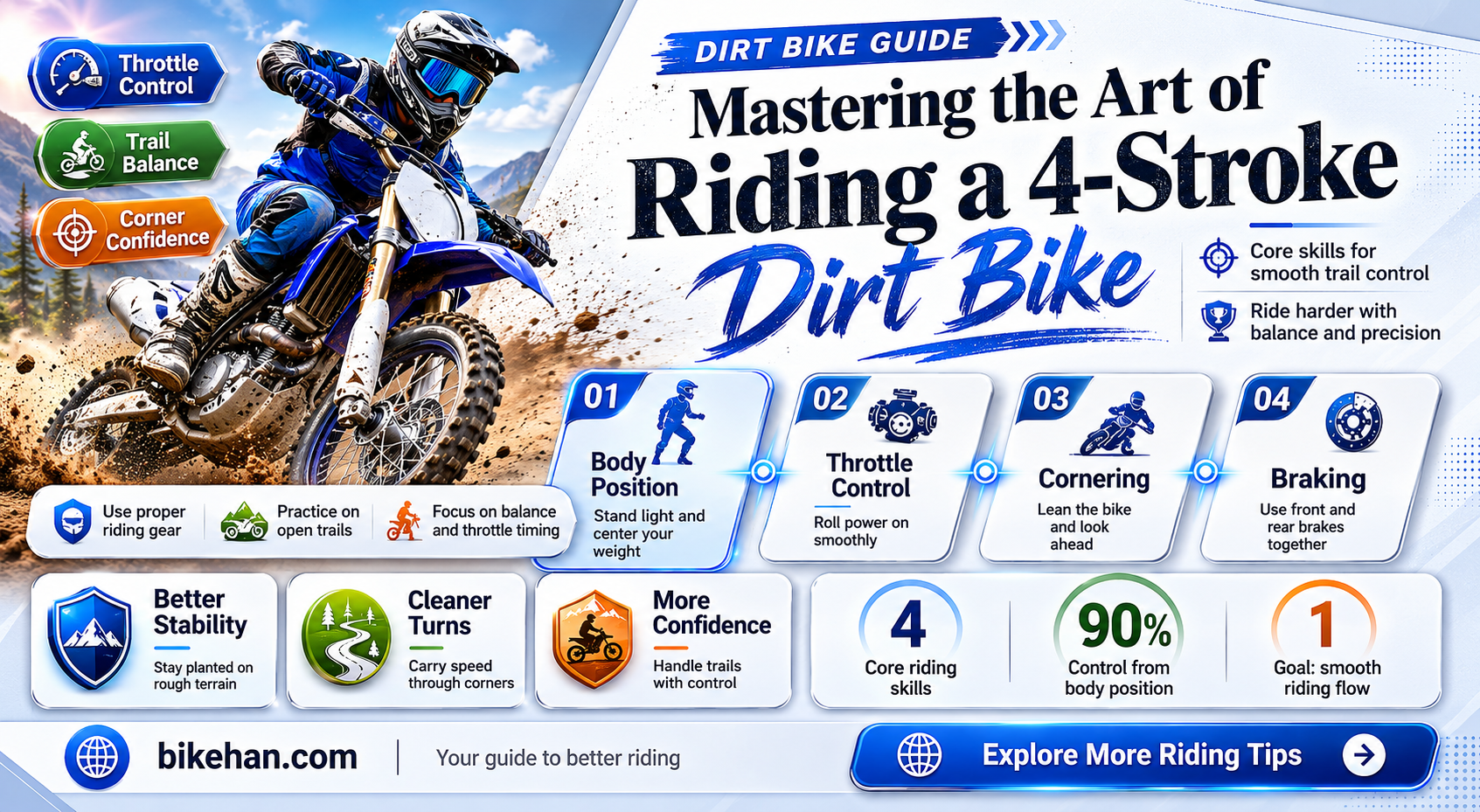
Driving a 4-stroke dirt bike requires a combination of skill, balance, and knowledge of the bike's mechanics. Before you begin, it's essential to familiarize yourself with the controls and features of your dirt bike. Start by locating the throttle, brakes, clutch, and gear shift. Ensure you're wearing appropriate safety gear, including a helmet, gloves, and protective clothing. Begin by practicing basic maneuvers like starting and stopping the bike, then gradually progress to more advanced techniques such as cornering and jumping. Remember to always maintain control of your speed and be aware of your surroundings. With practice and patience, you'll be able to confidently navigate various terrains on your 4-stroke dirt bike.
Explore related products


What You'll Learn
- Understanding the Controls: Learn the functions of the clutch, throttle, brakes, and gear shifter on your dirt bike
- Starting the Engine: Master the technique to start the 4-stroke engine, including proper clutch and throttle positioning
- Shifting Gears: Practice smooth gear shifting while maintaining balance and control of the bike
- Throttle Control: Develop skills to modulate the throttle for different terrains and speeds
- Braking Techniques: Learn effective front and rear braking methods to ensure safety and control during rides

Understanding the Controls: Learn the functions of the clutch, throttle, brakes, and gear shifter on your dirt bike
To effectively control a 4-stroke dirt bike, it's crucial to understand the functions of its key components: the clutch, throttle, brakes, and gear shifter. Each of these controls plays a vital role in maneuvering the bike, ensuring safety, and optimizing performance.
The clutch is a critical control that engages and disengages the engine from the transmission. When you pull the clutch lever, it disengages the engine, allowing you to shift gears smoothly. Releasing the clutch gradually engages the engine, transferring power to the rear wheel. Mastering the clutch is essential for seamless gear changes and preventing the bike from stalling.
The throttle controls the amount of air and fuel mixture entering the engine, which in turn regulates the bike's speed. A gentle twist on the throttle increases speed, while releasing it slows the bike down. It's important to modulate the throttle smoothly to maintain control and avoid sudden acceleration or deceleration, especially on uneven terrain.
Brakes are fundamental for controlling speed and ensuring safety. Dirt bikes typically have a front disc brake and a rear drum brake. The front brake provides more stopping power, while the rear brake helps in controlling speed and maintaining balance. When braking, it's essential to use both brakes simultaneously and apply gradual pressure to avoid locking the wheels, which could lead to a loss of control.
The gear shifter is used to change gears, which is crucial for adapting to different terrains and riding conditions. Shifting gears allows you to maintain an optimal engine speed for better performance and fuel efficiency. To shift gears, you need to pull the clutch lever, move the gear shifter to the desired position, and then release the clutch gradually. It's important to practice shifting gears smoothly and at the right times to avoid jerking the bike or losing power.
Understanding and mastering these controls is essential for safely and effectively riding a 4-stroke dirt bike. Practice and patience are key to developing the skills needed to handle these components with confidence.
Mastering the Art of Draining Your Dirt Bike Carb
You may want to see also
Starting the Engine: Master the technique to start the 4-stroke engine, including proper clutch and throttle positioning
To start a 4-stroke dirt bike engine, you must first ensure the bike is in a safe and stable position. Place the bike on a level surface, preferably on a stand, to prevent it from tipping over during the starting process. Next, locate the clutch lever on the left handlebar and the throttle on the right. The clutch should be fully disengaged, meaning the lever is pulled in towards you, and the throttle should be in the idle position, which is typically the leftmost setting.
Now, locate the starter button, usually found on the right handlebar or near the ignition switch. With the clutch disengaged and the throttle set to idle, press the starter button firmly and hold it until the engine begins to crank. It's important to note that some 4-stroke engines may require you to pedal the bike to generate enough power to start the engine, especially if it's a kick-start model.
As the engine cranks, slowly release the clutch lever to allow the engine to engage with the transmission. This should be done gradually to prevent the bike from jerking or stalling. Once the engine is running, you can adjust the throttle to increase the RPMs and warm up the engine. Remember to always wear appropriate safety gear, including gloves and a helmet, when operating a dirt bike.
One common mistake beginners make is not fully disengaging the clutch before starting the engine. This can cause the bike to lurch forward unexpectedly, potentially leading to injury. Another important tip is to never start the engine with the throttle in the open position, as this can cause the engine to flood with fuel and make it difficult to start.
In summary, starting a 4-stroke dirt bike engine requires proper positioning of the bike, disengaging the clutch, setting the throttle to idle, and pressing the starter button. By following these steps and avoiding common mistakes, you can safely and effectively start your dirt bike and be ready to hit the trails.
Dirt Bike Maintenance: Effective Ways to Drain Bad Gas
You may want to see also
Shifting Gears: Practice smooth gear shifting while maintaining balance and control of the bike
To master the art of shifting gears on a 4-stroke dirt bike, it's essential to understand the mechanics behind it. The process involves using the clutch lever and gear shifter in harmony to transition smoothly between gears. Start by familiarizing yourself with the bike's gear layout, typically found on the side of the bike or in the owner's manual. Once you know the gear positions, practice engaging and disengaging the clutch while the bike is stationary. This will help you develop the muscle memory needed for seamless gear changes.
When you're ready to shift gears while riding, remember to keep your body weight centered over the bike. This balance is crucial for maintaining control during the shift. As you approach a gear change, gently roll off the throttle and simultaneously pull in the clutch lever. The key is to coordinate these movements smoothly to avoid any jerky transitions. Once the clutch is fully engaged, use your foot to shift the gear lever into the desired position.
After shifting, it's time to re-engage the clutch. Do this gradually while gently rolling back on the throttle. This controlled acceleration will help you maintain balance and prevent the bike from bucking or losing traction. It's important to practice this process repeatedly to build confidence and proficiency in gear shifting.
One common mistake to avoid is shifting gears too abruptly. This can cause the bike to lurch or even stall. Instead, focus on making smooth, deliberate movements. Another tip is to use your body weight to help stabilize the bike during shifts. By leaning slightly into the turn, you can counterbalance the forces acting on the bike and maintain better control.
Finally, remember that practice makes perfect. Spend time on the bike, focusing specifically on your gear shifting technique. As you become more comfortable and skilled, you'll find that shifting gears becomes second nature, allowing you to focus more on enjoying the ride and less on the mechanics of gear changes.
Efficiently Drain Gas from Your 2-Stroke Dirt Bike: A Guide
You may want to see also
Throttle Control: Develop skills to modulate the throttle for different terrains and speeds
Mastering throttle control is crucial for navigating the varied terrains encountered while dirt biking. The throttle is your primary tool for managing speed and power delivery, and its modulation requires a delicate balance of finesse and strength. To develop these skills, begin by practicing on flat, open ground to get a feel for how the throttle responds to your inputs. Gradually progress to more challenging environments like hills, mud, and sand, where precise throttle control becomes even more critical.
One key technique is to use your body weight to help modulate the throttle. When accelerating, shift your weight forward to help the bike gain traction and maintain balance. Conversely, when decelerating or navigating tight turns, lean back slightly to reduce the load on the front wheel and improve steering response. This body positioning not only aids in throttle control but also enhances overall bike handling.
Another important aspect of throttle control is learning to use the clutch effectively in conjunction with the throttle. The clutch allows you to disengage the engine from the wheels, providing a smooth transition between gears and preventing the bike from stalling during slow-speed maneuvers. Practice engaging and disengaging the clutch while modulating the throttle to develop a seamless and controlled riding style.
In addition to these techniques, it's essential to understand how different terrains affect throttle response. For example, in muddy conditions, it's important to avoid sudden throttle inputs, as this can cause the wheels to spin and lose traction. Instead, use a smooth, gradual acceleration to maintain grip and control. On sandy terrain, you may need to use a more aggressive throttle input to prevent the bike from sinking into the soft surface, but be careful not to overdo it, as this can lead to loss of control.
Finally, remember that practice makes perfect. Spend time honing your throttle control skills in a variety of conditions to become a more confident and capable dirt bike rider. As you progress, you'll find that your ability to modulate the throttle becomes second nature, allowing you to focus on other aspects of riding and enjoy the thrill of tackling challenging terrains.
Dirt Bike Maintenance: The Complete Guide to Draining Your Carburetor
You may want to see also
Braking Techniques: Learn effective front and rear braking methods to ensure safety and control during rides
Mastering braking techniques is crucial for ensuring safety and control while riding a 4-stroke dirt bike. Effective braking involves understanding the nuances of both front and rear braking systems and how to use them in tandem to achieve optimal results. Let's delve into the specifics of each braking method and explore how to apply them in various riding scenarios.
Front braking is typically more powerful than rear braking, making it essential for quick stops and maintaining control during descents. To engage the front brake, squeeze the lever on the right handlebar while applying gradual pressure to avoid locking the wheel. It's important to use the front brake in moderation, as excessive force can lead to the bike tipping forward or the wheel skidding.
Rear braking, on the other hand, is more subtle but equally important for maintaining stability and control. To engage the rear brake, press down on the pedal located near the right footpeg. Unlike the front brake, the rear brake can be applied more aggressively without the risk of tipping the bike. However, it's crucial to avoid sudden stops, as this can cause the rear wheel to lock up and potentially lead to a skid.
When combining front and rear braking, it's essential to find the right balance to achieve smooth and controlled deceleration. A general rule of thumb is to use 70% front brake and 30% rear brake for most stopping situations. However, this ratio may vary depending on factors such as the bike's speed, weight distribution, and the terrain being ridden on.
In addition to mastering the basic braking techniques, it's important to be aware of common mistakes and potential hazards. For example, applying too much front brake can cause the bike to tip forward, while sudden stops using the rear brake can lead to skidding. To mitigate these risks, practice gradual and controlled braking, and always be mindful of the bike's speed and the surrounding environment.
By understanding and practicing effective braking techniques, riders can enhance their safety and control while enjoying the thrill of riding a 4-stroke dirt bike. Remember, braking is a skill that requires consistent practice and refinement, so take the time to hone your abilities and become a more confident and capable rider.
Mastering the Art of Wheelies on Your Dirt Bike
You may want to see also
Frequently asked questions
The basic controls of a 4-stroke dirt bike include the throttle, clutch, brake levers, and gear shifter. The throttle controls the engine speed, the clutch engages and disengages the engine from the transmission, the brake levers control the front and rear brakes, and the gear shifter changes the gears.
To start a 4-stroke dirt bike, you typically need to ensure the bike is in neutral, then use the electric starter or kickstart lever to turn the engine over. Make sure the kill switch is in the "on" position and that you have enough fuel.
The proper riding posture for a 4-stroke dirt bike involves standing on the foot pegs with your knees slightly bent, leaning forward slightly, and keeping your weight centered over the bike. This posture allows for better control and balance while riding.
To shift gears on a 4-stroke dirt bike, you need to use the clutch lever and the gear shifter. Squeeze the clutch lever to disengage the engine from the transmission, then use the gear shifter to move to the desired gear. Release the clutch lever slowly to engage the engine with the new gear.