Eric Johnson
Bike tires are typically made from a type of rubber called styrene-butadiene rubber (SBR). This material is favored for its excellent elasticity, durability, and resistance to abrasion, making it ideal for withstanding the rigors of cycling. SBR is a synthetic rubber that offers a good balance between grip and rolling resistance, which are crucial factors for bike tire performance. Additionally, some high-performance tires may incorporate other rubber compounds or materials to enhance specific characteristics such as puncture resistance or wet grip. The choice of rubber can significantly impact the overall performance and safety of a bicycle tire.
Explore related products




What You'll Learn
- Natural vs. Synthetic Rubber: Bike tires can be made from either natural rubber, derived from latex, or synthetic rubber, created from petroleum
- Rubber Compounds: Different rubber compounds are used to achieve specific properties like durability, grip, and puncture resistance in bike tires
- Vulcanization Process: The vulcanization process involves heating the rubber with sulfur to create cross-links, enhancing the tire's strength and elasticity
- Tire Tread Patterns: Various tread patterns are designed to provide optimal traction and handling on different surfaces and in various weather conditions
- Recycling and Sustainability: Efforts are being made to develop more sustainable rubber sources and recycling methods for bike tires to reduce environmental impact

Natural vs. Synthetic Rubber: Bike tires can be made from either natural rubber, derived from latex, or synthetic rubber, created from petroleum
Natural rubber, derived from the latex of the Hevea brasiliensis tree, has been the traditional material for bike tires due to its excellent elasticity, resilience, and grip properties. The process of extracting natural rubber involves tapping the tree to collect the latex, which is then coagulated and processed into rubber sheets. These sheets are subsequently vulcanized to enhance their strength and durability, making them suitable for tire manufacturing.
On the other hand, synthetic rubber, created from petroleum, offers several advantages over natural rubber. Synthetic rubber can be produced in a controlled environment, allowing for greater consistency in its properties. It is also more resistant to abrasion and can provide better performance in extreme temperatures. Additionally, synthetic rubber is less susceptible to punctures and can offer improved fuel efficiency due to its lower rolling resistance.
The choice between natural and synthetic rubber for bike tires often depends on the specific requirements of the cyclist. For instance, professional cyclists may prefer natural rubber tires for their superior grip and handling characteristics, especially in wet conditions. In contrast, recreational cyclists or those who prioritize durability and low maintenance may opt for synthetic rubber tires.
In recent years, there has been a growing interest in sustainable and eco-friendly alternatives to traditional rubber. Some manufacturers have started using recycled rubber or developing new materials from renewable sources, such as guayule or Russian dandelion, to reduce the environmental impact of tire production. These innovations aim to provide cyclists with high-performance tires while minimizing the ecological footprint associated with rubber extraction and processing.
When selecting bike tires, it is essential to consider factors such as riding conditions, personal preferences, and the intended use of the bicycle. Understanding the differences between natural and synthetic rubber can help cyclists make informed decisions about the type of tires that best suit their needs.
Exploring the Core: Inside the Bike Tire Card Mystery
You may want to see also
Explore related products

$33.99 $39.99

$39.99 $41.99


Rubber Compounds: Different rubber compounds are used to achieve specific properties like durability, grip, and puncture resistance in bike tires
Bike tires are made from a variety of rubber compounds, each engineered to provide specific performance characteristics. These compounds are typically based on natural rubber, synthetic rubber, or a blend of both. Natural rubber, derived from the sap of the rubber tree, offers excellent elasticity and grip, making it a popular choice for high-performance bike tires. Synthetic rubber, on the other hand, is produced from petroleum and can be tailored to provide a range of properties, including increased durability and resistance to punctures.
The choice of rubber compound can significantly impact the performance and longevity of a bike tire. For example, tires designed for road racing often use a softer rubber compound to maximize grip and handling, while touring tires may use a harder compound for improved durability and puncture resistance. Mountain bike tires, which need to withstand rough terrain and sharp objects, often use a combination of compounds to balance grip, durability, and puncture protection.
In addition to the type of rubber, the compound's formulation can also include various additives to enhance specific properties. These additives might include carbon black for improved strength and wear resistance, silica for better grip and rolling resistance, and antioxidants to protect the rubber from degradation due to heat and sunlight. The precise mix of these ingredients can vary greatly depending on the intended use of the tire, with manufacturers carefully tuning the formulations to meet the demands of different cycling disciplines.
When selecting bike tires, it's essential to consider the specific needs of your riding style and the conditions you'll be cycling in. For example, if you primarily ride on smooth, paved roads, a tire with a softer rubber compound and a focus on grip and handling may be ideal. However, if you frequently encounter rough terrain or sharp debris, a tire with a harder compound and enhanced puncture resistance might be a better choice. Understanding the different rubber compounds used in bike tires can help you make an informed decision and ensure that your tires are well-suited to your cycling adventures.
Unveiling the Ultimate: What Makes the Lightest Road Bike Tire?
You may want to see also
Explore related products


Vulcanization Process: The vulcanization process involves heating the rubber with sulfur to create cross-links, enhancing the tire's strength and elasticity
The vulcanization process is a critical step in the manufacturing of rubber bike tires. This process involves heating the rubber with sulfur to create cross-links, which significantly enhances the tire's strength and elasticity. The sulfur forms bridges between the rubber molecules, making the material more resistant to wear and tear, and better able to withstand the stresses of cycling.
The vulcanization process typically takes place in a large, pressurized vessel called a vulcanizer. The rubber is first mixed with sulfur and other additives, such as accelerators and antioxidants, to ensure even distribution of the cross-linking agents. The mixture is then molded into the desired shape and placed in the vulcanizer, where it is subjected to high temperatures and pressures for a specific period of time.
The duration and temperature of the vulcanization process are carefully controlled to achieve the desired level of cross-linking. If the process is too short or the temperature is too low, the rubber will not be sufficiently cured, resulting in a weak and brittle tire. On the other hand, if the process is too long or the temperature is too high, the rubber may become over-cured, leading to a hard and inflexible tire.
One of the key benefits of the vulcanization process is that it allows for the creation of tires with a wide range of properties. By adjusting the amount of sulfur and other additives, manufacturers can produce tires that are optimized for specific cycling conditions, such as high-performance road tires that require a balance of strength and flexibility, or off-road tires that need to be more resistant to punctures and abrasions.
In addition to improving the mechanical properties of the rubber, the vulcanization process also helps to enhance the tire's resistance to environmental factors, such as ozone and UV radiation. This is particularly important for bike tires, which are exposed to the elements on a regular basis and need to maintain their integrity over time.
Overall, the vulcanization process is a complex and critical step in the production of high-quality rubber bike tires. By carefully controlling the temperature, pressure, and duration of the process, manufacturers can create tires that are strong, durable, and well-suited to a variety of cycling conditions.
Exploring the Standard Valve Types for Bicycle Tires
You may want to see also
Explore related products


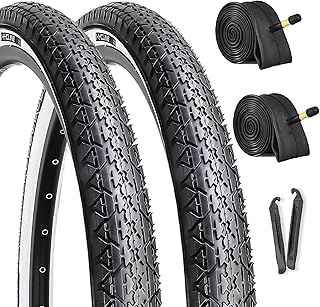


Tire Tread Patterns: Various tread patterns are designed to provide optimal traction and handling on different surfaces and in various weather conditions
Bike tire tread patterns play a crucial role in determining the tire's performance on different surfaces and in various weather conditions. The tread pattern refers to the arrangement and design of the grooves and blocks on the tire's surface. These patterns are carefully engineered to provide optimal traction, handling, and braking performance.
There are several types of tread patterns, each designed for specific riding conditions. For example, road bike tires typically have a slick or semi-slick tread pattern, which provides maximum contact with the pavement for improved traction and reduced rolling resistance. Mountain bike tires, on the other hand, have more aggressive tread patterns with deeper grooves and larger blocks to grip loose or uneven surfaces.
In addition to the type of riding, tread patterns also vary based on the weather conditions. Wet weather tires have deeper grooves to channel water away from the tire's surface, reducing the risk of hydroplaning. Winter tires have a unique tread pattern with small studs or spikes to provide better grip on icy or snowy surfaces.
The choice of tread pattern can significantly impact the overall performance and safety of the bike. Riders should consider the type of riding they will be doing and the weather conditions they will encounter when selecting a tire with the appropriate tread pattern.
When selecting a tire, it's essential to consider the specific needs of the rider and the bike. Factors such as the type of riding, the terrain, and the weather conditions all play a role in determining the best tread pattern for a particular application. By choosing the right tread pattern, riders can improve their bike's performance and safety, ensuring a more enjoyable and secure riding experience.
Optimal Bike Tire Pressure: A Comprehensive Guide for Cyclists
You may want to see also
Explore related products


Recycling and Sustainability: Efforts are being made to develop more sustainable rubber sources and recycling methods for bike tires to reduce environmental impact
The quest for sustainable rubber sources and effective recycling methods for bicycle tires is gaining momentum, driven by the need to mitigate environmental impacts. Currently, most bike tires are made from synthetic rubber, which is derived from non-renewable resources like petroleum. This has led to concerns about the sustainability of the industry and the environmental footprint of cycling.
One promising avenue of research is the development of natural rubber alternatives. Scientists are exploring the use of guayule, a desert shrub native to the southwestern United States and northern Mexico, as a source of natural rubber. Guayule-based rubber has the potential to be more sustainable than traditional natural rubber, which is primarily sourced from the Hevea brasiliensis tree found in tropical regions. The cultivation of guayule requires less water and pesticides, and it can be grown on marginal lands that are not suitable for food crops.
In addition to sustainable rubber sources, innovative recycling methods are being developed to reduce waste and recover valuable materials from used bike tires. One such method is pyrolysis, a thermal decomposition process that converts rubber into useful byproducts like carbon black, steel wire, and oil. This approach not only reduces the amount of waste sent to landfills but also provides a cost-effective way to recover materials that can be reused in the production of new tires and other products.
Another recycling initiative involves the use of automated sorting systems to separate different types of rubber and materials found in bike tires. This technology enables more efficient and accurate recycling, ensuring that materials are properly processed and reused. Furthermore, some companies are experimenting with the use of recycled rubber in the production of new tires, which can help to reduce the demand for virgin rubber and lower the environmental impact of tire manufacturing.
As the cycling industry continues to grow, the importance of sustainable rubber sources and effective recycling methods cannot be overstated. By investing in research and development, companies and governments can work together to create a more environmentally friendly and sustainable future for cycling enthusiasts and the planet as a whole.
Understanding the Warning Signs: When Your Bike Tire Starts to Bulge
You may want to see also
Frequently asked questions
Bike tires are typically made from a type of rubber called styrene-butadiene rubber (SBR). This material is chosen for its excellent elasticity, durability, and resistance to abrasion, making it ideal for withstanding the wear and tear of cycling.
Yes, in addition to rubber, bike tires often incorporate other materials such as steel or Kevlar for the tire's carcass, which provides structure and strength. The tread pattern may also include additives to enhance grip and durability.
The type of rubber used in bike tires significantly impacts their performance. SBR, commonly used in bike tires, offers a good balance of elasticity and durability, providing a smooth ride and reliable traction. Other rubber compounds, like natural rubber or butadiene rubber, may offer different performance characteristics, such as improved grip in wet conditions or increased puncture resistance.