Samantha Lee
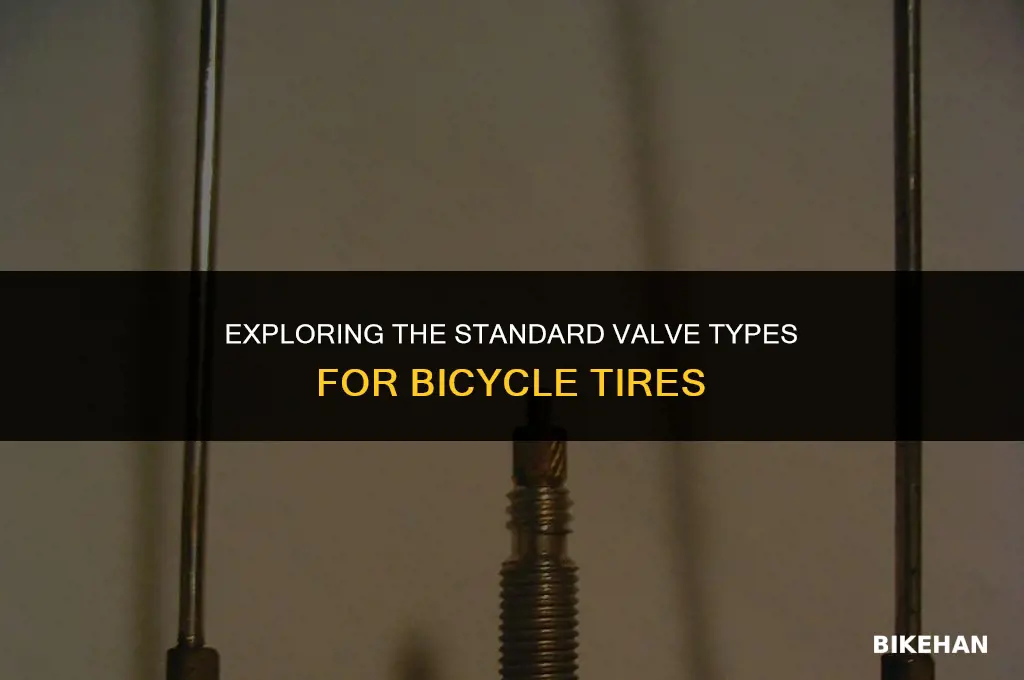
Bike tire valves are essential components that allow cyclists to inflate and deflate their tires. The most common types of bike tire valves are the Presta, Schrader, and Dunlop valves. Presta valves are typically found on road bikes and are characterized by their slim profile and locking nut mechanism. Schrader valves, which are more common on mountain bikes and BMX bikes, are wider and resemble the valves used on car tires. Dunlop valves, also known as Woods valves, are less common but can be found on some older bikes and certain types of equipment. Understanding the type of valve on your bike is crucial for proper tire maintenance and ensuring a safe and efficient ride.
Explore related products


What You'll Learn
- Presta Valve: A narrow, threaded valve commonly used on road bikes, requiring a specific pump adapter
- Schrader Valve: A wider, threaded valve found on most mountain bikes and some road bikes, compatible with car pumps
- Dunlop Valve: An older, less common valve type, characterized by its unique shape and locking mechanism
- Valve Caps: Protective covers for valve stems, available in various materials and designs, often used for customization
- Pump Compatibility: Different valves require specific pump adapters or settings, ensuring proper inflation and avoiding damage

Presta Valve: A narrow, threaded valve commonly used on road bikes, requiring a specific pump adapter
The Presta valve, a narrow and threaded valve, is predominantly found on road bikes. Its design is optimized for high-pressure inflation, which is essential for road cycling performance. Unlike other valve types, the Presta valve requires a specific pump adapter to ensure a secure and efficient inflation process. This adapter is crucial because it prevents air from escaping during inflation and allows for precise pressure control.
One of the key features of the Presta valve is its locking nut mechanism. This nut, located at the top of the valve, must be unscrewed before inflation can begin. Once the desired pressure is achieved, the nut is tightened to lock the valve and maintain the air pressure. This mechanism is particularly useful for cyclists who need to inflate their tires quickly and securely, especially during races or long rides.
Inflating a Presta valve tire requires a bit more attention to detail compared to other valve types. First, the cyclist must ensure that the pump adapter is properly attached to the valve. Next, they need to unscrew the locking nut by turning it counterclockwise. After inflating the tire to the recommended pressure, the cyclist must then tighten the locking nut by turning it clockwise. It's important to note that over-tightening the nut can damage the valve, so cyclists should be cautious and only tighten it until it's snug.
Despite its specific requirements, the Presta valve offers several advantages for road cyclists. Its narrow design allows for a more aerodynamic profile, which can improve speed and efficiency. Additionally, the Presta valve is less prone to punctures and leaks compared to other valve types, making it a reliable choice for long-distance rides.
In summary, the Presta valve is a specialized component designed for road bike tires, requiring a specific pump adapter for inflation. Its unique locking nut mechanism ensures a secure and efficient inflation process, while its narrow design and reliability make it an ideal choice for road cyclists. By understanding the specific requirements and advantages of the Presta valve, cyclists can optimize their tire inflation process and enhance their overall riding performance.
Understanding Inflation: A Guide to Hybrid Bike Tire Pressure
You may want to see also
Explore related products


Schrader Valve: A wider, threaded valve found on most mountain bikes and some road bikes, compatible with car pumps
The Schrader valve, a common sight on many bicycles, particularly mountain bikes and some road bikes, is characterized by its wider, threaded design. This type of valve is known for its compatibility with car pumps, making it a convenient choice for cyclists who need to inflate their tires quickly and efficiently. The Schrader valve's design allows for a secure connection with the pump, ensuring that air is transferred effectively without any leaks.
One of the key advantages of the Schrader valve is its ease of use. Cyclists can simply attach the valve to a car pump, open the valve, and start pumping air into the tire. This straightforward process makes it ideal for those who may not be familiar with other types of bike tire valves, such as the Presta or Dunlop valves, which often require additional adapters or specific pumps.
In terms of maintenance, Schrader valves are relatively easy to clean and lubricate. Regular cleaning is important to remove any dirt or debris that may accumulate around the valve, which can affect its performance. Lubricating the valve with a small amount of oil can help ensure smooth operation and prevent any squeaking or sticking.
When it comes to compatibility, Schrader valves are widely accepted by most car pumps, making them a versatile choice for cyclists. However, it's important to note that some high-performance road bikes may use Presta valves, which are designed to hold higher pressures. In such cases, cyclists may need to use a Presta-specific pump or an adapter to inflate their tires.
Overall, the Schrader valve is a reliable and user-friendly option for many cyclists. Its compatibility with car pumps, ease of use, and simple maintenance requirements make it a popular choice for those looking for a hassle-free way to keep their bike tires inflated.
Exploring the Largest Fat Bike Tires: A Comprehensive Guide
You may want to see also
Explore related products


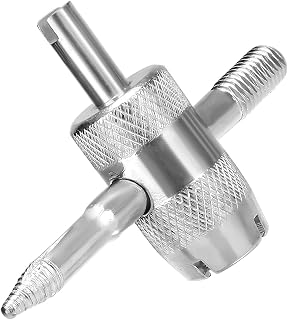


Dunlop Valve: An older, less common valve type, characterized by its unique shape and locking mechanism
The Dunlop valve, also known as the "Dunlop presta" or "Dunlop narrow valve," is an older, less common type of bicycle tire valve. It is characterized by its unique shape and locking mechanism, which differentiates it from the more widely used Presta and Schrader valves. The Dunlop valve features a slender, tapered body with a threaded section near the top, where a locking nut is screwed on to secure the valve in place. This design was intended to provide a more secure and airtight seal, reducing the risk of air leaks.
One of the key advantages of the Dunlop valve is its ability to hold high pressures, making it suitable for road and racing bicycles. However, its unique shape and locking mechanism can make it more challenging to use, especially for those unfamiliar with this type of valve. Inflating a tire with a Dunlop valve typically requires a specialized pump adapter or a pump with a universal head that can accommodate the valve's narrow profile.
Despite its benefits, the Dunlop valve has largely been phased out in favor of the Presta and Schrader valves, which are more widely available and easier to use. However, some vintage or high-end bicycles may still be equipped with Dunlop valves, and enthusiasts may prefer this type of valve for its classic aesthetic and performance characteristics.
In summary, the Dunlop valve is an older, less common bicycle tire valve characterized by its unique shape and locking mechanism. While it offers some advantages, such as the ability to hold high pressures, its use can be more challenging compared to other valve types. As a result, it has largely been replaced by the Presta and Schrader valves in modern bicycles.
Exploring the Optimal PSI for Bontrager Bike Tires: A Comprehensive Guide
You may want to see also
Explore related products


Valve Caps: Protective covers for valve stems, available in various materials and designs, often used for customization
Valve caps serve as protective covers for valve stems on bicycle tires. They are designed to prevent dirt, debris, and moisture from entering the valve stem, which could potentially damage the internal components and lead to air leaks. These caps are typically made from materials such as plastic, metal, or rubber, and they come in a variety of designs, colors, and shapes.
One of the primary purposes of valve caps is to provide a layer of protection against the elements. This is particularly important for cyclists who ride in harsh weather conditions or on rough terrain, as exposure to dirt and moisture can cause corrosion and wear over time. Additionally, valve caps can help to prevent accidental punctures or damage to the valve stem, which could render the tire unusable.
Beyond their functional benefits, valve caps also offer an opportunity for customization and personalization. Many cyclists choose to use valve caps that match the color scheme of their bike or that feature unique designs or logos. This allows riders to add a touch of individuality to their bicycle and make it stand out from others.
When selecting valve caps, it is important to consider the compatibility with your specific valve type. There are two main types of valve stems: Presta and Schrader. Presta valves are typically found on high-performance and road bikes, while Schrader valves are more common on mountain bikes and casual riding bicycles. Valve caps designed for Presta valves will not fit Schrader valves and vice versa.
In conclusion, valve caps are a simple yet effective accessory for protecting bicycle tire valve stems. They offer both practical benefits in terms of protection and maintenance, as well as an opportunity for cyclists to express their personal style through customization. By choosing the right valve caps for your bike, you can help to ensure the longevity of your tires and add a unique touch to your ride.
Optimal Tire Pressure for Street Bikes: A Comprehensive Guide
You may want to see also
Explore related products


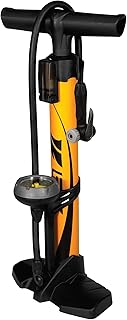
Pump Compatibility: Different valves require specific pump adapters or settings, ensuring proper inflation and avoiding damage
Ensuring proper pump compatibility with your bike tire valve is crucial for safe and efficient inflation. Different valves, such as Presta, Schrader, and Dunlop, require specific pump adapters or settings. Using the incorrect adapter or setting can lead to improper inflation, which may result in tire damage or even a dangerous blowout while riding.
For Presta valves, which are commonly found on road bikes, you'll need a pump with a Presta adapter or a universal adapter that can be adjusted to fit the Presta valve's narrow opening. These valves are designed to hold high pressures, so ensure your pump can reach the recommended pressure for your tires. Schrader valves, on the other hand, are more common on mountain bikes and are compatible with most standard pumps. However, it's still important to check that the pump's nozzle fits securely onto the Schrader valve to prevent air leaks during inflation.
Dunlop valves, which are less common but still found on some bikes, require a specific Dunlop adapter. These valves are designed for lower pressures, so make sure your pump can be adjusted accordingly. It's also worth noting that some newer pumps come with a universal adapter that can fit multiple valve types, making them more versatile and convenient for cyclists who own multiple bikes with different valve types.
When inflating your tires, always start with the valve closed and the pump disconnected. Attach the pump to the valve securely, then open the valve and begin pumping. Keep an eye on the pressure gauge to ensure you're reaching the recommended pressure for your tires. Once you've reached the desired pressure, close the valve and disconnect the pump. It's important to check the tire pressure regularly, especially before long rides, to ensure optimal performance and safety.
In summary, proper pump compatibility is essential for safe and efficient tire inflation. By understanding the different valve types and their specific pump requirements, you can avoid damage to your tires and ensure a smooth, safe ride. Always check your tire pressure regularly and use the correct pump adapter or setting for your valve type.
Exploring the Unique Purpose and Benefits of Tiny Bike Tires
You may want to see also
Frequently asked questions
The typical bike tire valve is a Presta valve, which is characterized by its narrow, threaded body and a small screw-top that needs to be opened before inflating the tire.
You can identify a Presta valve by its slim profile and the presence of a small, round, screw-top cap. When you remove this cap, you'll see a threaded valve stem.
Besides the Presta valve, there are two other common types of bike tire valves: the Schrader valve, which is wider and has a spring-loaded pin that needs to be depressed to inflate the tire, and the Dunlop valve, which is similar to the Presta valve but has a different thread pattern and a wider body.
No, you cannot use a Schrader valve on a tire designed for a Presta valve, as the Schrader valve is wider and will not fit into the Presta valve's narrow rim hole. You need to use the correct valve type for your tire to ensure a proper fit and function.