Matthew Brooks
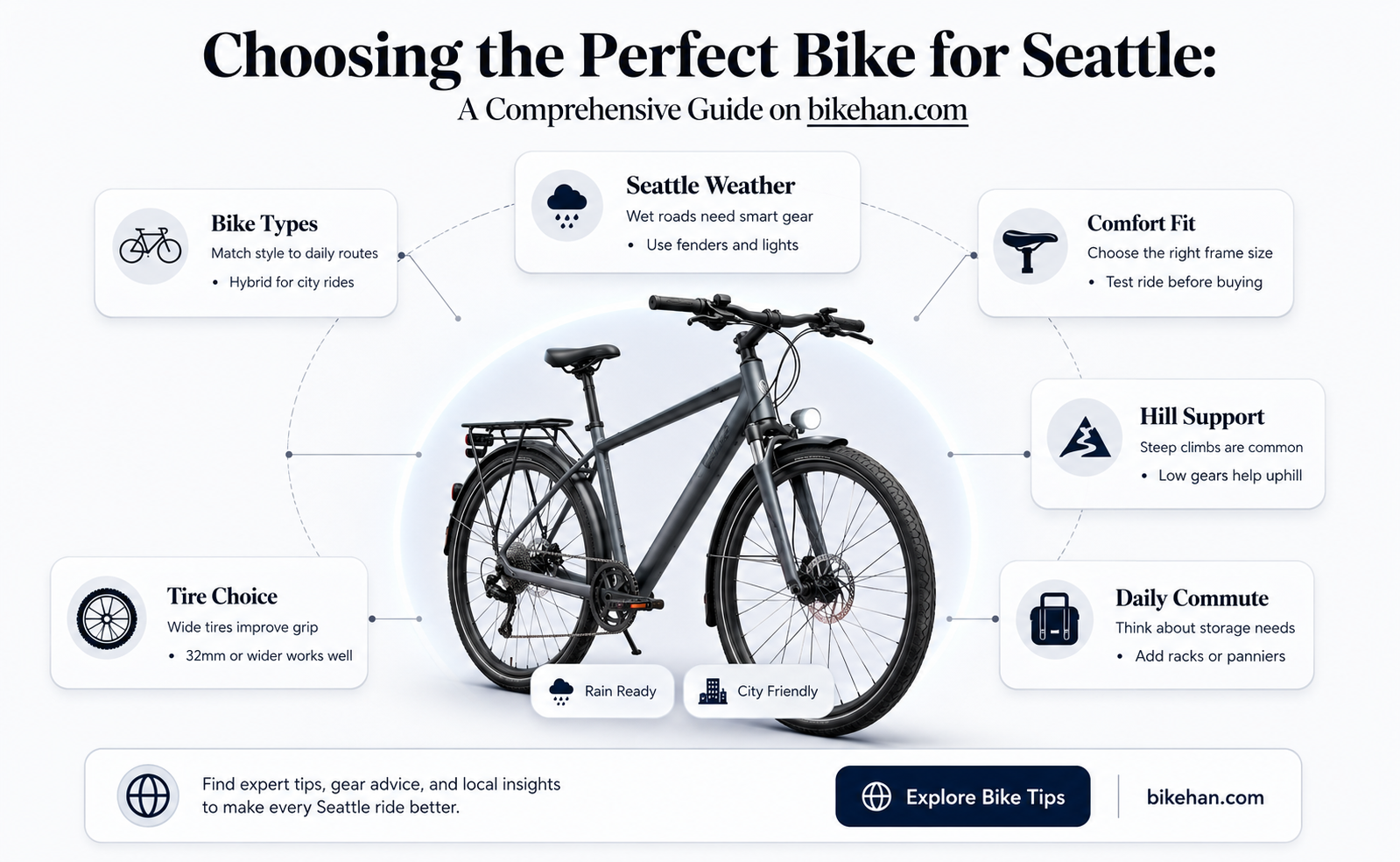
Seattle is known for its hilly terrain, wet weather, and a strong cycling culture, making it essential to choose the right bike for your needs. When considering what kind of bike to get for Seattle, you'll want to think about the type of riding you'll be doing most often. For commuting and casual riding around the city, a hybrid or commuter bike with a comfortable upright riding position and durable components is an excellent choice. These bikes often come equipped with features like fenders, lights, and racks, which are practical for Seattle's rainy climate and urban environment. If you're interested in exploring the city's many bike trails and parks, a mountain bike with good suspension and traction might be more suitable. For those who prefer speed and efficiency on paved roads, a road bike with drop handlebars and narrow tires could be the way to go. Additionally, considering the city's commitment to sustainability, you might also want to look into electric bikes, which can provide an extra boost on Seattle's steep hills. Ultimately, the best bike for Seattle will depend on your personal preferences, riding style, and the specific needs of your daily commute or recreational activities.
Explore related products


What You'll Learn
- Terrain Considerations: Seattle's hilly terrain requires a bike with good climbing capabilities and durable tires
- Weather Resistance: Given Seattle's rainy climate, a bike with rust-resistant materials and reliable brakes is essential
- Commuting Needs: For daily commuting, a comfortable bike with a good suspension system and ergonomic design is recommended
- Storage Options: Consider a bike with storage solutions like racks or baskets for carrying personal items or groceries
- Safety Features: Reflective gear, lights, and a bell or horn are important safety features for biking in Seattle's busy streets

Terrain Considerations: Seattle's hilly terrain requires a bike with good climbing capabilities and durable tires
Seattle's hilly terrain presents unique challenges for cyclists, making it essential to choose a bike that can handle the city's undulating landscape. A bike with good climbing capabilities is crucial for navigating the steep inclines that are a hallmark of Seattle's geography. Look for a model with a reliable gearing system that allows for smooth shifting and efficient power transfer when tackling hills.
Durable tires are equally important for Seattle's varied road conditions. The city's wet climate and frequent rainfall can make roads slippery and unpredictable, increasing the risk of punctures and accidents. Opt for tires with a robust tread pattern and puncture-resistant technology to ensure a safe and comfortable ride. Additionally, consider the width of the tires; wider tires can provide better traction and stability on wet surfaces.
When selecting a bike for Seattle, it's also worth considering the frame material. A lightweight yet sturdy frame can make a significant difference in your overall riding experience, especially when climbing hills. Aluminum and carbon fiber are popular choices for their strength-to-weight ratio, but steel frames can also be a good option for their durability and comfort.
Another factor to consider is the bike's braking system. Disc brakes are highly recommended for Seattle's wet conditions, as they provide better stopping power and modulation compared to traditional rim brakes. This can be particularly important when descending steep hills or navigating through traffic.
Finally, don't overlook the importance of a comfortable saddle and ergonomic handlebars. These components can greatly enhance your riding experience, especially during longer rides or when tackling challenging terrain. A bike fitting session at a local shop can help you find the perfect setup for your body and riding style.
In summary, when choosing a bike for Seattle's hilly terrain, prioritize good climbing capabilities, durable tires, a sturdy yet lightweight frame, reliable brakes, and comfortable components. By considering these factors, you'll be well-equipped to tackle the city's unique challenges and enjoy a safe and enjoyable cycling experience.
Urban Cycling: Choosing the Perfect Bike for City Adventures
You may want to see also
Explore related products


Weather Resistance: Given Seattle's rainy climate, a bike with rust-resistant materials and reliable brakes is essential
Seattle's rainy climate poses unique challenges for cyclists, making weather resistance a crucial factor when choosing a bike. Rust-resistant materials are essential to prevent corrosion from the constant moisture in the air. Look for bikes made from stainless steel, aluminum, or carbon fiber, which are more resistant to rust than traditional steel frames. Additionally, consider applying a rust-inhibiting coating to any metal parts that are not inherently rust-resistant.
Reliable brakes are also vital in wet conditions, as they can mean the difference between a safe stop and a dangerous skid. Disc brakes are generally more effective in wet weather than rim brakes, as they are less affected by water and mud. When choosing a bike with disc brakes, ensure that the brake pads are designed for wet conditions and that the brake system is properly maintained to prevent rust and corrosion.
Another important consideration is the bike's drivetrain. A bike with a sealed drivetrain will be better protected from the elements, reducing the risk of rust and wear. Additionally, consider using a lubricant that is specifically designed for wet conditions, as this will help to keep the drivetrain running smoothly even in the rain.
Tires also play a crucial role in wet weather cycling. Look for tires with a good tread pattern that will provide adequate traction on wet roads. Additionally, consider using a tire sealant to prevent punctures from debris that may be more prevalent in wet conditions.
Finally, don't forget about your own gear. A waterproof jacket, pants, and gloves will help to keep you dry and comfortable, even in the heaviest rain. And remember to always ride defensively, as wet roads can be more slippery and dangerous than dry ones.
Choosing the Perfect Bike for Your College Adventures
You may want to see also
Explore related products


Commuting Needs: For daily commuting, a comfortable bike with a good suspension system and ergonomic design is recommended
Seattle's hilly terrain and variable weather conditions demand a bike that can handle daily commuting with ease. A comfortable bike with a good suspension system and ergonomic design is recommended to absorb shocks from uneven surfaces and reduce strain on the rider's body. Look for bikes with features like a cushioned saddle, ergonomic grips, and a frame geometry that promotes an upright riding position to minimize back and neck pain.
When selecting a bike for commuting in Seattle, consider the importance of visibility and safety. Choose a bike with reflective elements, such as reflective tape or lights, to increase visibility during low-light conditions. Additionally, consider adding fenders to protect against splashes from wet roads and a rear rack for carrying bags or groceries.
For those who prefer a more relaxed riding experience, a cruiser or comfort bike may be ideal. These bikes typically feature a step-through frame design, making it easier to mount and dismount, and a more upright riding position for improved comfort. However, if you're looking for a more efficient and sporty ride, a hybrid or road bike with a suspension fork can provide a good balance between comfort and performance.
Another important factor to consider is the bike's weight. A lighter bike will be easier to maneuver and transport, especially if you need to carry it up stairs or onto public transportation. Look for bikes made with lightweight materials, such as aluminum or carbon fiber, to make your commute more manageable.
Finally, don't forget to consider the maintenance requirements of your bike. Choose a bike with reliable components and a simple drivetrain to minimize the need for frequent repairs. Regular maintenance, such as checking tire pressure and lubricating the chain, will help ensure a smooth and safe commute.
Choosing the Perfect Bike for Long-Distance Adventures
You may want to see also
Explore related products


Storage Options: Consider a bike with storage solutions like racks or baskets for carrying personal items or groceries
Seattle's hilly terrain and variable weather conditions make it essential for cyclists to have practical storage solutions on their bikes. Racks and baskets are popular options that allow riders to carry personal items and groceries without compromising their balance or comfort. When choosing a bike for Seattle, consider the following storage options:
Rear racks are a versatile choice, providing a stable platform for carrying bags, panniers, or even a small cooler. They're ideal for commuters who need to transport work essentials or groceries. Front baskets, on the other hand, offer easy access to items while riding and are perfect for carrying smaller loads like a laptop or a few books. Some bikes even come with both front and rear storage options, giving riders the flexibility to distribute their cargo as needed.
For those who prefer a more streamlined approach, consider a bike with built-in storage compartments. These can include downtube bags, seat bags, or even integrated storage within the bike frame itself. These options are great for riders who want to keep their belongings secure and out of sight while maintaining a sleek profile.
When selecting a storage solution, it's crucial to consider the weight capacity and compatibility with your bike. Make sure the rack or basket is designed for the type of bike you have and can safely support the weight of your intended cargo. Additionally, think about the ease of installation and removal, as well as any potential impact on your bike's handling and aerodynamics.
In conclusion, having adequate storage options on your bike can significantly enhance your cycling experience in Seattle. Whether you opt for racks, baskets, or built-in storage, make sure to choose a solution that meets your specific needs and complements your bike's design. With the right storage setup, you'll be able to tackle Seattle's streets with confidence and convenience.
Choosing the Perfect Commute Bike: A Comprehensive Guide
You may want to see also
Explore related products


Safety Features: Reflective gear, lights, and a bell or horn are important safety features for biking in Seattle's busy streets
Reflective gear is a crucial safety feature for biking in Seattle's busy streets. It increases your visibility to motorists, especially during the city's frequent rainy and overcast conditions. Reflective vests, armbands, and ankle straps are affordable and effective options. Additionally, reflective tape can be applied to your bike frame and wheels for extra visibility.
Lights are another essential safety feature. Seattle's short winter days mean that many commuters bike in low-light conditions. A white front light and a red rear light are legally required for nighttime biking in Washington State. Look for lights that are bright, durable, and easy to attach to your bike. Some lights also feature flashing modes, which can further increase your visibility to motorists.
A bell or horn is a simple but important safety tool. It allows you to alert pedestrians and other cyclists of your presence, helping to prevent collisions. Bells are typically quieter and more suitable for bike paths and residential areas, while horns are louder and better for busy streets. Choose a bell or horn that is easy to reach and operate while riding.
When selecting a bike for Seattle, consider integrating these safety features into your choice. Some bikes come with built-in reflectors or mounts for lights, which can be convenient. Additionally, think about the type of riding you'll be doing. If you'll be commuting on busy streets, invest in high-quality lights and a loud horn. If you'll be riding on bike paths or in parks, a bell and reflective gear may be sufficient.
Remember, safety should always be a top priority when biking in Seattle. By equipping your bike with reflective gear, lights, and a bell or horn, you can significantly reduce your risk of accidents and enjoy a safer, more pleasant riding experience.
Choosing the Perfect Bike for Your Child: A Comprehensive Guide
You may want to see also
Frequently asked questions
For commuting in Seattle, a hybrid or road bike is ideal due to their efficiency on paved roads and ability to handle varying terrains. Look for features like a lightweight frame, comfortable seating, and good gear systems to tackle the city's hills.
Yes, an electric bike can be a great option for Seattle's hilly terrain, especially if you're looking to commute longer distances or need assistance with steep inclines. E-bikes provide a motorized boost that can make riding in hilly areas more manageable and less physically demanding.
When choosing a bike for Seattle's weather conditions, consider features like fenders to protect against rain and mud, a durable frame that can withstand wet conditions, and tires with good traction for slippery surfaces. Additionally, having a reliable braking system and reflective gear for visibility during overcast days is crucial for safety.