Lauren Kennedy
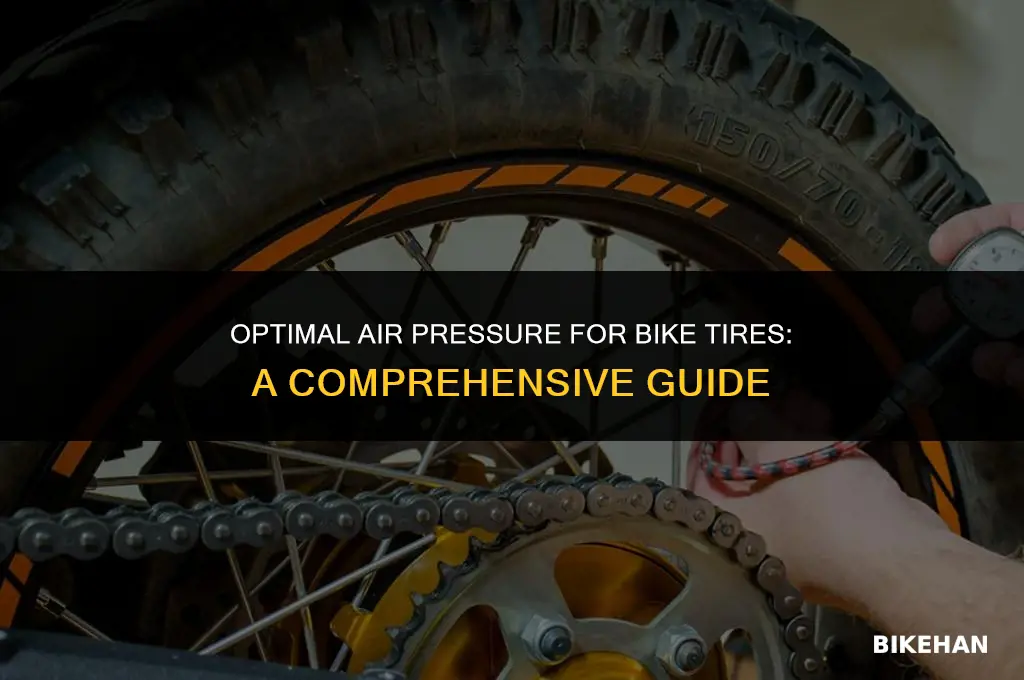
Proper tire inflation is crucial for a safe and efficient cycling experience. The right air pressure for bike tires depends on several factors, including the type of bike, the rider's weight, and the riding conditions. For road bikes, a higher pressure is typically recommended to reduce rolling resistance and improve speed, while mountain bikes may require lower pressure for better traction on rough terrain. Checking the tire pressure regularly and adjusting it according to the manufacturer's guidelines can help prevent flats, improve handling, and extend the life of the tires.
Explore related products


What You'll Learn
- Factors Influencing Air Pressure: Rider weight, bike type, terrain, and weather conditions affect optimal tire pressure
- Road Bike Tire Pressure: Typically ranges from 80-120 PSI for smooth surfaces and efficient rolling
- Mountain Bike Tire Pressure: Lower pressure, 30-50 PSI, for better traction and shock absorption on rough trails
- Hybrid Bike Tire Pressure: Moderate pressure, 50-70 PSI, balancing comfort and efficiency for varied terrains
- Checking and Adjusting Pressure: Use a gauge to check pressure regularly and adjust using a pump or valve

Factors Influencing Air Pressure: Rider weight, bike type, terrain, and weather conditions affect optimal tire pressure
Analyzing the factors that influence air pressure in bike tires reveals a complex interplay of variables. Rider weight is a primary consideration; heavier riders require higher tire pressures to prevent excessive deformation and maintain stability. Conversely, lighter riders can use lower pressures for a smoother ride and better traction. Bike type also plays a crucial role; road bikes typically require higher pressures for efficiency and speed, while mountain bikes benefit from lower pressures to absorb shocks and improve grip on rough terrain.
Terrain is another significant factor. Riding on smooth, paved surfaces demands higher tire pressures to reduce rolling resistance and increase speed. In contrast, off-road cycling necessitates lower pressures to enhance traction and shock absorption. Weather conditions further complicate the equation; cold temperatures cause tire pressures to drop, requiring adjustments to maintain optimal performance. Similarly, high temperatures can increase tire pressure, potentially leading to overinflation and reduced comfort.
To navigate these variables, cyclists should consider using a tire pressure chart that accounts for rider weight, bike type, and typical riding conditions. Additionally, investing in a high-quality tire pressure gauge and regularly checking tire pressures can help ensure optimal performance and safety. It's also worth noting that some modern bikes are equipped with tubeless tires, which can offer improved performance and reduced maintenance compared to traditional inner tube setups.
Ultimately, finding the right air pressure for bike tires involves a degree of experimentation and personalization. By understanding the factors that influence tire pressure and making informed adjustments, cyclists can enhance their riding experience, improve safety, and maximize the lifespan of their tires.
Exploring the Optimal PSI for Bontrager Bike Tires: A Comprehensive Guide
You may want to see also
Explore related products


Road Bike Tire Pressure: Typically ranges from 80-120 PSI for smooth surfaces and efficient rolling
For road bike enthusiasts, tire pressure is a critical factor that can significantly impact ride quality, speed, and safety. The typical tire pressure range for road bikes is between 80-120 PSI (pounds per square inch), which is optimized for smooth surfaces and efficient rolling. However, this range is not one-size-fits-all, and various factors such as rider weight, bike load, and road conditions can influence the ideal tire pressure.
To determine the right tire pressure for your road bike, start by considering your weight and the weight of any additional gear you'll be carrying. Heavier riders or those carrying extra load may require higher tire pressures to prevent tire deformation and ensure adequate support. Conversely, lighter riders may prefer lower pressures for a more comfortable ride and better traction.
Next, consider the road conditions you'll be riding on. For rough or uneven surfaces, slightly lower tire pressures can provide better shock absorption and grip. However, be cautious not to lower the pressure too much, as this can increase the risk of tire punctures and damage.
It's also essential to regularly check and maintain your tire pressure, as it can fluctuate with temperature changes and air leaks. Invest in a reliable tire pressure gauge and make it a habit to check your tires before each ride. Remember that proper tire pressure not only enhances your riding experience but also extends the lifespan of your tires and improves overall bike performance.
In summary, while the typical tire pressure range for road bikes is 80-120 PSI, it's crucial to consider individual factors such as rider weight, bike load, and road conditions to determine the optimal pressure for your specific needs. Regular maintenance and monitoring of tire pressure are key to ensuring a safe, efficient, and enjoyable ride.
Understanding Inflation: A Guide to Hybrid Bike Tire Pressure
You may want to see also
Explore related products


Mountain Bike Tire Pressure: Lower pressure, 30-50 PSI, for better traction and shock absorption on rough trails
Mountain biking presents unique challenges that demand specific tire pressure considerations. Unlike road biking, where higher pressures are preferred for reduced rolling resistance and increased speed, mountain biking requires a different approach. The rough and uneven terrain encountered on trails necessitates lower tire pressures to enhance traction and shock absorption. This is where the 30-50 PSI range comes into play.
Lowering the tire pressure within this range allows the tires to conform better to the irregularities of the trail, providing a larger contact patch with the ground. This increased contact area improves grip, which is crucial for maintaining control and stability when navigating obstacles such as rocks, roots, and loose dirt. Additionally, lower tire pressures enable the tires to absorb more of the impact from bumps and drops, reducing the amount of shock transmitted to the rider and the bike frame. This can lead to a more comfortable ride and less fatigue over long distances.
However, it's important to note that running tires at lower pressures also increases the risk of punctures and tire damage. Riders should regularly inspect their tires for signs of wear and tear, and be prepared to repair or replace them as needed. Furthermore, lower pressures may require more frequent adjustments to maintain optimal performance, especially in varying weather conditions.
In conclusion, for mountain bikers tackling rough trails, a tire pressure of 30-50 PSI can significantly enhance traction and shock absorption, leading to a safer and more enjoyable ride. By understanding the benefits and potential drawbacks of lower tire pressures, riders can make informed decisions to optimize their mountain biking experience.
Exploring the Largest Fat Bike Tires: A Comprehensive Guide
You may want to see also
Explore related products



Hybrid Bike Tire Pressure: Moderate pressure, 50-70 PSI, balancing comfort and efficiency for varied terrains
Hybrid bikes are versatile machines designed to handle a variety of terrains, from smooth city streets to rough trails. To optimize their performance, it's crucial to find the right tire pressure. A moderate pressure range of 50-70 PSI is often recommended for hybrid bikes, as it strikes a balance between comfort and efficiency.
Lower pressures within this range, closer to 50 PSI, will provide a softer ride, absorbing more of the bumps and vibrations from uneven surfaces. This can be particularly beneficial for riders who prioritize comfort or who frequently ride on rough trails. However, lower pressures can also lead to increased rolling resistance, which means you'll need to exert more effort to maintain your speed.
On the other hand, higher pressures within the 50-70 PSI range, closer to 70 PSI, will result in a firmer ride. This can improve efficiency on smooth surfaces, as there's less rolling resistance, allowing you to maintain higher speeds with less effort. However, higher pressures can also make the ride feel harsher, especially on rough terrain, and may increase the risk of punctures.
To find the ideal pressure for your hybrid bike, consider the type of terrain you'll be riding on most frequently. If you're primarily using your bike for commuting on city streets, a higher pressure may be more suitable. However, if you're planning to tackle trails or rough roads, a lower pressure may provide a more comfortable ride.
It's also important to note that tire pressure can affect the overall handling of your bike. Lower pressures can make the bike feel more stable and planted, while higher pressures can make it feel more responsive and agile. Experiment with different pressures within the 50-70 PSI range to find the sweet spot that balances comfort, efficiency, and handling for your specific riding needs.
Remember to regularly check and adjust your tire pressure, as it can fluctuate over time due to temperature changes and other factors. By maintaining the right pressure, you can ensure that your hybrid bike performs optimally, providing a comfortable and efficient ride on a variety of terrains.
Exploring the Purpose and Appeal of Fat-Tired Bikes: A Comprehensive Guide
You may want to see also
Explore related products


Checking and Adjusting Pressure: Use a gauge to check pressure regularly and adjust using a pump or valve
Regularly checking and adjusting the air pressure in your bike tires is crucial for optimal performance and safety. Use a reliable gauge to ensure accuracy, as even slight variations in pressure can significantly impact your ride. Start by removing the valve cap and pressing the gauge onto the valve stem. Be sure to read the pressure when the tire is cold, as heat can cause fluctuations.
Once you've determined the current pressure, compare it to the recommended range for your specific bike and riding conditions. This information is typically found on the tire sidewall or in your bike's user manual. If the pressure is too low, use a pump to inflate the tire gradually, checking the pressure frequently to avoid overinflation. Conversely, if the pressure is too high, release some air using the valve stem.
When adjusting the pressure, consider factors such as your weight, riding style, and the terrain you'll be covering. For example, if you're a heavier rider or plan to tackle rough terrain, you may need to increase the pressure for better support and puncture resistance. On the other hand, if you're riding on smooth surfaces or prefer a more comfortable ride, slightly lower pressure may be preferable.
Remember to check the pressure regularly, especially before long rides or after significant changes in temperature or altitude. Neglecting this important maintenance task can lead to decreased performance, increased risk of punctures, and even accidents. By staying vigilant and making adjustments as needed, you can ensure a safe and enjoyable cycling experience.
Inflating Knowledge: Understanding the Pressure Within Your Bike Tires
You may want to see also
Frequently asked questions
The recommended air pressure for road bike tires typically ranges from 80 to 120 PSI (pounds per square inch). However, the optimal pressure can vary depending on factors such as rider weight, riding style, and road conditions.
The correct air pressure for mountain bike tires depends on several factors, including rider weight, terrain, and personal preference. A general guideline is to start with a pressure of around 30 to 50 PSI and adjust based on how the bike feels. For rough terrain, lower pressures provide better traction and comfort, while higher pressures are better for smoother trails and improved efficiency.
Maintaining the proper air pressure in bike tires is crucial for several reasons. Firstly, it ensures optimal performance and handling, as different pressures affect the bike's grip, stability, and rolling resistance. Secondly, correct air pressure helps prevent tire damage and punctures, as underinflated tires are more prone to pinch punctures and sidewall damage. Lastly, proper inflation contributes to rider safety by reducing the risk of tire blowouts and improving overall control of the bicycle.