Lauren Kennedy
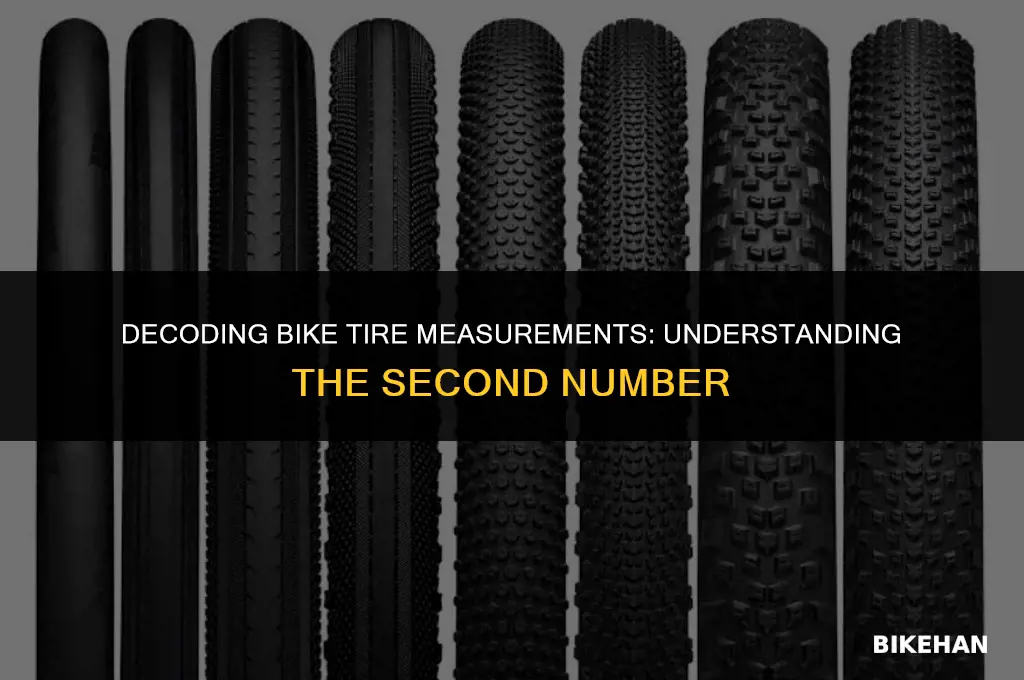
When it comes to understanding bike tire measurements, the second number in the sequence is crucial. This number typically represents the tire's width in millimeters. For instance, in a measurement like 700x28c, the 28 signifies that the tire is 28 millimeters wide. This width measurement is essential for ensuring the tire fits the rim properly and provides the desired level of comfort and performance. Wider tires generally offer a smoother ride and better traction, while narrower tires are lighter and can be more efficient for road cycling. Knowing the correct tire width is vital for cyclists looking to optimize their bike's setup for specific riding conditions or personal preferences.
Explore related products


What You'll Learn

Understanding bike tire sizes
The second number in a bike tire measurement typically refers to the width of the tire. This measurement is crucial for ensuring that the tire fits the rim and provides the desired level of performance and comfort. For example, a tire size of 700x28 indicates that the tire is 700mm in diameter and 28mm wide. The width of the tire affects various aspects of the bike's handling and ride quality, such as grip, rolling resistance, and puncture resistance.
When selecting a tire width, it's important to consider the type of riding you will be doing. Narrower tires, such as those with a width of 20-25mm, are generally faster and more efficient on smooth roads, as they have less rolling resistance. Wider tires, on the other hand, provide better grip and stability on rough or uneven surfaces, making them suitable for off-road or gravel riding. Additionally, wider tires can offer a more comfortable ride by absorbing more road vibrations.
It's also essential to ensure that the tire width is compatible with your bike's frame and rim. Most road bikes can accommodate tires up to 30-32mm wide, while mountain bikes and gravel bikes can often fit tires up to 40-50mm wide. Check your bike's specifications or consult with a local bike shop to determine the maximum tire width that can be safely used on your bike.
In summary, the second number in a bike tire measurement represents the tire's width, which plays a significant role in determining the bike's performance, comfort, and compatibility with different types of riding. When choosing a tire width, consider the type of riding you will be doing, the desired level of performance and comfort, and the compatibility with your bike's frame and rim.
Optimal Tire Pressure for Kids' Bikes: A Safety Guide
You may want to see also
Explore related products


How to read tire measurements
Understanding tire measurements is crucial for ensuring your bike performs optimally. The second number in a bike tire measurement typically refers to the width of the tire. For instance, in a measurement like "700x28c," the "28" indicates the tire width in millimeters. This width can significantly impact your ride; wider tires offer more stability and comfort, while narrower tires are generally faster and more efficient on smooth surfaces.
To read tire measurements accurately, you need to understand the standardized sizing system used by most manufacturers. The first number, such as "700" in our example, usually denotes the diameter of the wheel in millimeters that the tire is designed to fit. The second number, as we've discussed, is the width. The letter following the width (in this case, "c") often indicates the tire's construction type, with "c" standing for "clincher," which is the most common type for road bikes.
When selecting new tires, it's essential to match the measurements to your bike's specifications. Mismatched tires can lead to poor performance, increased wear, and even safety hazards. Always check your bike's manual or the manufacturer's website for the recommended tire size. Additionally, consider the terrain and conditions you'll be riding in; for example, if you frequently ride on rough roads or trails, you might opt for a wider tire with more tread for better traction and shock absorption.
In summary, the second number in a bike tire measurement is the width in millimeters, which plays a vital role in your bike's handling and comfort. Understanding and selecting the correct tire size is essential for a safe and enjoyable riding experience.
Exploring the Purpose and Appeal of Fat-Tired Bikes: A Comprehensive Guide
You may want to see also
Explore related products


Common tire size mistakes
One common mistake when it comes to bike tire sizes is misunderstanding the second number in the measurement. This number typically represents the width of the tire in millimeters. For example, in a tire size of 700x28, the "28" indicates the tire's width. A wider tire, such as a 700x32, would provide more stability and comfort, especially on rough roads. Conversely, a narrower tire like a 700x23 would be lighter and faster, ideal for smooth surfaces and racing.
Another frequent error is not considering the tire's diameter in relation to the rim size. The first number in the tire size (e.g., "700" in 700x28) should match the rim's diameter. Using a tire that's too large or too small for the rim can lead to improper fit, affecting the bike's handling and safety.
Additionally, some cyclists overlook the importance of tire pressure in relation to tire size. Larger tires can often run at lower pressures, providing a smoother ride and better traction. However, this isn't always the case, and it's crucial to consult the manufacturer's recommendations for optimal tire pressure based on both tire size and riding conditions.
Lastly, it's essential to ensure that the tire size is compatible with the bike's frame and fork. Some frames may not accommodate wider tires due to clearance issues. Always check the bike's specifications before purchasing new tires to avoid compatibility problems.
In summary, understanding the second number in a bike tire measurement is crucial for selecting the right tire for your needs. By considering factors such as tire width, diameter, pressure, and compatibility with your bike, you can avoid common tire size mistakes and ensure a safer, more enjoyable riding experience.
Understanding Inflation: A Guide to Hybrid Bike Tire Pressure
You may want to see also
Explore related products


Impact of tire size on bike performance
The second number in a bike tire measurement, which follows the diameter, indicates the tire's width. This measurement is crucial as it directly impacts the bike's performance in various ways. Wider tires, for instance, provide a larger contact patch with the road, which can enhance grip and stability, especially in wet or slippery conditions. This increased contact area also allows for better shock absorption, leading to a smoother ride over rough surfaces.
However, wider tires also have some drawbacks. They can create more rolling resistance, which means the rider needs to exert more energy to maintain speed. Additionally, wider tires may not fit certain bike frames or wheels, limiting their compatibility. On the other hand, narrower tires are generally lighter and have less rolling resistance, making them ideal for high-speed cycling on smooth roads. They also allow for quicker acceleration and easier maneuverability.
The choice of tire width should be based on the type of cycling the rider intends to do. For mountain biking, wider tires are typically preferred for their improved traction and shock absorption on uneven terrain. Road cyclists, however, may opt for narrower tires to reduce weight and rolling resistance on paved surfaces. It's also important to consider the rider's weight and riding style, as these factors can influence the optimal tire width for maximum performance and comfort.
In conclusion, the second number in a bike tire measurement, which represents the tire's width, plays a significant role in determining the bike's performance characteristics. By understanding the impact of tire width on grip, stability, rolling resistance, and compatibility, cyclists can make informed decisions about the best tire size for their specific needs and riding conditions.
Exploring the Largest Fat Bike Tires: A Comprehensive Guide
You may want to see also
Explore related products


Choosing the right tire size for your bike
The second number in a bike tire measurement, such as 700x28, refers to the tire's width in millimeters. This measurement is crucial for ensuring compatibility with your bike's rims and frame, as well as for achieving the desired ride characteristics. A wider tire, for instance, may provide more cushioning and stability, while a narrower tire can reduce rolling resistance and improve speed.
When choosing the right tire size for your bike, it's essential to consider the intended use and terrain. For road bikes, narrower tires (around 25-30mm) are typically preferred for their reduced rolling resistance and improved aerodynamics. However, if you plan to ride on rough or uneven surfaces, you may want to opt for a wider tire (around 32-38mm) to provide more cushioning and traction.
Mountain bikes, on the other hand, often require wider tires (around 2.1-2.6 inches) to provide adequate grip and stability on off-road terrain. The width of the tire can also affect the bike's handling, with wider tires offering more stability but potentially making the bike feel slower to turn.
To determine the right tire size for your bike, you'll need to measure the width of your current tires and compare it to the recommended tire sizes for your bike's frame and rim width. It's also important to consider the tire's aspect ratio, which is the ratio of the tire's height to its width. A higher aspect ratio (e.g., 700x28) will result in a taller, narrower tire, while a lower aspect ratio (e.g., 700x35) will result in a shorter, wider tire.
Ultimately, choosing the right tire size for your bike requires a balance between compatibility, ride characteristics, and personal preference. By understanding the second number in a bike tire measurement and considering the factors outlined above, you can make an informed decision that will enhance your cycling experience.
Optimal Inflation: Finding the Perfect PSI for Your 26-Inch Bike Tire
You may want to see also
Frequently asked questions
The second number in a bike tire measurement typically indicates the width of the tire in millimeters. For example, in a measurement like "700x28," the "28" refers to the tire's width.
A bike tire size label usually consists of two or three numbers. The first number represents the diameter of the wheel in millimeters, the second number is the width of the tire in millimeters, and if there's a third number, it may indicate the recommended pressure or another specification. For instance, "700x28" means the tire is designed for a 700mm wheel diameter and is 28mm wide.
The width measurement of a bike tire is crucial as it affects the tire's performance and compatibility with the bike. Wider tires generally provide more stability and comfort, especially on rough surfaces, while narrower tires are often faster and more efficient on smooth roads. Ensuring the correct width is essential for proper fitment and optimal riding experience.