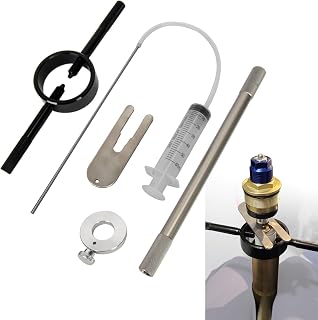
Samantha Lee
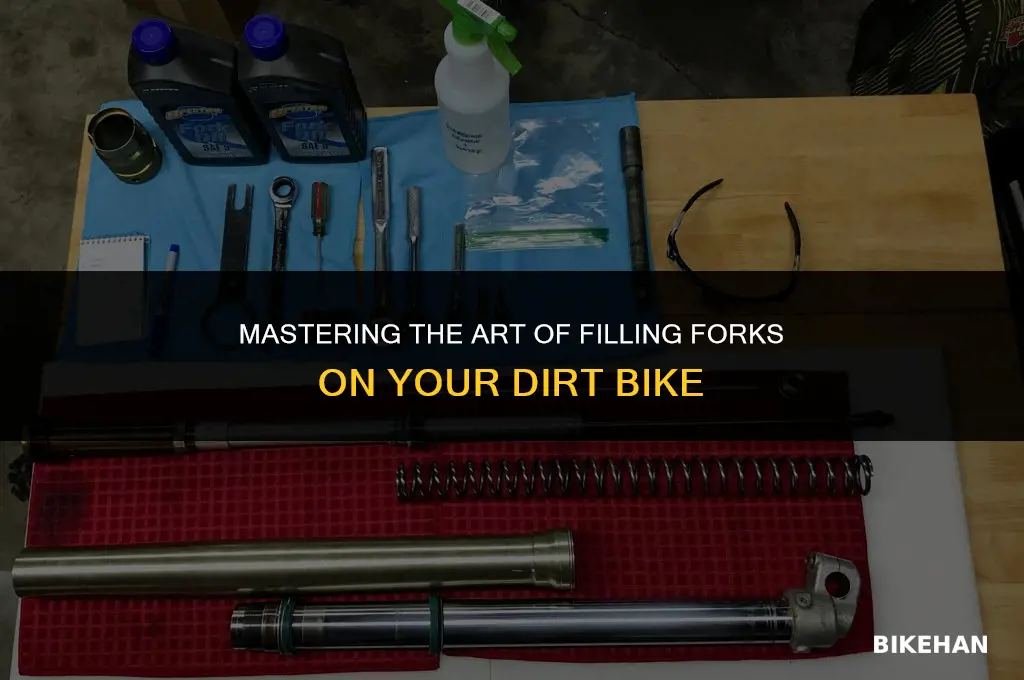
Filling forks on a dirt bike is a crucial maintenance task that ensures optimal performance and safety. The forks, which are the front suspension components, absorb shocks from rough terrain and help maintain tire contact with the ground. Over time, the fork oil can become contaminated or lose its viscosity, leading to reduced suspension performance. In this guide, we'll walk you through the step-by-step process of filling forks on a dirt bike, including the necessary tools, safety precautions, and techniques to achieve the best results. By following these instructions, you'll be able to restore your dirt bike's suspension to its optimal state, ensuring a smoother and safer ride.
Explore related products


What You'll Learn
- Choosing the Right Fork Oil: Selecting the appropriate oil viscosity for your dirt bike's fork performance
- Fork Compression Settings: Adjusting the compression to match rider weight and riding style for optimal handling
- Fork Rebound Adjustment: Fine-tuning the rebound to control the fork's return speed after impacts
- Air Pressure in Forks: For air-sprung forks, adjusting the air pressure to achieve the desired preload and response
- Fork Maintenance Tips: Regular cleaning, inspection, and servicing to ensure longevity and peak performance of the forks

Choosing the Right Fork Oil: Selecting the appropriate oil viscosity for your dirt bike's fork performance
Fork oil viscosity is a critical factor in the performance of your dirt bike's suspension system. The right viscosity ensures that the forks move smoothly, absorb shocks effectively, and provide the necessary stability and control during rides. To choose the appropriate oil viscosity, you need to consider several factors, including the type of riding you do, the weight of the rider, and the environmental conditions.
For off-road riding, a lower viscosity oil (around 5-10 wt) is generally recommended as it allows for better flow and shock absorption over rough terrain. However, if you're a heavier rider or frequently ride in muddy or wet conditions, a higher viscosity oil (15-20 wt) may be more suitable to provide the necessary damping and prevent the forks from bottoming out.
It's also important to consider the temperature range in which you'll be riding. In colder climates, a lower viscosity oil may be necessary to ensure proper fork function, while in hotter climates, a higher viscosity oil may be required to prevent the oil from thinning out too much.
When selecting fork oil, it's crucial to consult your dirt bike's owner's manual for the manufacturer's recommended viscosity range. Additionally, consider experimenting with different viscosities to find the one that best suits your riding style and conditions. Remember to always use high-quality fork oil designed specifically for dirt bikes, as using the wrong type of oil can lead to poor performance and potential damage to your suspension system.
Rev Up Your Ride: The Ultimate Guide to Drying Your Dirt Bike
You may want to see also
Explore related products




Fork Compression Settings: Adjusting the compression to match rider weight and riding style for optimal handling
Adjusting the compression settings on a dirt bike's forks is crucial for achieving optimal handling and performance. The compression damping controls how quickly the fork compresses when hitting bumps or obstacles, and it needs to be tailored to the rider's weight and riding style. A heavier rider will require more compression damping to prevent the forks from bottoming out, while a lighter rider may prefer less damping for a more responsive feel.
To adjust the compression settings, you'll need to access the compression adjusters on the forks. These are typically located on the top of the fork stanchions and can be adjusted using a screwdriver or a specialized tool. The exact method of adjustment will vary depending on the specific fork model, so it's essential to consult the manufacturer's instructions or a professional mechanic if you're unsure.
When adjusting the compression, it's important to consider the type of riding you'll be doing. For example, if you're primarily riding on rough, technical trails, you may want to increase the compression damping to improve control and stability. On the other hand, if you're riding on smoother trails or performing jumps and tricks, you may want to decrease the compression damping for a more responsive and agile feel.
It's also important to note that adjusting the compression settings can affect the overall balance and handling of the bike. If you're making significant changes to the compression, it's a good idea to test the bike on a variety of terrain to ensure that the settings are optimal for your riding style and preferences.
In summary, adjusting the compression settings on a dirt bike's forks is a critical aspect of achieving optimal handling and performance. By tailoring the compression damping to the rider's weight and riding style, you can improve control, stability, and overall riding experience. Remember to consult the manufacturer's instructions or a professional mechanic if you're unsure about the adjustment process, and always test the bike on a variety of terrain to ensure that the settings are optimal for your needs.
Mastering the Art of Road Riding on a Dirt Bike
You may want to see also
Explore related products


Fork Rebound Adjustment: Fine-tuning the rebound to control the fork's return speed after impacts
Fork rebound adjustment is a critical aspect of fine-tuning the suspension on a dirt bike. It involves adjusting the speed at which the forks return to their original position after being compressed by an impact. Proper rebound adjustment ensures that the bike handles well, maintains traction, and provides a comfortable ride. If the rebound is too slow, the bike may feel sluggish and unresponsive. Conversely, if it's too fast, the bike could become unstable and difficult to control.
To adjust the fork rebound, you'll need to locate the rebound adjustment screw, typically found on the top of the fork. This screw controls the flow of oil through the rebound circuit. Turning the screw clockwise will increase the rebound speed, while turning it counterclockwise will decrease it. It's essential to make small adjustments and test the bike after each change to find the optimal setting.
When adjusting the rebound, consider the type of riding you'll be doing. For off-road or motocross riding, a slightly slower rebound may be preferable to absorb bumps and maintain traction. For on-road or trail riding, a faster rebound might be more suitable to provide a smoother ride and better handling on uneven surfaces.
Remember to always consult your bike's manual for specific instructions and recommendations. Additionally, it's crucial to ensure that the forks are properly serviced and maintained, as worn or damaged components can affect the rebound adjustment and overall performance of the suspension.
In summary, fork rebound adjustment is a key factor in optimizing the performance and comfort of a dirt bike's suspension. By making careful adjustments and considering the type of riding, you can fine-tune the rebound to suit your needs and enhance your riding experience.
Mastering the Art of Feathering the Clutch on Your Dirt Bike
You may want to see also
Explore related products


Air Pressure in Forks: For air-sprung forks, adjusting the air pressure to achieve the desired preload and response
Air-sprung forks on dirt bikes require precise adjustment of air pressure to achieve optimal performance. The air pressure determines the preload and response of the fork, which in turn affects the bike's handling and rider comfort. To adjust the air pressure, you'll need an air pump with a pressure gauge and the manufacturer's recommended pressure settings for your specific fork model.
Start by removing the air cap on the fork's air valve. Then, connect the air pump to the valve and slowly inflate the fork to the recommended pressure. It's crucial to avoid overinflating the fork, as this can lead to a harsh ride and potential damage to the fork's components. Once you've reached the desired pressure, replace the air cap and test the fork's response by gently bouncing the bike.
If the fork feels too soft or too firm, you may need to make further adjustments. For a softer response, slightly decrease the air pressure. For a firmer response, increase the pressure in small increments. Remember to always refer to the manufacturer's guidelines and never exceed the maximum recommended pressure.
Proper air pressure adjustment is essential for maintaining the longevity of your air-sprung forks. Regularly checking and adjusting the air pressure can help prevent premature wear and tear on the fork's seals and other components. Additionally, keeping the air pressure at the optimal level ensures that your dirt bike handles predictably and provides a comfortable ride, even on rough terrain.
In summary, adjusting the air pressure in air-sprung forks is a critical aspect of dirt bike maintenance. By following the manufacturer's recommendations and making small, incremental adjustments, you can achieve the perfect balance of preload and response for your riding style and preferences.
Yamaha Dirt Bike Gas Drainage: A Step-by-Step Guide
You may want to see also
Explore related products


Fork Maintenance Tips: Regular cleaning, inspection, and servicing to ensure longevity and peak performance of the forks
Regular cleaning is paramount to maintaining the performance and longevity of your dirt bike's forks. Dirt, grime, and debris can accumulate quickly, especially after riding in muddy or dusty conditions. To clean the forks, start by removing any large clumps of dirt with a brush or rag. Then, use a mild detergent and warm water to scrub the forks thoroughly, paying special attention to the seals and wipers. Rinse the forks with clean water and dry them completely with a soft cloth. This process should be done after every ride to prevent buildup and ensure smooth operation.
Inspection is another crucial aspect of fork maintenance. Before and after each ride, inspect the forks for any signs of damage or wear. Look for dents, scratches, or cracks in the stanchions, and check the seals for any leaks or damage. The wipers should be intact and not torn or frayed. If you notice any issues during your inspection, it's important to address them immediately to prevent further damage and ensure rider safety.
Servicing your forks regularly is essential to keep them performing at their best. This includes changing the fork oil, replacing the seals and wipers, and adjusting the preload and damping. The frequency of servicing will depend on how often you ride and the conditions you ride in, but a general rule of thumb is to service the forks every 20-30 hours of riding time. When servicing the forks, it's important to use the correct type of oil and to follow the manufacturer's guidelines for preload and damping adjustments.
One common mistake riders make is neglecting the preload adjustment. The preload is the initial tension in the fork springs, and it affects how the forks respond to bumps and jumps. If the preload is too low, the forks will bottom out easily, leading to a harsh ride and potential damage. If the preload is too high, the forks won't absorb bumps effectively, resulting in a stiff and uncomfortable ride. To adjust the preload, you'll need to remove the top cap of the fork and turn the preload adjuster. The adjuster typically has a numbered scale, so you can set it to the recommended value for your weight and riding style.
Another important aspect of fork maintenance is proper storage. When not in use, store your dirt bike in a dry, cool place to prevent rust and corrosion. If you're storing the bike for an extended period, it's a good idea to remove the battery and drain the fuel to prevent any leaks or damage. Additionally, you should periodically check the forks for any signs of rust or corrosion, even if the bike is stored properly.
By following these maintenance tips, you can ensure that your dirt bike's forks remain in top condition, providing a smooth and safe ride every time you hit the trails. Remember, regular cleaning, inspection, and servicing are key to extending the life of your forks and maintaining peak performance.
Dirt Bike Tumbles: A Guide to Safe Falling Techniques
You may want to see also
Frequently asked questions
To fill the forks on your dirt bike, you will need a few essential tools. These include a fork filling tool or a syringe, a container of fork oil, a wrench or socket set to remove the fork caps, and some rags for cleaning. Additionally, having a service manual for your specific bike model can be very helpful for detailed instructions.
The correct amount of oil to use when filling the forks depends on your bike's specifications. Refer to your service manual for the recommended oil volume. Generally, you will fill the forks until the oil level reaches the specified height in the fork tube, often marked by a line or notch. Overfilling can lead to poor handling, while underfilling can cause the forks to bottom out easily.
The type of oil to use for filling the forks on your dirt bike is typically specified in the service manual. Most dirt bikes require a specific viscosity of fork oil, which can vary depending on the riding conditions and personal preference. Common types include 5W, 7.5W, and 10W fork oil. Using the correct oil viscosity is crucial for optimal fork performance and longevity.
The frequency of changing the oil in your dirt bike's forks depends on usage and riding conditions. As a general rule, it's recommended to change the fork oil every 25-50 hours of riding or at least once a year. If you ride in harsh conditions, such as mud or sand, you may need to change the oil more frequently. Regularly changing the oil helps maintain proper fork function and prevents wear.
When filling the forks on a dirt bike, there are several common mistakes to avoid. These include:
- Overfilling or underfilling the forks with oil, which can affect handling and performance.
- Using the wrong viscosity of fork oil, which can lead to poor damping and increased wear.
- Not properly cleaning the fork seals and caps before refilling, which can cause leaks or contamination.
- Failing to follow the manufacturer's specifications and instructions, which can result in damage to the forks or the bike.
By avoiding these mistakes and following the correct procedures, you can ensure that your dirt bike's forks perform optimally and last longer.