Megan Blake
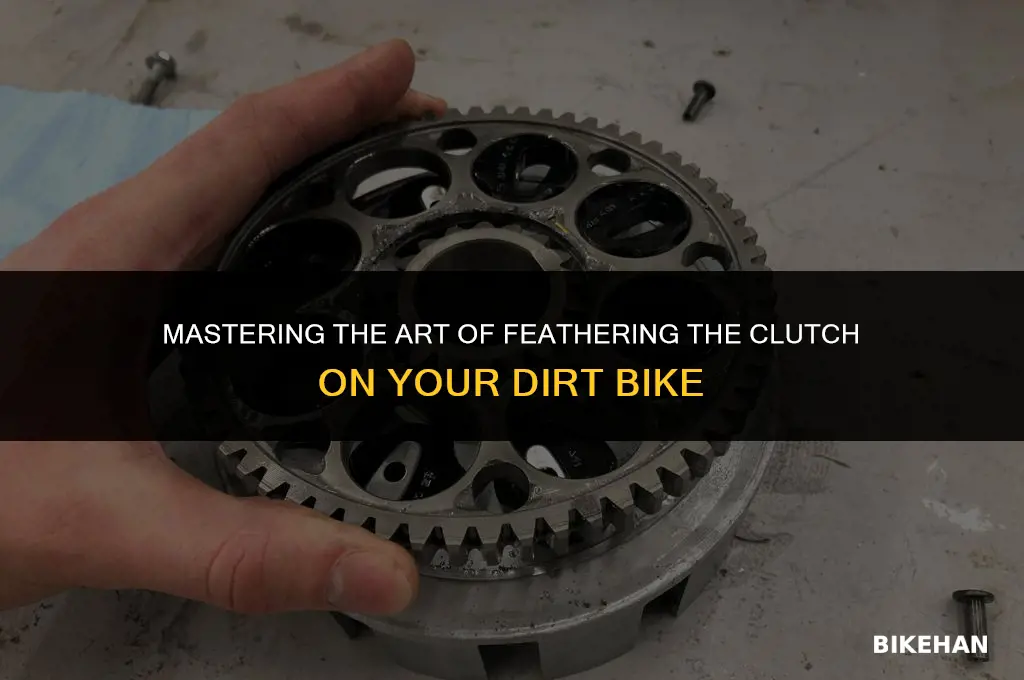
Feathering the clutch on a dirt bike is a crucial skill for smooth and controlled riding. It involves modulating the clutch lever to allow the engine's power to gradually engage with the transmission, preventing abrupt jerks and maintaining traction. This technique is especially important in off-road conditions where terrain can be unpredictable. To feather the clutch, start by finding the clutch's friction point, which is where the bike begins to move when the lever is released. Then, gently roll on the throttle while slowly releasing the clutch lever, allowing the engine's power to smoothly transfer to the rear wheel. This controlled engagement helps maintain stability and prevents the bike from stalling or lurching forward. With practice, feathering the clutch becomes second nature, enabling riders to navigate challenging trails with confidence and precision.
Explore related products



What You'll Learn
- Understanding Clutch Feathering: Learn the technique to smoothly engage and disengage the clutch for better control
- Throttle Control: Master the balance between throttle and clutch to prevent stalling and maintain momentum
- Brake Coordination: Integrate braking with clutch feathering to manage speed and stability during descents
- Body Positioning: Adjust your body weight to aid in clutch control and bike balance on rough terrain
- Practice Drills: Develop muscle memory with specific exercises designed to improve clutch feathering skills on a dirt bike

Understanding Clutch Feathering: Learn the technique to smoothly engage and disengage the clutch for better control
To master clutch feathering on a dirt bike, it's essential to understand the mechanics behind it. The clutch is a critical component that transfers power from the engine to the transmission. When you feather the clutch, you're modulating the pressure on the clutch plates to control the engagement and disengagement. This technique allows for smoother transitions between gears and better control over the bike, especially in off-road conditions.
Start by getting comfortable with the clutch lever's position and feel. With the bike stationary, practice slowly pulling the lever in and out to get a sense of the pressure required to engage and disengage the clutch. As you pull the lever in, you should feel the plates come together, and as you release it, the plates should separate. This is the basic motion you'll use to feather the clutch.
Now, let's apply this to riding. When accelerating from a stop, gently pull the clutch lever in while simultaneously rolling on the throttle. This will allow the clutch to engage smoothly and prevent the bike from stalling. As you reach higher speeds, you can fully engage the clutch and shift gears as needed. When decelerating, use the clutch to downshift smoothly and maintain control.
One common mistake is to jerk the clutch lever, which can cause the bike to lurch or stall. Instead, focus on making smooth, controlled movements. Another tip is to use your body weight to help modulate the clutch. For example, when cornering, shift your weight to the inside peg and use the clutch to help balance the bike.
Practice makes perfect, so spend time honing your clutch feathering skills. Start on flat ground and gradually progress to more challenging terrain. With time and patience, you'll develop the muscle memory needed to feather the clutch effortlessly, giving you better control and confidence on your dirt bike.
Mastering the Trails: A Beginner's Guide to Driving a Honda Dirt Bike
You may want to see also
Explore related products


Throttle Control: Master the balance between throttle and clutch to prevent stalling and maintain momentum
To master throttle control on a dirt bike, it's essential to understand the delicate balance between the throttle and clutch. This balance is crucial for preventing stalling and maintaining momentum, especially in challenging off-road conditions. The key is to find the sweet spot where the engine is running smoothly without lugging or revving excessively.
One effective technique is to use the clutch as a modulation tool, adjusting the amount of power delivered to the rear wheel. By feathering the clutch, you can control the bike's speed and traction more precisely. This is particularly useful when navigating slippery or uneven terrain, where sudden changes in throttle can cause the bike to lose grip.
To achieve this balance, start by finding a comfortable riding position with your body weight centered over the bike. Keep your elbows up and your hands relaxed on the handlebars. As you accelerate, gradually roll on the throttle while simultaneously releasing the clutch. This coordinated movement helps to ensure a smooth power delivery and prevents the bike from stalling.
It's also important to pay attention to the bike's engine sounds and vibrations. If the engine starts to lug or rev too high, adjust your throttle and clutch inputs accordingly. With practice, you'll develop a better sense of how to modulate the clutch and throttle to maintain optimal momentum and control.
Remember, mastering throttle control is an essential skill for any dirt bike rider. By learning to balance the throttle and clutch effectively, you'll be able to tackle a wider range of terrain and conditions with confidence and precision.
Effortless Dirt Bike Tire Removal: A Step-by-Step Guide
You may want to see also
Explore related products


Brake Coordination: Integrate braking with clutch feathering to manage speed and stability during descents
Integrating braking with clutch feathering is a critical skill for managing speed and stability during descents on a dirt bike. This technique allows riders to smoothly transition between braking and accelerating, ensuring a controlled and balanced ride. To master this skill, riders must first understand the principles of clutch feathering and how it interacts with the braking system.
Clutch feathering involves partially engaging the clutch to allow the engine to rev slightly while the bike is in gear. This technique is used to maintain a consistent speed and prevent the bike from stalling, especially during slow descents. When combined with braking, clutch feathering can help riders manage their speed more effectively and maintain better control over their bike.
To integrate braking with clutch feathering, riders should start by applying the brakes gently and gradually increasing the pressure as needed. As they slow down, they should simultaneously feather the clutch to keep the engine revving slightly. This will help prevent the bike from stalling and allow for a smoother transition between braking and accelerating.
One common mistake riders make when trying to integrate braking with clutch feathering is to apply too much brake pressure too quickly. This can cause the bike to stall or lose traction, leading to a loss of control. To avoid this, riders should focus on applying gentle, consistent brake pressure while feathering the clutch.
Another important aspect of brake coordination is understanding how to use the front and rear brakes effectively. The front brake provides more stopping power, but it can also cause the bike to tip forward if applied too aggressively. The rear brake, on the other hand, provides less stopping power but can help stabilize the bike during descents. Riders should learn to balance the use of both brakes to achieve the desired level of speed and stability.
In conclusion, integrating braking with clutch feathering is a crucial skill for dirt bike riders who want to maintain control and stability during descents. By understanding the principles of clutch feathering and how it interacts with the braking system, riders can develop the skills needed to navigate challenging terrain with confidence and precision.
Mastering the Streets: A Guide to Riding Street Bikes with Dirt Boots
You may want to see also
Explore related products



Body Positioning: Adjust your body weight to aid in clutch control and bike balance on rough terrain
To effectively feather the clutch on a dirt bike, especially on rough terrain, mastering body positioning is crucial. This technique involves adjusting your body weight to aid in clutch control and maintain bike balance. Here’s a detailed guide on how to achieve this:
First, understand that your body weight distribution significantly impacts the bike’s handling. When riding on rough terrain, you need to be dynamic and responsive to the changing conditions. Start by positioning your body centrally over the bike, with your feet firmly on the foot pegs and your knees slightly bent. This central position allows for better control and quicker reactions to the terrain.
Next, focus on your upper body positioning. Keep your torso upright and your arms relaxed, with your elbows slightly bent. This posture helps you maintain balance and control over the handlebars. As you encounter bumps or uneven surfaces, shift your weight slightly forward or backward to help absorb the impact and maintain traction.
One key technique is to use your body weight to assist in clutch control. When you need to feather the clutch, subtly shift your weight towards the rear of the bike. This action helps to reduce the load on the front wheel, allowing for smoother clutch engagement and disengagement. Conversely, when you need to accelerate or climb a hill, shift your weight forward to increase traction and power delivery.
Another important aspect is to keep your head and eyes focused on the path ahead. This helps you anticipate changes in the terrain and adjust your body positioning accordingly. Remember to stay loose and flexible, as rigidity can hinder your ability to react quickly to obstacles.
In summary, effective body positioning is essential for feathering the clutch on a dirt bike in rough terrain. By adjusting your weight distribution and maintaining a balanced posture, you can improve clutch control, bike handling, and overall riding performance. Practice these techniques regularly to become more proficient and confident in your dirt biking skills.
Dirt Bike Tumbles: A Guide to Safe Falling Techniques
You may want to see also
Explore related products




Practice Drills: Develop muscle memory with specific exercises designed to improve clutch feathering skills on a dirt bike
To develop muscle memory for clutch feathering on a dirt bike, it's essential to engage in targeted practice drills. These exercises are designed to enhance your control and precision, allowing for smoother transitions and better handling of the bike. One effective drill is the "slow roll" technique, where you practice gradually releasing the clutch while maintaining a steady throttle input. This helps in understanding the friction point and the gradual engagement of the clutch.
Another valuable exercise is the "clutch tap" drill. This involves quickly tapping the clutch lever while riding at a moderate speed, which aids in developing the ability to make rapid, precise adjustments. It's crucial to focus on the feel of the clutch and the bike's response during these drills, as this will help in building a better connection between your body and the machine.
In addition to these drills, it's beneficial to practice clutch feathering in various riding conditions. For instance, try feathering the clutch while navigating through tight turns or when accelerating out of them. This will help in understanding how clutch control impacts the bike's traction and stability. Remember, the key to mastering clutch feathering is consistent practice and a keen awareness of the bike's behavior.
When performing these drills, it's important to start slowly and gradually increase the difficulty as your skills improve. This will help in preventing any potential accidents and will allow your muscle memory to develop naturally. Additionally, consider using a training log to track your progress and identify areas that need further improvement.
In conclusion, by incorporating these practice drills into your training regimen, you can significantly enhance your clutch feathering skills on a dirt bike. This will not only improve your overall riding ability but also contribute to a safer and more enjoyable experience on the trails.
Mastering the Art of Drifting on a Dirt Bike: A Beginner's Guide
You may want to see also
Frequently asked questions
Feathering the clutch on a dirt bike means to gently and gradually engage or disengage the clutch lever to control the bike's power delivery, especially during low-speed maneuvers or when navigating challenging terrain.
Feathering the clutch is important for dirt bike riders because it allows them to smoothly control the bike's acceleration and maintain traction, particularly in slippery or uneven conditions. It helps prevent the bike from stalling or losing control.
To feather the clutch on a dirt bike, you should slowly and progressively pull the clutch lever towards you to disengage the clutch, and then gradually release it to engage the clutch again. This motion should be smooth and controlled, allowing you to modulate the power delivery as needed.
Feathering the clutch is particularly useful when riding on slippery surfaces like mud or wet rocks, when navigating steep inclines or declines, and when performing tight turns or other low-speed maneuvers. It helps maintain control and prevent the bike from stalling or sliding.
Yes, feathering the clutch can cause additional wear on the clutch components over time, as it involves frequent engagement and disengagement of the clutch. However, proper technique and regular maintenance can help minimize this wear and extend the life of the clutch.