Samantha Lee
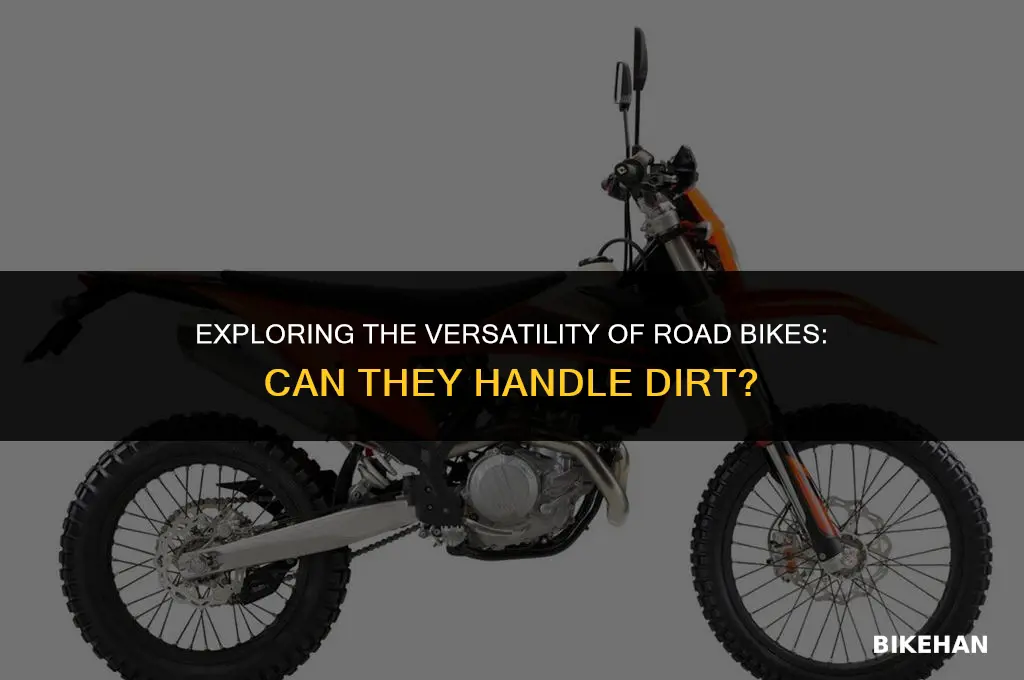
Road bikes are designed primarily for paved surfaces, with their thin tires and lightweight frames optimized for speed and efficiency on smooth roads. However, the question of whether you can ride road bikes on dirt is a common one, especially for cyclists who encounter mixed terrain or unpaved paths during their rides. While it's technically possible to ride a road bike on dirt, it's not ideal and can pose several challenges. The lack of traction on loose or uneven surfaces can make steering and braking more difficult, increasing the risk of accidents. Additionally, the delicate components of a road bike, such as the tires and rims, are more susceptible to damage from debris and rough terrain. For these reasons, it's generally recommended to use a more suitable bike, such as a mountain bike or gravel bike, for off-road cycling.
Explore related products


What You'll Learn
- Tire Considerations: Road bikes typically have narrow, smooth tires unsuitable for dirt traction
- Frame Durability: Road bike frames are designed for paved surfaces and may not withstand the rigors of dirt riding
- Suspension Systems: Unlike mountain bikes, road bikes lack suspension systems to absorb shocks from rough terrain
- Handling and Control: The geometry and handling characteristics of road bikes are optimized for speed and efficiency on pavement
- Safety Concerns: Riding a road bike on dirt can increase the risk of accidents due to reduced control and stability

Tire Considerations: Road bikes typically have narrow, smooth tires unsuitable for dirt traction
Road bikes are designed primarily for paved surfaces, and their tires reflect this intended use. The narrow, smooth tires found on most road bikes are optimized for reducing rolling resistance and improving speed on asphalt or concrete. However, these same tires can be a significant disadvantage when riding on dirt or unpaved surfaces. The lack of tread and width means that road bike tires struggle to grip loose or uneven terrain, leading to a higher risk of slipping or losing control.
One of the main issues with riding road bikes on dirt is the increased likelihood of punctures. The thin tires are more susceptible to damage from sharp rocks, sticks, or other debris commonly found on unpaved trails. Additionally, the high pressures typically used in road bike tires can make them more prone to pinch punctures when encountering rough terrain. To mitigate this risk, some riders may choose to run lower tire pressures or use puncture-resistant tire liners, but these solutions can negatively impact the bike's handling and speed on paved surfaces.
Another consideration is the impact on the bike's overall performance. Road bikes are built to be lightweight and efficient, with frames and components designed to minimize weight and maximize power transfer. However, riding on dirt can put additional stress on these components, potentially leading to premature wear or even damage. The suspension system, in particular, may not be designed to handle the bumps and shocks associated with off-road riding, which can lead to discomfort for the rider and increased fatigue.
Despite these challenges, some riders may still choose to ride road bikes on dirt for various reasons, such as the desire for a more versatile bike or the need to navigate mixed terrain. In these cases, there are a few modifications that can be made to improve the bike's suitability for off-road use. One option is to install wider, knobby tires that provide better traction on loose surfaces. Another is to use a suspension fork or seatpost to absorb some of the shocks and bumps associated with dirt riding. However, these modifications will likely impact the bike's performance on paved surfaces, so riders should carefully consider their intended use before making any changes.
In conclusion, while road bikes can technically be ridden on dirt, their narrow, smooth tires make them less than ideal for this type of terrain. Riders who choose to ride road bikes on dirt should be aware of the potential risks and challenges, and take steps to mitigate these issues if possible. Ultimately, the best solution for riders who frequently encounter dirt or unpaved surfaces is to use a bike specifically designed for off-road use, such as a mountain bike or gravel bike.
Exploring the Open Road: Bike Racks and Highway Adventures
You may want to see also
Explore related products


Frame Durability: Road bike frames are designed for paved surfaces and may not withstand the rigors of dirt riding
Road bike frames are engineered with a focus on speed and efficiency on paved surfaces. They are typically constructed from lightweight materials such as aluminum, carbon fiber, or steel, which provide a balance of strength and weight savings. However, these materials may not be as resilient when subjected to the stresses of dirt riding. The rough terrain, debris, and increased impact forces can lead to frame damage, including cracks, dents, and even complete failure.
One of the primary concerns with riding a road bike on dirt is the risk of frame damage due to the increased forces exerted on the frame. When riding on paved surfaces, the frame is subjected to relatively consistent and predictable loads. However, on dirt, the frame must withstand sudden impacts from rocks, roots, and other obstacles, which can cause stress concentrations and eventually lead to frame failure. Additionally, the constant vibration and jarring can cause fatigue in the frame over time, further increasing the risk of damage.
Another factor to consider is the design of the frame itself. Road bike frames are typically designed with a focus on aerodynamics and weight savings, which can compromise their structural integrity on rough terrain. For example, thin tubes and aggressive geometry may be more susceptible to damage from impacts and vibrations. In contrast, mountain bike frames are designed with a focus on durability and are constructed from thicker tubes and more robust materials to withstand the rigors of off-road riding.
To mitigate the risk of frame damage when riding a road bike on dirt, it is important to take certain precautions. One approach is to choose a road bike with a more robust frame design, such as one constructed from steel or with thicker tubes. Additionally, riders can opt for a suspension fork or seatpost to help absorb some of the impact forces and reduce the stress on the frame. It is also important to ride with caution and avoid aggressive maneuvers or high speeds on rough terrain.
In conclusion, while road bikes can be ridden on dirt, it is important to be aware of the potential risks to frame durability. By choosing a more robust frame design, using suspension components, and riding with caution, riders can help minimize the risk of frame damage and enjoy a safe and enjoyable off-road experience.
Road Cycling with a Mountain Bike: What You Need to Know
You may want to see also
Explore related products


Suspension Systems: Unlike mountain bikes, road bikes lack suspension systems to absorb shocks from rough terrain
Road bikes are designed primarily for smooth, paved surfaces, and one of their defining features is the lack of a suspension system. This is in stark contrast to mountain bikes, which are equipped with sophisticated suspension systems to handle the rigors of off-road terrain. The absence of suspension on road bikes means that they are less able to absorb shocks and vibrations from rough surfaces, making them less suitable for dirt roads and trails.
However, this doesn't mean that road bikes can't be ridden on dirt at all. Many road cyclists enjoy exploring gravel roads and light trails, and some even participate in events like gravel racing. The key is to understand the limitations of your road bike and to take precautions to ensure a safe and comfortable ride.
One of the main challenges of riding a road bike on dirt is the increased risk of punctures and tire damage. Road bike tires are typically narrower and have less tread than mountain bike tires, making them more susceptible to punctures from sharp rocks and debris. To mitigate this risk, it's important to choose the right tires for your ride. Some road cyclists opt for wider tires with more tread, while others use tire liners or sealant to help prevent punctures.
Another consideration when riding a road bike on dirt is the impact on your body. Without the cushioning effect of a suspension system, you'll feel more of the bumps and vibrations from the terrain, which can lead to increased fatigue and discomfort. To combat this, it's important to maintain a proper riding position and to use your body weight to help absorb shocks. You may also want to consider wearing gloves and using bar tape to provide additional cushioning.
Finally, it's important to be aware of the potential for decreased traction on loose or slippery surfaces. Road bike tires are designed for grip on smooth pavement, and they may not provide the same level of traction on dirt or gravel. To stay safe, it's important to ride at a controlled speed and to avoid sudden turns or braking. You may also want to consider using a different gear ratio to help maintain control on steep or slippery sections.
In conclusion, while road bikes may not be ideal for dirt riding, they can still be used for light off-road adventures. By choosing the right equipment, maintaining a proper riding position, and being aware of the potential challenges, you can enjoy a safe and enjoyable ride on your road bike.
Pedaling on a Flat: Exploring the Limits of Bike Tires
You may want to see also
Explore related products


Handling and Control: The geometry and handling characteristics of road bikes are optimized for speed and efficiency on pavement
Road bikes are engineered with a specific geometry that enhances their performance on paved surfaces. The frame design, wheel size, and handlebar configuration all contribute to a bike's handling and control characteristics. For instance, road bikes typically have a lightweight frame with a stiff bottom bracket, which allows for efficient power transfer from the rider to the wheels. The geometry also includes a relatively short wheelbase and a high bottom bracket, which improve maneuverability and reduce the risk of pedal strike on rough terrain.
One of the key features that optimize road bikes for speed and efficiency on pavement is the drop handlebar. This design allows riders to adopt an aerodynamic position, reducing wind resistance and enabling them to maintain higher speeds with less effort. Additionally, the narrow tires on road bikes minimize rolling resistance, further enhancing their performance on smooth surfaces.
However, when it comes to riding road bikes on dirt, these same handling and control characteristics can become a disadvantage. The lightweight frame and narrow tires provide less stability and traction on loose or uneven surfaces, making it more challenging to maintain control. The drop handlebars, while beneficial for aerodynamics on pavement, can also make it more difficult to maneuver the bike on technical off-road trails.
Despite these challenges, some riders do choose to ride road bikes on dirt roads or gravel trails. In these cases, it's essential to adjust riding techniques and potentially make modifications to the bike to improve its off-road capabilities. For example, riders may opt for wider tires with more aggressive tread patterns, or they may adjust the brake and gear settings to better suit the demands of off-road riding.
Ultimately, while road bikes are optimized for speed and efficiency on pavement, they can still be ridden on dirt with the right adjustments and precautions. Riders should be aware of the unique challenges posed by off-road terrain and take steps to ensure their safety and the longevity of their equipment.
Mini Bikes on Sidewalks: A Comprehensive Guide to Safe Riding
You may want to see also
Explore related products


Safety Concerns: Riding a road bike on dirt can increase the risk of accidents due to reduced control and stability
Riding a road bike on dirt surfaces can significantly increase the risk of accidents due to reduced control and stability. This is primarily because road bikes are designed for smooth, paved surfaces and lack the necessary features to handle the uneven and loose terrain of dirt paths. The thin tires, lightweight frame, and drop handlebars of a road bike make it difficult to maintain balance and control when encountering obstacles such as rocks, ruts, or mud.
One of the main safety concerns is the increased likelihood of skidding or sliding on dirt, which can lead to falls and injuries. The lack of traction provided by road bike tires on loose surfaces makes it challenging to steer and brake effectively. Additionally, the geometry of road bikes, with their aggressive riding position, can make it harder for riders to react quickly to changes in terrain or unexpected obstacles.
Another issue is the potential for damage to the bike itself. Riding on dirt can cause excessive wear and tear on the tires, chain, and gears, leading to mechanical failures that can further increase the risk of accidents. The frame and components of a road bike are also more susceptible to damage from impacts with rocks or other debris commonly found on dirt paths.
To mitigate these risks, riders should consider using bikes specifically designed for off-road use, such as mountain bikes or cyclocross bikes. These bikes feature wider tires with more aggressive tread patterns, sturdier frames, and more upright riding positions, all of which contribute to better control and stability on dirt surfaces. Additionally, riders should always wear appropriate safety gear, including helmets, gloves, and protective clothing, and should be cautious when navigating unfamiliar or challenging terrain.
In conclusion, while it is possible to ride a road bike on dirt, the safety concerns associated with reduced control and stability make it a less advisable choice compared to bikes designed for off-road use. Riders should carefully consider the risks and take necessary precautions to ensure a safe and enjoyable riding experience.
Georgia's Pocket Bike Laws: Street Riding Explained
You may want to see also
Frequently asked questions
While road bikes are primarily designed for paved surfaces, it is possible to ride them on dirt under certain conditions. However, it may not be the most comfortable or efficient experience due to the lack of suspension and the narrow tires.
Riding a road bike on dirt can pose several risks, including increased chances of punctures, damage to the bike's frame or components, and a higher likelihood of accidents due to reduced traction and control. It's important to exercise caution and consider the terrain before attempting to ride a road bike on dirt.
Yes, there are some modifications that can be made to a road bike to enhance its performance on dirt. These include installing wider tires with more aggressive tread patterns, adding suspension components such as a suspension fork or seat post, and adjusting the bike's geometry for better stability and control on uneven surfaces. However, it's essential to note that these modifications may alter the bike's handling characteristics on paved roads.