Ryan Cole
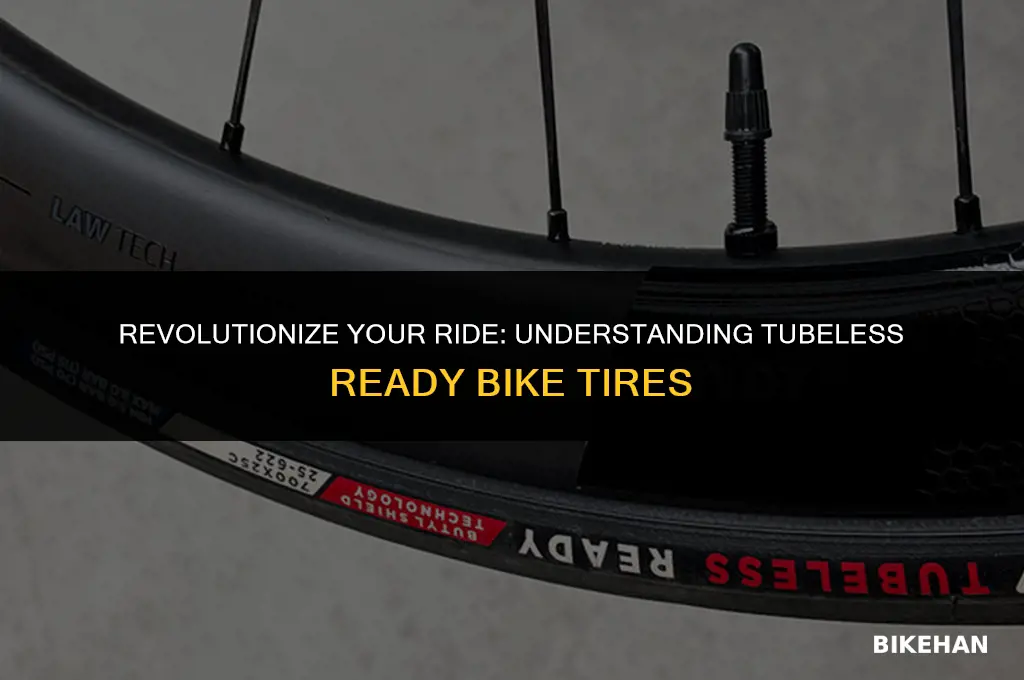
A tubeless ready bike tire is a type of bicycle tire designed to function without an inner tube. Instead, it relies on a tight seal between the tire and the rim to hold air. This technology offers several advantages over traditional tubed tires, including reduced weight, improved puncture resistance, and the ability to run lower tire pressures for a smoother ride and better traction. Tubeless ready tires are becoming increasingly popular among cyclists due to their performance benefits and ease of maintenance.
Explore related products


What You'll Learn
- Definition: A tubeless ready bike tire is designed to function without an inner tube, using a tight seal with the rim
- Benefits: Offers lower rolling resistance, reduced puncture risk, and the ability to run lower tire pressures for improved grip
- Compatibility: Requires a tubeless ready rim and specific valve stems; not compatible with traditional tube-type rims
- Installation: Involves applying a special sealant to the tire and rim interface to ensure an airtight seal
- Maintenance: Regularly checking and replenishing the sealant is crucial to maintain the tire's performance and prevent leaks

Definition: A tubeless ready bike tire is designed to function without an inner tube, using a tight seal with the rim
A tubeless ready bike tire represents a significant advancement in bicycle tire technology. Unlike traditional tires that rely on an inner tube to hold air, tubeless ready tires are designed to function without this inner tube, instead forming a tight seal directly with the rim of the wheel. This design offers several advantages, including reduced weight, improved puncture resistance, and the ability to run lower tire pressures for a smoother ride.
One of the key benefits of tubeless ready tires is their ability to maintain air pressure more effectively. Without an inner tube, there is less risk of air leakage through the tire's sidewalls, which can lead to a more consistent and reliable performance. Additionally, the absence of an inner tube allows for the use of sealant, which can further enhance puncture resistance by sealing small holes and cuts in the tire.
Tubeless ready tires also tend to be more durable than their tubed counterparts. The tight seal between the tire and rim helps to protect the tire from damage caused by debris or rough terrain, while the lack of an inner tube reduces the risk of pinch flats, which can occur when the inner tube is compressed between the tire and rim.
For cyclists looking to upgrade their bike's tires, tubeless ready options offer a range of benefits that can enhance both performance and durability. However, it's important to note that not all rims are compatible with tubeless ready tires, so it's essential to check the compatibility of your bike's wheels before making a purchase.
In summary, tubeless ready bike tires provide a number of advantages over traditional tubed tires, including improved air retention, puncture resistance, and durability. These benefits make them an attractive option for cyclists looking to enhance their riding experience and reduce maintenance requirements.
Optimal Tire Pressure for Kids' Bikes: A Safety Guide
You may want to see also
Explore related products


Benefits: Offers lower rolling resistance, reduced puncture risk, and the ability to run lower tire pressures for improved grip
Tubeless-ready bike tires offer several advantages over traditional tubed tires. One of the primary benefits is lower rolling resistance, which means that the tire encounters less friction as it rolls along the ground. This reduction in rolling resistance can lead to increased speed and efficiency, making it easier for cyclists to maintain higher speeds with less effort. Additionally, tubeless-ready tires are designed to be more puncture-resistant than their tubed counterparts. This is because the tire's structure is more robust, and there is no inner tube that can be easily punctured by sharp objects. As a result, cyclists can enjoy a reduced risk of flats and the associated downtime and inconvenience.
Another significant advantage of tubeless-ready tires is the ability to run lower tire pressures for improved grip. Lower tire pressures allow the tire to conform more closely to the road surface, increasing the contact area and providing better traction. This can be particularly beneficial in wet or slippery conditions, where maintaining grip is crucial for safety. Furthermore, running lower tire pressures can also lead to a smoother ride, as the tire is better able to absorb bumps and vibrations from the road.
In terms of practical applications, tubeless-ready tires are particularly well-suited for road cycling and mountain biking. For road cyclists, the lower rolling resistance and improved grip can translate to faster speeds and better handling, especially in competitive racing scenarios. For mountain bikers, the increased puncture resistance and ability to run lower tire pressures can provide better control and stability on rough, uneven terrain.
Overall, tubeless-ready bike tires offer a range of benefits that can enhance the cycling experience for riders of all levels and disciplines. By providing lower rolling resistance, reduced puncture risk, and the ability to run lower tire pressures for improved grip, these tires can help cyclists achieve better performance, safety, and comfort on the road or trail.
Exploring the Widest Road Bike Tires Compatible with Rim Brakes
You may want to see also
Explore related products

$54.35 $63.81


Compatibility: Requires a tubeless ready rim and specific valve stems; not compatible with traditional tube-type rims
Tubeless ready bike tires have revolutionized the cycling world with their convenience and performance benefits. However, their compatibility requirements are often overlooked, leading to confusion and potential issues for cyclists. To ensure a seamless transition to tubeless technology, it's crucial to understand the specific components needed for proper installation and function.
One of the primary compatibility factors is the rim. Tubeless ready tires require a rim that is specifically designed for tubeless use. This means the rim must have a smooth, uninterrupted inner surface to create an airtight seal with the tire. Traditional tube-type rims, which have holes for the tube's valve stem, are not suitable for tubeless tires. Attempting to use a tubeless tire on a tube-type rim can result in air leaks and poor performance.
In addition to the rim, the valve stem plays a critical role in tubeless tire compatibility. Tubeless ready rims typically use a presta valve stem, which has a wider base and a locking nut to secure the valve in place. This design ensures a tight seal and prevents air from escaping through the valve hole. It's important to note that not all presta valve stems are compatible with tubeless tires, so cyclists must verify that their valve stems meet the necessary specifications.
When upgrading to tubeless ready tires, cyclists should also consider the tire sealant. This liquid is applied to the inside of the tire and helps to seal any punctures or leaks. The choice of sealant can impact the tire's performance and longevity, so it's essential to select a high-quality product designed for tubeless tires.
To avoid compatibility issues, cyclists should carefully research and select the appropriate components for their tubeless ready setup. This includes the rim, valve stem, tire, and sealant. By ensuring that all components are compatible, cyclists can enjoy the benefits of tubeless technology, such as reduced maintenance, improved puncture resistance, and enhanced performance.
Understanding Tire Clearance: A Comprehensive Guide for Cyclists
You may want to see also
Explore related products


Installation: Involves applying a special sealant to the tire and rim interface to ensure an airtight seal
To ensure a successful tubeless-ready tire installation, it's crucial to apply a special sealant to the tire and rim interface. This sealant serves as a barrier, preventing air from escaping through the rim's tiny holes or imperfections. The process begins with thoroughly cleaning the rim and tire bead to remove any dirt, oils, or old sealant residue. Next, the sealant is applied evenly to the tire bead, ensuring complete coverage. The tire is then seated onto the rim, and the bead is worked into the rim's channel using a tire lever or by hand.
Once the tire is seated, the sealant will ooze out slightly, indicating a proper seal. It's essential to inflate the tire to the recommended pressure immediately after installation to ensure the sealant sets correctly. The sealant will typically dry within a few minutes, but it's best to wait at least 24 hours before riding to guarantee a secure seal. During this time, the sealant will bond with the tire and rim, creating a durable and airtight connection.
One common mistake to avoid is over-inflating the tire during the initial setup, as this can cause the sealant to be forced out of the tire and rim interface. Additionally, it's important to note that the sealant will need to be replenished periodically, as it can dry out over time or be compromised by punctures or other damage. Regular maintenance, including checking tire pressure and inspecting the tire and rim for wear, is crucial to ensure the longevity of the tubeless-ready setup.
In summary, the installation of a tubeless-ready bike tire involves applying a special sealant to the tire and rim interface, ensuring a secure and airtight seal. Proper preparation, application, and inflation are key to a successful installation, and regular maintenance is necessary to keep the tire performing optimally. By following these steps and avoiding common pitfalls, cyclists can enjoy the benefits of tubeless-ready tires, including improved puncture resistance and a smoother ride.
Understanding Bike Tire Nuts: A Guide to Standard Sizes
You may want to see also
Explore related products


$72.98 $82.95


Maintenance: Regularly checking and replenishing the sealant is crucial to maintain the tire's performance and prevent leaks
Regular maintenance is the cornerstone of ensuring optimal performance and longevity of tubeless ready bike tires. At the heart of this maintenance routine lies the crucial task of regularly checking and replenishing the sealant within the tire. This sealant, typically a liquid solution, plays a vital role in preventing air leaks and maintaining the tire's pressure, which is essential for a smooth and safe ride.
To perform this maintenance effectively, cyclists should establish a routine of inspecting their tires at least once a week. This involves removing the valve cap and using a tire pressure gauge to check the current pressure. If the pressure is lower than recommended, it's a sign that the sealant may need replenishing or that there's a puncture that needs addressing. In addition to pressure checks, visual inspections should be conducted to look for any signs of damage or wear on the tire's surface.
When replenishing the sealant, it's important to follow the manufacturer's guidelines regarding the type and amount of sealant to use. Generally, a small amount of sealant is added through the valve stem using a syringe or a specialized sealant injector. The tire should then be inflated to the recommended pressure and allowed to sit for a few hours to ensure the sealant has properly coated the interior surface of the tire.
One common mistake cyclists make is neglecting to shake the tire gently after adding sealant. This action helps distribute the sealant evenly around the tire's interior, ensuring that all potential leak points are covered. Additionally, it's crucial to avoid overfilling the tire with sealant, as this can lead to clumping and reduced effectiveness.
In conclusion, the regular checking and replenishing of sealant in tubeless ready bike tires is a simple yet critical maintenance task that can significantly extend the life of the tire and enhance riding safety. By establishing a consistent maintenance routine and following the manufacturer's guidelines, cyclists can ensure their tires remain in top condition, ready for whatever the road may bring.
Exploring the Largest Fat Bike Tires: A Comprehensive Guide
You may want to see also
Frequently asked questions
A tubeless ready bike tire is a type of bicycle tire designed to be used without an inner tube. Instead, it relies on a tight seal between the tire and the rim to hold air. This technology offers several benefits, including reduced weight, improved puncture resistance, and the ability to run lower tire pressures for a smoother ride.
Unlike traditional tubed tires, which require an inner tube to hold air, tubeless ready tires create an airtight seal directly with the rim. This eliminates the need for an inner tube, resulting in a lighter and more streamlined tire system. Additionally, tubeless ready tires are less prone to punctures and can maintain air pressure more effectively.
Tubeless ready bike tires offer several advantages over traditional tubed tires. These include:
- Reduced weight: Without the need for an inner tube, tubeless ready tires are lighter, which can improve overall bike performance and handling.
- Improved puncture resistance: The design of tubeless ready tires makes them less susceptible to punctures, reducing the likelihood of flats during rides.
- Better air retention: Tubeless ready tires can hold air pressure more consistently, resulting in a more stable and predictable ride.
- Lower tire pressures: These tires can be run at lower pressures, providing a smoother and more comfortable ride, especially on rough terrain.
Tubeless ready bike tires are not compatible with all bike rims. To use tubeless ready tires, you need rims that are specifically designed for tubeless technology. These rims have a different profile and construction to ensure a proper seal with the tire. It's important to check compatibility between the tire and rim before making a purchase.