Ryan Cole
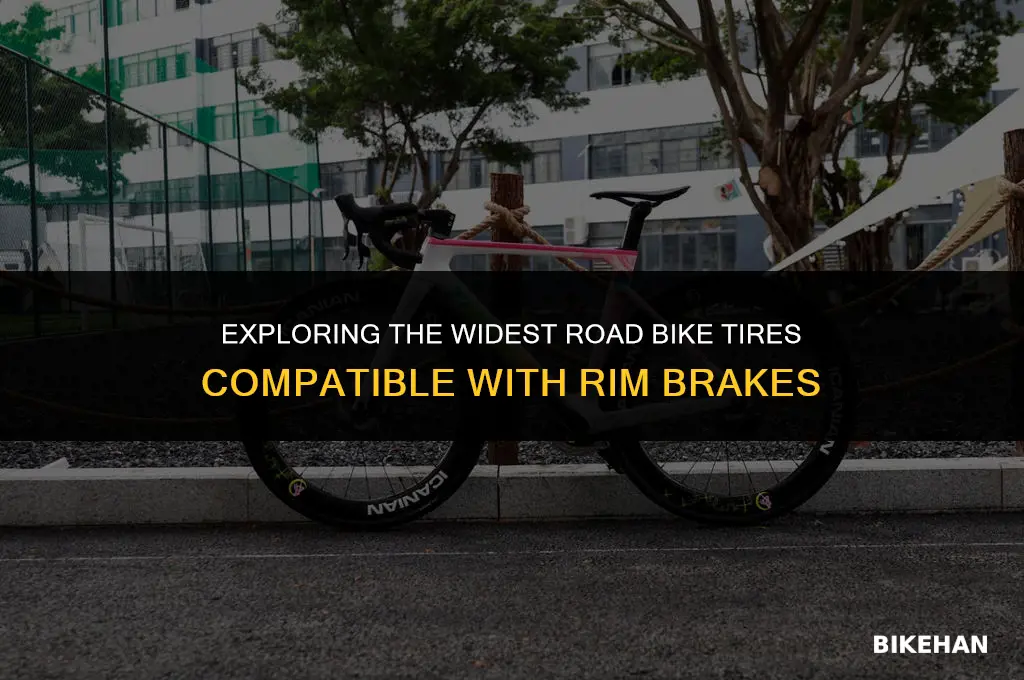
When it comes to road biking, tire width plays a crucial role in performance, comfort, and safety. For bicycles equipped with rim brakes, the widest tire option is an important consideration for enthusiasts looking to optimize their ride. The maximum width for a road bike tire with rim brakes typically depends on the frame and fork design, as well as the brake caliper clearance. While standard road tires range from 23mm to 28mm in width, some modern road bikes can accommodate tires up to 32mm or even 35mm wide. These wider tires offer benefits such as improved traction, increased comfort, and better handling on various road surfaces. However, it's essential to ensure compatibility with the bike's components and frame geometry to avoid any mechanical issues or compromised performance.
Explore related products



What You'll Learn
- Tire Widths: Road bike tires typically range from 18mm to 32mm for rim brakes
- Rim Brake Compatibility: Ensure the tire width doesn't exceed the brake caliper's reach
- Advantages of Wider Tires: Improved traction, comfort, and stability on varied road surfaces
- Disadvantages of Wider Tires: Potential increase in rolling resistance and weight
- Popular Wide Tire Options: Continental Grand Prix 5000, Schwalbe Pro One, and Vittoria Corsa

Tire Widths: Road bike tires typically range from 18mm to 32mm for rim brakes
Road bike tires with rim brakes typically range in width from 18mm to 32mm. This range offers a balance between speed, handling, and comfort. Narrower tires, such as those at the 18mm end of the spectrum, are favored by competitive road cyclists for their reduced rolling resistance and improved aerodynamics. These tires are ideal for smooth, paved surfaces where speed is paramount.
On the other hand, wider tires within this range, approaching 32mm, provide a more comfortable ride by absorbing more road vibrations and offering better traction. These tires are particularly suitable for longer rides or for cyclists who prioritize comfort over outright speed. They can also handle slightly rougher surfaces and light gravel, making them versatile for various road conditions.
It's important to note that while 32mm is the widest standard size for road bike tires with rim brakes, there are exceptions. Some manufacturers produce tires up to 35mm or even wider, designed for specific purposes such as touring or adventure riding. However, these wider tires may not be compatible with all road bikes, especially those with narrow frames or forks, and they can affect the bike's handling characteristics.
When choosing a tire width, cyclists should consider their riding style, the type of terrain they'll be riding on, and their personal preferences for speed and comfort. For most road cyclists, a tire width between 22mm and 28mm strikes a good balance, offering a mix of speed, handling, and comfort suitable for a variety of riding conditions.
In summary, while the typical range for road bike tire widths with rim brakes is 18mm to 32mm, the optimal width for any given cyclist will depend on their specific needs and preferences. By understanding the trade-offs between tire width and performance, cyclists can make informed decisions to enhance their riding experience.
Exploring the Standard Valve Types for Bicycle Tires
You may want to see also
Explore related products




Rim Brake Compatibility: Ensure the tire width doesn't exceed the brake caliper's reach
To ensure rim brake compatibility, it's crucial to verify that the tire width does not surpass the reach of the brake calipers. This is a fundamental aspect of road bike maintenance and safety. The brake calipers on a road bike are designed to accommodate a specific range of tire widths, and exceeding this range can lead to inadequate braking performance or even brake failure.
When selecting new tires for a road bike with rim brakes, it's essential to measure the existing tire width and compare it to the specifications provided by the brake caliper manufacturer. Typically, road bike tires range from 23mm to 32mm in width, but some bikes may accommodate wider tires. However, it's important to note that wider tires may not always be compatible with the brake calipers, even if they fit within the frame and fork.
To check the compatibility, you can use a tire width gauge or a ruler to measure the tire width at its widest point. Then, consult the brake caliper manufacturer's guidelines to ensure that the measured width falls within the recommended range. If the tire width exceeds the brake caliper reach, it's necessary to replace the tires with a narrower option that meets the compatibility requirements.
In addition to measuring the tire width, it's also important to consider the tire's sidewall height and the rim's internal width. The sidewall height should be sufficient to allow the brake calipers to clear the rim when the brake pads are engaged. Similarly, the rim's internal width should be compatible with the tire width to ensure a proper fit and optimal braking performance.
By taking these factors into account, you can ensure that your road bike's tire and brake system work together seamlessly, providing reliable and efficient braking performance. Remember, safety should always be the top priority when it comes to bicycle maintenance and upgrades.
Choosing the Right Tire Size for Your Adult Bicycle
You may want to see also
Explore related products


Advantages of Wider Tires: Improved traction, comfort, and stability on varied road surfaces
Wider tires have become increasingly popular among road cyclists due to their numerous advantages. One of the primary benefits is improved traction, which is especially noticeable on wet or slippery surfaces. The increased contact patch between the tire and the road allows for better grip, reducing the risk of skidding and improving overall control of the bicycle.
In addition to enhanced traction, wider tires also offer a more comfortable ride. The larger volume of air in the tire acts as a natural shock absorber, smoothing out bumps and vibrations from the road. This can lead to reduced fatigue and a more enjoyable cycling experience, particularly on long rides or rough terrain.
Stability is another key advantage of wider tires. The broader footprint provides a more stable platform, making it easier to maintain balance and control, especially at higher speeds or when cornering. This increased stability can be particularly beneficial for less experienced riders or those who are looking to improve their handling skills.
When considering the widest road bike tire with rim brakes, it's important to note that the maximum width will depend on the specific rim and brake setup. Generally, road bike rims are designed to accommodate tires up to 32-35mm wide, but some newer models may be able to fit even wider tires. It's crucial to check the compatibility of your rim and brake system before installing wider tires to ensure proper fit and function.
In conclusion, wider tires offer several advantages for road cyclists, including improved traction, comfort, and stability. When choosing the widest tire for your road bike with rim brakes, be sure to consider the specific requirements of your rim and brake setup to ensure a safe and optimal riding experience.
Exploring the World of Lightweight Fat Tire Bikes: A Comprehensive Guide
You may want to see also
Explore related products


Disadvantages of Wider Tires: Potential increase in rolling resistance and weight
Wider tires, while offering certain advantages such as improved grip and comfort, also come with notable disadvantages that cyclists should consider. One of the primary drawbacks is the potential increase in rolling resistance. Rolling resistance is the force that opposes the motion of a tire rolling on a surface, and wider tires tend to have higher rolling resistance due to their larger contact area with the road. This increased resistance can make pedaling more strenuous, particularly over long distances or on steep inclines, and can negatively impact a cyclist's speed and efficiency.
In addition to higher rolling resistance, wider tires also tend to be heavier than their narrower counterparts. The additional weight can make a significant difference in the overall performance of a road bike, as it affects not only the effort required to propel the bike forward but also its handling and responsiveness. Heavier tires can make a bike feel more sluggish and less agile, which can be particularly problematic when navigating tight corners or accelerating quickly.
Furthermore, the increased weight and rolling resistance of wider tires can lead to higher energy expenditure for the cyclist. This means that riders may need to consume more calories or expend more effort to maintain the same speed or complete the same distance as they would with narrower tires. Over time, this can contribute to fatigue and decreased performance, especially for competitive cyclists or those training for long-distance events.
It's also worth noting that wider tires may not be compatible with all road bikes or rim brake systems. Some frames may not have enough clearance to accommodate wider tires, and the increased weight and rolling resistance may put additional strain on the bike's components, potentially leading to premature wear or damage. Cyclists considering wider tires should therefore carefully assess their bike's compatibility and the potential impact on their riding experience before making a decision.
In conclusion, while wider tires can offer certain benefits, their potential increase in rolling resistance and weight are significant disadvantages that cyclists should take into account. Riders should carefully weigh these factors against their specific needs and preferences to determine whether wider tires are the right choice for their road biking endeavors.
Exploring the Advantages of Skinny Bike Tires: A Comprehensive Guide
You may want to see also
Explore related products


Popular Wide Tire Options: Continental Grand Prix 5000, Schwalbe Pro One, and Vittoria Corsa
The Continental Grand Prix 5000 is a popular choice among road cyclists seeking a wide tire option. This tire is known for its excellent grip and handling, thanks to its BlackChili compound and advanced tread pattern. It's available in various widths, including a 32mm option that provides a good balance between speed and comfort. The Grand Prix 5000 also features a durable construction with a high-strength carcass and a reflective sidewall for added visibility.
The Schwalbe Pro One is another top contender in the wide road tire market. This tire boasts a sleek design and impressive performance, with a focus on reducing rolling resistance and improving aerodynamics. The Pro One is available in a 30mm width, which offers a smooth ride and good cornering stability. It also features Schwalbe's V-Guard technology for enhanced puncture protection and a reflective sidewall for increased safety.
The Vittoria Corsa is a high-performance road tire that's popular among competitive cyclists. This tire is known for its fast rolling speed and excellent grip, thanks to its Graphene 2.0 compound and advanced tread pattern. The Corsa is available in a 28mm width, which provides a good balance between speed and handling. It also features a durable construction with a high-strength carcass and a reflective sidewall for added visibility.
When choosing a wide road bike tire with rim brakes, it's important to consider factors such as tire width, compound, tread pattern, and construction. The Continental Grand Prix 5000, Schwalbe Pro One, and Vittoria Corsa are all excellent options that offer a good balance between performance, durability, and safety. Ultimately, the best choice will depend on your specific riding needs and preferences.
Exploring the Inertia of a Bike Tire: A Comprehensive Guide
You may want to see also
Frequently asked questions
The widest road bike tire that can be used with rim brakes is typically around 32-35mm. However, this can vary depending on the specific rim brake system and the clearance available in the bike frame and fork.
Yes, some road bikes come with tires wider than 32-35mm, especially those designed for gravel or all-terrain use. These bikes often have frames and forks that provide additional clearance to accommodate wider tires.
Wider tires on a road bike can provide several benefits, including improved traction, increased comfort, and better handling on rough or uneven surfaces. They can also help to reduce the risk of punctures and improve overall ride quality.
Yes, there are some drawbacks to using wider tires on a road bike. Wider tires can be heavier and slower than narrower tires, and they may not fit in all bike frames and forks. Additionally, wider tires can make it more difficult to remove and replace the tire in case of a puncture or other issue.