Matthew Brooks
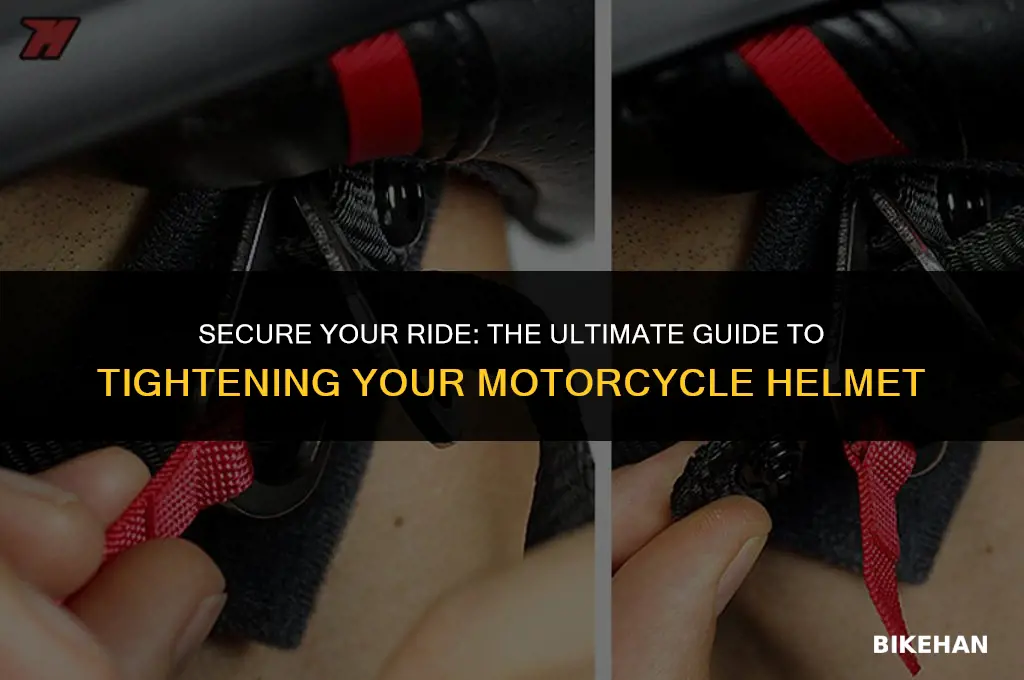
Ensuring a proper fit for your motorcycle helmet is crucial for both comfort and safety. A helmet that is too loose can become a hazard in the event of an accident, as it may not stay securely in place to protect your head. Conversely, a helmet that is too tight can cause discomfort and restrict your vision while riding. In this guide, we will walk you through the steps on how to tighten a motorcycle helmet effectively, ensuring a snug and secure fit that meets safety standards and enhances your riding experience.
Explore related products


What You'll Learn
- Choosing the Right Helmet Size: Ensure the helmet fits snugly without causing discomfort. Measure your head circumference for accuracy
- Adjusting the Chin Strap: Fasten the chin strap securely, ensuring it's tight enough to prevent the helmet from moving but not too tight to cause discomfort
- Using the Helmet's Adjustment Mechanism: Many helmets have built-in adjustment systems. Consult your helmet's manual to learn how to use these features correctly
- Securing the Helmet with Additional Accessories: Consider using helmet locks or straps to further secure the helmet when not in use
- Regular Maintenance and Inspection: Periodically check the helmet for any signs of wear or damage. Replace any worn-out parts to ensure optimal safety

Choosing the Right Helmet Size: Ensure the helmet fits snugly without causing discomfort. Measure your head circumference for accuracy
To ensure optimal safety and comfort while riding a motorcycle, selecting the correct helmet size is crucial. A helmet that fits too loosely can compromise safety in the event of an accident, while one that is too tight can cause discomfort and distraction. The key to finding the right fit lies in accurately measuring your head circumference.
Begin by using a flexible measuring tape to measure the circumference of your head, positioning it just above your eyebrows and ears. This measurement should be taken in centimeters for precision. Once you have your head circumference, refer to the manufacturer's sizing chart to determine the appropriate helmet size. It's important to note that helmet sizes can vary between brands, so always consult the specific sizing guide for the helmet you intend to purchase.
When trying on a helmet, ensure that it fits snugly but not so tightly that it causes discomfort. The helmet should sit level on your head, with the chin strap comfortably secured. If the helmet feels too tight or too loose, adjust the chin strap or consider trying a different size. Additionally, consider wearing the helmet for a short period to ensure that it remains comfortable over time.
In summary, choosing the right helmet size involves measuring your head circumference, consulting the manufacturer's sizing chart, and trying on the helmet to ensure a proper fit. By following these steps, you can ensure that your helmet provides both safety and comfort while riding.
Kentucky's Motorcycle Helmet Law: What You Need to Know
You may want to see also
Explore related products


Adjusting the Chin Strap: Fasten the chin strap securely, ensuring it's tight enough to prevent the helmet from moving but not too tight to cause discomfort
To ensure optimal safety and comfort while riding a motorcycle, it is crucial to properly adjust the chin strap of your helmet. Begin by fastening the chin strap securely, making sure it is snug enough to prevent the helmet from shifting during movement. However, be cautious not to overtighten the strap, as this can lead to discomfort and even restrict blood circulation.
A good starting point is to adjust the strap so that you can fit one finger comfortably between it and your chin. This allows for a secure fit without causing unnecessary pressure. Remember that the strap should sit flat against your chin, not digging into the skin. If you experience any discomfort or feel the helmet moving while riding, it may be necessary to readjust the strap.
It is also important to consider the type of chin strap your helmet has. Some helmets feature a quick-release buckle, while others may have a more traditional snap or hook-and-loop fastener. Familiarize yourself with the specific mechanism of your helmet to ensure you can fasten and unfasten it easily, even while wearing gloves.
In addition to proper adjustment, regularly inspect your chin strap for signs of wear and tear. Over time, the strap may become frayed or lose its elasticity, compromising its ability to hold the helmet securely in place. If you notice any damage, it is essential to replace the strap or the entire helmet if necessary.
By taking the time to properly adjust and maintain your motorcycle helmet's chin strap, you can significantly enhance your safety and comfort on the road. Remember, a well-fitted helmet is a crucial component of responsible motorcycle riding.
Ensuring a Perfect Fit: How to Measure for Your Motorcycle Helmet
You may want to see also
Explore related products


Using the Helmet's Adjustment Mechanism: Many helmets have built-in adjustment systems. Consult your helmet's manual to learn how to use these features correctly
Motorcycle helmets are equipped with various adjustment mechanisms to ensure a secure and comfortable fit. These mechanisms can include dials, sliders, and ratchet systems, each designed to fine-tune the helmet's fit around the wearer's head. To utilize these features effectively, it is crucial to consult the helmet's manual, as each model may have unique adjustment procedures.
For instance, some helmets may require the rider to turn a dial located at the back of the helmet to tighten or loosen the fit. Others might have a slider mechanism that allows for vertical or horizontal adjustments to accommodate different head shapes and sizes. Ratchet systems, on the other hand, may involve a lever that, when pressed, releases the ratchet to adjust the fit incrementally.
When adjusting the helmet, it is essential to ensure that the mechanism is engaged correctly to avoid any slippage or discomfort during the ride. The helmet should fit snugly but not too tightly, allowing for a comfortable range of motion without compromising safety. Regularly checking and adjusting the helmet's fit can help maintain its effectiveness in protecting the rider's head in case of an accident.
In addition to the built-in adjustment systems, some helmets may also offer additional accessories, such as interchangeable liners or cheek pads, to further customize the fit. These accessories can be particularly useful for riders who experience discomfort or pressure points with the standard helmet setup.
Ultimately, understanding and properly utilizing the helmet's adjustment mechanism is a critical aspect of motorcycle safety. By taking the time to familiarize oneself with the specific features and instructions of their helmet, riders can ensure a secure and comfortable fit that provides optimal protection on the road.
Finding the Perfect Fit: A Guide to Motorcycle Helmet Sizes
You may want to see also
Explore related products


Securing the Helmet with Additional Accessories: Consider using helmet locks or straps to further secure the helmet when not in use
To enhance the security of your motorcycle helmet when it's not in use, consider utilizing additional accessories such as helmet locks or straps. These accessories can provide an extra layer of protection against theft and ensure that your helmet remains safely in place. Helmet locks, for instance, can be attached to a fixed object, preventing the helmet from being easily removed. Straps, on the other hand, can be used to secure the helmet to your motorcycle or another immovable object, reducing the risk of it being stolen or damaged.
When selecting a helmet lock, look for one that is sturdy and weather-resistant. A good helmet lock should be able to withstand various environmental conditions without rusting or breaking. Additionally, consider the length of the lock's cable or chain to ensure it provides enough flexibility to secure your helmet in different locations. For straps, opt for ones made of durable materials like nylon or polyester, which can resist wear and tear. Adjustable straps are also a plus, as they can accommodate different helmet sizes and shapes.
To use a helmet lock, first, find a secure location to attach it, such as a metal bar or a designated helmet lock on your motorcycle. Then, loop the cable or chain through the helmet's ventilation holes or around the chin strap, ensuring it is snug but not too tight. Finally, lock the mechanism and keep the key in a safe place. When using straps, wrap them around the helmet and the fixed object, making sure they are tight enough to prevent the helmet from moving but not so tight that they cause damage. Always double-check that the helmet is securely fastened before leaving it unattended.
Remember, while helmet locks and straps can enhance security, they are not foolproof. It's still important to park your motorcycle in well-lit, secure areas and to use additional anti-theft measures, such as disc locks or alarms, to protect your entire vehicle. By combining these security measures, you can significantly reduce the risk of helmet theft and ensure that your riding gear remains safe and intact.
The Perfect Fit: Ensuring Your Motorcycle Helmet is Safe and Comfortable
You may want to see also
Explore related products

$6.39


Regular Maintenance and Inspection: Periodically check the helmet for any signs of wear or damage. Replace any worn-out parts to ensure optimal safety
Regular maintenance and inspection of your motorcycle helmet are crucial to ensuring its effectiveness in protecting you during a ride. Over time, helmets can suffer from wear and tear, which may compromise their structural integrity and safety features. Therefore, it is essential to periodically examine your helmet for any signs of damage or deterioration.
To conduct a thorough inspection, start by visually examining the helmet's exterior for any cracks, scratches, or dents. Pay close attention to the visor, as it should be clear and free from any obstructions that could impair your vision. Next, inspect the helmet's interior, including the padding and lining, for any signs of wear or degradation. Check the chin strap and buckle to ensure they are secure and functioning correctly.
In addition to visual inspections, it is also important to check the helmet's fit regularly. As the padding and lining can compress over time, the helmet may become looser, which can affect its ability to protect your head in the event of an accident. To ensure a proper fit, place the helmet on your head and fasten the chin strap. The helmet should sit snugly on your head without being too tight or too loose.
If you notice any signs of wear or damage during your inspection, it is crucial to replace the affected parts immediately. This may include replacing the visor, padding, lining, or chin strap. By replacing worn-out parts, you can restore your helmet's optimal safety and extend its lifespan.
Regular maintenance and inspection of your motorcycle helmet are essential to ensuring your safety on the road. By taking the time to examine your helmet periodically and replacing any worn-out parts, you can help prevent accidents and injuries. Remember, a well-maintained helmet is a crucial component of safe motorcycle riding.
Essential Tips for Choosing the Perfect Motorcycle Helmet
You may want to see also
Frequently asked questions
To properly tighten a motorcycle helmet, start by putting it on and ensuring it fits snugly on your head. Then, locate the chin strap and buckle it securely under your chin. Adjust the strap so it's tight enough that you can only fit one finger between it and your chin.
Tightening a motorcycle helmet is crucial for safety. A loose helmet can come off in the event of an accident, leaving your head unprotected. A properly tightened helmet ensures that it stays securely in place, providing maximum protection.
It's recommended to check the tightness of your motorcycle helmet every time you wear it. This is because the fit can change over time due to factors like weight loss, hair growth, or wear and tear on the helmet's padding.
No, you should only use the chin strap that comes with your motorcycle helmet. This strap is specifically designed to secure the helmet in place and provide the necessary level of tightness for safety.
If your motorcycle helmet doesn't fit properly, you should consider purchasing a new one that fits correctly. A helmet that's too large or too small won't provide adequate protection in the event of an accident.