Lauren Kennedy
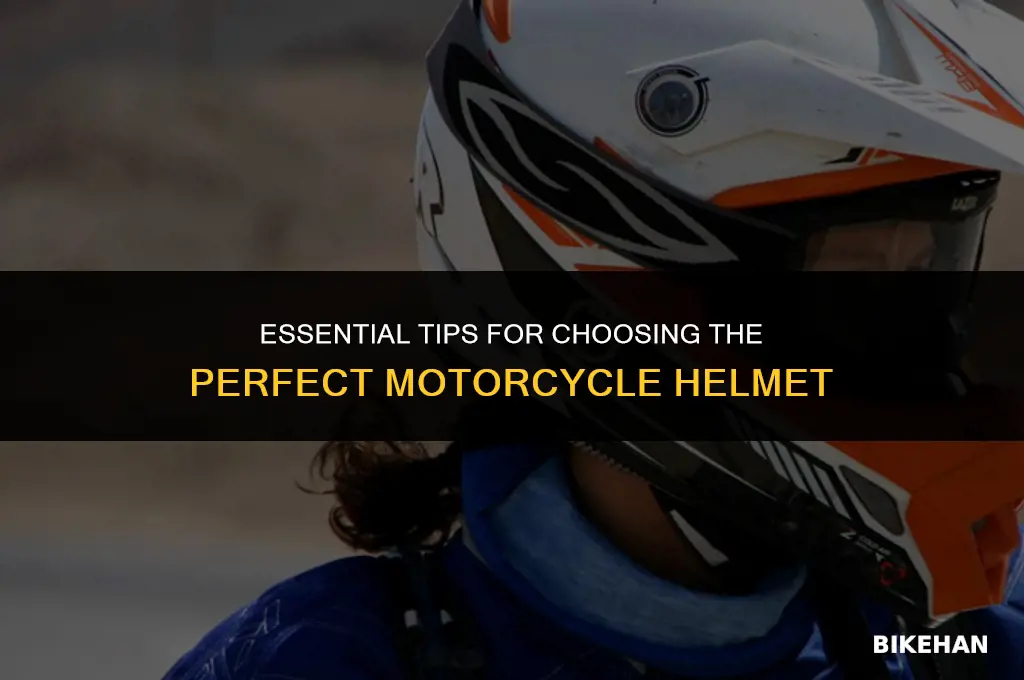
Choosing the right motorcycle helmet is crucial for both safety and comfort. A good helmet can significantly reduce the risk of head injuries in the event of an accident. When selecting a helmet, consider the following factors: safety ratings, fit, weight, ventilation, and noise reduction. Look for helmets that meet safety standards such as DOT, Snell, or ECE. Ensure the helmet fits snugly but comfortably, with enough room for your fingers to fit between the helmet and your head. The weight of the helmet should be balanced to avoid neck strain during long rides. Proper ventilation is essential to keep you cool and prevent the visor from fogging up. Lastly, consider the noise level; a quieter helmet can reduce fatigue on long trips. By evaluating these aspects, you can find a helmet that provides optimal protection and comfort for your riding needs.
Explore related products


What You'll Learn
- Fit and Comfort: Ensure the helmet fits snugly without pressure points and is comfortable for long rides
- Safety Ratings: Look for helmets with high safety ratings from organizations like DOT, Snell, or ECE
- Helmet Type: Choose between full-face, open-face, modular, or half-shell helmets based on riding style and preference
- Material and Construction: Opt for helmets made from durable materials like polycarbonate, fiberglass, or carbon fiber for optimal protection
- Ventilation and Noise: Consider helmets with good ventilation systems and noise reduction features for a more pleasant riding experience

Fit and Comfort: Ensure the helmet fits snugly without pressure points and is comfortable for long rides
A well-fitting helmet is crucial for both safety and comfort during motorcycle rides. To ensure a snug fit without pressure points, start by measuring your head circumference with a flexible tape measure, positioning it just above your eyebrows and ears. This measurement will help you select the appropriate helmet size. When trying on helmets, make sure to wear the same type of clothing you would typically wear while riding, as this can affect the fit. The helmet should sit comfortably on your head without being too tight or too loose. You should be able to fit one finger between the helmet and your forehead, and the chin strap should be adjusted so that it is snug but not constricting.
Comfort is equally important, especially for long rides. Look for helmets with moisture-wicking liners and ample ventilation to keep you cool and dry. The padding should be soft and well-distributed to prevent pressure points and discomfort. Additionally, consider the weight of the helmet, as a lighter helmet can reduce neck strain during extended periods of riding. It's also a good idea to try on different helmet styles, such as full-face, open-face, or modular helmets, to see which one best suits your comfort preferences and riding needs.
When assessing the comfort of a helmet, it's essential to consider the interior features. Helmets with removable and washable liners are not only more hygienic but also allow for customization based on your comfort needs. Some helmets even come with adjustable ventilation systems that can be fine-tuned to provide the right amount of airflow for your specific riding conditions. Furthermore, helmets with advanced noise reduction technology can significantly enhance comfort by reducing wind and engine noise, which can be particularly beneficial during long rides.
In summary, ensuring a proper fit and prioritizing comfort features are key factors in selecting a motorcycle helmet. By taking the time to measure your head, try on different helmets, and assess the interior features, you can find a helmet that not only provides optimal safety but also enhances your overall riding experience. Remember, a comfortable helmet is more likely to be worn consistently, which ultimately contributes to safer riding practices.
Exploring Tennessee's Motorcycle Helmet Laws: A Comprehensive Guide
You may want to see also
Explore related products


Safety Ratings: Look for helmets with high safety ratings from organizations like DOT, Snell, or ECE
When selecting a motorcycle helmet, safety should be your top priority. One of the most reliable ways to ensure you're choosing a safe helmet is by looking for high safety ratings from reputable organizations. The Department of Transportation (DOT), Snell Memorial Foundation, and Economic Commission for Europe (ECE) are three such organizations that provide safety ratings for motorcycle helmets. These ratings are based on rigorous testing and evaluation of the helmet's ability to protect the rider's head in the event of an accident.
The DOT is a U.S.-based organization that sets safety standards for all types of vehicles, including motorcycles. Helmets that meet DOT standards have been tested for impact absorption, penetration resistance, and retention system effectiveness. The Snell Memorial Foundation is another U.S.-based organization that provides safety ratings for helmets. Snell certification is often considered the gold standard in helmet safety, as their testing procedures are more stringent than those of the DOT. The ECE is a United Nations organization that sets safety standards for vehicles in Europe. Helmets that meet ECE standards have been tested for impact absorption, penetration resistance, and retention system effectiveness, similar to DOT standards.
When shopping for a helmet, look for the DOT, Snell, or ECE certification label on the helmet or its packaging. This label indicates that the helmet has met the safety standards set by these organizations. It's also important to note that not all helmets are certified by these organizations, so be sure to check the label before making a purchase. Additionally, keep in mind that safety ratings are not the only factor to consider when choosing a helmet. Comfort, fit, and visibility are also important considerations.
In conclusion, safety ratings from organizations like DOT, Snell, or ECE are a crucial factor to consider when selecting a motorcycle helmet. These ratings provide assurance that the helmet has been tested and meets high safety standards. By choosing a helmet with a high safety rating, you can significantly reduce your risk of head injury in the event of an accident.
Essential Features to Consider When Choosing a Motorcycle Helmet
You may want to see also
Explore related products


Helmet Type: Choose between full-face, open-face, modular, or half-shell helmets based on riding style and preference
When selecting a motorcycle helmet, the type of helmet you choose can significantly impact your riding experience and safety. The four main types of helmets to consider are full-face, open-face, modular, and half-shell. Each type offers unique benefits and drawbacks, and the best choice for you will depend on your riding style, preferences, and the specific conditions in which you ride.
Full-face helmets provide the most comprehensive protection, covering your entire head and face. They are ideal for high-speed riding and offer excellent noise reduction and aerodynamics. However, they can be less comfortable in hot weather and may limit your peripheral vision. Open-face helmets, on the other hand, offer less protection but provide a more open and airy feel, making them suitable for casual, low-speed riding in warm conditions. They allow for better visibility and communication but leave your face exposed to the elements and potential impacts.
Modular helmets are a versatile option that combines the benefits of full-face and open-face helmets. They feature a chin bar that can be raised or lowered, allowing you to switch between a fully protected and an open-face configuration. This makes them suitable for a wide range of riding conditions and styles. However, they tend to be heavier and less aerodynamic than traditional full-face helmets. Half-shell helmets offer minimal coverage, protecting only the top and back of your head. They are lightweight and comfortable but provide limited protection in the event of a crash.
When choosing a helmet type, consider factors such as your typical riding speed, the weather conditions you ride in, your level of experience, and your personal comfort preferences. It's also important to ensure that the helmet you choose meets safety standards and fits properly to provide the best possible protection.
Essential Guide to Selecting Your Perfect Motorcycle Helmet
You may want to see also
Explore related products


Material and Construction: Opt for helmets made from durable materials like polycarbonate, fiberglass, or carbon fiber for optimal protection
The choice of material in a motorcycle helmet is crucial for ensuring maximum safety and durability. Polycarbonate, fiberglass, and carbon fiber are among the top choices for riders due to their unique properties. Polycarbonate helmets are known for their impact resistance and ability to absorb shock, making them a popular choice for everyday riders. Fiberglass helmets offer a balance between weight and strength, providing excellent protection without compromising comfort. Carbon fiber helmets, on the other hand, are the lightest and strongest option, ideal for professional racers and serious enthusiasts.
When selecting a helmet, it's essential to consider the construction quality as well. Look for helmets with a solid, multi-density foam liner that can absorb impact energy effectively. The outer shell should be smooth and free of any imperfections that could weaken its structural integrity. Additionally, ensure that the helmet meets or exceeds safety standards set by organizations like the Department of Transportation (DOT) or the Snell Memorial Foundation.
Another factor to consider is the helmet's weight. While lighter helmets can reduce neck strain during long rides, they may not offer the same level of protection as heavier models. It's important to find a balance between weight and safety that suits your riding style and needs.
In terms of maintenance, it's crucial to inspect your helmet regularly for any signs of damage or wear. Even minor cracks or scratches can compromise the helmet's ability to protect you in the event of an accident. If you do notice any damage, it's best to replace the helmet immediately rather than risk your safety.
Ultimately, investing in a high-quality helmet made from durable materials is one of the most important decisions a motorcyclist can make. By choosing a helmet that offers superior protection, comfort, and durability, you can significantly reduce your risk of injury in the event of an accident and enjoy a safer, more enjoyable riding experience.
Choosing the Right Fit: A Guide to Determining Your Motorcycle Helmet Head Shape
You may want to see also
Explore related products


Ventilation and Noise: Consider helmets with good ventilation systems and noise reduction features for a more pleasant riding experience
A well-ventilated helmet can significantly enhance your riding experience by reducing fogging and keeping you cool. Look for helmets with adjustable vents that allow you to control the airflow based on your needs and the weather conditions. Some helmets even feature advanced ventilation systems with multiple air intakes and exhausts, designed to maximize airflow and minimize resistance.
Noise reduction is another crucial aspect to consider. A quieter helmet can reduce fatigue and improve your ability to hear important sounds, such as approaching vehicles or sirens. Helmets with noise reduction features often have a thicker lining or specialized materials that absorb and dampen sound waves. You can also look for helmets with a lower wind resistance coefficient, as these will typically produce less noise at high speeds.
When evaluating ventilation and noise reduction features, it's essential to consider your specific riding conditions. For example, if you frequently ride in hot and humid climates, a helmet with excellent ventilation may be more important than one with superior noise reduction. On the other hand, if you often ride on highways or in areas with heavy traffic, a quieter helmet may be a higher priority.
In addition to the helmet's design, you can also enhance ventilation and noise reduction by choosing the right accessories. For instance, a breathable helmet liner or a set of earplugs can help improve comfort and reduce noise. When selecting accessories, make sure they are compatible with your helmet and do not compromise its safety features.
Ultimately, the key to choosing a helmet with good ventilation and noise reduction is to prioritize your specific needs and preferences. By carefully evaluating the available options and considering your unique riding conditions, you can find a helmet that provides a comfortable, enjoyable, and safe riding experience.
Arizona's Motorcycle Helmet Laws: What You Need to Know
You may want to see also
Frequently asked questions
When selecting a motorcycle helmet, prioritize safety features such as a full-face design for maximum protection, a sturdy chin strap with a quick-release buckle, and a helmet that meets or exceeds safety standards like DOT, Snell, or ECE. Additionally, consider helmets with advanced features like MIPS (Multi-Directional Impact Protection System) for enhanced brain protection.
To find the right size for your motorcycle helmet, measure the circumference of your head just above your eyebrows and around the fullest part of the back of your head. Use this measurement to refer to the manufacturer's sizing chart. It's crucial to choose a helmet that fits snugly but comfortably, with enough room for one or two fingers to fit between the helmet and your forehead.
For a comfortable and well-ventilated motorcycle helmet, look for features like a moisture-wicking liner, adjustable ventilation systems, and a helmet with a wide field of vision. Consider trying on different helmets to assess comfort and fit, and opt for one with a visor that can be easily raised or lowered. Additionally, choose a helmet with a lightweight design to reduce neck strain during long rides.