Ryan Cole
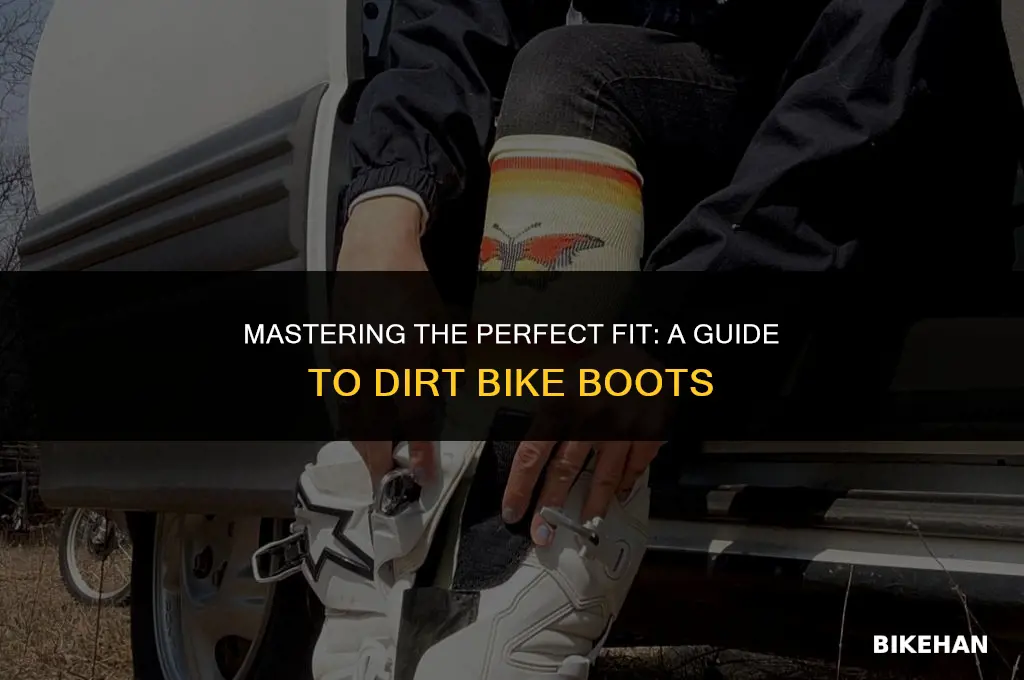
Fitting dirt bike boots correctly is crucial for both comfort and safety while riding. To ensure a proper fit, start by measuring your foot length and width, and refer to the manufacturer's sizing chart. When trying on boots, wear the same type of socks you would normally wear while riding. The boots should fit snugly but not be too tight, allowing for some movement of your toes and ankles. The heel should be secure, and the laces or buckles should be adjusted to prevent any slippage. It's also important to consider the break-in period, as new boots may feel stiff initially but will soften and mold to your feet over time.
Explore related products


What You'll Learn
- Choosing the Right Size: Ensure proper fit by measuring your feet and comparing with the manufacturer's size chart
- Breaking in the Boots: New boots can be stiff; wear them around to soften the material for better comfort
- Lacing Techniques: Learn how to lace your boots tightly but not too tight, ensuring support and circulation
- Protective Gear Compatibility: Make sure your boots fit well with other protective gear like shin guards and knee pads
- Maintenance and Care: Regularly clean and condition your boots to maintain their durability and performance

Choosing the Right Size: Ensure proper fit by measuring your feet and comparing with the manufacturer's size chart
To ensure a proper fit for dirt bike boots, it's crucial to start with accurate measurements of your feet. This involves more than just knowing your shoe size; you need to consider the length, width, and even the shape of your feet. Use a flexible measuring tape to wrap around the widest part of your foot, typically across the ball of the foot, and record this measurement. Additionally, measure the length from the heel to the longest toe. These measurements will serve as a baseline for comparing with the manufacturer's size chart.
When consulting the size chart, pay close attention to the specific measurements provided for each size. Manufacturers often include detailed charts that break down the length and width measurements for each size, and some even provide a foot shape analysis to help you find the best fit. It's important to note that sizes can vary significantly between brands, so don't assume that your size in one brand will be the same in another. Always refer to the specific size chart for the brand and model of boots you're interested in.
In addition to length and width, consider the overall shape of your foot. Some boots are designed with a more rounded toe box, while others have a more pointed shape. If you have a wider foot or a high instep, you may need to look for boots that offer more room in these areas. Conversely, if you have a narrower foot, you'll want to choose boots that provide a snugger fit to prevent your feet from sliding around inside the boots.
Once you've selected the appropriate size based on your measurements and the manufacturer's chart, it's a good idea to try on the boots if possible. This will allow you to assess the fit in terms of comfort and mobility. When trying on dirt bike boots, wear the same type of socks you would typically wear while riding to ensure an accurate fit. Walk around, flex your ankles, and simulate the movements you would make while riding to ensure the boots provide the necessary support and flexibility.
If you're purchasing boots online and can't try them on first, make sure to choose a retailer that offers a flexible return policy. This will allow you to exchange the boots for a different size if they don't fit as expected. Additionally, consider reading reviews from other customers to get an idea of how the boots fit and perform in real-world conditions.
In summary, choosing the right size for dirt bike boots involves taking accurate measurements of your feet, consulting the manufacturer's size chart, considering the shape of your foot, and trying on the boots if possible. By following these steps, you can ensure a proper fit that will provide comfort, support, and protection while riding.
Mastering the Art of Riding a 2-Stroke Dirt Bike
You may want to see also
Explore related products


Breaking in the Boots: New boots can be stiff; wear them around to soften the material for better comfort
New dirt bike boots often come with a stiff, rigid feel that can be uncomfortable during long rides. This stiffness is due to the materials used in the construction of the boots, which are designed to provide protection and support. However, this rigidity can lead to blisters, sore feet, and reduced mobility. To combat this issue, it's essential to break in your boots properly.
One effective method for breaking in dirt bike boots is to wear them around in everyday situations. This could include wearing them to work, school, or while running errands. The more you wear them, the more the materials will soften and mold to the shape of your feet. It's important to note that this process may take some time, so be patient and consistent in your efforts.
Another technique to speed up the break-in process is to use a boot stretcher. These devices are specifically designed to help soften and shape the materials in boots. Simply insert the stretcher into the boot and leave it overnight. The stretcher will apply gentle pressure to the materials, helping to soften them more quickly.
It's also crucial to avoid getting your boots wet during the break-in process. Water can cause the materials to become more rigid and can set back your progress. If you do get your boots wet, make sure to dry them thoroughly before continuing to wear them.
In addition to these methods, it's important to pay attention to your riding technique. Make sure you're using the correct body positioning and foot placement on the bike. This will help to reduce the strain on your feet and ankles, making it easier for your boots to break in.
Remember, breaking in your dirt bike boots is an essential part of ensuring a comfortable and safe riding experience. By following these tips and being consistent in your efforts, you can quickly and effectively soften your boots for optimal comfort and performance.
Decoding Your Dirt Bike's Year: A Comprehensive Guide
You may want to see also
Explore related products
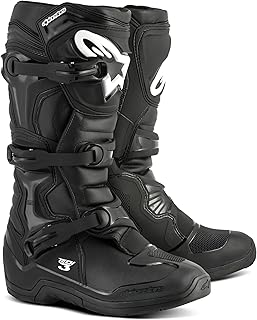


Lacing Techniques: Learn how to lace your boots tightly but not too tight, ensuring support and circulation
To lace dirt bike boots properly, start by ensuring the laces are evenly distributed and not twisted. This will help in achieving a uniform fit. Begin lacing from the bottom eyelets, pulling the laces tight but not excessively so. The goal is to secure the foot firmly within the boot without restricting blood circulation. As you move up the boot, continue to pull the laces snugly, making sure to keep the tension even on both sides.
A common mistake is to lace the boots too tightly, which can lead to discomfort and even injury. To avoid this, use the following technique: once you've reached the top eyelets, hold the laces with both hands and pull them in opposite directions. This will help to distribute the tension evenly and prevent any hotspots or pressure points. Additionally, make sure to tuck the laces into the boot or use lace clips to secure them, preventing them from coming undone during a ride.
It's also important to consider the type of laces you're using. Some boots come with elastic laces, which can provide a more flexible fit. Others may have traditional laces or even ratchet systems. Each type has its own advantages and disadvantages, so it's crucial to choose the one that best suits your needs and preferences.
Finally, remember to periodically check and adjust your laces, especially before and after each ride. Over time, laces can stretch or become loose, which can affect the fit and support of your boots. By maintaining proper lacing techniques, you can ensure that your dirt bike boots provide the necessary support and protection while also keeping you comfortable throughout your ride.
Dirt Bike Maintenance: The Complete Guide to Draining Your Carburetor
You may want to see also
Explore related products


Protective Gear Compatibility: Make sure your boots fit well with other protective gear like shin guards and knee pads
Ensuring that your dirt bike boots fit well with other protective gear is crucial for both comfort and safety. Shin guards and knee pads are essential components of a rider's protective ensemble, and their compatibility with your boots can significantly impact your riding experience. To achieve optimal fit and protection, it's important to consider the following factors:
Firstly, the height of your shin guards should align with the top of your boots. This ensures that there is no gap between the two, which could allow debris or impact to reach your shin. Additionally, the guards should not extend too far above the boot, as this can cause discomfort and restrict movement.
Secondly, the width of your knee pads should be proportional to the width of your boots. Knee pads that are too wide may overlap with the boot, causing discomfort and potentially interfering with the boot's protective features. Conversely, knee pads that are too narrow may not provide adequate coverage and protection.
Thirdly, the material and flexibility of your protective gear should complement each other. For instance, if your boots are made of a rigid material, your shin guards and knee pads should also be sturdy to provide consistent protection. On the other hand, if your boots are more flexible, your protective gear should also be designed to allow for a greater range of motion.
To ensure compatibility, it's recommended to try on your boots with your shin guards and knee pads before making a purchase. This will allow you to assess the fit and comfort of the entire ensemble, and make any necessary adjustments. Additionally, consulting with a professional or experienced rider can provide valuable insights into the best combinations of protective gear for your specific needs and riding style.
In conclusion, protective gear compatibility is a critical aspect of fitting dirt bike boots. By considering the height, width, and material of your shin guards and knee pads, and ensuring that they align with your boots, you can achieve a comfortable and safe riding experience. Remember to try on your gear together and seek professional advice when needed to make the most informed decisions.
Riding the Trails: A Guide to Street Legal Dirt Biking
You may want to see also
Explore related products


Maintenance and Care: Regularly clean and condition your boots to maintain their durability and performance
Regular cleaning and conditioning are essential to maintaining the durability and performance of your dirt bike boots. After each ride, it's crucial to remove any dirt, mud, or debris that may have accumulated on the boots. This can be done using a soft brush or cloth, followed by a gentle wash with mild soap and water. Be sure to avoid harsh chemicals or abrasive cleaners, as these can damage the boot's materials.
Once the boots are clean, it's important to condition them to keep the leather supple and prevent it from drying out or cracking. A high-quality leather conditioner can be applied using a soft cloth, working it into the leather in a circular motion. Allow the conditioner to absorb for a few minutes before wiping off any excess with a clean cloth.
In addition to regular cleaning and conditioning, it's also important to store your boots properly to maintain their shape and prevent damage. Avoid storing them in direct sunlight or in a damp environment, as this can cause the leather to fade or mildew. Instead, store them in a cool, dry place, preferably in a boot bag or box to protect them from dust and debris.
Another key aspect of boot maintenance is to regularly inspect them for any signs of wear or damage. Check the soles for any cracks or tears, and ensure that the buckles and straps are still securely fastened. If you notice any issues, it's important to address them promptly to prevent further damage and ensure your safety while riding.
By following these simple maintenance and care steps, you can help extend the life of your dirt bike boots and ensure that they continue to provide the protection and support you need while riding.
Mastering the Art of Clutch Control on Your Dirt Bike
You may want to see also
Frequently asked questions
To choose the right size for dirt bike boots, measure your foot length and width using a ruler or measuring tape. Refer to the manufacturer's sizing chart to find the corresponding boot size. It's important to wear the same type of socks you'll wear while riding when trying on boots to ensure a proper fit.
Look for dirt bike boots with reinforced ankle support, a sturdy sole with good traction, and protective elements such as shin guards and toe caps. Breathable materials and moisture-wicking liners can enhance comfort during long rides. Additionally, consider boots with adjustable straps for a secure fit and easy removal.
To break in new dirt bike boots, wear them around the house or on short walks to soften the materials. You can also use a hairdryer on a low setting to heat the boots and make them more pliable. Applying a leather conditioner or boot oil can help to soften the leather and improve its flexibility. Riding with the boots on short trips before embarking on longer rides can also help in the break-in process.