Ryan Cole
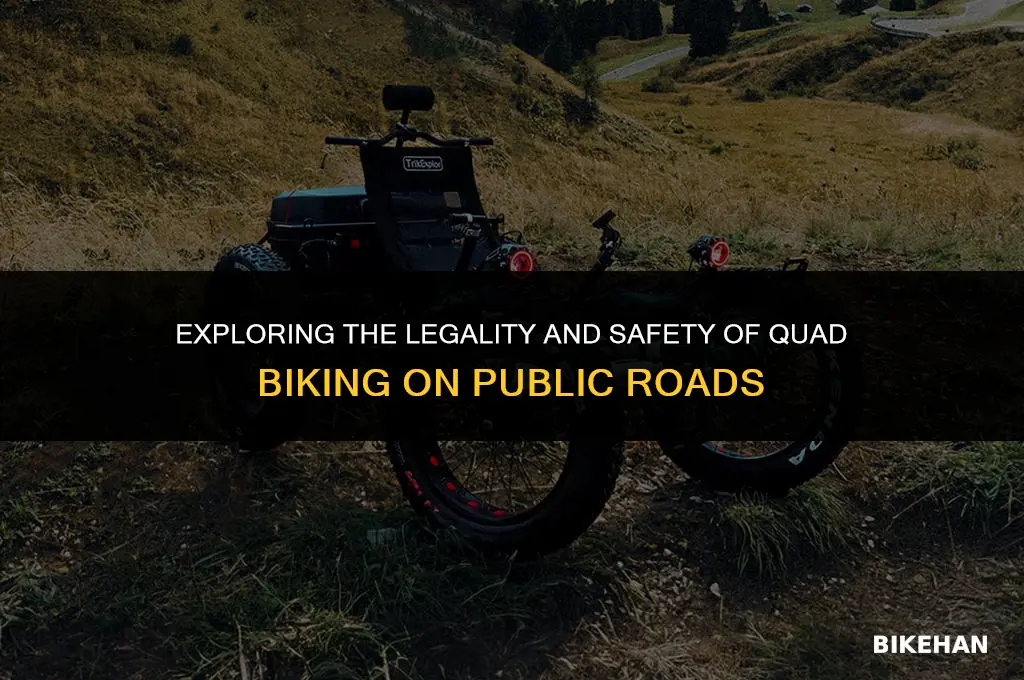
Quad bikes, also known as all-terrain vehicles (ATVs), are popular for off-road adventures, but their use on public roads is a subject of much debate and regulation. While they're designed for rugged terrain, many enthusiasts wonder if they can legally and safely ride their quad bikes on paved roads. The answer varies depending on local laws and the specific features of the quad bike in question. Some regions allow ATVs on certain types of roads under specific conditions, such as having proper lighting and signaling equipment, while others prohibit their use entirely due to safety concerns. It's crucial for riders to familiarize themselves with local regulations and ensure their vehicles meet the necessary requirements to avoid legal issues and ensure a safe riding experience.
Explore related products




What You'll Learn
- Legal Requirements: Check local laws and regulations regarding quad bike usage on public roads
- Safety Gear: Essential protective equipment includes helmets, gloves, and high-visibility clothing
- Road Conditions: Ensure the road surface is suitable for quad bikes, avoiding busy highways
- Licensing and Insurance: Verify if a special license or insurance is needed for road use
- Etiquette and Rules: Follow traffic rules, signal intentions, and be mindful of other road users

Legal Requirements: Check local laws and regulations regarding quad bike usage on public roads
Before hitting the road on your quad bike, it's crucial to understand the legal landscape surrounding its use. Laws and regulations vary significantly by location, and what's permissible in one area may be strictly prohibited in another. This section will guide you through the essential steps to ensure you're riding legally and safely.
First, check your local motor vehicle department's website or contact them directly to inquire about specific laws governing quad bike use on public roads. Some areas may require registration, licensing, or special permits, while others may ban quad bikes altogether. It's also important to note any age restrictions or requirements for safety equipment like helmets.
Next, familiarize yourself with any signage or road markings that indicate where quad bikes are allowed or prohibited. Certain roads may have designated lanes or trails for off-road vehicles, while others may explicitly forbid their use. Always respect these signs and markings to avoid legal repercussions and ensure the safety of yourself and others on the road.
Additionally, consider the environmental impact of riding your quad bike on public roads. Some areas may have restrictions in place to protect sensitive ecosystems or wildlife habitats. Be mindful of these regulations and plan your route accordingly to minimize your impact on the environment.
Finally, remember that ignorance of the law is not an excuse. It's your responsibility as a rider to stay informed about local laws and regulations regarding quad bike use. Failure to comply can result in fines, penalties, or even the confiscation of your vehicle. By taking the time to research and understand the legal requirements, you can enjoy your ride while staying safe and responsible.
Gravel Grinding: Can Your Road Bike Handle the Rough Stuff?
You may want to see also
Explore related products


Safety Gear: Essential protective equipment includes helmets, gloves, and high-visibility clothing
Wearing appropriate safety gear is crucial when operating a quad bike, especially if you plan to ride on public roads. Helmets are the most critical piece of equipment, as they protect your head from severe injuries in the event of an accident. Choose a helmet that meets safety standards and fits snugly on your head. Gloves are also essential, as they provide a better grip on the handlebars and protect your hands from abrasions. High-visibility clothing is another important safety measure, particularly if you're riding on roads with other vehicles. Bright colors and reflective materials make you more visible to drivers, reducing the risk of collisions.
In addition to these basic safety items, consider wearing protective eyewear, such as goggles or a face shield, to protect your eyes from debris and wind. Sturdy boots with good ankle support are also recommended to protect your feet and ankles in case of an accident. When selecting safety gear, look for products specifically designed for quad bike riding, as they will provide the best protection and comfort.
It's important to note that safety gear is not a substitute for safe riding practices. Always follow traffic rules, ride at a safe speed, and be aware of your surroundings. However, in the event of an accident, wearing the proper safety gear can significantly reduce the risk of serious injury.
When it comes to riding quad bikes on public roads, many countries have specific regulations regarding safety gear. For example, in the United States, the Consumer Product Safety Commission requires that all ATV riders wear helmets. In the UK, the law requires riders to wear helmets and high-visibility clothing. Be sure to check the regulations in your area before hitting the road on your quad bike.
In conclusion, safety gear is an essential part of quad bike riding, particularly when riding on public roads. By wearing the proper equipment, you can significantly reduce the risk of injury and ensure a safer, more enjoyable riding experience.
Road Cycling with a Mountain Bike: What You Need to Know
You may want to see also
Explore related products


Road Conditions: Ensure the road surface is suitable for quad bikes, avoiding busy highways
Analyzing road conditions is crucial when considering riding a quad bike on public roads. The suitability of the road surface directly impacts the safety and legality of quad bike usage. Busy highways are generally not suitable for quad bikes due to their high-speed limits and heavy traffic, which can pose significant risks to riders. Instead, riders should look for quieter, less-traveled roads with lower speed limits that allow for safer operation of their vehicles.
When assessing road conditions, riders should consider several factors. Firstly, the road surface should be smooth and free of debris to prevent accidents. Potholes, loose gravel, and uneven surfaces can cause quad bikes to become unstable or difficult to control. Secondly, the road should have adequate shoulder space or a designated lane for slower-moving vehicles like quad bikes. This helps to separate quad bike riders from faster-moving traffic, reducing the risk of collisions.
Additionally, riders should be aware of local laws and regulations regarding the use of quad bikes on public roads. Some areas may have specific requirements for roadworthiness, such as the need for headlights, taillights, and turn signals. Riders should also ensure that their quad bikes are properly registered and insured for road use.
In conclusion, ensuring that road conditions are suitable for quad bikes is essential for safe and legal riding. By avoiding busy highways and choosing quieter roads with appropriate surfaces and shoulder space, riders can significantly reduce the risks associated with quad bike use on public roads.
Exploring the Open Road: Bike Racks and Highway Adventures
You may want to see also
Explore related products


Licensing and Insurance: Verify if a special license or insurance is needed for road use
Before hitting the road on your quad bike, it's crucial to understand the legal requirements regarding licensing and insurance. In many jurisdictions, operating an all-terrain vehicle (ATV) or quad bike on public roads necessitates specific permits or endorsements on your driver's license. For instance, some states in the U.S. require ATV riders to have a valid driver's license with an ATV endorsement, which typically involves passing a written test and sometimes a practical riding exam.
Insurance is another critical aspect to consider. Standard auto insurance policies may not cover ATVs or quad bikes, so you might need to purchase a separate policy specifically designed for off-road vehicles. This insurance can protect you from liability in case of accidents and may also cover damages to your ATV. When selecting an insurance policy, ensure it aligns with the legal requirements of your state or country and provides adequate coverage for your riding needs.
To verify the specific requirements for your area, start by contacting your local Department of Motor Vehicles (DMV) or equivalent authority. They can provide detailed information on the necessary licenses, permits, and insurance coverage. Additionally, consider reaching out to ATV rider associations or clubs in your region, as they often have valuable insights and resources regarding local regulations and best practices for safe and legal riding.
Remember, failing to comply with licensing and insurance requirements can result in fines, penalties, or even the impoundment of your ATV. By taking the time to understand and meet these obligations, you can enjoy your quad bike adventures while staying within the bounds of the law and ensuring your safety and the safety of others on the road.
Mini Bike Road Riding: Legal and Safety Considerations
You may want to see also
Explore related products


Etiquette and Rules: Follow traffic rules, signal intentions, and be mindful of other road users
When operating a quad bike on public roads, adherence to traffic rules is paramount. This includes obeying speed limits, stopping at traffic signals, and yielding to pedestrians and other vehicles. Failure to comply with these regulations not only endangers the rider but also poses a risk to other road users. It is essential to familiarize oneself with local traffic laws and to always ride defensively, anticipating the actions of others and adjusting one's behavior accordingly.
Signaling intentions is another crucial aspect of road etiquette. Quad bike riders should use hand signals to indicate turns and lane changes, ensuring that their movements are predictable to other drivers. This is particularly important given the smaller size and less visibility of quad bikes compared to cars and motorcycles. By clearly communicating their intentions, riders can help prevent accidents and ensure a smoother flow of traffic.
Being mindful of other road users involves more than just following traffic rules and signaling intentions. It also means being aware of one's surroundings and adjusting one's riding style to accommodate different situations. For example, riders should be cautious when approaching intersections, as other drivers may not always see them. Additionally, they should be prepared to yield to faster-moving vehicles and to maintain a safe distance from others to allow for adequate reaction time.
In summary, proper etiquette and adherence to rules are essential for safely operating a quad bike on public roads. By following traffic regulations, signaling intentions, and being mindful of other road users, riders can help ensure their own safety as well as the safety of those around them.
Pocket Bikes in Bike Lanes: A Comprehensive Guide
You may want to see also
Frequently asked questions
The legality of riding a quad bike on the road varies by country and jurisdiction. In many places, quad bikes are not street legal and can only be ridden on private property or designated off-road trails.
Riding a quad bike on the road can be dangerous due to the lack of safety features compared to cars, such as seatbelts and airbags. Quad bikes also have a higher center of gravity, making them more prone to tipping over, especially on uneven surfaces or when making sharp turns.
To make a quad bike street legal, modifications may include adding headlights, taillights, turn signals, mirrors, and a license plate holder. Additionally, some jurisdictions may require the installation of a windshield and the use of a helmet.