Samantha Lee
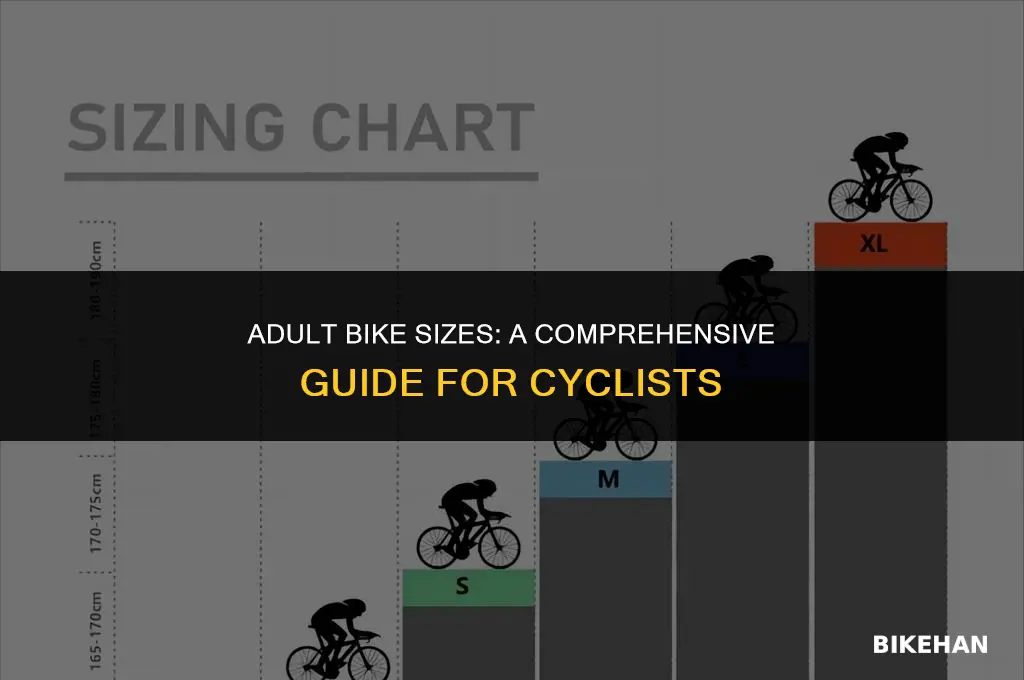
Adult bike sizes can vary significantly depending on the type of bike and the manufacturer. Generally, adult bikes range from about 48 inches to 64 inches in height, measured from the ground to the top of the seat post. The size of an adult bike is often determined by the frame size, which is typically measured from the center of the bottom bracket to the top of the seat tube. This measurement can range from about 14 inches to 24 inches. It's important to choose the right size bike for comfort, safety, and efficiency while riding.
Explore related products


What You'll Learn
- Frame Size: Adult bikes typically range from 17 to 23 inches in frame size
- Wheel Size: Common wheel sizes for adult bikes include 26, 27.5, and 29 inches
- Seat Height: The seat height can vary from 28 to 36 inches from the ground
- Handlebar Height: Handlebars are usually positioned between 35 to 45 inches from the ground
- Standover Height: This is the distance from the ground to the top of the bike frame, typically 25 to 32 inches

Frame Size: Adult bikes typically range from 17 to 23 inches in frame size
Adult bike frame sizes typically range from 17 to 23 inches, measured from the center of the bottom bracket to the top of the seat tube. This range accommodates the vast majority of adult riders, with smaller frames suited to shorter individuals and larger frames ideal for taller riders. The frame size is a critical factor in determining the overall fit and comfort of the bike, as well as its handling characteristics.
To find the right frame size, riders should consider their height and inseam length. A simple method is to stand over the bike with both feet flat on the ground; the top tube should pass just below the rider's crotch, with about an inch of clearance. Riders can also use a sizing chart, which correlates height and inseam length to recommended frame sizes. However, it's important to note that these charts are general guidelines and may not account for individual variations in body proportions.
In addition to height and inseam length, riders should also consider their riding style and preferences. For example, a rider who prefers a more aggressive, aerodynamic position may opt for a smaller frame size, while a rider who values comfort and stability may choose a larger frame. The type of riding will also influence the choice of frame size; for instance, mountain bikers may prefer a smaller frame for better maneuverability, while road cyclists may opt for a larger frame for improved speed and efficiency.
Ultimately, the best way to determine the right frame size is to test ride different bikes and find the one that feels most comfortable and responsive. Riders should pay attention to how the bike handles, how they feel on the saddle, and how their feet position on the pedals. By taking the time to find the right frame size, riders can ensure a more enjoyable and safe cycling experience.
Understanding Road Bike Sizes: A Guide to the 54cm Frame
You may want to see also
Explore related products


Wheel Size: Common wheel sizes for adult bikes include 26, 27.5, and 29 inches
Adult bike wheel sizes are a critical aspect of bike selection, impacting everything from ride comfort to handling and speed. The most common wheel sizes for adult bikes are 26, 27.5, and 29 inches, each offering distinct advantages and disadvantages.
The 26-inch wheel size is the smallest of the three and is often found on older bike models. It provides a more compact ride, making it easier to maneuver in tight spaces. However, it may not be as efficient on rough terrain due to its smaller diameter.
The 27.5-inch wheel size, also known as 650B, is a relatively newer option that bridges the gap between 26 and 29 inches. It offers a good balance between maneuverability and speed, making it a popular choice for mountain bikers and those seeking a versatile ride.
The 29-inch wheel size, or 700C, is the largest and most common for adult bikes. It provides the greatest speed and efficiency, especially on paved surfaces. However, it can be more challenging to maneuver in tight spaces and may require more effort to accelerate.
When choosing a wheel size, consider factors such as your riding style, the type of terrain you'll be on, and your personal preferences. It's also important to note that wheel size affects other aspects of bike fit, such as standover height and reach, so be sure to test ride different options to find the best fit for you.
Understanding Bike Frame Sizes: A Guide to 24-Inch Frames
You may want to see also
Explore related products


Seat Height: The seat height can vary from 28 to 36 inches from the ground
The seat height of an adult bike is a critical factor in determining the overall size and fit of the bicycle. It can vary significantly, ranging from 28 to 36 inches from the ground. This variation allows for a wide range of rider heights and preferences, ensuring that most adults can find a comfortable and efficient riding position.
When considering the seat height, it's essential to think about the rider's inseam length, which is the distance from the crotch to the floor. A general rule of thumb is that the seat height should be approximately equal to the rider's inseam length, give or take a few inches. This ensures that the rider can comfortably reach the pedals and maintain a proper riding posture.
However, it's important to note that this is just a starting point. Rider preferences can vary greatly, and some may prefer a higher or lower seat height for various reasons. For example, a rider who prefers a more aggressive riding position may opt for a higher seat height, while someone who wants a more relaxed ride may choose a lower seat height.
In addition to the rider's inseam length and preferences, the type of bike also plays a role in determining the appropriate seat height. For instance, road bikes typically have higher seat heights than mountain bikes or hybrid bikes. This is because road bikes are designed for speed and efficiency, and a higher seat height allows the rider to adopt a more aerodynamic position.
Ultimately, the ideal seat height will depend on a combination of factors, including the rider's height, inseam length, preferences, and the type of bike. By considering these factors and experimenting with different seat heights, riders can find the perfect fit for their needs and enjoy a comfortable and efficient ride.
Understanding Bike Sizes: A Guide to 52cm Bicycles
You may want to see also
Explore related products


Handlebar Height: Handlebars are usually positioned between 35 to 45 inches from the ground
The positioning of handlebars on an adult bike is a critical aspect of ensuring both comfort and safety for the rider. Handlebars are typically set between 35 to 45 inches from the ground, a range that accommodates the average height of adult riders. This height allows for an ergonomic riding posture, reducing strain on the back, shoulders, and wrists during long rides. Proper handlebar height also contributes to better control and stability of the bike, especially when navigating uneven terrain or making sharp turns.
Determining the ideal handlebar height involves considering several factors beyond just the rider's height. These include the rider's arm length, shoulder width, and personal preference for riding position. For instance, a rider with longer arms may prefer handlebars positioned slightly higher to avoid overextension, while a rider with a broader shoulder width might opt for a lower setting to maintain a comfortable reach. Additionally, the type of cycling activity can influence handlebar height; for example, road cyclists often prefer a lower position for better aerodynamics, whereas mountain bikers may choose a higher setting for improved control on rough trails.
Adjusting the handlebar height is a relatively straightforward process that can be done with basic tools. Most bikes have adjustable handlebars that can be raised or lowered using a hex key or wrench. It's essential to make adjustments gradually and test the new position after each change to ensure optimal comfort and control. When adjusting handlebar height, it's also important to consider the alignment with the saddle and pedals to maintain a balanced riding position.
In summary, the handlebar height on an adult bike should be tailored to the individual rider's physical characteristics and riding preferences to promote comfort, safety, and performance. By understanding the factors that influence handlebar positioning and following proper adjustment techniques, cyclists can enhance their overall riding experience.
Understanding Bike Tire Sizes: A Guide to 700x42c Tires
You may want to see also
Explore related products




Standover Height: This is the distance from the ground to the top of the bike frame, typically 25 to 32 inches
Standover height is a critical measurement when determining the appropriate size of an adult bike. This dimension, which ranges from 25 to 32 inches, is the distance from the ground to the top of the bike frame. It plays a significant role in ensuring that the rider can comfortably and safely mount and dismount the bicycle, as well as maintain proper leg clearance while pedaling.
For riders with shorter legs, a lower standover height is preferable, as it allows for easier access to the bike and reduces the risk of injury in case of a fall. Conversely, taller riders may require a higher standover height to accommodate their longer legs and to prevent their knees from hitting the frame during aggressive pedaling.
When selecting a bike, it's essential to consider the standover height in conjunction with other factors such as seat height, handlebar reach, and overall frame geometry. A bike with an appropriate standover height will not only provide a more comfortable riding experience but also enhance the rider's control and stability on the road or trail.
To determine the ideal standover height, riders can measure their inseam length and use it as a reference point. Generally, the standover height should be slightly less than the rider's inseam length to allow for adequate leg clearance. However, personal preferences and riding styles can also influence the choice of standover height, so it's crucial to test ride different bikes to find the one that feels most comfortable and suitable.
In summary, standover height is a vital consideration when choosing an adult bike, as it directly impacts the rider's comfort, safety, and overall riding experience. By understanding the importance of this measurement and how it relates to individual rider characteristics, cyclists can make more informed decisions when selecting a bike that meets their specific needs and preferences.
Understanding Bike Frame Sizes: A Guide to 21-Inch Rims
You may want to see also
Frequently asked questions
Adult bikes generally range from small to extra-large, with sizes often denoted by numerical values or letters such as S, M, L, XL. The exact size range can vary by manufacturer and type of bike.
To determine the right size for an adult bike, you typically need to consider your height and inseam length. Manufacturers often provide sizing charts that correlate these measurements with the appropriate bike size.
Common types of adult bikes include road bikes, mountain bikes, hybrid bikes, commuter bikes, and cruiser bikes. Each type is designed for specific riding conditions and purposes.
While the frame size of an adult bike is fixed, you can often adjust the seat height and handlebar position to achieve a more comfortable and ergonomic fit. Some bikes also allow for adjustments to the stem length and saddle setback.
Riding a bike that is too small or too large can lead to discomfort, reduced efficiency, and increased risk of injury. A bike that is too small may cause your knees to hit the handlebars, while a bike that is too large may make it difficult to reach the pedals and control the bike effectively.