Megan Blake
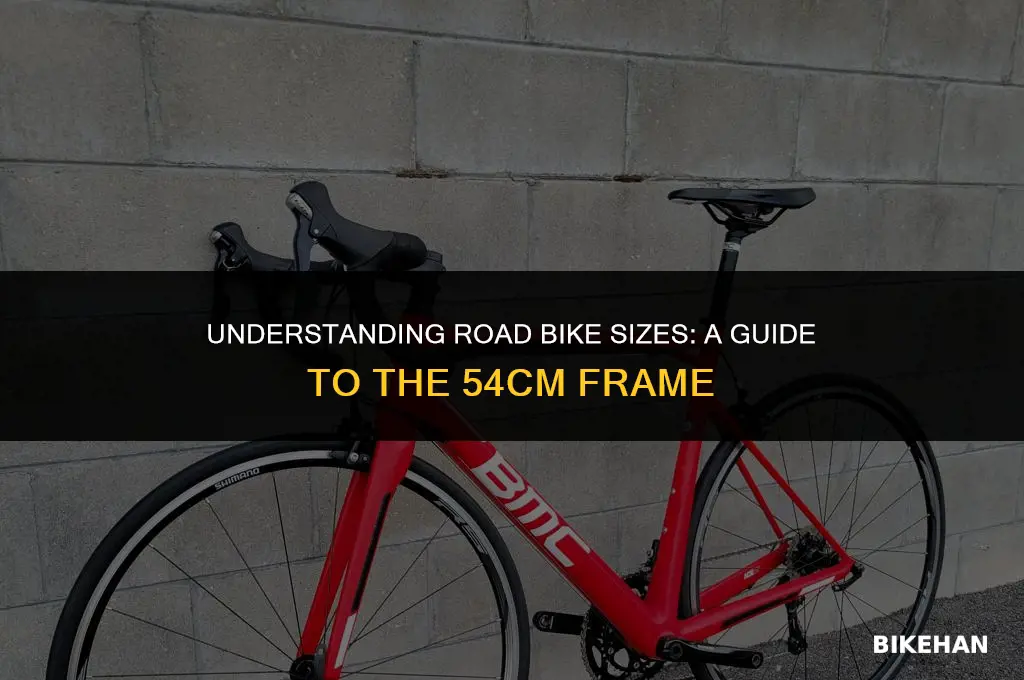
Road bike sizing can be a complex topic, with various factors influencing the ideal size for a rider. A 54 road bike, which refers to the frame size, is typically suitable for riders who are around 5'8 to 5'10 tall. However, this is just a general guideline, and the perfect size can vary based on the rider's inseam length, riding style, and personal preferences. It's essential to consider the geometry of the bike, including the top tube length, seat tube length, and wheelbase, to ensure a comfortable and efficient riding position. Additionally, factors such as the type of riding (racing, touring, or casual) and the rider's flexibility and fitness level can also impact the choice of bike size. To find the ideal size, it's recommended to consult with a professional bike fitter or visit a local bike shop for a test ride and personalized advice.
Explore related products


What You'll Learn
- Frame Size: Understanding the dimensions and proportions of a 54cm road bike frame
- Wheel Size: Exploring the typical wheel sizes used on 54cm road bikes and their impact on ride quality
- Handlebar Width: Discussing the ideal handlebar width for a 54cm frame and its effect on handling
- Saddle Height: Determining the appropriate saddle height for riders of different heights on a 54cm bike
- Reach and Stack: Analyzing the reach and stack measurements of a 54cm road bike and how they influence rider comfort and performance

Frame Size: Understanding the dimensions and proportions of a 54cm road bike frame
A 54cm road bike frame is designed to fit riders of a specific height range, typically between 5'8" and 5'11". The frame size is measured from the center of the bottom bracket to the top of the seat tube, and it's crucial for ensuring a comfortable and efficient riding position. A frame that's too small or too large can lead to discomfort, reduced performance, and even safety issues.
The proportions of a 54cm frame are carefully calculated to provide a balance between stability, maneuverability, and speed. The wheelbase, which is the distance between the front and rear wheels, is usually around 100-105cm for a 54cm frame. This length provides a good compromise between stability at high speeds and agility when cornering. The stack height, which is the vertical distance from the bottom bracket to the top of the head tube, is typically around 58-60cm. This measurement affects the rider's position relative to the handlebars and can influence the bike's handling characteristics.
Another important dimension is the reach, which is the horizontal distance from the bottom bracket to the top of the head tube. A 54cm frame usually has a reach of around 38-40cm. This measurement determines how stretched out the rider will be when holding the handlebars, and it can impact comfort and control. The seat tube angle, which is the angle between the seat tube and the ground, is typically around 73-75 degrees for a 54cm frame. This angle affects the rider's leg extension and can influence pedaling efficiency and comfort.
When choosing a 54cm road bike frame, it's essential to consider not only the frame size but also the rider's body proportions and riding style. Some riders may prefer a slightly smaller or larger frame size based on their torso length, arm length, and leg length. Additionally, the type of riding the bike will be used for, such as racing, touring, or commuting, can influence the desired frame size and proportions.
In conclusion, understanding the dimensions and proportions of a 54cm road bike frame is crucial for selecting the right bike for a rider's specific needs and preferences. By considering factors such as frame size, wheelbase, stack height, reach, and seat tube angle, riders can find a bike that provides a comfortable, efficient, and enjoyable riding experience.
Understanding Bike Frame Sizes: Is 45cm Right for You?
You may want to see also
Explore related products


Wheel Size: Exploring the typical wheel sizes used on 54cm road bikes and their impact on ride quality
Road bikes, particularly those sized 54cm, often come with standard wheel sizes that can significantly affect the ride quality. The most common wheel size for these bikes is 700c, which is the international standard for road bikes. This size provides a good balance between speed, handling, and comfort. However, some manufacturers may opt for 650b wheels, which are slightly smaller and can offer a more comfortable ride due to their ability to accommodate wider tires.
The choice of wheel size can have a profound impact on the bike's performance. Larger wheels, like the 700c, tend to roll over obstacles more easily and maintain speed better, making them ideal for racing and long-distance riding. On the other hand, smaller wheels, such as 650b, can provide a more stable and comfortable ride, especially on rough terrain, due to their lower center of gravity and increased tire contact with the road.
When selecting a wheel size for a 54cm road bike, it's essential to consider the rider's preferences and the intended use of the bike. For competitive riders who prioritize speed and efficiency, 700c wheels are typically the preferred choice. However, for casual riders or those who plan to ride on rough or uneven surfaces, 650b wheels may offer a more enjoyable and comfortable experience.
In addition to the wheel size, the tire width also plays a crucial role in ride quality. Wider tires can provide better traction and a smoother ride, especially on rough roads. However, they may also increase rolling resistance, which can slow the bike down. Narrower tires, on the other hand, are faster and more efficient but may not provide as much comfort or traction on rough surfaces.
Ultimately, the ideal wheel size and tire width for a 54cm road bike will depend on the rider's individual needs and preferences. By understanding the advantages and disadvantages of different wheel sizes and tire widths, riders can make informed decisions to optimize their ride quality and performance.
Understanding Bike Frame Sizes: Is 53cm Right for You?
You may want to see also
Explore related products


Handlebar Width: Discussing the ideal handlebar width for a 54cm frame and its effect on handling
The ideal handlebar width for a 54cm frame is a critical aspect of bike fitting that can significantly impact handling and comfort. A common misconception is that handlebar width should directly correlate with frame size, but this is not always the case. While a 54cm frame is considered large, the optimal handlebar width can vary based on the rider's body dimensions, riding style, and personal preference.
For a 54cm frame, a handlebar width of 42-44cm is often recommended as a starting point. This width provides a balance between stability and maneuverability, making it suitable for a wide range of riding conditions. However, riders with broader shoulders or those who prefer a more aggressive riding position may benefit from wider handlebars, up to 46-48cm. Conversely, riders with narrower shoulders or those who prefer a more upright position may find narrower handlebars, around 40-42cm, more comfortable.
The effect of handlebar width on handling is multifaceted. Wider handlebars can offer better stability and control, especially at high speeds or when cornering. They also allow for a more natural arm position, reducing strain on the shoulders and wrists. However, wider handlebars can make the bike feel less responsive and more difficult to maneuver in tight spaces. Narrower handlebars, on the other hand, can make the bike feel more agile and responsive, but they may also increase the risk of over-correcting and can lead to a less comfortable riding position.
Ultimately, the ideal handlebar width for a 54cm frame is a matter of personal preference and should be determined through trial and error. It is essential to consider factors such as riding style, body dimensions, and comfort when selecting the right handlebar width. Consulting with a professional bike fitter or visiting a local bike shop for a test ride can be invaluable in finding the perfect handlebar width for your 54cm frame.
Understanding 700c Bike Tires: A Comprehensive Guide to Size and Fit
You may want to see also
Explore related products


Saddle Height: Determining the appropriate saddle height for riders of different heights on a 54cm bike
Determining the appropriate saddle height for riders of different heights on a 54cm bike is crucial for both comfort and performance. A saddle that is too high or too low can lead to discomfort, inefficiency, and even injury. For a 54cm bike, which is typically suitable for riders between 5'6" and 5'10", the saddle height should be adjusted based on the rider's inseam length.
To find the correct saddle height, start by measuring the rider's inseam. This can be done by having the rider stand against a wall with their feet shoulder-width apart and measuring the distance from the floor to the top of their inner thigh. Once the inseam length is known, it can be used to calculate the appropriate saddle height.
A common method for determining saddle height is the '100% inseam' rule, where the saddle height is set to 100% of the rider's inseam length. However, this method may not be suitable for all riders, especially those with longer or shorter legs in proportion to their torso. A more refined approach is to use the 'LeMond formula,' which takes into account the rider's height and inseam length to calculate the ideal saddle height.
Using the LeMond formula, the saddle height (SH) is calculated as follows: SH = (inseam length / height) * bike frame size. For a 54cm bike, this formula can provide a more accurate and personalized saddle height adjustment. It's important to note that these calculations serve as a starting point, and further fine-tuning may be necessary based on the rider's individual preferences and riding style.
Once the saddle height has been determined, it's essential to test the position while riding. The rider should sit on the bike with their feet on the pedals and their hands on the handlebars. The knee should be slightly bent at the top of the pedal stroke, and the rider should be able to reach the handlebars comfortably without stretching. If the saddle height is too high, the rider may experience discomfort in the lower back and hamstrings. If it's too low, the rider may feel cramped and inefficient.
In conclusion, determining the appropriate saddle height for a 54cm bike involves measuring the rider's inseam, using a formula to calculate the saddle height, and fine-tuning the position based on the rider's comfort and performance. By taking these steps, riders can ensure a more enjoyable and efficient cycling experience.
Exploring the Perfect Fit: Understanding 20-Inch Bike Sizes for Kids and Adults
You may want to see also
Explore related products


Reach and Stack: Analyzing the reach and stack measurements of a 54cm road bike and how they influence rider comfort and performance
The reach and stack measurements of a 54cm road bike are critical factors that significantly influence rider comfort and performance. The reach, which is the horizontal distance from the center of the bottom bracket to the top of the head tube, determines how stretched out the rider will be when in the drops. A longer reach can provide a more aerodynamic position but may also lead to discomfort over long distances due to the increased strain on the rider's back and shoulders. Conversely, a shorter reach can offer a more upright and comfortable riding position but might compromise aerodynamic efficiency.
The stack, on the other hand, refers to the vertical distance from the center of the bottom bracket to the top of the head tube. A higher stack can result in a more upright riding position, which is generally more comfortable for the rider, especially during long rides. However, it can also affect the bike's handling, making it feel less responsive and more sluggish. A lower stack can enhance the bike's handling and responsiveness but may require the rider to adopt a more aggressive and less comfortable position.
For a 54cm road bike, the ideal reach and stack measurements will depend on the rider's individual preferences, body dimensions, and riding style. A rider with a longer torso and arms may prefer a bike with a longer reach and higher stack to achieve a comfortable and efficient riding position. In contrast, a rider with a shorter torso and arms may benefit from a bike with a shorter reach and lower stack.
When analyzing the reach and stack measurements of a 54cm road bike, it is essential to consider the overall geometry of the bike, including the wheelbase, chainstay length, and fork rake. These factors work together to determine the bike's handling characteristics, comfort level, and performance capabilities. A well-designed bike will balance these factors to provide a harmonious riding experience that meets the needs of the rider.
In conclusion, the reach and stack measurements of a 54cm road bike play a crucial role in determining rider comfort and performance. By understanding these measurements and how they interact with other aspects of the bike's geometry, riders can make informed decisions when selecting a bike that best suits their individual needs and preferences.
Understanding Bike Sizes: A Guide to 58mm Frames
You may want to see also
Frequently asked questions
The size 54 in a road bike typically refers to the frame size, which is measured from the center of the bottom bracket to the top of the seat tube.
A 54 road bike size is considered medium to large. It's suitable for riders who are approximately 5'8" to 6' tall, depending on the specific geometry of the bike.
A 54 road bike size offers a good balance between comfort and performance. It's large enough to provide an efficient riding position but not so large that it becomes unwieldy or uncomfortable for most riders.