Megan Blake
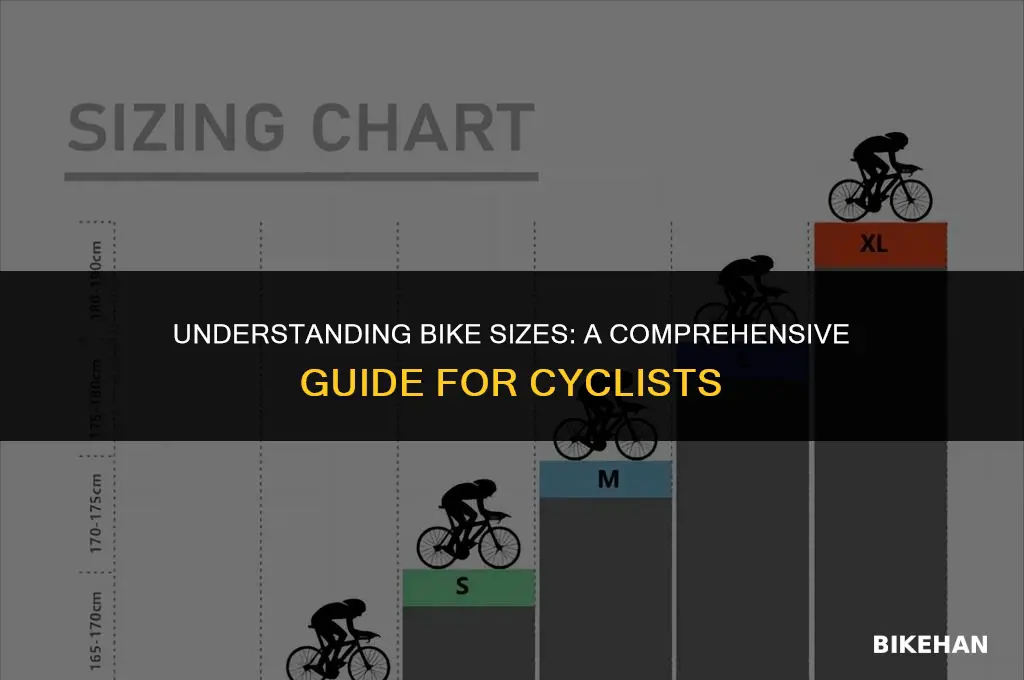
When it comes to bicycles, size is a crucial factor that affects both comfort and performance. The size of a bike is typically determined by the length of the frame, which is measured from the center of the bottom bracket to the top of the seat tube. Bikes come in a range of sizes to accommodate different body types and riding styles. For example, a small bike might have a frame size of around 48 cm, while a large bike could be 58 cm or more. Additionally, bike sizes can vary by brand and model, so it's important to consult the manufacturer's sizing chart when selecting a new bike. Proper sizing ensures that the rider can maintain an efficient and comfortable riding position, reducing the risk of injury and improving overall enjoyment of the cycling experience.
Explore related products


What You'll Learn
- Bike Frame Sizes: Understanding the different frame sizes available for bikes and how they impact rider comfort and performance
- Wheel Sizes: Exploring the various wheel sizes used in bicycles, from smaller BMX wheels to larger mountain bike wheels
- Handlebar Widths: Discussing the importance of handlebar width in bike sizing and its effect on handling and control
- Seat Height Adjustment: Explaining how to properly adjust the seat height on a bike for optimal riding position and efficiency
- Bike Types and Sizing: Comparing how sizing varies across different types of bikes, such as road bikes, mountain bikes, and hybrid bikes

Bike Frame Sizes: Understanding the different frame sizes available for bikes and how they impact rider comfort and performance
Bike frame sizes play a crucial role in determining rider comfort and performance. Understanding the different frame sizes available is essential for selecting the right bike for your needs. Frame size is typically measured from the center of the bottom bracket to the top of the seat tube, and it can range from around 48 cm to 62 cm or more. The right frame size for you will depend on your height, inseam length, and riding style.
For example, a rider with a height of 5'6" to 5'8" would typically require a frame size of around 52 cm to 54 cm. However, this is just a general guideline, and individual preferences may vary. Some riders may prefer a slightly larger or smaller frame size based on their riding style and comfort preferences.
Choosing the wrong frame size can lead to discomfort and decreased performance. A frame that is too small may cause the rider to feel cramped and restricted, while a frame that is too large may make it difficult to reach the handlebars and pedals comfortably. This can lead to inefficient pedaling, decreased control, and increased risk of injury.
To determine the right frame size for you, it's important to consider both your height and inseam length. Your inseam length is the distance from the floor to the top of your inner thigh, and it can be measured by standing against a wall with your feet shoulder-width apart and measuring the distance from the floor to the top of your inner thigh. Once you have these measurements, you can use a frame size chart to determine the right frame size for your needs.
In addition to height and inseam length, it's also important to consider your riding style when selecting a frame size. For example, if you plan to do a lot of off-road riding, you may want to choose a slightly smaller frame size to allow for more maneuverability and control. On the other hand, if you plan to do a lot of long-distance road riding, you may want to choose a slightly larger frame size for increased comfort and stability.
Ultimately, the key to selecting the right frame size is to find a balance between comfort and performance. By considering your height, inseam length, and riding style, you can choose a frame size that will allow you to ride comfortably and efficiently, while also minimizing the risk of injury.
Understanding Bike Sizes: A Guide to 58mm Frames
You may want to see also
Explore related products


Wheel Sizes: Exploring the various wheel sizes used in bicycles, from smaller BMX wheels to larger mountain bike wheels
Bicycle wheel sizes play a crucial role in determining the bike's performance and suitability for different terrains and riding styles. The spectrum of wheel sizes ranges from the compact 20-inch wheels found on BMX bikes to the substantial 29-inch wheels commonly seen on mountain bikes. Each size offers distinct advantages and is tailored to specific cycling needs.
BMX bikes, known for their agility and use in stunt riding, feature 20-inch wheels that provide a lower center of gravity, enhancing maneuverability and control during tricks. As we move up in size, 24-inch and 26-inch wheels are often found on cruiser and hybrid bikes, striking a balance between comfort and efficiency for casual riding on paved surfaces.
The 27.5-inch and 29-inch wheels dominate the mountain biking scene, offering increased ground clearance and better obstacle handling on rough trails. These larger wheels also provide a smoother ride over uneven terrain, thanks to their ability to roll over bumps and dips more effectively. However, the trade-off for this improved off-road performance is a higher center of gravity, which can affect handling and stability.
When selecting a bike, understanding the relationship between wheel size and intended use is essential. Riders should consider factors such as their height, riding style, and the type of terrain they will be traversing. For instance, a taller rider may benefit from the increased stability of a 29-inch wheel, while a shorter rider might find a 24-inch or 26-inch wheel more manageable.
In conclusion, the diverse range of bicycle wheel sizes caters to a wide array of cycling preferences and requirements. By carefully considering the unique characteristics of each wheel size, riders can choose a bike that optimizes their performance and enjoyment on the road or trail.
Understanding Bike Sizes: A Guide to 29-Inch Bikes
You may want to see also
Explore related products



Handlebar Widths: Discussing the importance of handlebar width in bike sizing and its effect on handling and control
The width of a bike's handlebars plays a crucial role in determining the overall handling and control of the bicycle. Wider handlebars provide greater stability and control, especially when navigating through rough terrain or making sharp turns. This is because a wider handlebar allows for a more natural hand and arm position, reducing strain and increasing leverage. On the other hand, narrower handlebars are often preferred for road bikes as they enable a more aerodynamic riding position and can improve speed.
When considering bike sizing, handlebar width is an essential factor to take into account. A handlebar that is too wide or too narrow can negatively impact the rider's comfort and control. For example, a rider with smaller hands may find it difficult to grip and control a very wide handlebar, while a rider with larger hands may feel cramped on a narrow handlebar.
In addition to affecting handling and control, handlebar width can also influence the bike's overall geometry. A wider handlebar can make a bike feel more stable and planted, while a narrower handlebar can make it feel more agile and responsive. This is why it's important to choose a handlebar width that is appropriate for the type of riding you will be doing and your personal preferences.
When selecting a handlebar width, it's also important to consider the stem length and the reach of the bike. A longer stem and a greater reach will typically require a wider handlebar to maintain proper control and comfort. Conversely, a shorter stem and a smaller reach may allow for a narrower handlebar.
Ultimately, the ideal handlebar width will vary depending on the individual rider and the specific type of riding they will be doing. It's important to experiment with different handlebar widths and to consult with a professional bike fitter to determine the best option for your needs. By choosing the right handlebar width, you can improve your bike's handling and control, and enhance your overall riding experience.
Understanding Bike Frame Sizes: A Guide to 56-Inch Frames
You may want to see also
Explore related products


Seat Height Adjustment: Explaining how to properly adjust the seat height on a bike for optimal riding position and efficiency
To properly adjust the seat height on a bike for optimal riding position and efficiency, start by ensuring the bike is on a level surface and the pedals are in the 6 o'clock position. This will allow for a more accurate assessment of the rider's leg extension. The rider should sit on the saddle with their feet on the pedals, and their knees should be slightly bent at the bottom of the pedal stroke. If the rider's knees are fully extended or their heels are lifting off the pedals, the seat height needs to be adjusted.
To adjust the seat height, locate the seat post clamp, which is typically found just below the saddle. Loosen the clamp by turning it counterclockwise, and then raise or lower the seat post as needed. It's important to make small adjustments and test the new height before fully tightening the clamp. The ideal seat height will allow the rider to have a slight bend in their knees at the bottom of the pedal stroke, with their feet flat on the pedals.
Once the seat height is adjusted, it's crucial to also check the saddle's fore-and-aft position. The saddle should be positioned so that the rider's sit bones are directly over the pedals, and their hands are comfortably reaching the handlebars. This will ensure a balanced and efficient riding position, reducing the risk of injury and improving overall comfort.
In addition to adjusting the seat height and saddle position, riders should also consider the handlebar height and reach. The handlebars should be positioned so that the rider can comfortably reach them without straining their arms or shoulders. This will help maintain a relaxed and efficient riding position, allowing the rider to focus on the road ahead.
Proper seat height adjustment is essential for both comfort and efficiency when riding a bike. By following these steps and considering the rider's individual needs and preferences, cyclists can achieve an optimal riding position that will enhance their overall biking experience.
Understanding Bike Sizes: A Guide to 52cm Bicycles
You may want to see also
Explore related products


Bike Types and Sizing: Comparing how sizing varies across different types of bikes, such as road bikes, mountain bikes, and hybrid bikes
Road bikes, mountain bikes, and hybrid bikes each have their own unique sizing considerations based on the rider's intended use and body measurements. Road bikes typically feature a more aggressive riding position, with a lower handlebar height and a longer reach to the pedals. This requires a different sizing approach compared to mountain bikes, which have a more upright riding position and a shorter reach to the pedals. Hybrid bikes, which combine elements of both road and mountain bikes, have their own sizing nuances that cater to their versatile nature.
When sizing a road bike, the primary measurement is the rider's inseam, which is used to determine the saddle height. The saddle height should allow the rider to touch the ground with both feet when seated, with a slight bend in the knees. The handlebar height is then adjusted to create the desired riding position, with the rider's arms extended and elbows slightly bent.
For mountain bikes, the sizing process takes into account the rider's inseam, as well as their torso length and arm reach. The saddle height is typically higher than on a road bike, allowing the rider to stand up and pedal more easily on steep terrain. The handlebar height is also higher, providing better control and maneuverability on rough trails.
Hybrid bikes, which are designed for both on-road and off-road use, have a sizing approach that falls somewhere between road and mountain bikes. The saddle height is typically lower than on a mountain bike, but higher than on a road bike, allowing for a comfortable riding position on both paved and unpaved surfaces. The handlebar height is also adjusted to provide a balance between control and comfort.
In addition to these general sizing guidelines, it's important to consider the specific features of each bike model, such as the frame geometry and component specifications. These factors can affect the overall fit and feel of the bike, and may require adjustments to the sizing recommendations. Ultimately, the best way to determine the correct size for any type of bike is to test ride multiple models and consult with a knowledgeable bike shop professional.
Understanding Bike Frame Sizes: A Guide to the 23-Inch Frame
You may want to see also
Frequently asked questions
The size of a bike typically refers to the length of the frame, which is measured from the center of the bottom bracket to the top of the seat tube. This measurement is usually given in inches or centimeters.
To determine the right bike size, you'll need to consider your height and inseam length. Most bike manufacturers provide size charts that correlate these measurements with the appropriate frame size. You can also visit a local bike shop for a professional fitting.
Common bike sizes for adults range from 48 cm to 62 cm (or XXS to XXL) for road bikes, and from 13 inches to 21 inches for mountain bikes. However, sizes can vary depending on the brand and type of bike.
While you can make some adjustments to the fit of your bike, such as raising or lowering the seat and handlebars, you cannot significantly change the overall size of the frame. If your bike is too big or too small, it's best to consider exchanging it for a more appropriate size.