Samantha Lee
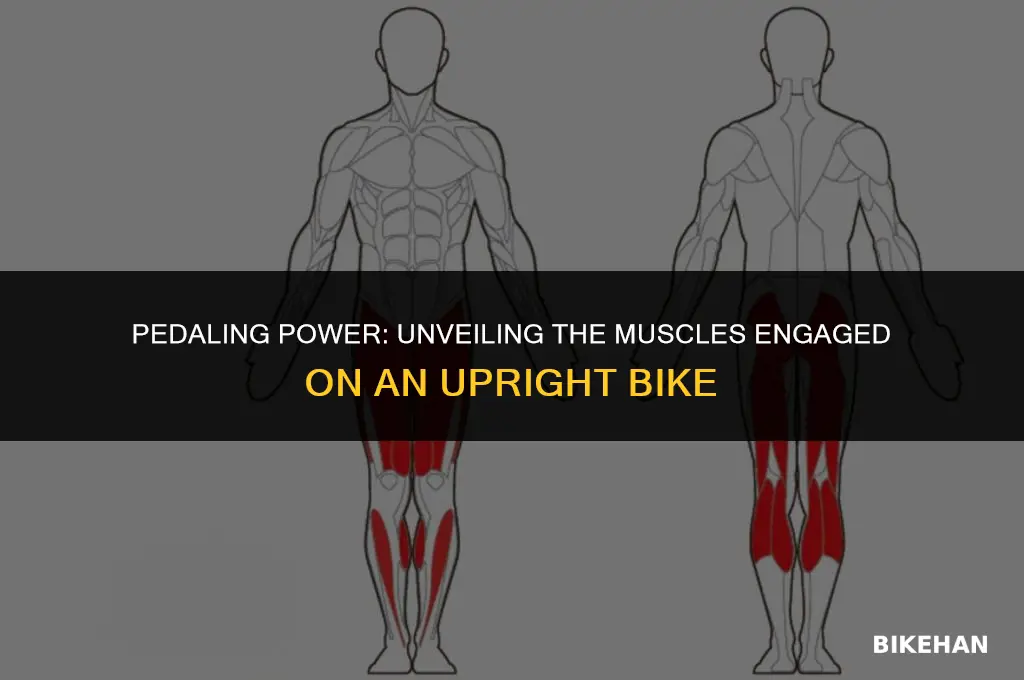
When riding an upright bike, several key muscle groups are engaged to power your movement and maintain balance. The primary muscles utilized include the quadriceps, hamstrings, glutes, and calves in your legs, which work together to push down on the pedals and propel the bike forward. Additionally, your core muscles, including the abdominals and lower back, are crucial for stabilizing your body and maintaining an upright posture. The arms and shoulders also play a role in steering and balancing, particularly when navigating turns or uneven terrain. Understanding which muscles are engaged during cycling can help riders optimize their training and improve their overall performance and comfort on the bike.
| Characteristics | Values |
|---|---|
| Muscle Groups | Quadriceps, Hamstrings, Glutes, Calves, Core |
| Quadriceps | Rectus Femoris, Vastus Lateralis, Vastus Intermedius, Vastus Medialis |
| Hamstrings | Semitendinosus, Semimembranosus, Biceps Femoris |
| Glutes | Gluteus Maximus, Gluteus Medius, Gluteus Minimus |
| Calves | Gastrocnemius, Soleus |
| Core | Rectus Abdominis, Obliques, Transverse Abdominis |
| Primary Action | Pedaling |
| Secondary Actions | Balancing, Steering |
| Intensity | Moderate to High |
| Duration | Variable (dependent on workout) |
| Frequency | Variable (dependent on workout) |
| Resistance | Variable (dependent on bike settings) |
| Impact | Low |
| Range of Motion | Circular (pedaling motion) |
| Equipment | Upright Bike |
| Additional Notes | Proper form and technique are crucial to avoid injury and maximize muscle engagement. |
Explore related products


What You'll Learn
- Leg Muscles: Quadriceps, hamstrings, glutes, and calves are the primary muscles engaged during cycling
- Core Muscles: Abdominals and lower back muscles are crucial for maintaining stability and posture on the bike
- Arm Muscles: Biceps, triceps, and forearms are used to grip the handlebars and control the bike
- Shoulder Muscles: Deltoids and trapezius muscles help in steering and maintaining balance
- Back Muscles: Latissimus dorsi and rhomboids are engaged to support the spine and aid in breathing

Leg Muscles: Quadriceps, hamstrings, glutes, and calves are the primary muscles engaged during cycling
Cycling is a dynamic activity that engages multiple muscle groups in the legs. The quadriceps, located at the front of the thigh, are responsible for extending the knee joint and are heavily involved in the downstroke phase of cycling. The hamstrings, situated at the back of the thigh, play a crucial role in bending the knee and are most active during the upstroke phase. The glutes, or buttocks, are essential for maintaining proper posture and generating power during the pedal stroke. Lastly, the calves, which include the gastrocnemius and soleus muscles, are engaged in stabilizing the foot and ankle during cycling.
To maximize the benefits of cycling, it's important to understand how these muscles work together. During the downstroke, the quadriceps contract to push the pedal down, while the glutes help to stabilize the hips and transfer power from the legs to the pedals. As the pedal moves upward, the hamstrings contract to pull the pedal up, and the calves assist in maintaining foot stability. This coordinated effort of the leg muscles not only propels the bike forward but also helps to improve cardiovascular fitness, muscle strength, and endurance.
In addition to the primary leg muscles, cycling also engages the core muscles, including the abdominals and lower back, to maintain balance and stability. The arms and shoulders are also involved in steering and balancing the bike. However, the leg muscles are the primary drivers of the cycling motion and are responsible for generating the majority of the power required to move the bike.
To avoid injury and maximize performance, cyclists should focus on proper form and technique. This includes maintaining a comfortable and stable riding position, using a smooth and controlled pedal stroke, and gradually increasing intensity to avoid overexertion. Stretching and strengthening exercises targeting the leg muscles can also help to improve cycling performance and reduce the risk of injury.
In conclusion, cycling is an excellent way to engage and strengthen the leg muscles, particularly the quadriceps, hamstrings, glutes, and calves. By understanding how these muscles work together and focusing on proper form and technique, cyclists can maximize the benefits of this dynamic and enjoyable activity.
Pedal Power: Unveiling the Muscles Engaged on an Exercise Bike
You may want to see also
Explore related products


Core Muscles: Abdominals and lower back muscles are crucial for maintaining stability and posture on the bike
The core muscles, comprising the abdominals and lower back muscles, play a pivotal role in maintaining stability and posture while riding an upright bike. These muscles are engaged continuously to keep the rider balanced and to facilitate smooth pedaling. The rectus abdominis, obliques, and transverse abdominis work in tandem with the erector spinae and other lower back muscles to provide the necessary support.
When riding an upright bike, the core muscles are activated to stabilize the torso, preventing excessive swaying or leaning. This is particularly important when navigating turns or uneven terrain. The engagement of these muscles also helps in maintaining an efficient pedaling cadence by providing a stable base for the legs to push against.
In addition to stability, the core muscles contribute to overall posture on the bike. Proper posture is essential for comfort and performance, as it reduces the risk of strain or injury. By keeping the spine aligned and the shoulders relaxed, the core muscles help in maintaining an aerodynamic position, which can enhance speed and endurance.
Strengthening the core muscles through targeted exercises can significantly improve a cyclist's performance and reduce the risk of injury. Exercises such as planks, leg raises, and back extensions can help in building the necessary strength and endurance. Incorporating these exercises into a regular training routine can lead to better stability, posture, and overall cycling efficiency.
In conclusion, the core muscles are integral to the cycling experience on an upright bike. They provide the essential stability and support needed for efficient pedaling and navigation. By understanding the role of these muscles and taking steps to strengthen them, cyclists can enhance their performance and enjoy a more comfortable and injury-free ride.
Post-Extraction Cycling: A Guide to Safe Bike Riding After Tooth Removal
You may want to see also
Explore related products


Arm Muscles: Biceps, triceps, and forearms are used to grip the handlebars and control the bike
The arm muscles play a crucial role in cycling, particularly when it comes to gripping the handlebars and controlling the bike. The biceps, triceps, and forearms are the primary muscles engaged in this activity. While the legs are often considered the powerhouse of cycling, the arms are essential for maintaining balance, steering, and ensuring a comfortable ride.
The biceps are responsible for flexing the elbow joint, which is important for maintaining a firm grip on the handlebars. As you cycle, your biceps contract and relax, helping to absorb the vibrations and shocks from the road. This is especially important when riding on rough terrain or during long-distance rides, where fatigue can set in.
The triceps, on the other hand, are responsible for extending the elbow joint. They work in conjunction with the biceps to provide a stable grip on the handlebars. When you're cycling uphill or accelerating, your triceps are engaged to help you maintain control of the bike. They also play a role in braking, as you need to apply pressure to the brake levers with your hands.
The forearms are often overlooked when it comes to cycling, but they are essential for maintaining a comfortable and efficient riding position. The muscles in your forearms help to stabilize your wrists and hands, preventing them from becoming fatigued or cramped during long rides. They also play a role in controlling the bike's direction, as you need to make subtle adjustments to the handlebars to navigate turns and obstacles.
To improve your cycling performance and reduce the risk of injury, it's important to strengthen and condition your arm muscles. This can be done through a variety of exercises, such as bicep curls, tricep extensions, and forearm stretches. Incorporating these exercises into your training routine can help you build the necessary strength and endurance to tackle even the most challenging rides.
Choosing the Right Lubricant for Cartridge Bearing Bike Hubs
You may want to see also
Explore related products



Shoulder Muscles: Deltoids and trapezius muscles help in steering and maintaining balance
The deltoids and trapezius muscles play a crucial role in the mechanics of riding an upright bike. These shoulder muscles are primarily responsible for steering and maintaining balance, two essential functions for safe and efficient cycling. The deltoids, located on the outer shoulder, work in conjunction with the trapezius muscles, which span the upper back and extend down to the shoulder blades. Together, they enable the rider to make precise turns and adjustments while navigating various terrains.
When steering an upright bike, the deltoids and trapezius muscles contract to pull the handlebars in the desired direction. This action is particularly evident when making sharp turns or maneuvering through tight spaces. Additionally, these muscles help stabilize the upper body, preventing excessive swaying or leaning that could compromise balance. This stabilizing function is especially important when riding on uneven surfaces or when encountering sudden obstacles.
Maintaining balance on an upright bike requires constant, subtle adjustments by the deltoids and trapezius muscles. They work in tandem with the core muscles to keep the rider's center of gravity aligned over the bike's wheels. This coordination is vital for preventing falls and ensuring a smooth, controlled ride. Furthermore, the trapezius muscles play a key role in shoulder blade movement, which is essential for maintaining an aerodynamic posture and reducing wind resistance.
In summary, the deltoids and trapezius muscles are indispensable for the proper functioning of an upright bike. They facilitate steering, maintain balance, and contribute to overall riding efficiency. By understanding the specific roles of these shoulder muscles, cyclists can better appreciate the biomechanics of biking and take steps to strengthen and condition these muscles for improved performance and safety.
Unveiling the Strength: Metals That Power Your Bicycle's Performance
You may want to see also
Explore related products


Back Muscles: Latissimus dorsi and rhomboids are engaged to support the spine and aid in breathing
The latissimus dorsi and rhomboids are key players in maintaining spinal stability and facilitating respiration during upright cycling. These muscles work in tandem to support the spine, ensuring that it remains in a neutral position, which is crucial for both comfort and performance. The latissimus dorsi, spanning the width of the back, pulls the shoulders down and back, while the rhomboids, located between the shoulder blades, help to retract and stabilize the scapulae.
During inhalation, the latissimus dorsi and rhomboids aid in expanding the chest cavity by pulling the ribs upwards and outwards. This action increases the volume of the thoracic cavity, allowing the lungs to fill with air more efficiently. Conversely, during exhalation, these muscles assist in compressing the chest cavity, pushing the ribs downwards and inwards, which helps to expel air from the lungs.
In the context of upright cycling, maintaining proper posture is essential to engage these muscles effectively. Cyclists should ensure that their shoulders are relaxed and down, their chest is open, and their spine is in a neutral position. This posture not only optimizes the function of the latissimus dorsi and rhomboids but also reduces the risk of strain or injury.
Strengthening these muscles through targeted exercises can enhance cycling performance and reduce the risk of back pain. Exercises such as lat pulldowns, rows, and scapular retractions can help to build the necessary strength and endurance. Additionally, incorporating stretching and mobility exercises into a cyclist's routine can improve flexibility and range of motion, further supporting the health and function of these critical back muscles.
Best Motorcycles for Farm and Ranch Work: A Comprehensive Guide
You may want to see also
Frequently asked questions
The primary muscles engaged while riding an upright bike include the quadriceps, hamstrings, glutes, and calves. These muscles work together to power the pedals and maintain balance.
The position of the handlebars on an upright bike allows for a more relaxed posture, reducing strain on the back and shoulders. This position primarily engages the muscles in the lower body, such as the quadriceps, hamstrings, and glutes, while also utilizing the core muscles for stability.
While the primary focus of riding an upright bike is on the lower body muscles, the upper body muscles, including the arms, shoulders, and core, are also engaged to a lesser extent. These muscles help with balance, steering, and maintaining an upright posture.
Increasing the resistance level on an upright bike intensifies the workout for the primary muscles involved, such as the quadriceps, hamstrings, and glutes. Higher resistance requires more force to pedal, leading to greater muscle engagement and potentially improved strength and endurance over time.
Yes, riding an upright bike can be an effective way to burn calories and aid in weight loss. The activity engages multiple muscle groups, increasing the overall calorie expenditure. Additionally, regular cardiovascular exercise, such as biking, can contribute to a healthier lifestyle and weight management when combined with a balanced diet.