Matthew Brooks
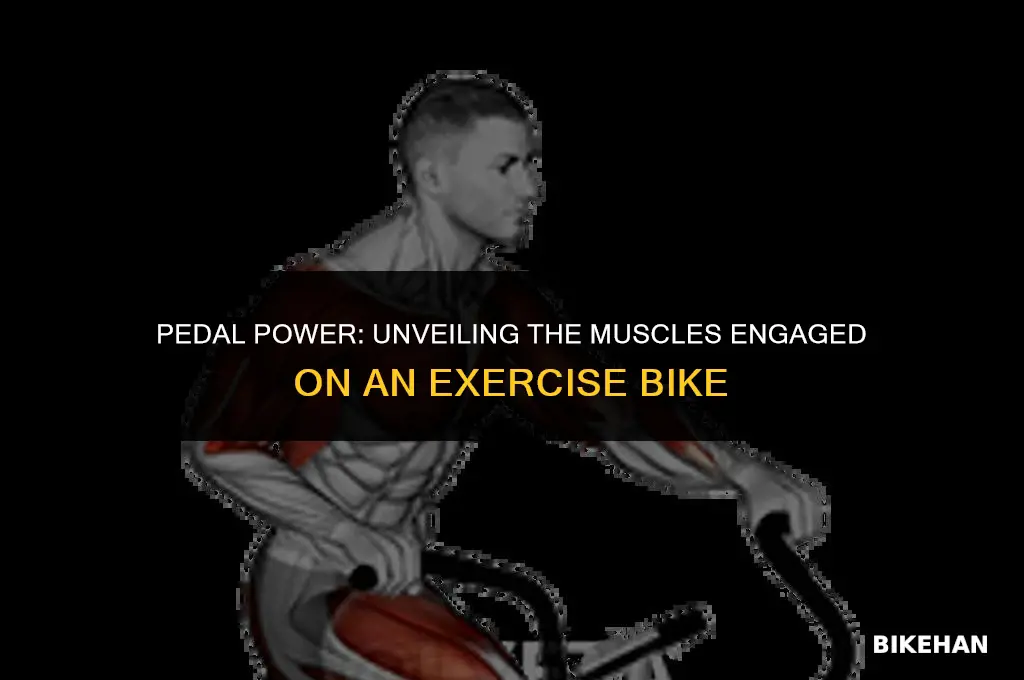
When using an exercise bike, several muscle groups are engaged to facilitate the pedaling motion and maintain balance. The primary muscles utilized include the quadriceps, hamstrings, glutes, and calves in the lower body. Additionally, the core muscles, such as the abdominals and lower back, are activated to stabilize the torso. The upper body also plays a role, with the arms and shoulders helping to maintain proper posture and grip on the handlebars. This comprehensive engagement makes cycling an effective full-body workout, improving cardiovascular health, muscle strength, and overall fitness.
Explore related products


What You'll Learn
- Leg Muscles: Quadriceps, hamstrings, glutes, and calves are the primary muscles engaged during cycling
- Core Muscles: The rectus abdominis, obliques, and lower back muscles are activated to maintain balance and stability
- Upper Body Muscles: While less involved, the shoulders, arms, and chest muscles can be engaged if using handlebars for support
- Muscle Endurance: Cycling primarily builds muscular endurance, allowing muscles to sustain activity over extended periods
- Muscle Strength: Regular cycling can also increase muscle strength, particularly in the lower body, due to the repetitive motion and resistance

Leg Muscles: Quadriceps, hamstrings, glutes, and calves are the primary muscles engaged during cycling
Cycling, whether on an exercise bike or outdoors, is a comprehensive lower-body workout that targets multiple muscle groups. The quadriceps, located at the front of the thigh, are the primary extensors of the knee and are heavily engaged during the downstroke phase of cycling. This phase, where the leg is pushed downwards to turn the pedal, demands significant quadriceps activation, making it an effective exercise for building strength and endurance in these muscles.
The hamstrings, situated at the back of the thigh, play a crucial role in the upstroke phase of cycling. As the leg lifts and the knee bends, the hamstrings contract to control the movement and prepare the leg for the next downstroke. This continuous engagement helps in developing the hamstrings, contributing to overall leg strength and stability.
The glutes, or buttocks, are another key muscle group activated during cycling. They are responsible for hip extension, which is essential for maintaining an efficient pedaling motion. Strong glutes help in generating power and speed, making cycling an excellent exercise for toning and strengthening this area.
Lastly, the calves, located at the back of the lower leg, are engaged throughout the cycling motion. They assist in ankle plantarflexion, which is the downward movement of the foot, and help in maintaining proper foot positioning on the pedals. This constant activation can lead to improved calf definition and endurance.
In summary, cycling is a multifaceted exercise that effectively targets the quadriceps, hamstrings, glutes, and calves. By incorporating cycling into a fitness routine, individuals can enhance leg strength, improve cardiovascular health, and achieve overall lower-body fitness.
Unfolding the Secrets: Materials Behind Foldable Bikes
You may want to see also
Explore related products


Core Muscles: The rectus abdominis, obliques, and lower back muscles are activated to maintain balance and stability
The core muscles, including the rectus abdominis, obliques, and lower back muscles, play a crucial role in maintaining balance and stability during exercise bike workouts. These muscles are engaged to keep the body upright and stable, allowing for efficient pedaling and minimizing the risk of injury.
The rectus abdominis, commonly known as the "six-pack" muscles, are located in the front of the abdomen. They contract to flex the spine and help maintain an upright posture while riding the exercise bike. The obliques, situated on the sides of the abdomen, are responsible for rotating the torso and stabilizing the body during side-to-side movements. They also assist in maintaining proper alignment of the spine and pelvis.
The lower back muscles, including the erector spinae and multifidus, are essential for extending the spine and providing support to the lower back. During exercise bike workouts, these muscles help maintain a neutral spine position, preventing excessive forward or backward leaning that could lead to discomfort or injury.
To effectively engage the core muscles while using an exercise bike, it is important to maintain proper form and posture. This includes keeping the back straight, shoulders relaxed, and hands firmly gripping the handlebars. Additionally, focusing on controlled breathing and avoiding leaning too far forward or backward can help ensure that the core muscles are properly activated throughout the workout.
In summary, the core muscles, including the rectus abdominis, obliques, and lower back muscles, are vital for maintaining balance and stability during exercise bike workouts. By understanding the role of these muscles and focusing on proper form and posture, individuals can maximize the effectiveness of their exercise bike routines and reduce the risk of injury.
Exploring the Optimal Mix for X1 Pocket Bike Performance
You may want to see also
Explore related products


Upper Body Muscles: While less involved, the shoulders, arms, and chest muscles can be engaged if using handlebars for support
While the legs are the primary movers during cycling, the upper body also plays a crucial role, especially when using handlebars for support. The shoulders, arms, and chest muscles can be engaged to varying degrees, depending on the intensity and style of cycling. For instance, when gripping the handlebars tightly during a sprint or while navigating a steep incline, the deltoids, biceps, and triceps are activated to help stabilize the upper body and maintain control of the bike.
The chest muscles, particularly the pectoralis major, are also engaged when leaning forward on the bike, as this position requires the chest to push against the handlebars. This forward-leaning posture is common in road cycling and mountain biking, where aerodynamics and control are essential. Additionally, the serratus anterior, a muscle that helps to stabilize the shoulder blades, is activated when maintaining an upright posture on the bike.
To maximize the engagement of these upper body muscles, cyclists can incorporate specific techniques into their riding. For example, alternating between sitting and standing positions on the bike can increase the demand on the shoulders, arms, and chest. When standing, the cyclist should focus on keeping their elbows slightly bent and their shoulders relaxed, allowing the legs to do the majority of the work while the upper body provides support.
Incorporating interval training into cycling workouts can also help to target the upper body muscles. During high-intensity intervals, cyclists should focus on maintaining a strong grip on the handlebars and engaging their core muscles to stabilize the upper body. This not only helps to improve overall cycling performance but also contributes to a more balanced and efficient workout.
In summary, while the upper body muscles may not be as heavily involved as the legs during cycling, they still play a significant role in maintaining control, stability, and posture on the bike. By incorporating specific techniques and training methods, cyclists can effectively engage these muscles and improve their overall performance and fitness.
Unveiling the Secret: Which Keiser Spin Bike Model Powers LA Fitness?
You may want to see also
Explore related products


Muscle Endurance: Cycling primarily builds muscular endurance, allowing muscles to sustain activity over extended periods
Cycling is renowned for its ability to enhance muscular endurance, a critical component of overall fitness. Muscular endurance refers to the capacity of muscles to perform repeated contractions over an extended period without succumbing to fatigue. This is particularly important in cycling, where sustained effort is required to maintain speed and efficiency over long distances.
The primary muscles engaged during cycling are the quadriceps, hamstrings, glutes, and calves. These muscles work in concert to power the pedals and propel the cyclist forward. The quadriceps, located at the front of the thigh, are responsible for the downward motion of the pedal stroke, while the hamstrings and glutes provide the necessary force for the upward motion. The calves play a supporting role, helping to stabilize the foot and ankle during the pedal stroke.
In addition to these major muscle groups, cycling also engages the core muscles, including the abdominals and lower back. These muscles are crucial for maintaining proper posture and balance on the bike, which is essential for efficient pedaling and injury prevention.
To maximize muscular endurance gains from cycling, it is important to focus on long, steady rides at a moderate intensity. This type of training will help to increase the muscles' ability to utilize oxygen and delay the onset of fatigue. Incorporating interval training, where short bursts of high-intensity effort are followed by periods of recovery, can also be beneficial for improving muscular endurance.
Proper nutrition and hydration are essential for supporting muscular endurance during cycling. Consuming a balanced diet rich in carbohydrates, proteins, and healthy fats will provide the necessary energy and nutrients for sustained performance. Staying hydrated before, during, and after rides is crucial for maintaining optimal muscle function and preventing cramping and fatigue.
In conclusion, cycling is an excellent way to build muscular endurance, particularly in the lower body and core. By focusing on long, steady rides, incorporating interval training, and maintaining proper nutrition and hydration, cyclists can significantly improve their muscles' ability to sustain activity over extended periods.
Essential Mountain Bike Bags for Downhill Biking Adventures
You may want to see also
Explore related products


Muscle Strength: Regular cycling can also increase muscle strength, particularly in the lower body, due to the repetitive motion and resistance
Regular cycling is a powerful way to build muscle strength, especially in the lower body. The repetitive motion of pedaling engages multiple muscle groups, creating a comprehensive workout that targets both the front and back of the legs. As you push down on the pedals, your quadriceps, located at the front of your thighs, contract to generate force. Simultaneously, your hamstrings, situated at the back of your thighs, work to stabilize your legs and assist in the pedaling motion.
In addition to these primary muscle groups, cycling also engages your glutes, calves, and even your core muscles. The glutes, or buttocks, play a crucial role in powering each pedal stroke, while the calves help to maintain proper foot positioning and provide additional force. Your core muscles, including the abdominals and lower back, are activated to maintain stability and balance during the workout.
To maximize muscle strength gains from cycling, it's essential to incorporate resistance training into your routine. This can be achieved by adjusting the tension on your exercise bike or by adding weights to your workout. By increasing the resistance, you challenge your muscles to work harder, leading to greater strength gains over time.
Another key factor in building muscle strength through cycling is consistency. Regular workouts, ideally 3-4 times per week, allow your muscles to adapt and grow stronger. It's also important to vary the intensity and duration of your workouts to keep your muscles guessing and prevent plateaus.
In conclusion, cycling is an effective way to increase muscle strength in the lower body. By engaging multiple muscle groups and incorporating resistance training, you can achieve significant strength gains and improve your overall fitness level.
Understanding Shark Toothing on Bikes: A Comprehensive Guide
You may want to see also
Frequently asked questions
The primary muscles engaged while using an exercise bike are the quadriceps, hamstrings, glutes, and calves. These muscles work together to pedal the bike and maintain balance.
Yes, while the primary focus is on the lower body, the upper body muscles, such as the arms, shoulders, and back, are also engaged to a lesser extent. They help in maintaining balance and posture while riding the bike.
The intensity of pedaling directly affects muscle engagement. Higher intensity pedaling requires more force from the quadriceps, hamstrings, and glutes, leading to increased muscle activation and development.
Yes, using an exercise bike can help in building muscle mass, especially in the lower body. Consistent and intense cycling sessions can lead to increased muscle size and strength over time.
To increase the effectiveness of a workout on an exercise bike, you can vary the resistance, incorporate interval training, and adjust the duration of your sessions. Additionally, focusing on proper form and engaging your core muscles can enhance the overall workout experience.