Matthew Brooks
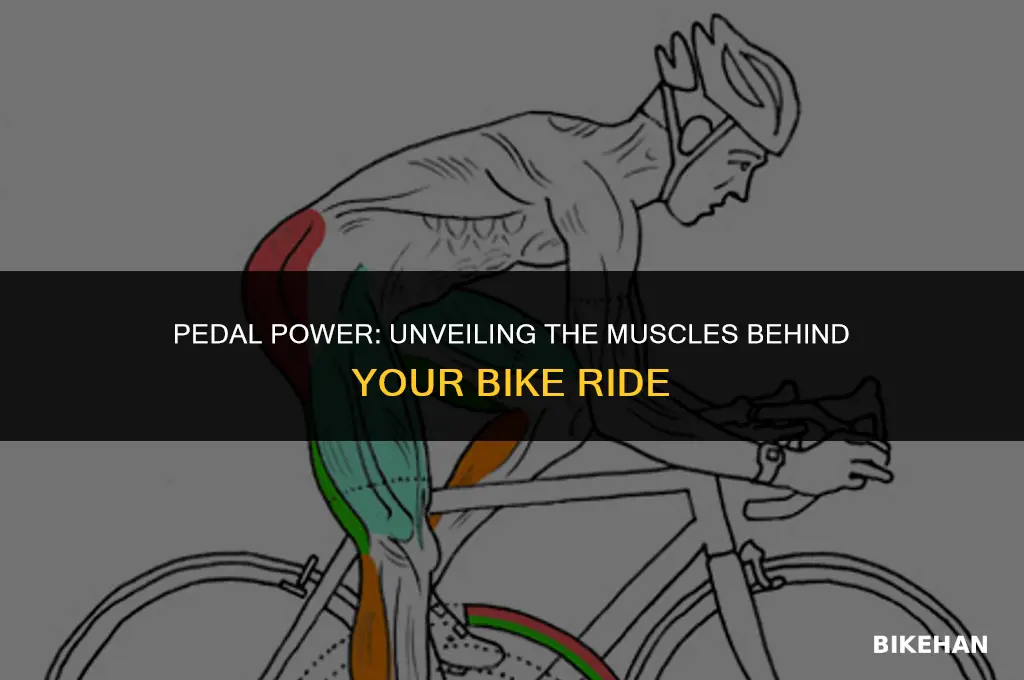
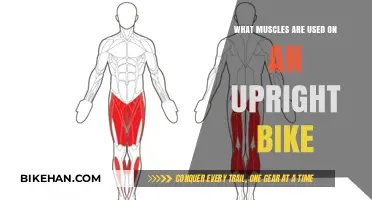
Cycling is an excellent form of exercise that engages multiple muscle groups throughout the body. When you pedal, your legs are the primary movers, utilizing the quadriceps, hamstrings, glutes, and calf muscles to generate power and propel the bike forward. However, cycling also requires core stability to maintain balance and posture, engaging the abdominals, obliques, and lower back muscles. Additionally, your arms and shoulders are involved in steering and maintaining control of the handlebars, while your chest and back muscles help with breathing and upper body stability. Overall, cycling is a full-body workout that can improve cardiovascular fitness, muscle strength, and flexibility.
Explore related products

$11.99 $17.99


What You'll Learn
- Leg Muscles: Quadriceps, hamstrings, glutes, and calves are the primary muscles engaged during cycling
- Core Muscles: Abdominals, obliques, and lower back muscles are crucial for maintaining stability and balance on the bike
- Upper Body Muscles: While less involved, muscles in the shoulders, arms, and back help with steering and maintaining posture
- Muscle Endurance: Cycling requires sustained muscle effort, particularly in the legs, to maintain pedaling over long distances
- Muscle Recovery: Proper rest, nutrition, and stretching are essential for muscle recovery and preventing injuries in cyclists

Leg Muscles: Quadriceps, hamstrings, glutes, and calves are the primary muscles engaged during cycling
Cycling is a dynamic activity that heavily relies on the strength and endurance of various leg muscles. The quadriceps, located at the front of the thigh, play a crucial role in extending the knee joint, which is essential for the pedaling motion. As you push down on the pedals, your quadriceps contract, providing the necessary force to propel the bike forward.
On the backside of the thigh, the hamstrings are equally important. They are responsible for flexing the knee and extending the hip, which helps in maintaining a smooth and efficient pedaling cadence. The glutes, or gluteal muscles, are the powerhouse of the lower body. They contribute significantly to hip extension and external rotation, which are vital movements for generating power and speed while cycling.
The calves, comprising the gastrocnemius and soleus muscles, are often overlooked but are essential for plantar flexion at the ankle joint. This movement helps in pushing down on the pedals with greater force and maintaining proper foot positioning. Additionally, the calves play a role in stabilizing the lower leg and absorbing shock during cycling.
To optimize your cycling performance and prevent injuries, it's crucial to strengthen and condition these leg muscles. Incorporating exercises such as squats, lunges, deadlifts, and calf raises into your training routine can help build the necessary strength and endurance. Furthermore, proper warm-up and cool-down routines, along with adequate stretching, are essential for maintaining muscle flexibility and preventing strains or pulls.
In conclusion, the quadriceps, hamstrings, glutes, and calves are the primary muscles engaged during cycling. Understanding their roles and functions can help you tailor your training and improve your overall cycling performance. By focusing on strengthening these muscles and maintaining proper form and technique, you can enhance your efficiency, speed, and endurance on the bike.
Exploring the Essential Materials That Make Up Modern Bicycles
You may want to see also
Explore related products


Core Muscles: Abdominals, obliques, and lower back muscles are crucial for maintaining stability and balance on the bike
The core muscles, comprising the abdominals, obliques, and lower back muscles, play a pivotal role in maintaining stability and balance while cycling. These muscles work in harmony to keep the torso stable, which is essential for efficient pedaling and overall control of the bike. When you pedal, your core muscles engage to prevent excessive side-to-side movement and to maintain proper posture. This stability is crucial, especially when navigating uneven terrain or making sharp turns.
The abdominal muscles, located at the front of the torso, are key players in this process. They contract to stabilize the spine and pelvis, ensuring that the upper body remains steady. The obliques, situated on the sides of the torso, also contribute significantly by resisting rotational forces that could otherwise cause the rider to lose balance. Meanwhile, the lower back muscles, including the erector spinae, work to extend the spine and maintain an upright posture, which is vital for both comfort and control during long rides.
In addition to their role in stability, strong core muscles can also enhance cycling performance. A robust core allows for more efficient power transfer from the legs to the pedals, as the torso remains stable and does not absorb excess energy. This can lead to improved speed and endurance, making core strength an important aspect of a cyclist's overall fitness regimen.
To strengthen these core muscles, cyclists can incorporate specific exercises into their training routine. Planks, for example, are an excellent way to target the abdominals and obliques, while lower back extensions can help fortify the muscles of the lumbar region. By focusing on these exercises, cyclists can develop a stronger, more stable core, which will ultimately translate to better performance and control on the bike.
Measuring Bike Trails: The Essential Guide to Metric Units
You may want to see also
Explore related products


Upper Body Muscles: While less involved, muscles in the shoulders, arms, and back help with steering and maintaining posture
While the legs are the primary drivers of a cyclist's motion, the upper body plays a crucial role in maintaining control and stability. The muscles in the shoulders, arms, and back are engaged to steer the bike and maintain an optimal posture, reducing the risk of injury and improving overall performance.
The deltoids, or shoulder muscles, are responsible for lifting and rotating the arms, which is essential for steering the bike. The trapezius muscles, located in the upper back, work in conjunction with the deltoids to stabilize the shoulders and maintain a balanced posture. This is particularly important when navigating tight turns or uneven terrain, as it helps to prevent the cyclist from losing control or falling off the bike.
The biceps and triceps, located in the upper arms, are also engaged during cycling. The biceps are responsible for flexing the elbow, which helps to absorb shock and maintain a comfortable grip on the handlebars. The triceps, on the other hand, extend the elbow and provide additional support to the shoulders. This is especially important when riding on rough roads or trails, as it helps to reduce the impact on the upper body and prevent fatigue.
In addition to these muscles, the core muscles, including the abdominals and lower back, play a vital role in maintaining stability and control. A strong core helps to keep the cyclist's body aligned and balanced, reducing the risk of injury and improving overall performance.
To improve upper body strength and endurance for cycling, it's essential to incorporate a variety of exercises into a training routine. This can include weightlifting, bodyweight exercises, and plyometric drills. Focusing on exercises that target the deltoids, trapezius, biceps, triceps, and core muscles can help to build the necessary strength and endurance for a more efficient and comfortable ride.
Exploring the Power Behind Specialized E-Bikes: A Motor Guide
You may want to see also
Explore related products



Muscle Endurance: Cycling requires sustained muscle effort, particularly in the legs, to maintain pedaling over long distances
Cycling is a demanding sport that requires a unique combination of strength, endurance, and technique. Among these, muscle endurance plays a crucial role, particularly in the legs, as cyclists need to maintain a consistent pedaling motion over long distances. This sustained effort is essential for efficient energy utilization and preventing fatigue.
The primary muscles engaged during cycling are the quadriceps, hamstrings, glutes, and calves. These muscles work in harmony to produce the circular motion of pedaling. The quadriceps, located at the front of the thigh, are responsible for the downstroke phase, where they extend the knee and drive the pedal downward. The hamstrings, situated at the back of the thigh, take over during the upstroke phase, bending the knee and pulling the pedal back up. The glutes, or buttocks muscles, provide additional power and stability during both phases, while the calves help to maintain the foot's position on the pedal and absorb shock.
To improve muscle endurance for cycling, it's essential to focus on high-repetition, low-resistance exercises that mimic the pedaling motion. This can include cycling-specific drills, such as interval training and hill repeats, as well as off-bike exercises like lunges, squats, and leg presses. Incorporating these exercises into a regular training routine can help cyclists build the necessary endurance to tackle long rides and challenging terrain.
In addition to targeted exercises, proper nutrition and hydration play a vital role in supporting muscle endurance. Consuming a balanced diet rich in carbohydrates, proteins, and healthy fats can provide the necessary fuel for sustained energy output. Staying hydrated before, during, and after rides is also crucial for preventing cramps and maintaining optimal muscle function.
Finally, recovery and rest are essential components of any training program aimed at improving muscle endurance. Allowing the body time to repair and adapt to the stresses of cycling can help prevent overtraining and reduce the risk of injury. This can include activities like stretching, foam rolling, and getting adequate sleep each night.
In conclusion, muscle endurance is a critical factor in cycling performance, particularly for long-distance rides. By focusing on specific exercises, proper nutrition, hydration, and recovery, cyclists can build the necessary endurance to excel in their sport and enjoy a more comfortable and efficient riding experience.
Exploring Motor Options for Bike Power: A Comprehensive Guide
You may want to see also
Explore related products


Muscle Recovery: Proper rest, nutrition, and stretching are essential for muscle recovery and preventing injuries in cyclists
Cyclists often focus on the physical demands of riding, but muscle recovery is equally crucial for performance and injury prevention. Proper rest is paramount, as it allows muscles to repair and strengthen. During rest, the body synthesizes proteins to mend muscle fibers damaged during exercise. For cyclists, this means ensuring adequate sleep and incorporating rest days into their training schedule.
Nutrition plays a vital role in muscle recovery. Consuming a balanced diet rich in protein, carbohydrates, and healthy fats provides the necessary building blocks for muscle repair. Immediately after a ride, cyclists should aim to consume a meal or snack that includes both protein and carbohydrates to kickstart the recovery process. Hydration is also essential, as dehydration can lead to muscle cramps and fatigue.
Stretching is another key component of muscle recovery. It helps to improve flexibility, reduce muscle tension, and prevent injuries. Cyclists should incorporate dynamic stretches into their pre-ride routine to prepare their muscles for the demands of cycling. Post-ride, static stretches can help to cool down the muscles and reduce soreness.
In addition to these core elements, cyclists should also consider other recovery techniques such as foam rolling, massage, and compression garments. These methods can help to improve blood flow, reduce inflammation, and speed up the recovery process. By prioritizing muscle recovery, cyclists can enhance their performance, reduce the risk of injury, and enjoy a more sustainable and enjoyable cycling experience.
Essential Mountain Bike Bags for Downhill Biking Adventures
You may want to see also
Frequently asked questions
The primary muscles used when cycling include the quadriceps, hamstrings, glutes, and calf muscles. These muscles work together to power the pedals and maintain balance.
The quadriceps, located at the front of the thigh, are crucial for extending the knee and pushing the pedals down. They provide the majority of the power during the downstroke phase of cycling.
The hamstrings, situated at the back of the thigh, are responsible for bending the knee and pulling the pedals up. They work in conjunction with the quadriceps to create a smooth and efficient pedaling motion.
Yes, the glutes are significantly involved in cycling. They help stabilize the hips and provide additional power during the downstroke. Strong glutes can enhance overall cycling performance and endurance.
The calf muscles, including the gastrocnemius and soleus, play a vital role in cycling by aiding in the push-off phase of the pedal stroke. They also help maintain proper foot positioning on the pedals and contribute to overall lower leg stability.