Lauren Kennedy
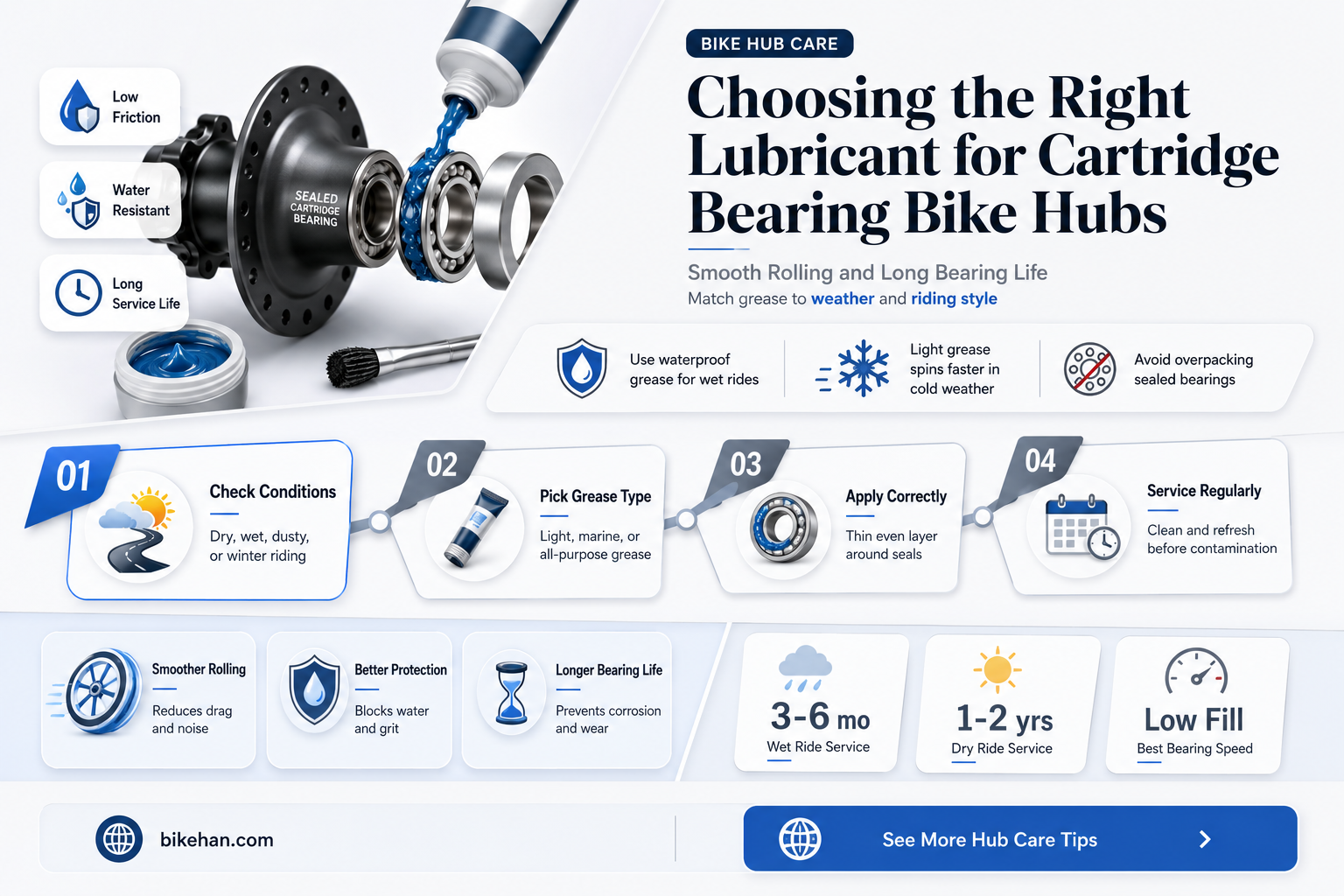
When it comes to maintaining your bike's cartridge bearing hubs, choosing the right lubricant is crucial for ensuring smooth operation and prolonging the life of your bearings. In this guide, we'll explore the different types of lubricants available, their properties, and how to select the best one for your specific needs. Whether you're a seasoned cyclist or a beginner, understanding the importance of proper lubrication and knowing which products to use can make a significant difference in your riding experience. So, let's dive in and discover the key factors to consider when choosing a lubricant for your cartridge bearing bike hubs.
Explore related products


What You'll Learn
- Types of Lubricants: Grease, oil, wax, and dry lubricants; their pros and cons for bike hubs
- Grease Selection: Choosing the right grease viscosity for different riding conditions and temperatures
- Oil Lubrication: Best oil types for wet and dry conditions; how to apply and maintain
- Wax Lubricants: Advantages of wax for dry, dusty rides; application techniques and longevity
- Maintenance Tips: Regular cleaning, re-lubrication schedules, and signs of over-lubrication to avoid

Types of Lubricants: Grease, oil, wax, and dry lubricants; their pros and cons for bike hubs
Grease is a popular choice for bike hub lubrication due to its ability to create a protective barrier against moisture and contaminants. It's particularly effective in wet conditions and can provide long-lasting protection. However, grease can attract dirt and debris, potentially leading to a buildup that can impede the smooth operation of the hub. Additionally, over-application of grease can cause excess to seep out, creating a mess and potentially damaging other bike components.
Oil-based lubricants offer a different approach, providing a thinner, more fluid coating that can penetrate deeper into the bearings. This can result in smoother operation and reduced friction. However, oils can be more prone to dripping and may require more frequent application, especially in dry conditions. They also tend to be less effective at protecting against moisture and can wash away more easily in wet weather.
Wax lubricants represent a middle ground between grease and oil. They offer a semi-solid consistency that can provide a durable protective layer while still allowing for smooth operation. Wax is particularly effective in dry conditions and can be less messy than grease. However, it may not perform as well in wet conditions and can be more difficult to apply evenly.
Dry lubricants, such as those based on Teflon or graphite, offer a unique solution for bike hub lubrication. They provide a dry, powdery coating that can reduce friction without attracting dirt or moisture. This makes them ideal for use in dry, dusty conditions. However, dry lubricants may not provide the same level of protection against moisture as other types and can be more difficult to apply effectively.
When choosing a lubricant for cartridge bearing bike hubs, it's essential to consider the specific conditions in which the bike will be used. For wet and muddy conditions, grease may be the best choice. For dry, dusty environments, a dry lubricant could be more effective. Oil-based lubricants may be suitable for general use, while wax lubricants can offer a good balance between protection and performance. Ultimately, the best lubricant will depend on the rider's preferences, the bike's usage patterns, and the environmental conditions.
Choosing the Perfect Lube: A Guide to Bike Chain Maintenance
You may want to see also
Explore related products


Grease Selection: Choosing the right grease viscosity for different riding conditions and temperatures
Selecting the appropriate grease viscosity is crucial for maintaining the performance and longevity of cartridge bearing bike hubs. Grease viscosity refers to its thickness and resistance to flow, which directly impacts how well it lubricates the bearings under various conditions. For optimal performance, it’s essential to choose a grease that matches the specific requirements of your riding environment and the temperature ranges you’ll encounter.
In general, lower viscosity greases (e.g., 0# or 1# NLGI grade) are suitable for colder temperatures and high-speed applications, as they flow more easily and provide better lubrication. Conversely, higher viscosity greases (e.g., 2# or 3# NLGI grade) are preferable for warmer temperatures and lower speed applications, as they offer better stability and resistance to melting.
When selecting a grease for your bike hubs, consider the following factors:
- Temperature Range: Choose a grease that can withstand the temperature extremes you’ll encounter during your rides. For cold climates, a lower viscosity grease will ensure smooth bearing operation, while in hot climates, a higher viscosity grease will prevent the bearings from drying out or seizing.
- Riding Conditions: If you frequently ride in wet or muddy conditions, opt for a grease with good water resistance properties. This will help prevent water from penetrating the bearings and causing corrosion or damage.
- Bearing Type: Different bearing types may require specific grease formulations. For example, ceramic bearings often benefit from a lighter, more fluid grease, while steel bearings may require a thicker, more robust grease.
To ensure proper grease application, follow these steps:
- Clean the Bearings: Before applying new grease, thoroughly clean the bearings to remove any old grease, dirt, or debris. This will ensure that the new grease adheres properly and provides optimal lubrication.
- Apply the Grease: Use a small amount of grease and apply it evenly to the bearings. Over-greasing can lead to excess heat buildup and reduced bearing life.
- Reassemble the Hub: Once the grease is applied, reassemble the hub and test it to ensure smooth operation.
Regular maintenance and proper grease selection are key to keeping your bike hubs running smoothly and efficiently. By choosing the right grease viscosity for your specific riding conditions and temperatures, you can significantly extend the life of your bearings and enjoy a more reliable and enjoyable riding experience.
Gearing Up: The Impact of Tooth Count on Bike Performance
You may want to see also
Explore related products


Oil Lubrication: Best oil types for wet and dry conditions; how to apply and maintain
For optimal performance and longevity of cartridge bearing bike hubs, choosing the right oil lubricant is crucial. In wet conditions, where water and mud are prevalent, a thicker oil with a higher viscosity is recommended. This type of oil will create a protective film that prevents water from penetrating the bearings, thus reducing the risk of corrosion and wear. Look for oils specifically designed for wet conditions, often labeled as "wet lube" or "all-weather lube."
In contrast, dry conditions require a lighter oil with a lower viscosity. This allows for smoother rotation of the bearings and prevents the buildup of dirt and grime. Oils marketed as "dry lube" or "summer lube" are ideal for these conditions. They are formulated to evaporate quickly, leaving behind a thin, protective layer that doesn't attract dirt.
When applying oil lubricant to cartridge bearing bike hubs, it's essential to follow a few key steps. First, ensure the bearings are clean and free of any old lubricant or debris. Use a clean rag or paper towel to wipe away any excess dirt. Next, apply a small amount of oil to the bearings, being careful not to over-lubricate. Over-lubrication can lead to the buildup of dirt and grime, which can negatively impact performance. Finally, rotate the wheels to distribute the oil evenly throughout the bearings.
Regular maintenance is also important to ensure the longevity of your cartridge bearing bike hubs. In wet conditions, it's recommended to clean and re-lubricate the bearings every 100-200 miles. In dry conditions, you can go a bit longer, aiming for every 300-500 miles. Always inspect the bearings for signs of wear or damage, and replace them if necessary.
By choosing the right oil lubricant and following proper application and maintenance techniques, you can keep your cartridge bearing bike hubs running smoothly and efficiently, regardless of the conditions.
Understanding Shark Toothing on Bikes: A Comprehensive Guide
You may want to see also
Explore related products


Wax Lubricants: Advantages of wax for dry, dusty rides; application techniques and longevity
Wax lubricants offer a distinct advantage for cyclists who frequently ride in dry, dusty conditions. Unlike traditional oil-based lubricants, wax creates a dry film that repels dirt and grime, ensuring smoother and more efficient rides over longer distances. This characteristic makes wax particularly suitable for off-road cycling or in regions with arid climates where dust and sand can quickly clog traditional lubricants.
Application techniques for wax lubricants are relatively straightforward but require attention to detail for optimal performance. First, ensure the bike hub is thoroughly cleaned and free of any existing lubricant or debris. Next, apply a thin layer of wax directly to the bearing surfaces, using a small brush or applicator to reach all areas evenly. It's crucial not to overapply, as excess wax can build up and negatively impact performance. After application, allow the wax to set for a few minutes before wiping off any surplus with a clean cloth.
The longevity of wax lubricants can vary depending on riding conditions and frequency. In general, wax can last for several hundred miles under normal riding conditions, but in more demanding environments, such as off-road or in extreme temperatures, reapplication may be necessary more frequently. Regular maintenance checks are recommended to monitor the condition of the wax and ensure timely reapplication to maintain optimal performance.
One of the key benefits of wax lubricants is their environmental friendliness. Unlike oil-based lubricants, which can be harmful if ingested or released into the environment, wax is non-toxic and biodegradable. This makes it a safer choice for both cyclists and the planet, reducing the risk of contamination during maintenance or in the event of a spill.
In summary, wax lubricants provide a unique solution for cyclists seeking a durable and efficient lubricant for dry, dusty rides. With proper application and maintenance, wax can offer long-lasting performance while also being environmentally responsible. Cyclists who frequently ride in challenging conditions should consider incorporating wax lubricants into their maintenance routine for improved efficiency and reduced environmental impact.
Post-Extraction Cycling: When Is It Safe to Ride Again?
You may want to see also
Explore related products


Maintenance Tips: Regular cleaning, re-lubrication schedules, and signs of over-lubrication to avoid
Regular cleaning is crucial for maintaining the performance and longevity of cartridge bearing bike hubs. Dirt and grime can accumulate over time, leading to increased friction and wear on the bearings. To clean the hubs, start by removing the wheels from the bike and disassembling the hubs according to the manufacturer's instructions. Use a soft brush or cloth to gently remove any loose dirt, then apply a small amount of degreaser to the bearings and let it sit for a few minutes. After the degreaser has had time to work, use a clean cloth to wipe away any remaining grime and residue. Be sure to avoid using harsh chemicals or abrasive materials that could damage the bearings.
Re-lubrication schedules are essential for keeping the bearings running smoothly. The frequency of re-lubrication will depend on the specific lubricant used and the riding conditions. As a general rule, it's recommended to re-lubricate the bearings every 100-200 miles or after a thorough cleaning. When re-lubricating, apply a small amount of lubricant to each bearing and rotate the hub to ensure even distribution. Over-lubrication can be just as problematic as under-lubrication, so it's important to use the correct amount of lubricant.
Signs of over-lubrication include excessive noise, increased friction, and a buildup of grime and dirt around the bearings. If you suspect that your hubs are over-lubricated, it's best to clean them thoroughly and start with a fresh application of lubricant. In some cases, it may be necessary to use a lubricant remover to fully clean the bearings and remove any excess lubricant.
When choosing a lubricant for cartridge bearing bike hubs, it's important to select a product that is specifically designed for this purpose. Look for a lubricant that is compatible with the materials used in the bearings and that provides adequate protection against wear and corrosion. Avoid using general-purpose lubricants or those that are not suitable for use on bicycle components.
In conclusion, proper maintenance of cartridge bearing bike hubs involves regular cleaning, adherence to re-lubrication schedules, and careful attention to signs of over-lubrication. By following these tips, you can help ensure that your hubs perform optimally and last for many miles to come.
Safe Cycling After Tooth Extraction: Tips and Precautions
You may want to see also
Frequently asked questions
For cartridge bearing bike hubs, it's recommended to use a high-quality synthetic grease. This type of lubricant provides excellent protection against wear and corrosion, and it maintains its consistency over a wide range of temperatures.
The frequency of lubrication depends on usage and environmental conditions. As a general rule, it's a good idea to inspect and lubricate your hubs every 100-200 miles or at least once a season. If you ride in wet or dirty conditions, you may need to lubricate more frequently.
While WD-40 and other spray lubricants can be used as a temporary solution, they are not ideal for long-term use on cartridge bearing bike hubs. These types of lubricants tend to evaporate quickly and may not provide adequate protection against wear and corrosion. It's best to use a synthetic grease specifically designed for bike bearings.
If your cartridge bearing bike hubs are making noise, feeling rough, or not spinning smoothly, it's likely that they need lubrication. Regular maintenance and inspection can help prevent these issues and ensure that your hubs are functioning properly.