Matthew Brooks
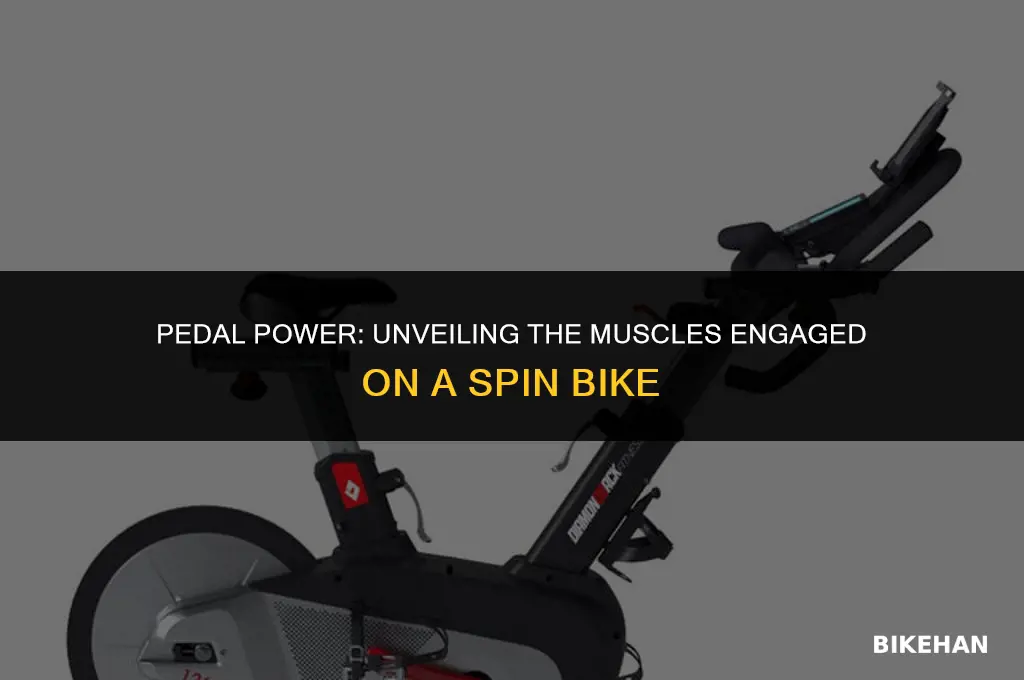
When using a spin bike, several key muscle groups are engaged to power through the workout. The primary muscles utilized include the quadriceps, hamstrings, glutes, and calves in the lower body. These muscles work together to generate force and maintain the pedaling motion. Additionally, the core muscles, including the abdominals and lower back, are activated to stabilize the body and maintain proper posture during the ride. The upper body also plays a role, with the arms and shoulders engaged to grip the handlebars and control the bike's resistance. Overall, spinning is a comprehensive workout that targets multiple muscle groups simultaneously, making it an effective way to improve cardiovascular fitness and muscular endurance.
Explore related products


What You'll Learn
- Leg Muscles: Quadriceps, hamstrings, glutes, and calves are the primary muscles engaged during spin bike workouts
- Core Muscles: The rectus abdominis, obliques, and lower back muscles are crucial for maintaining proper posture and stability
- Upper Body Muscles: While not the primary focus, the arms, shoulders, and back muscles are used to maintain balance and grip
- Cardiovascular System: Spinning is an excellent cardio workout, improving heart health and increasing overall endurance
- Muscle Endurance: Regular spin bike use can lead to increased muscle endurance, particularly in the lower body muscles

Leg Muscles: Quadriceps, hamstrings, glutes, and calves are the primary muscles engaged during spin bike workouts
During a spin bike workout, the quadriceps are the primary muscles engaged. These muscles are located at the front of the thigh and are responsible for extending the knee joint. When pedaling, the quadriceps contract to push down on the pedals, providing the necessary force to propel the bike forward.
The hamstrings, located at the back of the thigh, are also heavily engaged during spin bike workouts. These muscles are responsible for bending the knee joint and work in conjunction with the quadriceps to maintain a smooth and efficient pedaling motion. As the pedals rotate, the hamstrings contract to pull the pedals back up, ensuring a continuous and fluid movement.
The glutes, or buttocks muscles, play a crucial role in stabilizing the hips and maintaining proper posture during spin bike workouts. These muscles contract to keep the hips level and prevent them from swaying side to side, which can lead to discomfort and inefficiency. Additionally, the glutes help to generate power and momentum, especially when standing up on the pedals or accelerating.
The calves, located at the back of the lower leg, are also engaged during spin bike workouts. These muscles are responsible for plantarflexion, or pointing the toes downward, which helps to maintain a secure grip on the pedals. The calves also assist in stabilizing the ankles and preventing excessive movement, which can lead to injury.
In summary, the quadriceps, hamstrings, glutes, and calves are the primary muscles engaged during spin bike workouts. These muscles work together to provide the necessary force, stability, and efficiency required for a successful and effective workout. By targeting these specific muscle groups, spin bike workouts can help to improve overall lower body strength, endurance, and cardiovascular fitness.
Revving Up Production: The Machinery Behind Harley-Davidson Bikes
You may want to see also
Explore related products


Core Muscles: The rectus abdominis, obliques, and lower back muscles are crucial for maintaining proper posture and stability
The rectus abdominis, obliques, and lower back muscles are essential for maintaining proper posture and stability while using a spin bike. These core muscles work in tandem to support the spine, facilitate smooth pedaling, and enhance overall balance.
The rectus abdominis, commonly known as the "six-pack" muscles, run vertically along the front of the abdomen. They play a crucial role in stabilizing the torso and maintaining an upright posture during intense cycling sessions. Engaging these muscles helps prevent slouching and reduces the risk of lower back pain.
The obliques, located on the sides of the abdomen, are responsible for rotational movements and lateral stability. When pedaling on a spin bike, the obliques help maintain a stable core, allowing for efficient power transfer from the legs to the pedals. Strengthening these muscles can improve cycling performance and reduce the risk of injury.
The lower back muscles, including the erector spinae and multifidus, provide support for the lumbar spine. They work in conjunction with the abdominal muscles to maintain a neutral spine position, which is essential for proper posture and stability on the bike. Weakness in these muscles can lead to poor posture, lower back pain, and decreased cycling efficiency.
To effectively engage these core muscles while using a spin bike, it's important to maintain proper form and technique. This includes keeping the shoulders relaxed, the chest open, and the core muscles engaged throughout the entire range of motion. Additionally, incorporating specific core-strengthening exercises into a regular workout routine can help improve overall cycling performance and reduce the risk of injury.
Pedaling in Comfort: Unveiling the Muscle Mechanics of Recumbent Biking
You may want to see also
Explore related products


Upper Body Muscles: While not the primary focus, the arms, shoulders, and back muscles are used to maintain balance and grip
While the legs are the primary drivers of a spin bike workout, the upper body muscles play a crucial supporting role. The arms, shoulders, and back muscles are engaged to maintain balance and grip, which is essential for a safe and effective ride.
The arms are used to pump the handlebars, which helps to increase the intensity of the workout and engage the upper body. This action primarily targets the biceps and triceps, but also involves the brachialis and brachioradialis muscles. The shoulders are engaged to stabilize the upper body and maintain proper posture, with the deltoids, trapezius, and rhomboids being the primary muscles involved.
The back muscles, including the latissimus dorsi, rhomboids, and erector spinae, are also engaged to maintain balance and proper posture. These muscles help to keep the spine aligned and prevent the rider from leaning too far forward or backward.
In addition to maintaining balance and grip, the upper body muscles also play a role in generating power and speed. By engaging the arms and shoulders, riders can increase their overall power output and maintain a higher cadence.
To maximize the engagement of the upper body muscles, riders should focus on maintaining proper posture and grip, and avoid leaning too heavily on the handlebars. By doing so, they can ensure a safe and effective workout that targets both the upper and lower body.
Smooth Shifting: The Ultimate Guide to Bike Cable Lubricants
You may want to see also
Explore related products


Cardiovascular System: Spinning is an excellent cardio workout, improving heart health and increasing overall endurance
Spinning is an excellent cardio workout, improving heart health and increasing overall endurance. This high-intensity exercise elevates the heart rate, promoting better cardiovascular function and stamina. Regular spinning sessions can lead to improved lung capacity, enhanced circulation, and a reduced risk of heart disease.
The cardiovascular benefits of spinning are attributed to its ability to engage multiple muscle groups simultaneously. As you pedal, your legs, glutes, and core muscles work in harmony, requiring a significant amount of oxygen and energy. This increased demand on the body's energy systems leads to a higher heart rate and improved cardiovascular fitness.
In addition to its cardiovascular benefits, spinning also provides an excellent lower body workout. The constant pedaling motion targets the quadriceps, hamstrings, glutes, and calves, helping to build strength and endurance in these muscles. The resistance level of the spin bike can be adjusted to increase the intensity of the workout, further challenging the cardiovascular system and promoting muscle growth.
To maximize the cardiovascular benefits of spinning, it's essential to maintain proper form and technique. This includes sitting upright on the bike, engaging the core muscles, and avoiding leaning forward or backward. Additionally, varying the resistance level and incorporating interval training can help to keep the heart rate elevated and improve overall cardiovascular fitness.
In conclusion, spinning is an excellent cardio workout that provides numerous benefits for the cardiovascular system. By engaging multiple muscle groups and elevating the heart rate, spinning can help to improve heart health, increase endurance, and promote overall fitness.
Gearing Up: The Impact of Tooth Count on Bike Performance
You may want to see also
Explore related products


Muscle Endurance: Regular spin bike use can lead to increased muscle endurance, particularly in the lower body muscles
Regular spin bike use can lead to increased muscle endurance, particularly in the lower body muscles. This is because spinning engages multiple muscle groups simultaneously, providing a comprehensive workout that builds stamina over time. The primary muscles targeted during spinning are the quadriceps, hamstrings, glutes, and calves. These muscles work together to power the pedals, and as you increase the resistance and duration of your rides, they adapt by becoming stronger and more efficient.
One of the key benefits of spinning is its ability to improve cardiovascular fitness while also building muscle endurance. Unlike other forms of cardio, such as running or cycling, spinning allows you to adjust the resistance to challenge your muscles more intensely. This leads to greater muscle activation and, ultimately, increased endurance. Additionally, spinning is a low-impact exercise, making it suitable for people of all fitness levels and reducing the risk of injury compared to high-impact activities.
To maximize muscle endurance gains from spinning, it's important to vary your workout routine. Incorporating different types of rides, such as interval training, hill climbs, and endurance rides, can help target different muscle fibers and prevent plateauing. Interval training, for example, involves alternating between high-intensity sprints and low-intensity recovery periods, which can help improve both anaerobic and aerobic endurance. Hill climbs, on the other hand, focus on building strength and endurance in the quadriceps and glutes by simulating uphill riding.
In addition to varying your workout routine, proper nutrition and recovery are crucial for building muscle endurance. Consuming a balanced diet rich in carbohydrates, protein, and healthy fats can help fuel your workouts and support muscle repair and growth. Adequate hydration is also essential, as dehydration can impair muscle function and hinder recovery. After each ride, it's important to stretch and foam roll to prevent muscle soreness and improve flexibility. Getting enough sleep each night is another key factor, as sleep is when your body repairs and rebuilds muscle tissue.
In conclusion, regular spin bike use can be an effective way to increase muscle endurance, particularly in the lower body muscles. By varying your workout routine, focusing on proper nutrition and recovery, and making spinning a consistent part of your fitness regimen, you can experience significant improvements in muscle endurance and overall fitness.
Choosing the Right Lube for Your Stationary Bike: A Guide
You may want to see also
Frequently asked questions
The primary muscles engaged while using a spin bike include the quadriceps, hamstrings, glutes, and calves in the lower body. Additionally, the core muscles, including the abdominals and lower back, are activated to maintain stability and posture.
Increasing the resistance level on a spin bike intensifies the workout, leading to greater engagement of the leg muscles, particularly the quadriceps and hamstrings. Higher resistance also requires more effort from the core muscles to maintain balance and stability.
Yes, by adjusting your spin bike technique, you can target specific muscle groups. For example, leaning forward and gripping the handlebars can shift the focus to your quadriceps, while sitting back and using the pedals to pull upwards can engage your glutes and hamstrings more effectively.
Using a spin bike offers several benefits for muscle strengthening and endurance. It provides a low-impact, high-intensity workout that can improve cardiovascular fitness, increase muscle tone, and enhance overall leg strength. Additionally, spin biking can help burn calories, improve joint mobility, and reduce stress on the knees and ankles compared to high-impact exercises.