 Lauren Kennedy
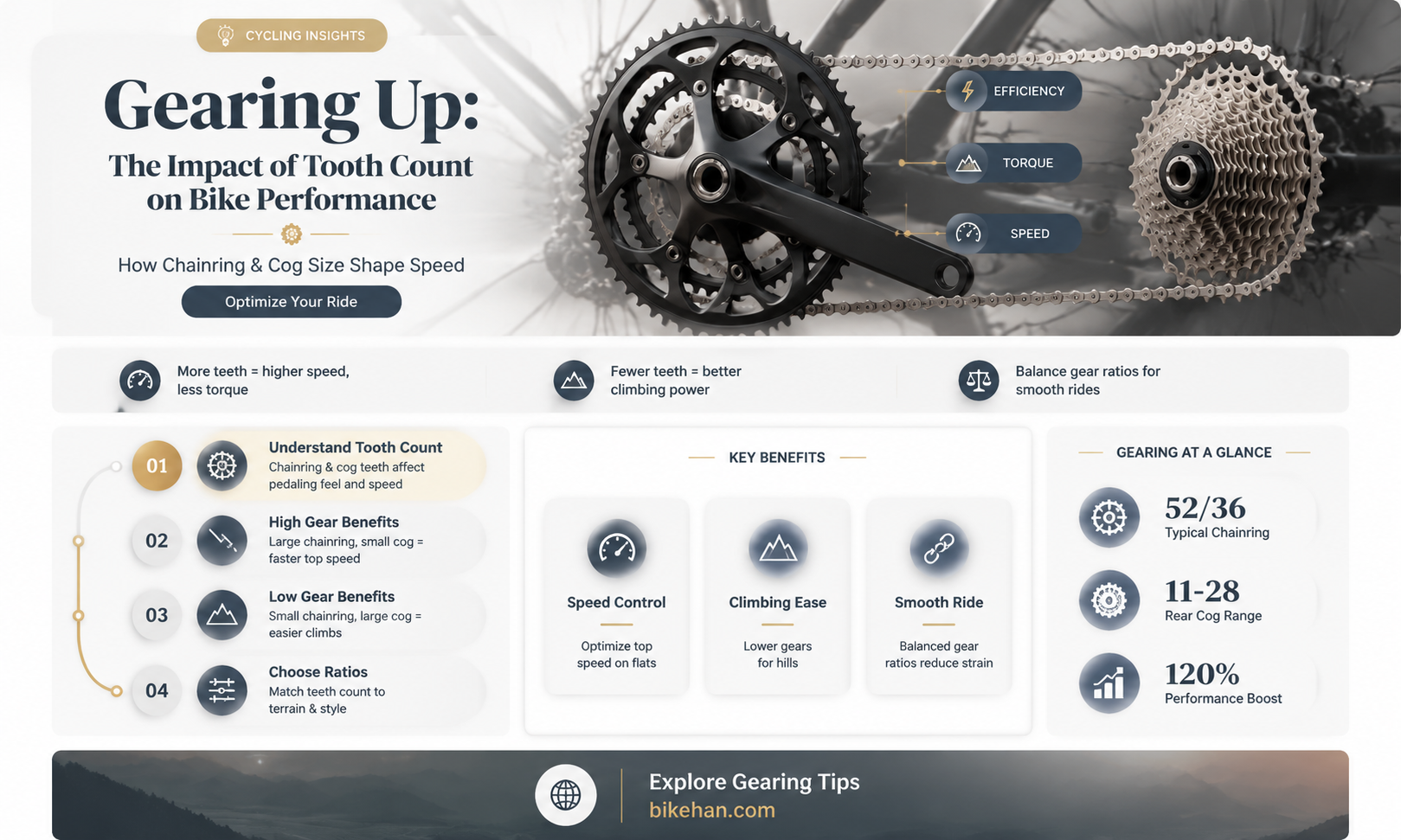
Tooth count, or more accurately, gear ratio, plays a crucial role in the performance and efficiency of bicycles. It determines how easy or difficult it is to pedal, affecting speed, power output, and rider fatigue. A higher gear ratio (more teeth on the front chainring relative to the rear cog) makes pedaling harder but allows for faster speeds, ideal for descents or racing. Conversely, a lower gear ratio (fewer teeth on the front chainring) makes pedaling easier, suitable for climbing hills or casual riding. Understanding gear ratios is essential for cyclists to optimize their bike setup for different terrains and riding styles.
Explore related products


What You'll Learn
- Gear Ratio Impact: How tooth count affects bike gear ratios and overall performance
- Chain Strength: The relationship between tooth count and chain durability
- Weight Considerations: Does a higher tooth count increase bike weight significantly
- Pedaling Efficiency: How different tooth counts influence pedaling ease and speed
- Terrain Adaptability: Choosing the right tooth count for various biking terrains

Gear Ratio Impact: How tooth count affects bike gear ratios and overall performance
The gear ratio of a bicycle is a critical factor in determining its performance, and the tooth count of the gears plays a significant role in this. The gear ratio is defined as the number of teeth on the front chainring divided by the number of teeth on the rear cog. A higher gear ratio means that the bike will travel further with each pedal stroke, making it easier to maintain high speeds on flat terrain. Conversely, a lower gear ratio provides more torque, making it easier to climb hills or accelerate from a stop.
The tooth count of the gears directly affects the gear ratio, and therefore, the performance of the bike. For example, a bike with a 53-tooth chainring and an 11-tooth cog will have a gear ratio of 4.82:1, which is suitable for racing on flat courses. On the other hand, a bike with a 30-tooth chainring and a 32-tooth cog will have a gear ratio of 0.94:1, which is more suitable for climbing steep hills.
The choice of tooth count depends on the type of riding the bike will be used for. For road racing, a higher gear ratio is preferred to maximize speed on flat terrain. For mountain biking, a lower gear ratio is preferred to provide more torque for climbing hills and navigating rough terrain. For urban commuting, a medium gear ratio is often preferred to provide a balance between speed and torque.
In addition to affecting the gear ratio, the tooth count of the gears also affects the bike's cadence. Cadence is the number of pedal strokes per minute, and it is an important factor in determining the efficiency and comfort of the rider. A higher gear ratio will result in a lower cadence, while a lower gear ratio will result in a higher cadence. Therefore, the tooth count of the gears must be chosen carefully to ensure that the bike's cadence is suitable for the type of riding it will be used for.
In conclusion, the tooth count of the gears has a significant impact on the gear ratio and overall performance of a bicycle. By choosing the appropriate tooth count, riders can optimize their bike's performance for the type of riding they will be doing, whether it be road racing, mountain biking, or urban commuting.
Explore related products




Chain Strength: The relationship between tooth count and chain durability
The relationship between tooth count and chain durability is a critical aspect of bicycle maintenance that often goes overlooked. Contrary to popular belief, the number of teeth on a bike's chainring does not directly impact the strength or longevity of the chain itself. Chain strength is primarily determined by the quality of the materials used in its construction, such as the type of steel and the manufacturing process. However, the tooth count can influence the wear and tear on the chain over time.
A higher tooth count on the chainring can lead to increased friction and stress on the chain, as it must engage with more teeth during each rotation. This can result in faster wear and a higher likelihood of chain failure. Conversely, a lower tooth count can reduce friction and stress, potentially extending the chain's lifespan. It's important to note that this relationship is not linear, and other factors such as gear shifting frequency, riding conditions, and maintenance practices also play significant roles in chain durability.
One common misconception is that a chain with more links will be stronger. In reality, the strength of a chain is determined by the tensile strength of its individual links, not the total number of links. Manufacturers often use the same materials and construction methods for chains of different lengths, so the overall strength remains consistent regardless of the number of links.
To maximize chain durability, it's essential to focus on proper maintenance and gear selection. Regular cleaning and lubrication can significantly reduce wear and extend the chain's lifespan. Additionally, choosing a chainring with an appropriate tooth count for the rider's needs and riding conditions can help minimize stress on the chain. For example, a rider who frequently tackles steep hills may benefit from a smaller chainring with fewer teeth, while a rider who primarily rides on flat terrain may prefer a larger chainring with more teeth.
In conclusion, while the tooth count on a bike's chainring does not directly determine chain strength, it can influence chain durability through increased friction and stress. Proper maintenance and gear selection are key to maximizing chain lifespan and ensuring a smooth, efficient ride.
Explore related products


Weight Considerations: Does a higher tooth count increase bike weight significantly?
The relationship between tooth count and bike weight is a nuanced one. While it's true that a higher tooth count can contribute to increased weight, the effect is often minimal and can be offset by other factors. For instance, a bike with a larger cassette may have more teeth overall, but if it's made from lightweight materials like aluminum or carbon fiber, the weight increase might be negligible. Conversely, a bike with fewer teeth but heavier components, such as a steel frame or large chainrings, could end up being heavier despite the lower tooth count.
One of the key considerations when evaluating the impact of tooth count on bike weight is the concept of rotational mass. This refers to the weight of the wheels, tires, and drivetrain components that rotate as the bike moves. A higher tooth count can increase rotational mass, which can make the bike feel heavier and more sluggish, especially when accelerating or climbing. However, this effect is often more pronounced in high-performance or racing bikes, where every gram of weight matters. For casual riders or those using their bikes for commuting, the difference in weight may not be as noticeable or significant.
Another factor to consider is the distribution of weight on the bike. A higher tooth count on the rear cassette can shift the weight distribution slightly towards the back of the bike, which may affect handling and balance. This can be particularly important for riders who prefer a more aggressive riding position or who frequently carry heavy loads on their bikes. In such cases, a higher tooth count might require adjustments to other components, such as the seat position or handlebar height, to maintain optimal balance and control.
Ultimately, the impact of tooth count on bike weight is just one of many factors to consider when choosing or customizing a bicycle. While a higher tooth count can contribute to increased weight, it's important to weigh this against other considerations, such as the bike's intended use, the rider's preferences, and the overall component selection. By taking a holistic approach to bike design and customization, riders can find the perfect balance between weight, performance, and comfort.
Explore related products


Pedaling Efficiency: How different tooth counts influence pedaling ease and speed
The efficiency of pedaling a bicycle is significantly influenced by the tooth count of the gears. A higher tooth count on the rear cassette generally makes it easier to pedal uphill or through difficult terrain, as it reduces the mechanical advantage required to turn the wheels. Conversely, a lower tooth count is beneficial for achieving higher speeds on flat or downhill sections, as it allows the rider to maintain a higher cadence with less effort.
For instance, a cyclist tackling a steep incline might find it easier to pedal with a 32-tooth cog rather than a 25-tooth cog, as the larger cog provides more leverage. On the other hand, when racing on a flat course, a 11-tooth cog might be preferred over a 14-tooth cog to enable faster acceleration and higher top speeds.
The relationship between tooth count and pedaling efficiency is not linear, however. Factors such as the rider's strength, the bike's weight, and the terrain's gradient all play a role in determining the optimal gear setup. Additionally, the front chainrings also affect pedaling efficiency, with larger chainrings providing more speed but requiring more effort to turn.
In practice, cyclists often experiment with different gear combinations to find the setup that best suits their riding style and the specific demands of their routes. Some riders prefer a wide-range cassette with a large number of gears to cover various terrains, while others opt for a simpler setup with fewer gears but more evenly spaced intervals.
Ultimately, the key to maximizing pedaling efficiency lies in understanding how tooth count affects gear ratios and selecting the appropriate gears for the task at hand. By doing so, cyclists can optimize their performance, conserve energy, and enjoy a more comfortable and enjoyable ride.
Explore related products


Terrain Adaptability: Choosing the right tooth count for various biking terrains
Navigating varied terrains on a bike requires more than just physical endurance; it demands a strategic approach to gear selection. The tooth count of your bike's cassette plays a pivotal role in determining how efficiently you can tackle different landscapes. For instance, a higher tooth count is ideal for climbing steep hills, as it allows for easier pedaling and better control. Conversely, a lower tooth count is more suitable for flat or downhill terrains, enabling higher speeds with less effort.
When choosing the right tooth count for your bike, consider the type of terrain you'll be riding most frequently. If you're an avid mountain biker, a wide-range cassette with a high maximum tooth count will be beneficial for handling rugged trails and steep inclines. On the other hand, road cyclists who primarily ride on smooth, paved surfaces may prefer a narrower range with fewer teeth to reduce weight and increase speed.
Another factor to consider is your personal riding style and fitness level. If you're a beginner or prefer a more leisurely pace, a higher tooth count can make it easier to maintain momentum on challenging terrains. However, if you're an experienced rider looking to push your limits, a lower tooth count can provide the necessary resistance for intense training sessions.
It's also important to note that the tooth count of your front chainrings should complement the rear cassette. A mismatch between the front and rear gears can lead to inefficient power transfer and a less enjoyable riding experience. Experimenting with different gear combinations can help you find the perfect balance for your specific needs and preferences.
In conclusion, the tooth count of your bike's cassette is a crucial factor in terrain adaptability. By selecting the appropriate tooth count for your riding style and the terrains you'll be tackling, you can optimize your bike's performance and enhance your overall cycling experience. Remember to consider both the front and rear gears, and don't be afraid to experiment with different combinations to find what works best for you.
Frequently asked questions
Yes, the tooth count of a bike's cassette significantly affects its performance. A higher tooth count provides easier pedaling on flat terrain and better acceleration, while a lower tooth count is more suitable for climbing hills and maintaining speed on varied terrain.
The front chainring's tooth count plays a crucial role in determining the bike's gearing. A larger chainring with more teeth results in higher gears, which are faster but require more effort to pedal, especially uphill. Conversely, a smaller chainring with fewer teeth offers lower gears, making it easier to pedal on inclines but slower on flat or downhill sections.
For a beginner cyclist, a bike with a moderate tooth count on both the cassette and chainrings is ideal. This setup provides a balance between speed and ease of pedaling, making it suitable for learning and building confidence on various types of terrain without being too challenging.
The tooth count can be adjusted on most bicycles by changing the cassette or chainrings. However, some bikes, especially those with internal gearing systems or certain types of hub gears, may have limitations on how the tooth count can be modified. It's always best to consult the bike's manual or a professional mechanic for specific advice on gear adjustments.


