 Matthew Brooks

A recumbent bike offers a unique cycling experience by placing the rider in a reclined position, which engages different muscle groups compared to traditional upright cycling. When pedaling on a recumbent bike, the primary muscles at work include the quadriceps, hamstrings, glutes, and calves in the legs. Additionally, the core muscles, particularly the lower back and obliques, are actively engaged to stabilize the body. Unlike upright cycling, recumbent biking places less emphasis on the upper body muscles, such as the arms and shoulders, as they are not needed for balance or steering. This design can make recumbent biking more accessible for individuals with upper body limitations or those seeking a lower-impact cardiovascular workout.
Explore related products


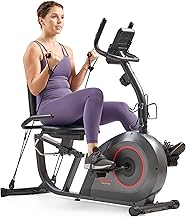
What You'll Learn
- Leg Muscles: Quadriceps, hamstrings, glutes, and calves are the primary muscles engaged during pedaling
- Core Muscles: Abdominals and lower back muscles are used to stabilize the body and maintain posture
- Upper Body Muscles: Shoulders, arms, and chest muscles are utilized to grip the handlebars and control the bike
- Muscle Efficiency: Recumbent bikes allow for more efficient use of leg muscles due to the reclined position
- Injury Prevention: The design of recumbent bikes can help reduce strain on the knees and lower back, preventing injuries

Leg Muscles: Quadriceps, hamstrings, glutes, and calves are the primary muscles engaged during pedaling
The quadriceps, hamstrings, glutes, and calves are the primary muscles engaged during pedaling on a recumbent bike. These muscles work together to generate the force needed to propel the bike forward. The quadriceps, located at the front of the thigh, are responsible for extending the knee joint, while the hamstrings, located at the back of the thigh, are responsible for flexing the knee joint. The glutes, or buttocks, are responsible for extending the hip joint, and the calves, located at the back of the lower leg, are responsible for plantarflexing the ankle joint.
During pedaling, these muscles work in a coordinated manner to generate force. As the pedals rotate, the quadriceps and glutes contract to extend the knee and hip joints, respectively, while the hamstrings and calves relax. As the pedals reach the bottom of their rotation, the hamstrings and calves contract to flex the knee and plantarflex the ankle joints, respectively, while the quadriceps and glutes relax. This alternating contraction and relaxation of muscles allows for smooth and efficient pedaling.
In addition to these primary muscles, other muscles such as the core and upper body muscles are also engaged during pedaling on a recumbent bike. The core muscles, including the abdominals and lower back, are responsible for stabilizing the body and maintaining proper posture, while the upper body muscles, including the arms and shoulders, are responsible for gripping the handlebars and steering the bike.
Overall, pedaling on a recumbent bike is a full-body workout that engages multiple muscle groups, making it an effective way to improve cardiovascular fitness, muscle strength, and endurance.
Pedal Power: Unveiling the Muscles Engaged During Stationary Bike Workouts
You may want to see also
Explore related products


Core Muscles: Abdominals and lower back muscles are used to stabilize the body and maintain posture
The core muscles, comprising the abdominals and lower back muscles, play a crucial role in stabilizing the body and maintaining posture during various physical activities, including cycling on a recumbent bike. These muscles form a supportive corset around the spine and pelvis, providing the necessary stability to perform movements efficiently and safely.
When riding a recumbent bike, the core muscles are engaged to maintain an upright posture and to transfer power from the legs to the pedals. The rectus abdominis, obliques, and transverse abdominis work in conjunction with the erector spinae and other lower back muscles to keep the torso stable and aligned. This stability is essential for generating force and maintaining balance, especially when navigating turns or uneven terrain.
In addition to their role in posture and stability, the core muscles also contribute to the overall efficiency of the cycling motion. By engaging the core, cyclists can better transfer power from their legs to the pedals, resulting in a more effective and powerful stroke. This can lead to improved performance and reduced fatigue during long rides.
To maximize the engagement of the core muscles while riding a recumbent bike, cyclists should focus on maintaining a neutral spine position and engaging their abdominals throughout the pedal stroke. This can be achieved by keeping the shoulders relaxed, the chest open, and the core muscles activated. Additionally, incorporating specific core-strengthening exercises into a regular training routine can help improve overall cycling performance and reduce the risk of injury.
In summary, the core muscles are essential for stabilizing the body, maintaining posture, and enhancing performance during recumbent bike riding. By understanding the role of these muscles and incorporating specific training techniques, cyclists can improve their efficiency, power, and overall riding experience.
Post-Extraction Cycling: A Guide to Safe Bike Riding After Tooth Removal
You may want to see also
Explore related products


Upper Body Muscles: Shoulders, arms, and chest muscles are utilized to grip the handlebars and control the bike
The upper body muscles play a crucial role in riding a recumbent bike, particularly the shoulders, arms, and chest muscles. These muscles are primarily utilized to grip the handlebars and control the bike, ensuring stability and maneuverability during the ride.
The shoulders are engaged to maintain a stable position on the bike, preventing excessive movement that could lead to discomfort or loss of control. The deltoid muscles, located on the outer part of the shoulders, are particularly active in this regard. Additionally, the trapezius muscles, which extend from the neck to the shoulder blades, help to keep the shoulders relaxed and in a neutral position.
The arms are also heavily involved in the riding process, with the biceps and triceps working in tandem to control the handlebars. The biceps, located on the front of the upper arm, are responsible for flexing the elbow and pulling the handlebars towards the rider, while the triceps, located on the back of the upper arm, extend the elbow and push the handlebars away from the rider. This coordinated effort allows for precise control of the bike's direction and speed.
The chest muscles, specifically the pectoralis major, are engaged to maintain a forward-leaning position on the bike, which is essential for optimal aerodynamics and power transfer. These muscles also help to stabilize the shoulders and arms, reducing the risk of injury and fatigue during long rides.
In addition to these primary muscles, the upper back muscles, including the rhomboids and latissimus dorsi, are also active during recumbent bike riding. These muscles help to maintain a straight posture, preventing the rider from slouching or leaning too far forward.
Overall, the upper body muscles are essential for a safe and efficient recumbent bike ride. By understanding the specific roles of these muscles, riders can better prepare themselves for the physical demands of this unique form of cycling.
Choosing the Right Lube: A Guide to Bike Chain Lubricants
You may want to see also
Explore related products


Muscle Efficiency: Recumbent bikes allow for more efficient use of leg muscles due to the reclined position
The recumbent bike's design facilitates a more efficient use of leg muscles primarily due to its reclined seating position. Unlike traditional upright bicycles, which require riders to maintain a vertical posture, recumbent bikes allow for a more relaxed, horizontal alignment of the body. This position reduces the strain on the lower back and allows the gluteal muscles, hamstrings, and quadriceps to work in a more coordinated and efficient manner.
One of the key benefits of this design is the reduced pressure on the perineal area, which can lead to increased comfort and decreased risk of injury or discomfort during long rides. Additionally, the reclined position enables the rider to engage their core muscles more effectively, providing better stability and balance.
From a biomechanical perspective, the recumbent bike's setup allows for a smoother and more continuous pedaling motion. This is because the rider's legs are positioned in a way that minimizes the dead zones in the pedal stroke, leading to more efficient power transfer and less wasted energy. As a result, riders can maintain higher speeds with less effort, making recumbent bikes an attractive option for both casual cyclists and competitive athletes.
Furthermore, the recumbent bike's design can be particularly beneficial for individuals with certain physical limitations or injuries. For example, those with lower back issues or knee problems may find the reclined position more comfortable and less aggravating than the upright posture of a traditional bike. This makes recumbent bikes a versatile option for a wide range of users, from fitness enthusiasts to those looking for a low-impact exercise solution.
In conclusion, the muscle efficiency offered by recumbent bikes is a result of their unique design, which promotes a more natural and comfortable riding position. This efficiency can lead to improved performance, reduced risk of injury, and increased comfort, making recumbent bikes a valuable addition to any cyclist's arsenal.
Exploring the Essential Materials Behind Your Bicycle's Construction
You may want to see also
Explore related products



Injury Prevention: The design of recumbent bikes can help reduce strain on the knees and lower back, preventing injuries
The design of recumbent bikes offers a unique approach to injury prevention, particularly in reducing strain on the knees and lower back. Unlike traditional upright bicycles, recumbent bikes position the rider in a reclined position, which can significantly alleviate pressure on these commonly injured areas. This design feature is especially beneficial for cyclists who spend long hours on the bike or those who are recovering from previous injuries.
One of the key benefits of recumbent bikes is their ability to promote a more natural and ergonomic riding posture. By reclining the rider, the bike reduces the need for excessive bending at the knees and hips, which can lead to strain and injury over time. Additionally, the lower back is supported by the bike's backrest, preventing the forward-leaning posture that often contributes to back pain in upright cycling.
Recumbent bikes also engage different muscle groups compared to traditional bikes, which can help in injury prevention. While upright bikes primarily work the quadriceps and hamstrings, recumbent bikes place more emphasis on the glutes, calves, and lower back muscles. This shift in muscle engagement can help to balance out the strength and flexibility of the lower body, reducing the risk of overuse injuries.
Furthermore, the design of recumbent bikes can be particularly advantageous for riders with pre-existing knee or back conditions. By minimizing the impact and strain on these areas, recumbent bikes can provide a low-impact exercise option that allows riders to maintain their fitness levels without exacerbating their injuries. This makes them an excellent choice for individuals who are looking to stay active but need to avoid high-impact activities.
In conclusion, the design of recumbent bikes offers a promising approach to injury prevention in cycling. By promoting a more ergonomic riding posture, engaging different muscle groups, and providing a low-impact exercise option, recumbent bikes can help riders reduce their risk of knee and lower back injuries. This makes them a valuable tool for both recreational cyclists and those who are looking to maintain their fitness levels while managing pre-existing conditions.
Essential Mountain Bike Bags for Downhill Biking Adventures
You may want to see also
Frequently asked questions
The primary muscles engaged while using a recumbent bike include the quadriceps, hamstrings, glutes, and calves. These muscles are responsible for the pedaling motion and are worked extensively during a ride.
The reclined position on a recumbent bike shifts the emphasis from the lower back and hip flexors to the glutes and hamstrings. This position can reduce strain on the lower back and knees while still providing an effective workout for the leg muscles.
Yes, while the primary focus is on the lower body, the upper body muscles, particularly the arms, shoulders, and back, are also engaged to a lesser extent. These muscles help stabilize the body and maintain balance during the ride.
Yes, the intensity of the workout can be adjusted by varying the resistance and speed. Higher resistance and lower speeds will target the quadriceps and glutes more intensely, while lower resistance and higher speeds will engage the hamstrings and calves more effectively. Additionally, incorporating interval training can further enhance muscle engagement and overall workout effectiveness.


