Samantha Lee
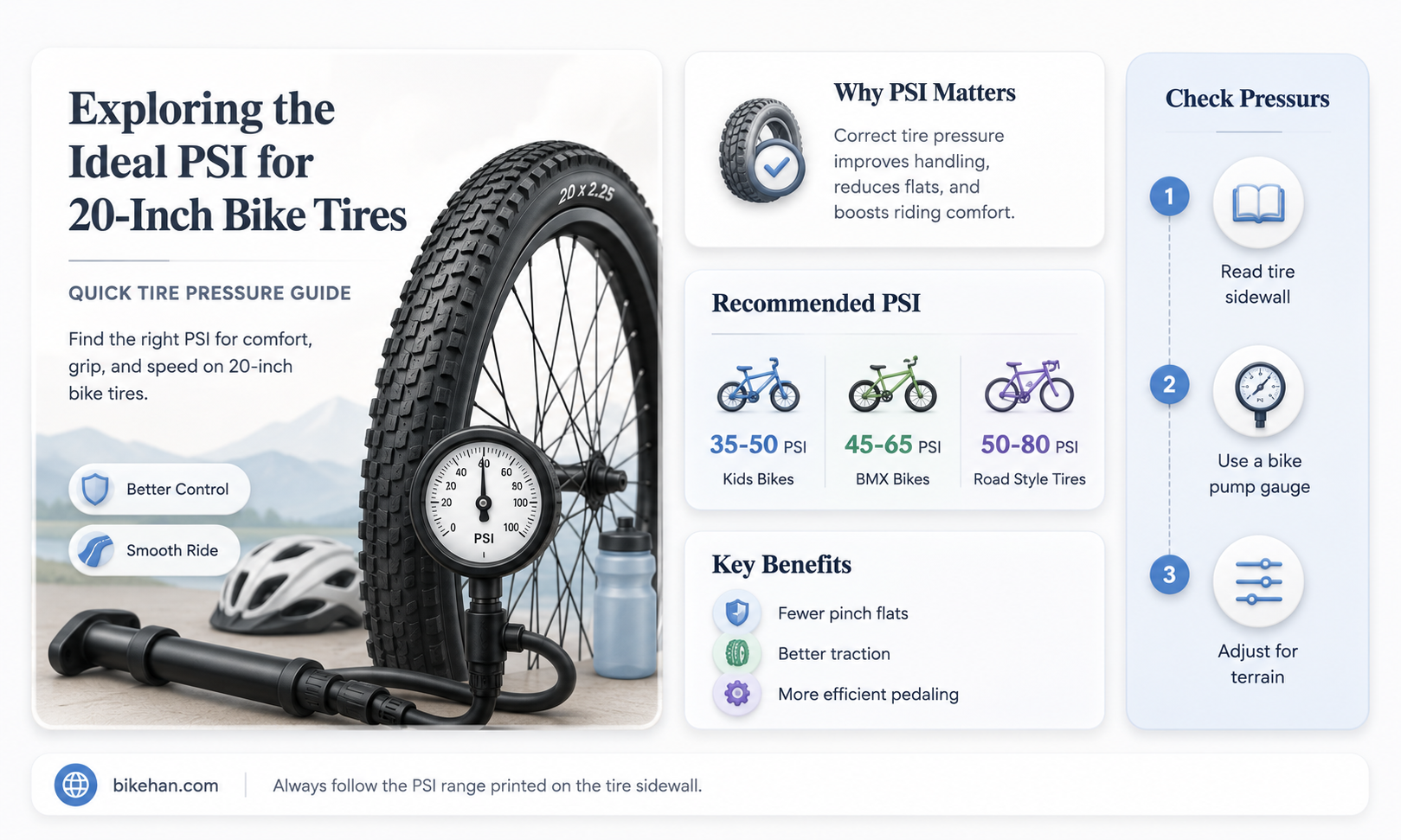
When it comes to bicycle tires, understanding the correct tire pressure is crucial for optimal performance and safety. The tire pressure is typically measured in pounds per square inch (PSI). For 20-inch bike tires, which are commonly found on BMX bikes and some mountain bikes, the recommended PSI can vary depending on the specific use case and rider preference. Generally, a higher tire pressure can lead to a faster ride on smooth surfaces, while a lower pressure can provide better traction and shock absorption on rough terrain. It's important to consult the manufacturer's guidelines or conduct a bit of research to determine the ideal PSI for your specific 20-inch bike tires, as this can significantly impact your riding experience.
Explore related products


What You'll Learn
- Understanding PSI: Explanation of what PSI stands for and its importance in bike tire maintenance
- Recommended PSI Range: Typical PSI ranges for 20-inch bike tires, considering different types of bikes and riding conditions
- Checking Tire Pressure: Methods to check the PSI of bike tires, including tools and techniques for accurate readings
- Inflation Tips: Best practices for inflating 20-inch bike tires to the correct PSI, ensuring safety and performance
- PSI and Riding Conditions: How varying PSI can affect bike handling and comfort in different riding environments

Understanding PSI: Explanation of what PSI stands for and its importance in bike tire maintenance
PSI, or Pounds per Square Inch, is a unit of pressure commonly used to measure the inflation level of bike tires. Proper tire inflation is crucial for several reasons. Firstly, it ensures optimal performance and efficiency while riding. Underinflated tires can lead to increased rolling resistance, making it harder to pedal and reducing your overall speed. On the other hand, overinflated tires can result in a harsher ride and decreased traction, especially on uneven surfaces.
Secondly, maintaining the correct PSI helps prevent tire damage and punctures. Underinflated tires are more susceptible to pinch punctures, where the tire is compressed against the rim, causing damage to the inner tube or tire sidewall. Overinflated tires, while less prone to punctures, can still suffer from blowouts or sidewall bulges if the pressure becomes too high.
Thirdly, proper tire inflation contributes to rider safety. Underinflated tires can affect the bike's handling and stability, making it more difficult to control, especially during turns or when braking. Overinflated tires, as mentioned earlier, can reduce traction and increase the risk of skidding or losing control.
To determine the correct PSI for your 20-inch bike tires, you'll need to consider several factors, including the type of bike, the rider's weight, and the riding conditions. Most bike tires will have a recommended pressure range printed on the sidewall, usually in both PSI and BAR (Barometric Atmospheric Pressure). For 20-inch bike tires, the typical pressure range is between 40-60 PSI. However, it's essential to consult your bike's manual or the tire manufacturer's recommendations for the most accurate information.
Regularly checking and adjusting your tire pressure is an essential part of bike maintenance. Invest in a good-quality tire pump with a pressure gauge, and make it a habit to check your tire pressure at least once a week, or before any long rides. Remember to let your tires cool down before checking the pressure, as warm tires can give inaccurate readings. By understanding PSI and maintaining the correct tire pressure, you can ensure a safer, more efficient, and enjoyable riding experience.
Exploring the Core: Inside the Bike Tire Card Mystery
You may want to see also
Explore related products


Recommended PSI Range: Typical PSI ranges for 20-inch bike tires, considering different types of bikes and riding conditions
The recommended PSI (pounds per square inch) range for 20-inch bike tires varies significantly depending on the type of bike and the riding conditions. For instance, road bikes typically require higher PSI values to reduce rolling resistance and improve speed on paved surfaces. A common range for road bikes with 20-inch tires is between 80 to 120 PSI. On the other hand, mountain bikes, which often have 20-inch tires, require lower PSI values to enhance traction and absorb shocks from rough terrain. The typical PSI range for mountain bikes is between 30 to 50 PSI.
For hybrid bikes, which are designed for a mix of road and off-road use, the recommended PSI range falls somewhere in between. Hybrid bikes with 20-inch tires usually perform well with PSI values ranging from 50 to 70. It's important to note that these are general guidelines, and the optimal PSI may vary based on factors such as rider weight, tire width, and personal preference.
In addition to the type of bike, riding conditions also play a crucial role in determining the appropriate PSI range. For example, riding on wet or slippery surfaces may require slightly lower PSI values to improve grip. Conversely, riding on rough or uneven terrain may necessitate higher PSI values to prevent tire damage and improve handling.
To find the optimal PSI range for your specific bike and riding conditions, it's recommended to consult the manufacturer's guidelines or experiment with different values to find the best balance between comfort, speed, and traction. Regularly checking and adjusting tire pressure is essential for maintaining optimal performance and safety while cycling.
Exploring the Most Prevalent Bicycle Tire Dimensions
You may want to see also
Explore related products


Checking Tire Pressure: Methods to check the PSI of bike tires, including tools and techniques for accurate readings
To check the tire pressure of a 20-inch bike tire, you'll need a few essential tools and a bit of know-how. The most common method is to use a tire pressure gauge. These gauges come in various types, including digital and analog models. Digital gauges provide a more precise reading, often with an LCD display, while analog gauges use a needle to indicate the pressure.
Before you begin, ensure the tire is cool, as heat can affect the pressure reading. Remove the valve cap from the tire's valve stem. If you have a Presta valve, you'll need to press the small button in the center of the valve to release the air. For Schrader valves, simply remove the cap. Insert the gauge's probe into the valve stem and press it firmly to get a reading. Make sure to hold the gauge perpendicular to the valve stem for an accurate measurement.
Another method to check tire pressure is by using a floor pump with a built-in gauge. This method is particularly useful if you need to inflate your tires. Attach the pump's hose to the valve stem, ensuring a secure connection. Pump air into the tire until the gauge on the pump reaches the desired pressure. It's important to note that overinflating your tires can lead to a harsher ride and increased risk of punctures, while underinflating can reduce traction and control.
For a more professional approach, you can use a tire pressure monitoring system (TPMS). These systems are commonly found in newer bicycles and provide real-time pressure readings. They typically consist of sensors mounted inside the tires that transmit data to a display unit on the handlebars. This allows you to monitor your tire pressure while riding, ensuring optimal performance and safety.
Regardless of the method you choose, it's crucial to check your tire pressure regularly. Proper tire inflation not only improves your bike's handling and efficiency but also extends the life of your tires. Remember to always refer to your bike's manual for the recommended tire pressure, as it can vary depending on the type of bike and riding conditions.
Inflating Knowledge: Understanding the Pressure Within Your Bike Tires
You may want to see also
Explore related products


Inflation Tips: Best practices for inflating 20-inch bike tires to the correct PSI, ensuring safety and performance
To ensure optimal performance and safety, it's crucial to inflate 20-inch bike tires to the correct PSI (pounds per square inch). The recommended PSI range for 20-inch bike tires typically falls between 30 to 50 PSI, depending on the specific type of tire and the rider's weight. It's important to check the tire's sidewall for the manufacturer's recommended PSI range.
When inflating the tire, use a high-quality floor pump or a CO2 inflator. Start by removing the valve cap and attaching the pump hose to the valve. If using a floor pump, stroke the pump handle up and down to inflate the tire. If using a CO2 inflator, press the inflator button to release the CO2 into the tire. Be sure to check the tire pressure regularly using a tire pressure gauge to ensure it reaches the desired PSI.
Overinflating or underinflating the tire can lead to safety issues and decreased performance. Overinflated tires can be more susceptible to punctures and may provide a harsher ride, while underinflated tires can lead to increased rolling resistance and may cause the tire to come off the rim.
It's also important to consider the riding conditions when inflating the tire. For example, if riding on rough terrain or in wet conditions, a slightly lower PSI may provide better traction and shock absorption. Conversely, if riding on smooth pavement or in dry conditions, a higher PSI may provide better speed and efficiency.
Regularly checking and maintaining the correct tire pressure is essential for both safety and performance. Make it a habit to check the tire pressure before each ride, and adjust as necessary based on the riding conditions and the manufacturer's recommendations.
Exploring the Largest Fat Bike Tires: A Comprehensive Guide
You may want to see also
Explore related products


PSI and Riding Conditions: How varying PSI can affect bike handling and comfort in different riding environments
The optimal tire pressure for a 20-inch bike tire can vary significantly depending on the riding conditions and the type of bike. For example, a mountain bike tire may require a lower PSI for better traction and shock absorption on rough trails, while a road bike tire may need a higher PSI for improved speed and efficiency on smooth pavement.
PSI, or pounds per square inch, is a measure of tire pressure that can greatly impact the handling and comfort of a bike. Too low of a PSI can lead to a "squishy" feeling and increased rolling resistance, making it harder to pedal and maintain speed. On the other hand, too high of a PSI can result in a harsh, uncomfortable ride and decreased traction, especially on uneven surfaces.
When considering the PSI for a 20-inch bike tire, it's important to take into account the rider's weight, the type of terrain they'll be riding on, and their personal preferences for handling and comfort. A good starting point is to consult the tire manufacturer's recommendations, which are usually printed on the tire's sidewall. From there, riders can experiment with different PSI levels to find the optimal balance for their specific needs and riding style.
In general, mountain bike tires typically require a PSI range of 30-50, while road bike tires may need a PSI range of 80-120. However, these are just general guidelines, and the ideal PSI can vary depending on a number of factors. For example, a heavier rider may need to use a higher PSI to prevent tire deformation, while a lighter rider may be able to use a lower PSI for a more comfortable ride.
Ultimately, finding the right PSI for a 20-inch bike tire is a matter of personal preference and experimentation. By understanding the relationship between PSI and riding conditions, riders can optimize their tire pressure for improved handling, comfort, and performance on the bike.
Exploring the Tattico Bike Tire App: A Cyclist's Guide
You may want to see also