Ryan Cole
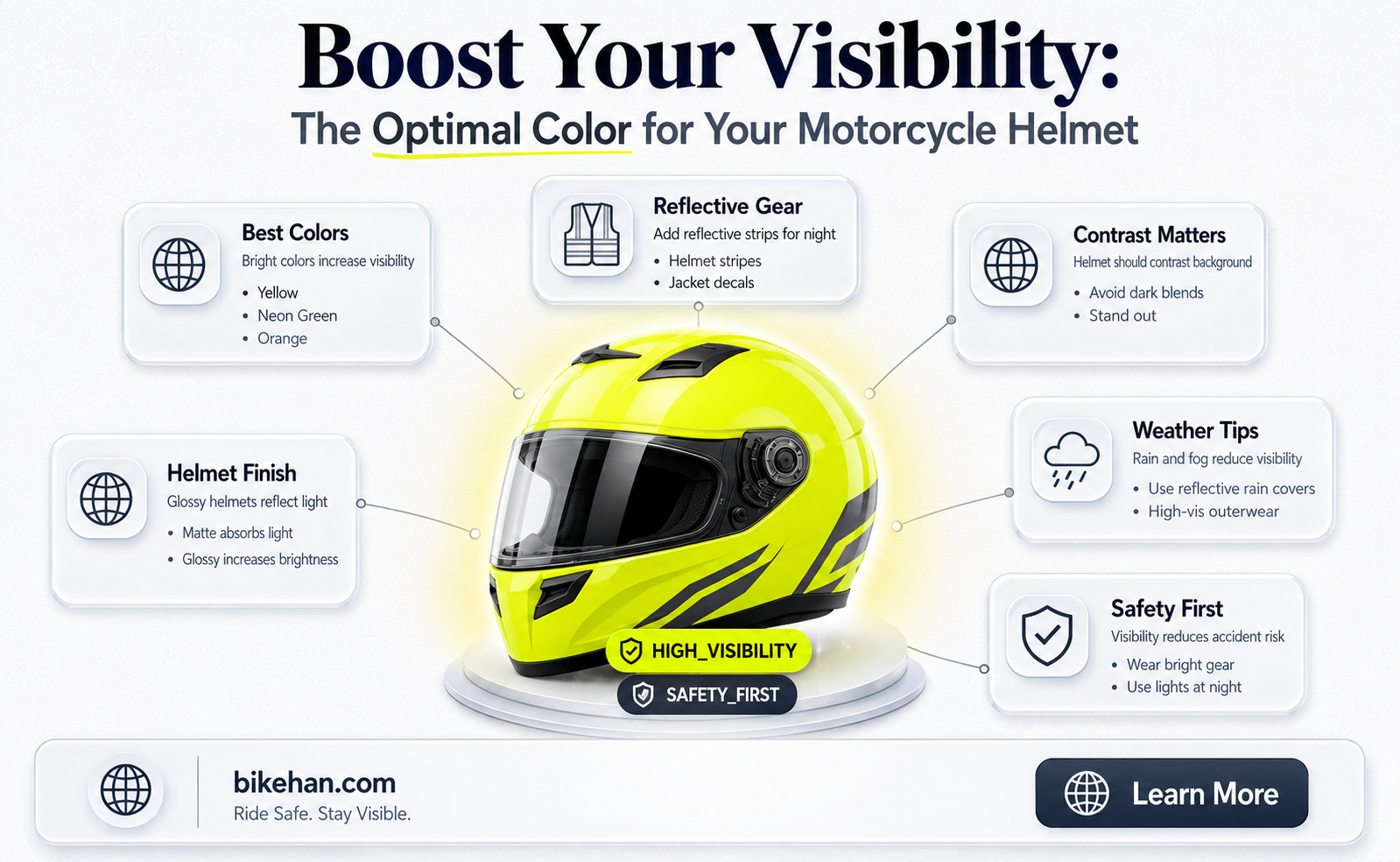
When it comes to motorcycle safety, visibility is a crucial factor. The color of your helmet can significantly impact how easily you're seen by other road users, especially in low-light conditions or inclement weather. While personal style and preference often dictate helmet color choices, it's essential to consider which hues offer the best visibility on the road. Research suggests that bright, high-contrast colors like yellow, orange, and red are among the most visible, particularly when paired with reflective materials. These colors stand out against various backgrounds and in different lighting conditions, potentially reducing the risk of accidents by making riders more noticeable to drivers and pedestrians alike.
Explore related products


What You'll Learn
- High-Visibility Colors: Exploring the most noticeable helmet colors for safety
- Reflective Materials: Discussing helmet materials that enhance visibility at night
- Color Psychology: Analyzing how different colors are perceived by other road users
- Safety Standards: Reviewing regulations and recommendations for helmet visibility
- Real-World Examples: Showcasing popular helmet colors and their visibility in various conditions

High-Visibility Colors: Exploring the most noticeable helmet colors for safety
Motorcycle helmets are critical safety gear, and choosing the right color can significantly impact visibility on the road. High-visibility colors are designed to stand out against various backgrounds and lighting conditions, making the rider more noticeable to other motorists. In this exploration of the most visible helmet colors, we delve into the science behind high-visibility hues and their practical applications for motorcycle safety.
One of the most effective high-visibility colors for motorcycle helmets is fluorescent yellow-green. This color is particularly noticeable in low-light conditions and against the backdrop of urban environments. Studies have shown that fluorescent yellow-green helmets are more visible than traditional black or white helmets, especially during dawn, dusk, and nighttime riding. The reason behind this heightened visibility lies in the color's ability to reflect light efficiently, making it easier for other drivers to spot the rider.
Another high-visibility option is bright orange. This color is often used in construction and road work zones due to its exceptional visibility in both daylight and low-light conditions. Orange helmets can be particularly effective in areas with dense foliage or during autumn when the surroundings are filled with similar hues. The contrast between the bright orange and the natural environment helps the rider stand out, reducing the risk of accidents.
Reflective materials can further enhance the visibility of motorcycle helmets. Many high-visibility helmets incorporate reflective strips or decals that catch and reflect light from vehicle headlights. These reflective elements can be especially useful in situations where the rider is stationary or moving slowly, as they create a distinct pattern of light that is easily recognizable to other drivers.
In addition to color and reflective materials, the design of the helmet can also play a role in visibility. Helmets with sleek, aerodynamic shapes may be more visible than those with bulky or irregular designs. A smooth, streamlined helmet can create a more consistent and recognizable silhouette, making it easier for other motorists to identify the rider as a motorcyclist.
Ultimately, the most visible motorcycle helmet color is one that combines high-visibility hues, reflective materials, and a design that enhances recognition on the road. By choosing a helmet that stands out against various backgrounds and lighting conditions, riders can significantly improve their safety and reduce the risk of accidents.
Is Mounting a GoPro on Your Motorcycle Helmet Legal?
You may want to see also
Explore related products


Reflective Materials: Discussing helmet materials that enhance visibility at night
Reflective materials play a crucial role in enhancing the visibility of motorcycle helmets at night. These materials are designed to reflect light back to its source, such as car headlights, making the wearer more noticeable in low-light conditions. One of the most common types of reflective materials used in helmets is retroreflective tape or decals. These can be applied to various parts of the helmet, including the sides, back, and even the visor, to increase visibility from multiple angles.
Another innovative approach to improving nighttime visibility is the use of photochromic materials. These materials change color in response to light conditions, becoming more reflective and brighter in low light. This technology can be integrated into the helmet's design, providing an adaptive solution that enhances safety without compromising aesthetics.
In addition to these materials, some helmets incorporate LED lights or other illumination features. These can be particularly effective in increasing visibility, as they actively emit light rather than just reflecting it. However, it's important to consider the battery life and maintenance requirements of such features when choosing a helmet.
When selecting a helmet with reflective materials, it's essential to consider the specific riding conditions and personal preferences. For example, riders who frequently travel at night may benefit from helmets with more extensive reflective coverage or brighter LED lights. On the other hand, riders who prefer a more subtle look might opt for helmets with minimal reflective elements or photochromic materials that blend in during the day.
In conclusion, reflective materials are a valuable addition to motorcycle helmets, significantly enhancing nighttime visibility and safety. By understanding the different types of reflective materials and their applications, riders can make informed decisions when choosing a helmet that best suits their needs and riding conditions.
Top Spots to Sell Your Motorcycle Helmets: A Comprehensive Guide
You may want to see also
Explore related products


Color Psychology: Analyzing how different colors are perceived by other road users
The visibility of a motorcycle helmet is crucial for rider safety, and color plays a significant role in how noticeable a helmet is to other road users. Color psychology, the study of how colors affect human behavior and perception, can provide valuable insights into choosing the most visible helmet color.
Research has shown that bright, high-contrast colors are more easily perceived by the human eye, especially in low-light conditions or against complex backgrounds like traffic. Yellow, for instance, is often cited as one of the most visible colors, particularly in the early morning and late afternoon when the sun is low. This is because yellow has a high luminance and is easily distinguishable from the surrounding environment.
However, the visibility of a color can also depend on its context. For example, a bright red helmet might stand out against a green forest backdrop but could blend in with the brake lights of cars in heavy traffic. Similarly, a white helmet might be highly visible at night but less so during the day when it could merge with the bright sky or road markings.
In addition to the color itself, the finish of the helmet can also impact visibility. A glossy finish can reflect more light, making the helmet more noticeable, while a matte finish might absorb light and reduce visibility. Some helmets also feature reflective materials or decals that can enhance visibility in low-light conditions by reflecting the headlights of other vehicles.
Ultimately, the most visible helmet color will depend on a variety of factors, including the time of day, weather conditions, and the specific environment in which the rider is traveling. By understanding the principles of color psychology and considering these contextual factors, riders can make informed decisions about which helmet color will provide the best visibility and, consequently, the highest level of safety on the road.
Indiana Motorcycle Helmet Laws: What You Need to Know
You may want to see also
Explore related products


Safety Standards: Reviewing regulations and recommendations for helmet visibility
Motorcycle helmets are critical safety gear, and their visibility is a key factor in preventing accidents. Safety standards and regulations vary by region, but most agree on the importance of high-visibility colors. For instance, the Department of Transportation (DOT) in the United States mandates that helmets meet specific visibility requirements, including the use of reflective materials.
When reviewing safety standards, it's essential to consider both the color and the reflective properties of a helmet. While bright colors like yellow, orange, and red are often recommended for their high visibility during the day, reflective materials are crucial for nighttime visibility. Some safety standards, such as those set by the Economic Commission for Europe (ECE), require helmets to have a certain level of reflectivity to ensure they are visible in low-light conditions.
In addition to color and reflectivity, the design of the helmet can also impact visibility. Helmets with a full-face design, for example, may have less visible space for reflective materials compared to open-face helmets. Manufacturers must balance the need for visibility with other safety considerations, such as impact resistance and comfort.
It's also important to note that while safety standards provide guidelines, they do not guarantee that a helmet will be visible in all situations. Riders should consider additional factors, such as weather conditions and the type of environment they will be riding in, when choosing a helmet. For example, a helmet with a bright color may be more visible in a city setting, while a helmet with high reflectivity may be more beneficial for rural roads at night.
Ultimately, the most visible motorcycle helmet is one that meets safety standards, is appropriate for the riding conditions, and is well-maintained. Riders should regularly inspect their helmets for any damage or wear that could reduce visibility and replace them as needed. By following safety guidelines and choosing a helmet that is both visible and protective, riders can significantly reduce their risk of accidents.
Personalize Your Ride: The Ultimate Guide to Customizing Your Motorcycle Helmet
You may want to see also
Explore related products


Real-World Examples: Showcasing popular helmet colors and their visibility in various conditions
In urban environments, where traffic density is high and visibility can be compromised by tall buildings and frequent stops, bright and reflective helmet colors are crucial. For instance, a neon yellow helmet with reflective strips can significantly enhance a rider's visibility to other motorists, especially during rush hour or in low-light conditions. This color choice is particularly effective in cities where taxis and buses are common, as it stands out against the typical yellow and green hues of these vehicles.
On the open road, especially during long-distance rides, the visibility of a helmet color can be influenced by the surrounding landscape and weather conditions. A white helmet, for example, can be highly visible against the backdrop of a clear blue sky or a lush green forest. However, in foggy or rainy conditions, a more vibrant color like orange or red may be more noticeable to other drivers. It's also worth noting that matte finishes can be less visible than glossy or reflective finishes in certain lighting conditions, so riders should consider this when choosing a helmet for highway use.
In off-road or motocross settings, helmet visibility is often less about being seen by other vehicles and more about being visible to fellow riders and track officials. Bright, contrasting colors like blue, green, or pink can help riders stand out against the natural terrain and make it easier for others to spot them in case of an emergency. Additionally, some off-road helmets come with visors or face shields that can further enhance visibility by reducing glare and protecting the rider's eyes from debris.
When it comes to nighttime riding, the importance of helmet visibility cannot be overstated. A helmet with a reflective surface or built-in lights can significantly increase a rider's visibility to other motorists, especially when riding in areas with limited street lighting. Some helmets even feature LED lights that can be programmed to flash or change color, providing an additional layer of visibility and safety.
In conclusion, the most visible helmet color is not a one-size-fits-all solution. Rather, it depends on the specific riding conditions and environment. By choosing a helmet color that is well-suited to their typical riding scenarios, motorcyclists can enhance their visibility and safety on the road.
Missouri Motorcycle Helmet Laws: What You Need to Know
You may want to see also
Frequently asked questions
Bright and reflective colors such as yellow, orange, or white are generally the most visible during the day. These colors stand out against various backgrounds and in different lighting conditions, making them ideal for daytime riding.
At night, helmets with reflective materials or bright colors like white, yellow, or orange are most visible. The reflective elements catch and bounce back light from vehicle headlights, increasing visibility to other road users.
Yes, features such as reflective strips, decals, or patterns can significantly enhance the visibility of a motorcycle helmet. These elements reflect light and make the helmet more noticeable, especially in low-light conditions.
The design of a motorcycle helmet can impact its visibility in several ways. Helmets with sleek, aerodynamic shapes may have less surface area for reflective materials, while those with more angular or textured designs can provide additional points for light reflection. Additionally, the placement and size of reflective elements can vary between helmet designs, affecting overall visibility.
Yes, visibility is a crucial factor to consider when choosing a motorcycle helmet. A helmet that is highly visible can help increase the rider's safety by making them more noticeable to other drivers on the road, reducing the risk of accidents.