Lauren Kennedy
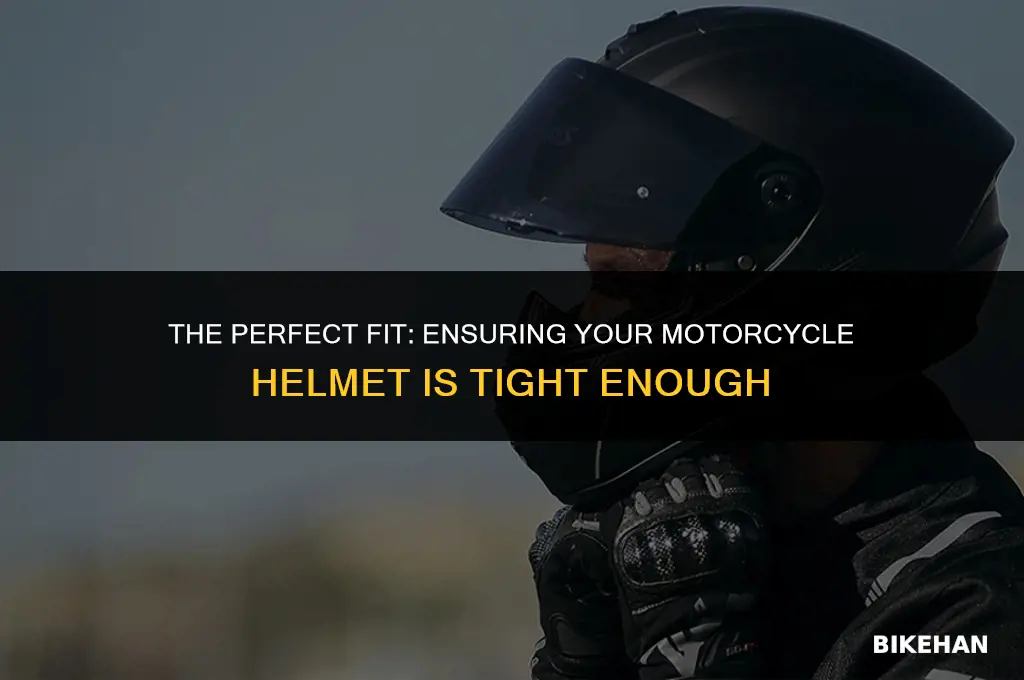
When considering the fit of a motorcycle helmet, it's crucial to strike a balance between comfort and security. A helmet that is too loose may not provide adequate protection in the event of an accident, as it could shift or come off entirely upon impact. On the other hand, a helmet that is too tight can cause discomfort, headaches, and even impair vision or breathing. The ideal fit should be snug but not constricting, allowing for a full range of motion and minimal movement of the helmet on the head. It's essential to follow the manufacturer's guidelines for sizing and adjustment to ensure optimal safety and comfort while riding.
Explore related products


$55.09 $57.99


What You'll Learn
- Comfort vs. Safety: Ensuring a snug fit without causing discomfort is crucial for long rides
- Impact Absorption: A tight helmet can better absorb shock during an accident, reducing injury risk
- Noise Reduction: Properly fitted helmets minimize wind noise, enhancing rider focus and reducing fatigue
- Retention System: Secure chin straps and retention systems are essential to keep the helmet in place
- Certification Standards: Meeting safety standards like DOT, Snell, or ECE ensures optimal protection

Comfort vs. Safety: Ensuring a snug fit without causing discomfort is crucial for long rides
Ensuring a snug fit without causing discomfort is crucial for long rides. A helmet that is too loose can shift around during a ride, creating distractions and potentially compromising safety. On the other hand, a helmet that is too tight can cause headaches, fatigue, and even impair vision. The key is to find the perfect balance between comfort and safety.
To achieve this balance, it's important to understand the different factors that affect helmet fit. These include the shape of the head, the thickness of the hair, and any additional accessories such as glasses or earplugs. It's also important to consider the type of ride, as longer rides may require a more comfortable fit.
One way to ensure a snug fit without causing discomfort is to use a helmet sizing chart. These charts take into account the different factors that affect helmet fit and provide a guide for selecting the right size. It's also important to try on the helmet before purchasing, as different brands and models may have slightly different fits.
Another way to ensure a comfortable fit is to adjust the helmet's padding and straps. Most helmets have adjustable padding that can be customized to fit the shape of the head. The straps should be snug but not too tight, and should be adjusted so that the helmet stays in place during a ride.
Finally, it's important to break in the helmet before embarking on a long ride. This can be done by wearing the helmet for short periods of time, gradually increasing the duration. This will help to soften the padding and adjust the fit, ensuring a comfortable and safe ride.
Kentucky's Motorcycle Helmet Law: What You Need to Know
You may want to see also
Explore related products


Impact Absorption: A tight helmet can better absorb shock during an accident, reducing injury risk
A tight motorcycle helmet plays a crucial role in impact absorption during accidents. The snug fit ensures that the helmet's inner padding and materials are in optimal contact with the rider's head, allowing for efficient distribution of force upon impact. This reduces the risk of traumatic brain injuries and skull fractures, which are common in motorcycle accidents. Studies have shown that helmets with a proper fit can significantly decrease the severity of head injuries, making it a critical aspect of rider safety.
The physics behind impact absorption involves the transfer of kinetic energy from the rider's head to the helmet's materials. A tight helmet ensures that this energy is distributed over a larger area, reducing the force exerted on any single point of the skull. Additionally, the inner padding of a well-fitted helmet can compress and deform, absorbing much of the impact energy and preventing it from reaching the rider's head. This compression and deformation are essential in mitigating the effects of high-speed collisions, where the forces involved can be extremely high.
Furthermore, a tight helmet can also prevent the rider's head from moving excessively within the helmet during an accident. This movement can cause additional injuries, such as neck strains and whiplash. By keeping the head securely in place, a tight helmet minimizes the risk of these secondary injuries, providing comprehensive protection to the rider.
In conclusion, the impact absorption capabilities of a tight motorcycle helmet are vital in reducing the risk of severe head injuries during accidents. The snug fit ensures optimal contact between the helmet's materials and the rider's head, allowing for efficient energy distribution and absorption. This, combined with the prevention of excessive head movement, makes a tight helmet an essential component of motorcycle safety gear. Riders should always ensure that their helmets fit properly to maximize these protective benefits.
Arizona's Motorcycle Helmet Laws: What You Need to Know
You may want to see also
Explore related products



Noise Reduction: Properly fitted helmets minimize wind noise, enhancing rider focus and reducing fatigue
A properly fitted motorcycle helmet is crucial for noise reduction, which in turn enhances rider focus and reduces fatigue. When a helmet fits snugly, it creates a seal around the rider's head, minimizing the amount of wind noise that can enter. This is particularly important at high speeds, where wind noise can be overwhelming and distracting. By reducing this noise, riders can better concentrate on the road and their surroundings, leading to a safer riding experience.
In addition to enhancing focus, a properly fitted helmet can also reduce rider fatigue. Wind noise can cause stress and strain on the rider's ears and head, leading to discomfort and tiredness over time. By minimizing this noise, riders can enjoy a more comfortable and less exhausting ride. This is especially important for long-distance riders, who may be on the road for hours at a time.
To ensure proper noise reduction, it's important to choose a helmet that fits correctly. A helmet that is too loose will not create an effective seal, allowing wind noise to enter. On the other hand, a helmet that is too tight can cause discomfort and pressure points, which can also lead to fatigue. The ideal fit is one that is snug but not uncomfortable, with no gaps between the helmet and the rider's head.
When fitting a helmet, it's important to follow the manufacturer's guidelines and to try on different sizes and styles to find the best fit. Some helmets may come with adjustable features, such as padding or straps, that can help to achieve a more customized fit. Additionally, riders should consider wearing earplugs or other noise-cancelling devices in conjunction with their helmet for added noise reduction.
In conclusion, a properly fitted motorcycle helmet is essential for noise reduction, which can enhance rider focus and reduce fatigue. By choosing a helmet that fits correctly and following the manufacturer's guidelines, riders can enjoy a safer and more comfortable riding experience.
Exploring the Composition of Motorcycle Helmets: A Comprehensive Guide
You may want to see also
Explore related products


Retention System: Secure chin straps and retention systems are essential to keep the helmet in place
A secure retention system is crucial for ensuring that a motorcycle helmet stays in place during a ride. This system typically includes a chin strap that fastens under the rider's chin, as well as additional straps or clips that may secure the helmet around the neck or to the rider's clothing. The primary purpose of this system is to prevent the helmet from coming off in the event of an accident or sudden stop, which could lead to serious head injuries.
When choosing a motorcycle helmet, it's important to consider the type of retention system that will be most effective for your needs. Some helmets feature a simple buckle-style chin strap, while others may have a more complex system with multiple adjustment points. It's also important to ensure that the retention system is compatible with any additional gear you may be wearing, such as a neck brace or communication device.
In addition to providing a secure fit, a well-designed retention system can also offer added comfort for the rider. For example, some helmets feature padded chin straps or adjustable tension settings to help distribute the weight of the helmet evenly and reduce pressure points. This can be particularly important for riders who plan to wear their helmet for extended periods of time.
One common mistake that riders make is failing to properly adjust the retention system before riding. This can lead to the helmet being too loose, which can compromise its effectiveness in the event of an accident. It's important to take the time to adjust the straps and ensure that the helmet fits snugly against your head and neck before hitting the road.
Another consideration is the durability of the retention system. Over time, the straps and buckles can wear out or become damaged, which can reduce their effectiveness. It's important to regularly inspect your helmet's retention system and replace any worn or damaged components as needed.
In conclusion, a secure retention system is an essential component of any motorcycle helmet. By choosing a helmet with a well-designed retention system and taking the time to properly adjust it, riders can help ensure their safety and comfort on the road.
Florida Motorcycle Helmet Laws: What You Need to Know
You may want to see also
Explore related products


Certification Standards: Meeting safety standards like DOT, Snell, or ECE ensures optimal protection
Meeting safety standards like DOT, Snell, or ECE ensures optimal protection when it comes to motorcycle helmets. These certifications are not just labels; they represent rigorous testing and quality assurance processes that helmets must undergo to be considered safe for use. The Department of Transportation (DOT) in the United States, for example, has specific impact and penetration tests that helmets must pass. Similarly, Snell and ECE (Economic Commission for Europe) have their own stringent requirements.
One of the key aspects of these standards is the fit of the helmet. A helmet that meets these certifications will have been designed to fit snugly on the head, providing maximum protection in the event of an accident. This is because a loose helmet can shift during impact, reducing its effectiveness in absorbing shock and protecting the skull.
To ensure optimal protection, it's crucial to choose a helmet that not only meets these safety standards but also fits correctly. This means selecting the right size and adjusting the helmet properly to ensure a tight, comfortable fit. A well-fitted helmet should sit squarely on the head, with the chin strap securely fastened and the helmet's interior padding snug against the head.
In addition to fit, these safety standards also cover other important aspects of helmet design, such as the materials used, the construction of the helmet, and the presence of features like visors and ventilation systems. By choosing a helmet that meets these standards, riders can be confident that they are getting a high-quality, protective piece of gear that will serve them well in the event of an accident.
Ultimately, the importance of certification standards cannot be overstated. They provide a benchmark for helmet manufacturers to aim for and give riders a way to ensure they are purchasing a safe and effective helmet. By prioritizing these standards and ensuring a proper fit, motorcycle riders can significantly reduce their risk of head injuries and enjoy a safer riding experience.
Boost Your Visibility: The Optimal Color for Your Motorcycle Helmet
You may want to see also
Frequently asked questions
Yes, a motorcycle helmet should be tight. A snug fit is crucial for safety, as it ensures the helmet stays securely in place during a ride or in the event of an accident.
A motorcycle helmet should be tight enough that it doesn't move around on your head, but not so tight that it causes discomfort or restricts blood flow. You should be able to fit one finger between the helmet and your head for a proper fit.
Wearing a loose motorcycle helmet can be dangerous, as it may not stay in place during an accident, leaving your head unprotected. Additionally, a loose helmet can be a distraction while riding, as it may shift around or catch the wind, making it difficult to focus on the road.