Eric Johnson
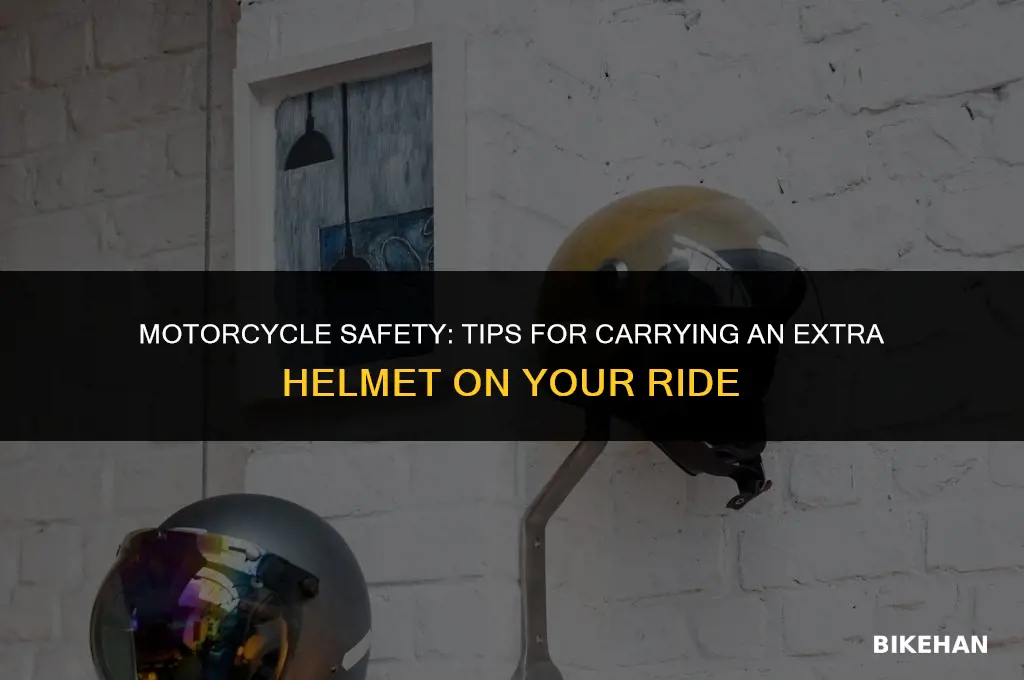
Carrying an extra helmet on a motorcycle can be essential for riders who frequently travel with a passenger or prefer to have a spare helmet readily available. There are several methods to securely transport an additional helmet, each with its own advantages and considerations. Some common options include using a helmet lock, attaching a helmet carrier to the motorcycle, or utilizing storage compartments if available. It's important to ensure that the helmet is securely fastened to prevent it from falling off during transit, which could pose a safety risk or result in damage to the helmet. Additionally, riders should consider the aerodynamics and balance of their motorcycle when choosing a method to carry an extra helmet, as improper placement can affect the handling and stability of the bike.
Explore related products


What You'll Learn
- Helmet Mounts: Install a helmet mount on your motorcycle for secure storage
- Top Case: Use a top case or trunk for additional storage space
- Side Carriers: Attach side carriers or saddlebags for extra helmet storage
- Helmet Locks: Invest in helmet locks to secure your helmet when parked
- Passenger Seat: Place the extra helmet on the passenger seat if space allows

Helmet Mounts: Install a helmet mount on your motorcycle for secure storage
Installing a helmet mount on your motorcycle is a practical solution for securely storing an extra helmet while on the go. Begin by selecting a suitable mount designed specifically for motorcycle use, ensuring it is compatible with your bike's make and model. Look for mounts made from durable materials like metal or high-strength plastic to withstand the rigors of the road.
Once you have chosen the right mount, follow the manufacturer's instructions for installation. Typically, this will involve attaching the mount to a secure point on your motorcycle, such as the handlebars or rearview mirrors. Make sure the mount is tightly fastened and can support the weight of the helmet without causing any damage to your bike.
After installing the mount, place your extra helmet on it and secure it using the provided straps or locking mechanism. Ensure the helmet is firmly attached and will not come loose during transit. It's also a good idea to periodically check the mount and helmet to make sure they remain securely in place.
One advantage of using a helmet mount is that it keeps your extra helmet easily accessible in case you need it. Additionally, it prevents the helmet from being damaged or lost while riding. Remember to always wear your primary helmet while riding, as the extra helmet is meant for storage and not immediate use.
In conclusion, installing a helmet mount on your motorcycle is a convenient and secure way to carry an extra helmet. By following the proper installation steps and regularly checking the mount, you can ensure your extra helmet is always safe and readily available when needed.
Taming the Dragon: A Guide to Customizing Your Motorcycle Helmet
You may want to see also
Explore related products


Top Case: Use a top case or trunk for additional storage space
Utilizing a top case or trunk on your motorcycle is an excellent solution for carrying an extra helmet, especially if you're planning a long trip or need to transport additional gear. These storage options are designed to be aerodynamic and secure, ensuring your belongings stay safe and intact during your journey. When selecting a top case, consider the size and weight capacity to ensure it can accommodate your helmet comfortably. Additionally, look for features like waterproofing and lockable mechanisms to protect your items from the elements and potential theft.
Installing a top case typically involves attaching a mounting rack to your motorcycle's rear seat or subframe. Once the rack is securely in place, you can easily attach the top case using the provided hardware. It's essential to ensure the case is properly balanced and doesn't obstruct your view or affect your motorcycle's handling. You may need to adjust the mounting position or use additional support brackets to achieve the optimal setup.
One of the main advantages of using a top case is the additional storage space it provides. This can be particularly useful if you're traveling with a passenger and need to carry extra clothing, tools, or personal items. Many top cases also come with internal compartments or organizers, allowing you to keep your belongings neatly arranged and easily accessible.
When packing your top case, it's crucial to distribute the weight evenly and secure your items to prevent them from shifting during transit. Use straps, bungee cords, or packing cubes to keep everything in place. It's also a good idea to pack heavier items at the bottom and lighter items on top to maintain balance and stability.
In conclusion, a top case or trunk is a practical and convenient option for carrying an extra helmet and other gear on your motorcycle. By choosing the right case, ensuring proper installation, and packing efficiently, you can enjoy a safe and comfortable ride while keeping your belongings secure and organized.
Reviving Old Motorcycle Helmets: Creative Reuse Ideas
You may want to see also
Explore related products


Side Carriers: Attach side carriers or saddlebags for extra helmet storage
For motorcyclists who need to transport an extra helmet, side carriers or saddlebags offer a practical and secure solution. These accessories can be easily attached to the sides of the motorcycle, providing dedicated storage space for helmets and other essentials. When selecting side carriers, it's important to consider factors such as size, weight capacity, and material durability to ensure they can safely accommodate the extra helmet without compromising the motorcycle's balance or performance.
Installing side carriers typically involves mounting brackets or frames onto the motorcycle's chassis, followed by attaching the carriers themselves. It's crucial to follow the manufacturer's instructions carefully to ensure a secure and stable fit. Once installed, the side carriers can be used to store helmets, gloves, tools, and other riding gear, keeping them organized and easily accessible during trips.
One advantage of side carriers is that they distribute the weight of the extra helmet evenly across the motorcycle, reducing the risk of imbalance or handling issues. Additionally, they provide a more aerodynamic storage solution compared to top cases or backpacks, which can create drag and affect fuel efficiency. However, it's important to note that side carriers may slightly increase the motorcycle's overall width, so riders should be cautious when navigating tight spaces or parking in crowded areas.
When using side carriers for helmet storage, it's essential to secure the helmets properly to prevent them from shifting or falling out during transit. This can be achieved by using straps, bungee cords, or specialized helmet locks. Regularly checking the security of the helmets and the carriers themselves is also important to ensure they remain safely in place throughout the journey.
In conclusion, side carriers or saddlebags are a versatile and practical option for motorcyclists looking to carry an extra helmet. By providing dedicated storage space and even weight distribution, they offer a convenient solution that enhances both the functionality and safety of the motorcycle. Riders should carefully consider their specific needs and the features of different side carrier models to choose the best option for their helmet storage requirements.
Exploring the Versatility of Modular Motorcycle Helmets
You may want to see also
Explore related products


Helmet Locks: Invest in helmet locks to secure your helmet when parked
Investing in a helmet lock is a crucial step in ensuring the security of your helmet when your motorcycle is parked. Helmet locks come in various types, including cable locks, chain locks, and disc locks, each offering different levels of security and convenience. Cable locks are lightweight and easy to use, making them a popular choice among riders. Chain locks provide a higher level of security due to their strength and resistance to cutting. Disc locks, on the other hand, are designed to lock the motorcycle's disc brake, preventing the wheel from turning and making it difficult for thieves to move the bike.
When choosing a helmet lock, consider the following factors: the level of security it provides, its ease of use, its compatibility with your helmet and motorcycle, and its durability. Look for locks made from high-quality materials that can withstand harsh weather conditions and resist tampering. Additionally, consider the length of the lock's cable or chain to ensure it is long enough to secure your helmet to a fixed object, such as a bike rack or a post.
To use a helmet lock effectively, follow these steps: First, choose a secure location to park your motorcycle, preferably in a well-lit area with high visibility. Next, attach the helmet lock to your helmet, ensuring it is securely fastened. Then, connect the lock to a fixed object, making sure there is enough tension to prevent the helmet from being easily removed. Finally, double-check the lock to ensure it is properly engaged and that your helmet is secure.
In addition to using a helmet lock, there are other measures you can take to protect your helmet and motorcycle from theft. These include parking in designated motorcycle parking areas, using a motorcycle cover to conceal your bike, and installing an alarm system or GPS tracking device. By taking these precautions, you can significantly reduce the risk of your helmet and motorcycle being stolen.
Remember, investing in a helmet lock is not only about protecting your helmet but also about deterring potential thieves. A visible helmet lock can serve as a deterrent, making it less likely that someone will attempt to steal your helmet or motorcycle. So, when it comes to securing your helmet, don't overlook the importance of a good helmet lock.
Rev Up Your Safety: The Ultimate Guide to Motorcycle Helmet Replacement
You may want to see also
Explore related products


Passenger Seat: Place the extra helmet on the passenger seat if space allows
If your motorcycle has a passenger seat, it can be a convenient spot to place an extra helmet, provided there's enough space. Start by ensuring the passenger seat is clear of any other items or obstructions. Gently place the helmet on the seat, positioning it so that it doesn't slide off easily. You may want to use a helmet lock or strap to secure it in place, especially if you're planning a longer ride.
One advantage of placing the helmet on the passenger seat is that it's easily accessible in case you need to switch riders or if your passenger decides to take a break from wearing their helmet. However, it's important to remember that the helmet should never be placed in a way that interferes with the rider's control of the motorcycle or the passenger's ability to sit comfortably.
When placing the helmet on the passenger seat, consider the weight distribution of your motorcycle. Adding extra weight to one side can affect the bike's balance and handling, so it's crucial to ensure that the helmet is placed in a way that doesn't compromise safety. If you're unsure about the best way to position the helmet, consult your motorcycle's owner manual or speak with a professional mechanic.
In some cases, you may find that the passenger seat isn't spacious enough to accommodate an extra helmet comfortably. If this is the case, consider alternative storage options such as a saddlebag or a top case. These accessories can provide a secure and convenient place to store your helmet while also freeing up space on the passenger seat for other items or, of course, a passenger.
Remember, the key to safely carrying an extra helmet on your motorcycle is to ensure that it's securely positioned and doesn't interfere with the operation of the bike or the comfort of the rider and passenger. By following these guidelines, you can enjoy your ride with peace of mind, knowing that your extra helmet is safely stowed away.
Missouri Motorcycle Helmet Laws: What You Need to Know
You may want to see also
Frequently asked questions
The safest ways include using a helmet lock, a rear luggage rack, or a side saddlebag specifically designed for helmets. Always ensure the helmet is securely fastened to prevent it from falling off while riding.
While it's possible to place an extra helmet on the back seat, it's not the most secure method. The helmet could shift or fall off during transit. It's recommended to use a dedicated storage solution like a luggage rack or saddlebag for better security.
Legal requirements vary by jurisdiction. In some areas, there may be laws regarding the proper storage and transport of helmets. It's important to check local regulations to ensure compliance and safety.
To protect your extra helmet from theft, use a sturdy lock to secure it to your motorcycle or a fixed object. Consider using a U-lock or a heavy-duty chain lock. Additionally, parking in well-lit, secure areas can deter potential thieves.
When choosing a storage solution, consider factors such as security, ease of access, weather protection, and compatibility with your motorcycle. Ensure the storage option is sturdy, can securely hold the helmet in place, and is convenient for both loading and unloading.