 Lauren Kennedy
Identifying the make and model of a dirt bike can be a crucial task for enthusiasts, owners, and potential buyers. The process involves examining specific features and components that are unique to each manufacturer and model. In this guide, we will explore the key steps to accurately determine the make and model of a dirt bike, including visual inspection, checking for branding and model indicators, and utilizing online resources and databases. Whether you're a seasoned rider or a newcomer to the world of dirt biking, this information will help you better understand and appreciate the nuances of these off-road machines.
Explore related products


What You'll Learn
- Check the VIN: Locate the vehicle identification number on the bike's frame or engine
- Inspect the Engine: Look for distinctive features or markings on the engine that indicate make and model
- Frame Design: Analyze the bike's frame geometry and construction for unique design elements
- Suspension Components: Examine the front and rear suspension systems for identifying features
- Bodywork and Plastics: Inspect the bike's bodywork, including the seat, fairings, and fenders, for model-specific details

Check the VIN: Locate the vehicle identification number on the bike's frame or engine
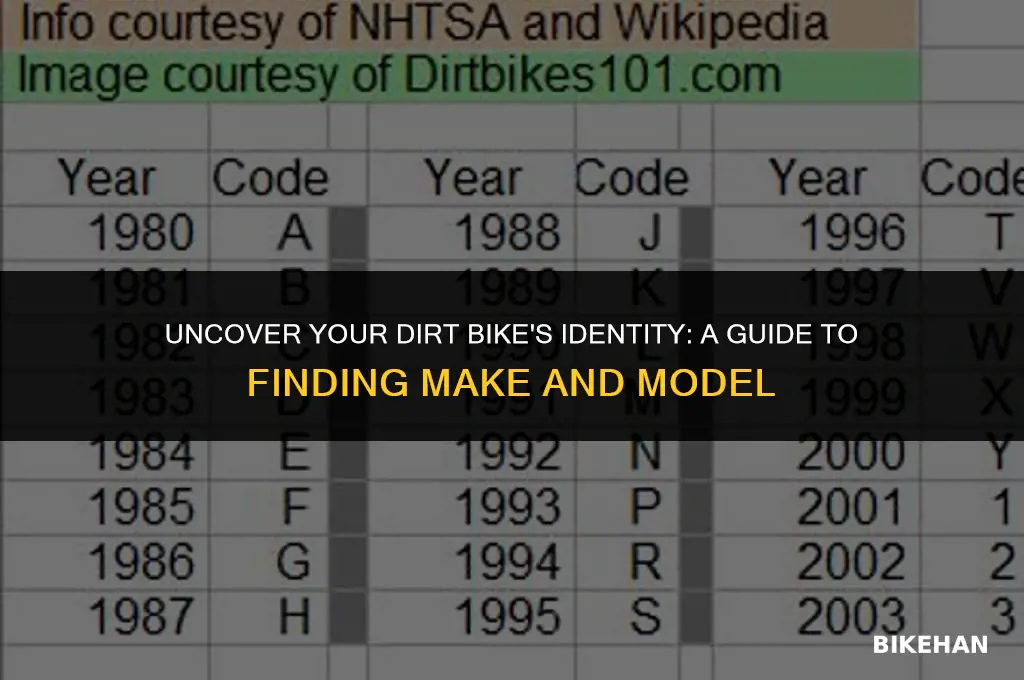
The Vehicle Identification Number (VIN) is a unique code assigned to every vehicle, including dirt bikes, which serves as a fingerprint for identification purposes. To locate the VIN on a dirt bike, you should first check the frame, typically near the bottom bracket or the downtube. If it's not visible there, the next logical place to look is the engine, often stamped on the engine block or casing.
Once you've found the VIN, you can use it to determine the make and model of the dirt bike. This information is crucial for various reasons, such as registering the bike, obtaining insurance, or sourcing parts for maintenance and repairs. The VIN can also provide insights into the bike's history, including its manufacturing date and any potential recalls.
To decode the VIN, you can use online resources or contact the manufacturer directly. Many websites offer free VIN decoding services, where you can input the number and receive detailed information about the bike. Alternatively, reaching out to the manufacturer with the VIN can provide you with accurate and up-to-date details about the specific model and its specifications.
It's important to note that the VIN is not only a means of identification but also a security feature. Tampering with or altering the VIN is illegal and can lead to serious consequences. When purchasing a used dirt bike, always verify the VIN to ensure the bike's legitimacy and to avoid potential legal issues.
In summary, checking the VIN is a straightforward yet essential step in determining the make and model of a dirt bike. By locating this unique identifier on the frame or engine, you can access valuable information about the bike's origin, specifications, and history, ensuring a well-informed decision when buying, selling, or maintaining a dirt bike.
Mastering the Art of Riding a 2-Stroke Dirt Bike
You may want to see also
Explore related products


Inspect the Engine: Look for distinctive features or markings on the engine that indicate make and model
To accurately determine the make and model of a dirt bike, one of the most reliable methods is to inspect the engine. This approach is particularly useful when other identifying features such as logos or model names are not visible or have been removed. The engine often contains distinctive features or markings that can provide crucial information about the manufacturer and the specific model of the dirt bike.
Begin by locating the engine on the dirt bike. Typically, the engine is positioned centrally within the frame, below the seat and above the exhaust system. Once you have found the engine, look for any visible markings, numbers, or letters that could indicate the make and model. These identifiers are often stamped or engraved directly onto the engine casing or other metal components.
One common place to find such markings is on the cylinder head or the crankcase. Manufacturers often stamp their logo or name, along with the model number or engine displacement, in these areas. For example, a Honda engine might have "Honda" and "CRF250" engraved on it, while a Yamaha engine might display "Yamaha" and "YZ250F". If you are unsure about the location of these markings, consult the dirt bike's owner's manual or search online for diagrams and guides specific to the make and model you suspect.
In addition to engraved markings, you can also look for distinctive design features that are unique to certain manufacturers or models. For instance, the shape and arrangement of the cooling fins on the cylinder head, the design of the exhaust manifold, or the style of the ignition cover can all be indicative of a particular make or model. By comparing these features to known designs from various manufacturers, you can narrow down the possibilities and make an educated guess about the dirt bike's identity.
Remember to take note of any unusual modifications or aftermarket parts that may have been installed on the engine. These additions can sometimes obscure or alter the original markings and features, making it more challenging to identify the make and model. If you suspect that the engine has been modified, try to remove or inspect these parts to reveal the underlying original components.
By thoroughly inspecting the engine and noting any distinctive features or markings, you can significantly increase your chances of accurately determining the make and model of the dirt bike. This method is particularly valuable when other identification methods fail, and it can provide a wealth of information about the bike's specifications and capabilities.
Mastering the Art of Feathering the Clutch on Your Dirt Bike
You may want to see also
Explore related products


Frame Design: Analyze the bike's frame geometry and construction for unique design elements
Analyzing the frame geometry and construction of a dirt bike is crucial for identifying unique design elements that can help determine its make and model. The frame is the backbone of the bike, and manufacturers often incorporate specific design features that set their bikes apart from competitors. Look for distinctive elements such as the shape of the downtube, the angle of the head tube, and the configuration of the rear suspension linkage. These features can provide valuable clues about the bike's brand and model.
One approach to frame analysis is to compare the bike's geometry to known specifications from various manufacturers. Many dirt bike brands publish detailed frame geometry charts on their websites or in their catalogs. By measuring key dimensions such as the wheelbase, seat height, and handlebar width, you can narrow down the possibilities and identify potential matches. Keep in mind that frame geometry can vary significantly between different models and years, so it's essential to be thorough in your analysis.
In addition to geometry, the construction materials and methods used in the frame can also offer insights into the bike's make and model. For example, some manufacturers may use aluminum alloy frames, while others may opt for steel or carbon fiber. The welding patterns, bracket shapes, and mounting points for components such as the engine and suspension can also be indicative of a particular brand's design language. Examining these elements closely can help you spot unique features that are characteristic of specific manufacturers.
When analyzing the frame, it's also important to consider the bike's intended use and performance characteristics. Dirt bikes designed for motocross racing may have different frame geometries and construction methods compared to trail bikes or enduro bikes. Understanding the intended purpose of the bike can help you focus your analysis on the most relevant design elements.
Finally, don't overlook the importance of consulting with experts or experienced riders who are familiar with different dirt bike brands and models. They can provide valuable insights and help you identify subtle design features that may not be immediately apparent. Online forums, social media groups, and local riding communities can be excellent resources for gathering information and advice on frame analysis.
By combining a detailed examination of the frame's geometry and construction with knowledge of different manufacturers' design philosophies and intended uses, you can increase your chances of accurately identifying the make and model of a dirt bike. Remember to be patient and thorough in your analysis, as the key details may not always be immediately obvious.
Yamaha Dirt Bike Gas Drainage: A Step-by-Step Guide
You may want to see also
Explore related products


Suspension Components: Examine the front and rear suspension systems for identifying features
The suspension system of a dirt bike is a critical component that can provide valuable clues about its make and model. By examining the front and rear suspension systems, you can identify specific features that are unique to certain manufacturers or models. Start by looking at the front forks. Different brands and models will have distinct fork designs, such as the shape of the fork legs, the presence of a fork brace, and the type of fork seals used. For example, some high-end dirt bikes may have gold-colored forks, which are often associated with premium suspension brands like Öhlins or Showa.
Next, inspect the rear suspension. The rear shock absorber can also have identifying features, such as the shape of the shock body, the type of spring used, and the presence of any external adjustments. Some dirt bikes may have a mono-shock setup, while others might have a twin-shock configuration. The linkage system connecting the rear wheel to the shock absorber can also vary between models, with some using a single-sided swingarm and others using a double-sided design.
When examining the suspension components, it's essential to look for any branding or model numbers that may be stamped or printed on the parts. These can often be found on the fork stanchions, shock body, or linkage components. Additionally, consider the overall quality and finish of the suspension parts, as this can be an indicator of the bike's intended use and target market. High-performance dirt bikes will typically have more robust and adjustable suspension systems compared to entry-level models.
In conclusion, by carefully inspecting the front and rear suspension systems of a dirt bike, you can uncover valuable information that can help identify its make and model. Pay attention to the design, branding, and quality of the components, as these details can provide significant insights into the bike's origin and intended use.
Dirt Bike Maintenance: The Complete Guide to Draining Your Carburetor
You may want to see also
Explore related products



Bodywork and Plastics: Inspect the bike's bodywork, including the seat, fairings, and fenders, for model-specific details
Inspecting the bodywork and plastics of a dirt bike is crucial for identifying its make and model. Start by examining the seat, which often has distinctive shapes and contours unique to specific manufacturers. For example, some brands may have a more elongated seat for taller riders, while others might feature a shorter, more compact design for better maneuverability.
Next, focus on the fairings and fenders. These components not only protect the bike from debris but also serve as a canvas for model-specific styling cues. Look for unique patterns, color schemes, or graphics that can be associated with particular brands or models. Additionally, some manufacturers may place their logos or model names on these parts, providing a direct clue to the bike's identity.
When inspecting the bodywork, pay attention to the overall design language of the bike. Different manufacturers have distinct styling philosophies, which can be reflected in the lines, curves, and angles of the bike's plastic components. For instance, one brand might favor a more aggressive, angular look, while another might opt for smoother, more flowing lines.
It's also important to consider the quality and condition of the plastics. Some higher-end models may use more durable or premium materials, which can be a subtle indicator of the bike's make and model. Furthermore, the way the plastics are mounted and integrated with other components can provide additional clues about the bike's design and engineering.
In conclusion, a thorough inspection of the bodywork and plastics can reveal valuable information about a dirt bike's make and model. By paying close attention to the seat, fairings, fenders, and overall design language, you can uncover unique details that will help you identify the bike with greater accuracy.
Mastering the Semi-Automatic Dirt Bike: A Beginner's Guide
You may want to see also
Frequently asked questions
If the branding on a dirt bike is not visible, you can identify the make and model by examining specific design features such as the shape of the fuel tank, the style of the seat, the design of the wheels and rims, and the overall frame geometry. Additionally, you can look for any unique features or modifications that might be specific to certain models or manufacturers. Consulting a dirt bike expert or using online forums and databases can also be helpful in identifying the bike's make and model.
Common places to find the make and model information on a dirt bike include the frame, where it is often stamped or engraved; the fuel tank, where decals or badges may be present; the seat, which sometimes has the model name printed on it; and the wheels, where the manufacturer's name might be displayed on the spokes or hub. Additionally, the bike's documentation, such as the owner's manual or registration papers, will typically include the make and model information.
Yes, there are several online resources and tools that can help you identify the make and model of a dirt bike. Websites such as BikeCheck, CycleTrader, and Dirt Bike Magazine offer databases and search tools where you can input specific details about the bike, such as its VIN (Vehicle Identification Number), to find out its make and model. Additionally, online forums and social media groups dedicated to dirt biking can be valuable resources, as members often share information and expertise about different bike models and manufacturers.


