Ryan Cole
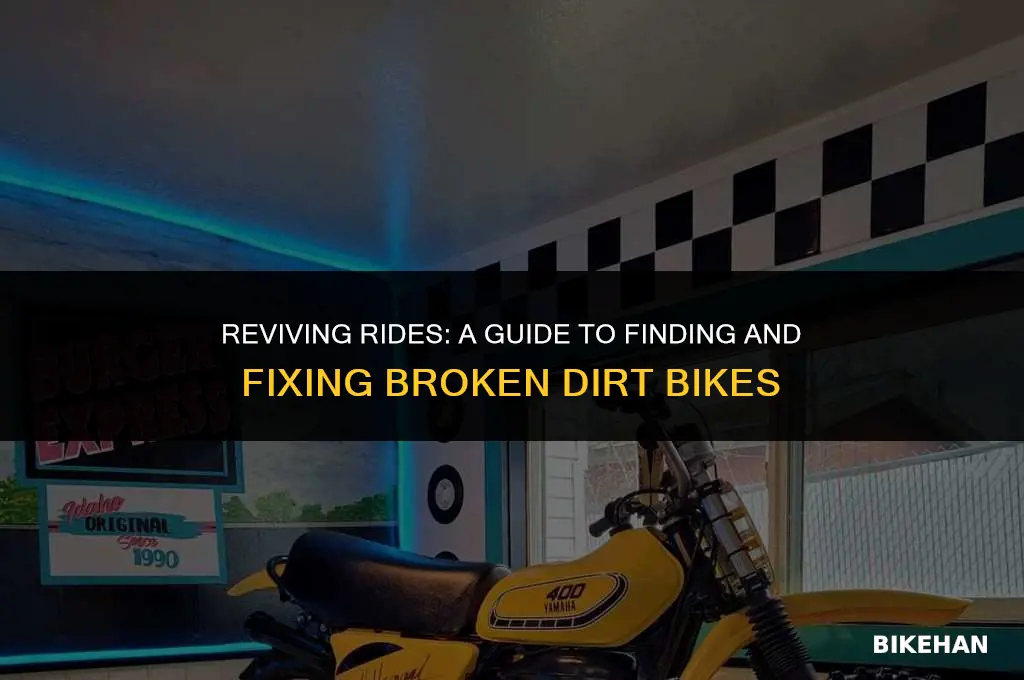
Finding broken dirt bikes to fix up can be an exciting and rewarding endeavor for motorcycle enthusiasts. It allows you to bring new life to neglected machines and potentially save money compared to buying a new bike. To start your search, consider checking online marketplaces, local classifieds, and salvage yards where you might find dirt bikes in need of repair. Networking with other riders and joining online forums dedicated to dirt bike restoration can also provide valuable leads. When evaluating a potential project, be sure to inspect the bike thoroughly for structural damage, engine issues, and missing parts. With the right skills, tools, and patience, you can transform a broken dirt bike into a reliable and high-performing machine.
Explore related products


What You'll Learn
- Online Marketplaces: Websites like eBay, Craigslist, and Facebook Marketplace often list used dirt bikes
- Local Classifieds: Check local newspapers and bulletin boards for ads selling dirt bikes
- Dirt Bike Forums: Online forums and communities dedicated to dirt biking can be great resources
- Salvage Yards: Some salvage yards specialize in motorcycle parts and may have dirt bikes
- Word of Mouth: Ask friends, family, and fellow dirt bike enthusiasts if they know of any bikes for sale

Online Marketplaces: Websites like eBay, Craigslist, and Facebook Marketplace often list used dirt bikes
Online marketplaces have become a treasure trove for enthusiasts looking to find broken dirt bikes to fix up. Websites like eBay, Craigslist, and Facebook Marketplace frequently list used dirt bikes, often at a fraction of the cost of purchasing new. These platforms allow buyers to search for specific models, compare prices, and read detailed descriptions of the bike's condition. When searching for a broken dirt bike, it's essential to be specific in your search terms, using keywords like "non-running," "needs repair," or "parts bike" to narrow down the results.
One of the advantages of online marketplaces is the ability to reach a wide audience of sellers. This increases the likelihood of finding a bike that matches your specific needs and budget. Additionally, many of these platforms offer buyer protection programs, which can provide an added layer of security when making a purchase. However, it's crucial to be cautious when buying from online marketplaces, as there's always a risk of scams or misrepresentation of the bike's condition.
To mitigate these risks, it's recommended to ask the seller for additional photos and information about the bike. Inquire about the bike's history, including any accidents or major repairs. If possible, arrange to inspect the bike in person before making a purchase. This will allow you to assess the extent of the damage and determine if the bike is worth the investment.
When purchasing a broken dirt bike, it's also important to consider the cost of repairs. Research the average cost of parts and labor for the specific model you're interested in. This will help you determine if the bike is a viable project or if it would be more cost-effective to purchase a new bike. Additionally, consider the availability of parts for the specific model, as some older or less common bikes may have limited parts availability.
In conclusion, online marketplaces can be an excellent resource for finding broken dirt bikes to fix up. By being specific in your search terms, cautious when making a purchase, and considering the cost of repairs, you can find a bike that matches your needs and budget. Remember to always prioritize safety and do your due diligence when making a purchase online.
Drying Dirt Bike Boots: A Comprehensive Guide for Riders
You may want to see also
Explore related products


Local Classifieds: Check local newspapers and bulletin boards for ads selling dirt bikes
Scouring local classifieds can be a treasure hunt for those looking to find broken dirt bikes to fix up. Start by picking up the weekend edition of your local newspaper, as this is often when individuals place ads for items they're looking to sell. Flip through the classified section, paying close attention to ads that mention dirt bikes or motorcycles. You might find sellers who are unaware of the specific model or condition of the bike, providing an opportunity to negotiate a better price for a bike that needs repairs.
In addition to newspapers, community bulletin boards can be a valuable resource. These are often found in public spaces such as libraries, community centers, or local coffee shops. Take a few minutes to scan the notices pinned up, as you might find someone looking to offload a dirt bike they no longer have the time or resources to fix. Keep an eye out for handwritten notes or flyers that seem hastily made, as these could indicate a motivated seller.
Another approach is to visit local thrift stores or pawn shops that sell used sporting goods. While the selection might be limited, you could stumble upon a hidden gem that needs some TLC. Don't be afraid to ask the staff if they have any dirt bikes in stock or if they know of any customers looking to sell. Building relationships with these local businesses can lead to future opportunities and insider knowledge on where to find the best deals.
When searching through local classifieds, it's essential to be patient and persistent. Set aside time each week to check the listings, and don't get discouraged if you don't find what you're looking for right away. Consider expanding your search to nearby towns or cities, as this could increase your chances of finding a suitable dirt bike. Remember, the key is to stay vigilant and be ready to act quickly when you spot a potential opportunity.
Mastering the 450 Dirt Bike: A Beginner's Guide to Off-Road Riding
You may want to see also
Explore related products


Dirt Bike Forums: Online forums and communities dedicated to dirt biking can be great resources
Dirt bike forums are treasure troves of information for enthusiasts looking to find and fix up broken bikes. These online communities are filled with experienced riders, mechanics, and hobbyists who are passionate about dirt biking and are often willing to share their knowledge. By tapping into these forums, you can gain access to a wealth of resources, including tips on where to find broken bikes, advice on how to assess and repair them, and recommendations for the best tools and parts.
One of the key benefits of dirt bike forums is the ability to connect with people who have firsthand experience with the specific issues you're facing. Whether you're looking for advice on how to fix a particular problem with your bike or you're trying to find a reliable source for replacement parts, these forums can provide you with the information you need. Additionally, many forums have sections dedicated to buying, selling, and trading bikes and parts, which can be a great way to find broken bikes at a reasonable price.
To get the most out of dirt bike forums, it's important to be an active participant. This means not only asking questions but also sharing your own experiences and knowledge. By contributing to the community, you can build relationships with other members and increase the likelihood that they'll be willing to help you when you need it. It's also a good idea to familiarize yourself with the forum's rules and etiquette to ensure that you're posting in the appropriate sections and not violating any guidelines.
When using dirt bike forums to find broken bikes to fix up, it's essential to be cautious and do your due diligence. While many forum members are trustworthy and knowledgeable, there are also those who may not have the best intentions. Be sure to ask plenty of questions about the bike's condition, history, and any potential issues before making a purchase. It's also a good idea to request photos and, if possible, to inspect the bike in person before committing to a deal.
In conclusion, dirt bike forums can be invaluable resources for those looking to find and fix up broken bikes. By leveraging the knowledge and experience of these online communities, you can save time, money, and effort in your search for the perfect project bike. Just remember to be an active and responsible participant, and always exercise caution when making purchases.
Mastering the Art of Filling Your Dirt Bike Radiator: A Step-by-Step Guide
You may want to see also
Explore related products


Salvage Yards: Some salvage yards specialize in motorcycle parts and may have dirt bikes
Salvage yards can be a treasure trove for enthusiasts looking to find broken dirt bikes to fix up. These yards often specialize in various types of vehicles, including motorcycles, and may have a dedicated section for dirt bikes. To locate a salvage yard that deals with dirt bikes, you can start by searching online directories or contacting local motorcycle clubs for recommendations. Once you've identified a potential salvage yard, it's essential to call ahead and inquire about their inventory and policies regarding the sale of used parts and vehicles.
When visiting a salvage yard, be prepared to spend some time searching through the rows of parked motorcycles and parts. Bring a list of the specific components you're looking for, as well as any tools you might need to remove parts on-site. It's also a good idea to wear appropriate clothing and protective gear, such as gloves and safety glasses, as salvage yards can be dirty and potentially hazardous environments.
One of the benefits of shopping at a salvage yard is the opportunity to find rare or discontinued parts that may be difficult to locate elsewhere. Additionally, purchasing used parts can be more cost-effective than buying new ones, especially if you're working on a budget. However, it's crucial to inspect any parts you're considering purchasing carefully, as they may be worn out or damaged beyond repair.
If you're new to working on dirt bikes, it can be helpful to bring a more experienced friend or mechanic with you to the salvage yard. They can offer guidance on which parts to look for and how to assess their condition. Furthermore, many salvage yards have knowledgeable staff who can assist you in finding the right parts and provide advice on your repair project.
In conclusion, salvage yards can be an excellent resource for finding broken dirt bikes to fix up, offering a wide range of parts and vehicles at potentially lower prices than other sources. By doing your research, being prepared, and seeking expert advice when needed, you can make the most of your salvage yard experience and find the perfect dirt bike to restore.
Mastering the Art of Balance: A Guide to Wheelies on Dirt Bikes
You may want to see also
Explore related products


Word of Mouth: Ask friends, family, and fellow dirt bike enthusiasts if they know of any bikes for sale
Leveraging your personal network can be a surprisingly effective way to find broken dirt bikes to fix up. Start by casually mentioning your interest in restoring dirt bikes to friends and family. You might be surprised to learn that someone in your circle has an old bike they're looking to get rid of or knows someone who does.
Fellow dirt bike enthusiasts can also be a valuable resource. Attend local dirt bike events, join online forums, or participate in social media groups dedicated to the sport. These communities often have members who are knowledgeable about bikes and may be aware of opportunities to purchase used or broken bikes.
When reaching out, be specific about what you're looking for. Mention that you're interested in bikes that need work, as this can help filter out leads that aren't a good fit. Also, be prepared to offer a fair price for the bike, even if it's in poor condition. Remember, the goal is to find a bike that you can restore, not to get a deal on a fully functional bike.
One advantage of using word of mouth is that you may be able to get a bike at a lower price than you would through a dealership or online listing. Additionally, you may be able to get more information about the bike's history and any potential issues it may have. This can be invaluable when deciding whether or not a particular bike is worth taking on as a restoration project.
However, it's important to be cautious when buying a bike through word of mouth. Make sure to inspect the bike thoroughly before making a purchase, and consider having a mechanic look it over as well. Also, be aware that you may not have the same legal protections as you would when buying from a dealership, so it's important to get everything in writing and to be clear about the terms of the sale.
Overall, using word of mouth can be a great way to find broken dirt bikes to fix up, but it's important to be proactive, specific, and cautious in your approach. By leveraging your personal network and the dirt bike community, you may be able to find the perfect bike to restore and enjoy.
Mastering the Art of Donuting on a Dirt Bike: A Step-by-Step Guide
You may want to see also
Frequently asked questions
You can find broken dirt bikes at local junkyards, online marketplaces like eBay or Craigslist, salvage yards, or by contacting local dirt bike repair shops that might have trade-ins or abandoned bikes.
Look for bikes with intact frames, undamaged engines, and complete sets of parts. Check for any signs of major structural damage or corrosion. It's also important to verify the bike's history and title to ensure it's not stolen or has outstanding liens.
To determine the repair cost, assess the extent of the damage and the required replacement parts. Research the prices of new and used parts online or at local repair shops. Additionally, factor in the cost of labor if you're not planning to do the repairs yourself.
Essential tools for dirt bike repair include a socket set, wrenches, screwdrivers, pliers, and a tire iron. You may also need specialized tools like a flywheel puller or a clutch alignment tool. Safety equipment such as gloves and safety glasses is highly recommended.
Yes, there are legal considerations. Ensure you have the proper title and documentation for the bike. When reselling, provide accurate information about the bike's condition and any repairs made. Familiarize yourself with local laws regarding the sale of used vehicles and any required disclosures.