Samantha Lee
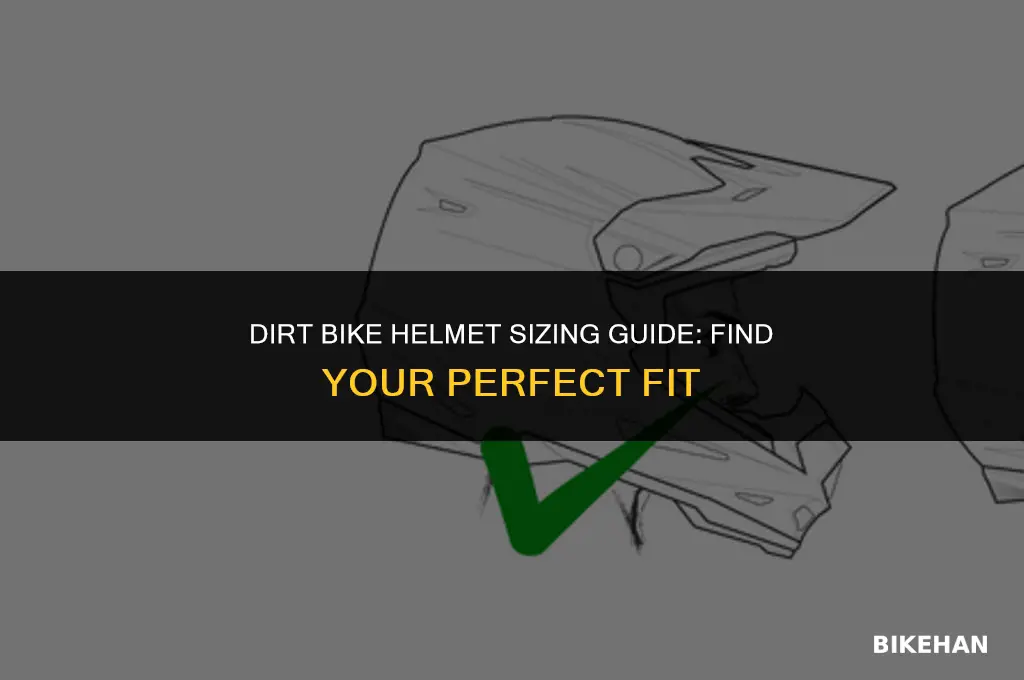
Determining the correct size for a dirt bike helmet is crucial for both safety and comfort. A helmet that fits properly can significantly reduce the risk of head injuries in the event of an accident. To find your ideal helmet size, start by measuring your head circumference using a flexible tape measure. Position the tape measure just above your eyebrows and ears, and wrap it around the fullest part of your head. Once you have your measurement, consult the manufacturer's sizing chart to select the appropriate helmet size. It's important to note that helmet sizes can vary between brands, so always refer to the specific chart provided by the helmet's manufacturer. Additionally, consider trying on helmets at a local store to ensure a proper fit before making a purchase.
Explore related products


What You'll Learn
- Measure your head circumference with a flexible tape measure above your eyebrows and around the back of your head
- Check the helmet manufacturer's size chart to match your measurement with the correct helmet size
- Consider the helmet's weight and comfort, as well as the type of riding you'll be doing
- Try on different helmets to ensure a snug fit, with no gaps between the helmet and your head
- Adjust the helmet's chin strap and padding for a secure and comfortable fit while riding

Measure your head circumference with a flexible tape measure above your eyebrows and around the back of your head
To accurately determine your dirt bike helmet size, begin by measuring your head circumference. This is a crucial step, as a helmet that fits well is essential for both comfort and safety while riding. Use a flexible tape measure, which can easily conform to the shape of your head, ensuring a precise measurement.
Start by positioning the tape measure above your eyebrows, resting it gently against your forehead. This is the widest part of your head, and it's important to measure it accurately. From there, wrap the tape measure around the back of your head, keeping it parallel to the floor. Make sure the tape is snug but not tight, as you want the helmet to fit comfortably without being too loose.
As you measure, take note of the circumference in inches or centimeters, depending on the sizing chart you're using. Most helmet manufacturers provide sizing charts that correlate head circumference with helmet size. Once you have your measurement, you can refer to these charts to find the appropriate helmet size for your head.
It's important to note that different helmet brands may have slightly different sizing standards, so it's always a good idea to check the specific sizing chart for the brand you're interested in. Additionally, if you're between sizes, it's generally recommended to go with the smaller size, as a slightly snugger fit is better than a helmet that's too loose.
Remember, a proper fit is key to ensuring that your helmet stays securely in place during a ride and provides the necessary protection in the event of a fall or collision. Taking the time to measure your head circumference accurately is a small step that can make a big difference in your riding experience.
Dirt Bike Tumbles: A Guide to Safe Falling Techniques
You may want to see also
Explore related products


Check the helmet manufacturer's size chart to match your measurement with the correct helmet size
To determine the correct size for your dirt bike helmet, it's crucial to consult the manufacturer's size chart. Each brand may have slight variations in sizing, so using the specific chart provided by the helmet's maker ensures the most accurate fit. Begin by measuring your head circumference, typically around the forehead and back of the head, just above the eyebrows and ears. Use a flexible measuring tape and record the measurement to the nearest centimeter or inch.
Next, locate the size chart for your chosen helmet brand, which can usually be found on the manufacturer's website or in the product manual. The chart will list head circumference measurements alongside corresponding helmet sizes. Match your recorded measurement with the appropriate size on the chart. If your measurement falls between two sizes, it's generally recommended to choose the larger size for a more comfortable fit.
It's important to note that helmet sizes are not standardized across all brands, so a medium in one brand may not be equivalent to a medium in another. Always rely on the specific size chart for the helmet you intend to purchase. Additionally, consider the helmet's intended use; for example, some riders may prefer a slightly larger size for added comfort during long rides, while others may opt for a snugger fit for more aggressive riding styles.
Once you've determined the correct size based on the manufacturer's chart, it's advisable to try on the helmet before making a final purchase. This allows you to ensure that the helmet fits comfortably and securely on your head, without any pressure points or excessive movement. Remember, a properly fitting helmet is essential for both safety and comfort while riding.
Mastering the Trails: A Beginner's Guide to Riding a 125cc Dirt Bike
You may want to see also
Explore related products


Consider the helmet's weight and comfort, as well as the type of riding you'll be doing
When selecting a dirt bike helmet, it's crucial to consider its weight and comfort, as these factors significantly impact your riding experience. A heavier helmet can cause neck fatigue during long rides, while a lighter one may not provide adequate protection. Comfort is equally important, as an ill-fitting helmet can lead to headaches and distraction. The type of riding you'll be doing also plays a role in helmet selection. For instance, motocross riders may prefer a helmet with a visor for added protection from debris, while trail riders might opt for a more aerodynamic design.
To determine the right helmet weight, consider the duration and intensity of your rides. If you're a casual rider who takes short trips, a heavier helmet might not be a concern. However, if you're a competitive rider or embark on long trails, a lighter helmet can make a significant difference in your performance and comfort. Look for helmets made from advanced materials like carbon fiber or Kevlar, which offer a good balance between weight and protection.
Comfort is another critical aspect to consider. A helmet that fits well should be snug but not too tight, allowing for adequate airflow and minimizing pressure points. The padding and lining should be soft and breathable, and the chin strap should be adjustable to ensure a secure fit. Some helmets come with removable and washable liners, which can help maintain hygiene and extend the helmet's lifespan.
The type of riding you'll be doing also influences your helmet choice. Motocross riders, who often encounter rough terrain and high speeds, may prefer a helmet with a visor and a more robust construction. Trail riders, on the other hand, might prioritize aerodynamics and ventilation, as they often ride on smoother surfaces and at lower speeds. Consider the specific demands of your riding style when selecting a helmet.
In conclusion, when figuring out your dirt bike helmet size, don't overlook the importance of weight, comfort, and the type of riding you'll be doing. A well-chosen helmet can enhance your safety, comfort, and overall riding experience. Take the time to try on different models, read reviews, and consult with experts to find the perfect helmet for your needs.
Mastering the Art of Gear Shifting on a Dirt Bike
You may want to see also
Explore related products


$55.09 $57.99


Try on different helmets to ensure a snug fit, with no gaps between the helmet and your head
To ensure a proper fit for your dirt bike helmet, it's crucial to try on various helmets and check for a snug fit. This means there should be no gaps between the helmet and your head. A helmet that fits well will provide better protection in the event of an accident, as it will stay securely in place and distribute the impact force more effectively.
When trying on helmets, start by putting on the chin strap and tightening it to a comfortable level. Then, move the helmet around on your head to check for any loose spots. Pay particular attention to the forehead, temples, and back of the head. If you can fit more than one finger between the helmet and your head in any of these areas, the helmet is too large.
It's also important to consider the shape of your head when choosing a helmet. Some helmets are designed for rounder heads, while others are better suited for more oval-shaped heads. If you're unsure about your head shape, you can measure the circumference of your head just above your eyebrows and compare it to the manufacturer's sizing chart.
Another factor to consider is the thickness of your hair. If you have thick hair, you may need to choose a slightly larger helmet size to accommodate it. Conversely, if you have thin hair or are bald, you may need to choose a smaller size to ensure a snug fit.
Finally, don't forget to check the helmet's weight. A heavier helmet may provide more protection, but it can also be more fatiguing to wear for extended periods. Choose a helmet that strikes a balance between protection and comfort.
Mastering the Art of Riding a 4-Stroke Dirt Bike
You may want to see also
Explore related products


Adjust the helmet's chin strap and padding for a secure and comfortable fit while riding
To ensure a secure and comfortable fit while riding, it's crucial to adjust the helmet's chin strap and padding correctly. Start by fastening the chin strap snugly, ensuring it's tight enough to prevent the helmet from moving around but not so tight that it causes discomfort or restricts breathing. The strap should sit just below the jawline, and you should be able to fit one finger between the strap and your chin for optimal comfort.
Next, check the padding inside the helmet. It should be firm yet comfortable, providing adequate cushioning without compressing your head. If the padding feels too thin or worn out, consider replacing it to maintain proper protection. Adjust the padding as needed to ensure an even fit around your head, avoiding any pressure points or gaps.
When adjusting the chin strap, make sure the buckle is secure and functioning properly. A faulty buckle can compromise the helmet's safety, so inspect it regularly for any signs of wear or damage. Additionally, ensure that the chin strap is properly aligned with the helmet's shell to prevent any twisting or turning during use.
It's also important to consider the helmet's overall fit in conjunction with the chin strap and padding adjustments. The helmet should sit squarely on your head, covering the forehead and sitting above the eyebrows. If the helmet feels too loose or too tight, even after adjusting the chin strap and padding, it may be necessary to try a different size or model.
Finally, remember to re-adjust the chin strap and padding periodically, especially after long rides or if you experience any discomfort. Proper maintenance and adjustment of your helmet's chin strap and padding are essential for ensuring a safe and enjoyable riding experience.
Yamaha Dirt Bike Gas Drainage: A Step-by-Step Guide
You may want to see also
Frequently asked questions
To measure your head for a dirt bike helmet, use a flexible tape measure and wrap it around the fullest part of your head, just above your eyebrows and ears. Make sure the tape is snug but not too tight, and record the measurement to the nearest centimeter or inch.
The general sizing range for adult dirt bike helmets varies by brand, but typically falls within the following categories: Small (55-58 cm or 21.7-22.8 inches), Medium (59-62 cm or 23.2-24.4 inches), Large (63-66 cm or 24.8-26 inches), and Extra Large (67-70 cm or 26.4-27.6 inches).
A dirt bike helmet should fit snugly on your head without being too tight or too loose. It should sit just above your eyebrows, with the chin strap securely fastened and the helmet level on your head. There should be no excessive movement or slippage when you shake your head, and your vision should not be obstructed by the helmet's visor or frame.