Matthew Brooks
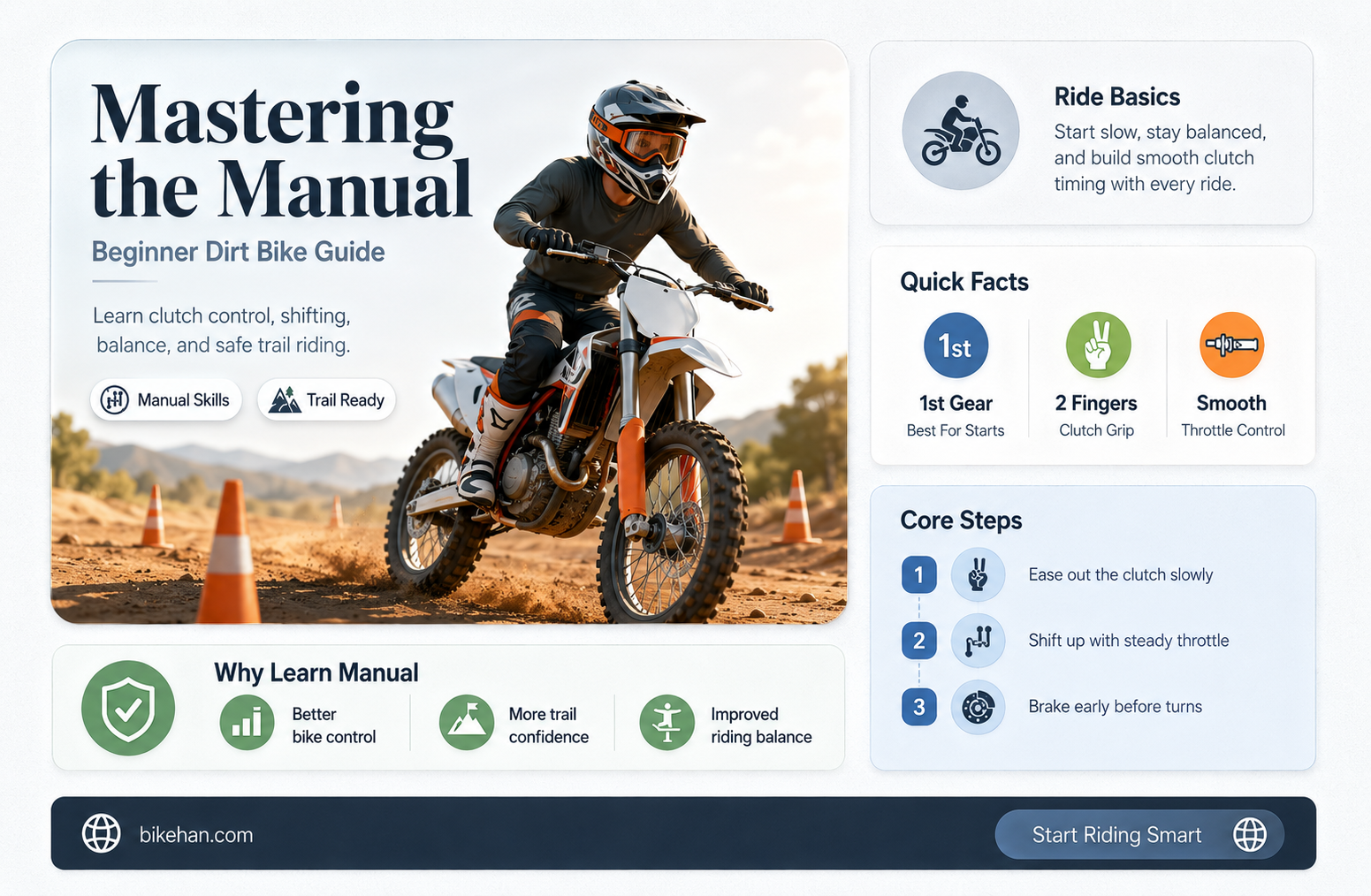
Learning to drive a manual dirt bike can be an exhilarating and rewarding experience. It requires a combination of physical skill, mental focus, and an understanding of the bike's mechanics. Before you begin, it's essential to familiarize yourself with the controls, including the clutch, throttle, brakes, and gears. Start by finding a suitable location to practice, such as a flat, open area with no obstacles. Begin by getting comfortable with the bike's weight and balance, then gradually progress to starting the engine and shifting gears. Remember to always wear appropriate safety gear, including a helmet, gloves, and protective clothing. With patience and practice, you'll soon be able to confidently navigate your dirt bike and enjoy the thrill of off-road riding.
Explore related products


What You'll Learn
- Getting Started: Understand bike controls, seating position, and safety gear
- Clutch Control: Learn smooth clutch engagement and disengagement techniques
- Throttle Management: Master throttle modulation for different terrains
- Shifting Gears: Practice upshifting and downshifting smoothly
- Braking Techniques: Develop effective braking strategies for various conditions

Getting Started: Understand bike controls, seating position, and safety gear
Before you even start the engine of a manual dirt bike, it's crucial to familiarize yourself with the controls and seating position to ensure a safe and comfortable ride. The first step is to understand the layout of the handlebars, which typically house the throttle, clutch lever, and brake controls. The throttle is usually located on the right handlebar, while the clutch lever is on the left. The front brake lever is also on the right handlebar, near the throttle. Understanding these controls is essential for smooth operation and quick response during riding.
Next, let's talk about the seating position. On a dirt bike, the rider's position is more upright compared to a street bike, allowing for better control and maneuverability on rough terrain. When seated, your feet should be on the foot pegs, with your knees gripping the sides of the bike. This position helps in maintaining balance and provides the necessary leverage for steering and controlling the bike. It's also important to note that dirt bikes often have a higher seat height, so ensure you can touch the ground with both feet when stopped.
Safety gear is non-negotiable when it comes to dirt biking. A helmet is the most critical piece of equipment, protecting your head from potential impacts. Choose a helmet that fits snugly and is certified for off-road use. Additionally, wear goggles to protect your eyes from dust, debris, and sunlight. A chest protector can help shield your torso from injuries, while gloves provide better grip and protect your hands. Lastly, sturdy boots with good ankle support are essential to protect your feet and ankles during a ride.
Now, let's dive into some practical tips for beginners. When starting out, it's a good idea to practice on a flat, open area to get comfortable with the bike's controls and handling. Begin by getting a feel for the throttle and clutch, learning how to smoothly transition between gears. Practice braking techniques, focusing on using both the front and rear brakes effectively. As you gain confidence, start incorporating turns and slight inclines into your practice routine.
One common mistake beginners make is not using the clutch properly when shifting gears. Remember to squeeze the clutch lever fully before changing gears to avoid any jerky movements or potential damage to the bike. Another tip is to maintain a steady throttle when riding, especially on uneven terrain. This helps in maintaining traction and prevents the bike from stalling.
In conclusion, understanding the bike controls, seating position, and safety gear is paramount for anyone looking to ride a manual dirt bike. By familiarizing yourself with these aspects and practicing regularly, you'll be well on your way to enjoying the thrilling experience of dirt biking safely and confidently.
Mastering the Clutch: A Beginner's Guide to Dirt Bike Driving
You may want to see also
Explore related products




Clutch Control: Learn smooth clutch engagement and disengagement techniques
Mastering clutch control is essential for smooth and efficient riding of a manual dirt bike. The clutch is a critical component that allows you to transfer power from the engine to the rear wheel, and proper technique is key to avoiding jerky movements and potential damage to your bike. To engage the clutch smoothly, start by ensuring your bike is in neutral and the engine is idling. Gradually press the clutch lever in while simultaneously easing off the throttle. This coordinated action will help prevent the bike from lurching forward or stalling.
When disengaging the clutch, the process is reversed. Slowly release the clutch lever while gently applying the throttle to maintain engine speed. This will ensure a seamless transition of power and prevent the bike from bucking or losing momentum. It's important to practice these techniques in a controlled environment, such as an empty parking lot or a designated practice area, to build muscle memory and confidence.
One common mistake beginners make is to abruptly engage or disengage the clutch, which can lead to jerky movements and even loss of control. To avoid this, focus on smooth, deliberate actions and maintain a steady throttle input. Additionally, be mindful of your body positioning and weight distribution, as these factors can significantly impact clutch control.
As you become more proficient with clutch control, you can start to incorporate more advanced techniques, such as feathering the clutch to modulate power delivery during turns or when navigating obstacles. Remember, practice is key to mastering clutch control, so be patient and persistent in your efforts. With time and dedication, you'll be able to engage and disengage the clutch with precision and finesse, enhancing your overall riding experience and skill level.
Dirt Bike Maintenance: The Complete Guide to Draining Your Gas Tank
You may want to see also
Explore related products



Throttle Management: Master throttle modulation for different terrains
Effective throttle management is crucial for navigating the diverse terrains encountered while riding a manual dirt bike. The throttle is your primary tool for controlling speed and power delivery, and mastering its modulation can significantly enhance your riding experience and safety.
In off-road conditions, the key to successful throttle control lies in understanding how to balance power and traction. On loose or slippery surfaces, such as mud, sand, or gravel, it's essential to avoid abrupt throttle inputs, which can cause the rear wheel to lose grip and spin out. Instead, apply the throttle smoothly and progressively, allowing the bike to build momentum gradually. This technique helps maintain traction and prevents the bike from becoming unstable.
Conversely, when riding on hard-packed dirt or rocky trails, you may need to use more aggressive throttle control to overcome obstacles and maintain speed. In these situations, quick, precise throttle inputs can help you accelerate out of turns and over bumps, but it's still important to avoid excessive wheel spin.
One effective strategy for mastering throttle modulation is to practice riding in different gears. By shifting gears appropriately, you can maintain a consistent power output while adjusting your speed to suit the terrain. For example, when climbing a steep hill, you may need to shift down to a lower gear to maintain torque, while on flat or downhill sections, you can shift up to increase speed without over-revving the engine.
Another important aspect of throttle management is learning to use the clutch effectively in conjunction with the throttle. The clutch allows you to control the connection between the engine and the rear wheel, which is essential for smooth gear changes and maintaining traction. When accelerating from a stop, for instance, you should engage the clutch gradually while simultaneously applying the throttle, ensuring a seamless transfer of power to the rear wheel.
In summary, mastering throttle modulation for different terrains requires a combination of smooth, progressive throttle control, appropriate gear selection, and effective use of the clutch. By practicing these techniques, you can improve your ability to navigate challenging off-road conditions safely and confidently, enhancing your overall riding experience.
Mastering the Art of Wheelies on Your Dirt Bike
You may want to see also
Explore related products


Shifting Gears: Practice upshifting and downshifting smoothly
To master the art of shifting gears on a manual dirt bike, it's essential to understand the mechanics behind it. The process involves a delicate balance of throttle control, clutch operation, and gear selection. When upshifting, you'll need to gradually increase the throttle while simultaneously engaging the clutch and shifting the gear lever to the next higher gear. This should be done smoothly to avoid any jerky movements that could destabilize the bike.
Downshifting, on the other hand, requires a slightly different approach. As you prepare to downshift, you'll need to decrease the throttle and engage the clutch. Then, shift the gear lever to the next lower gear. It's crucial to match the engine speed to the gear you're shifting into to ensure a seamless transition. This can be achieved by blipping the throttle slightly as you engage the new gear.
One common mistake beginners make is not engaging the clutch fully before shifting gears. This can lead to grinding gears and potential damage to the transmission. Another error is shifting gears too abruptly, which can cause the bike to lurch forward or backward, depending on whether you're upshifting or downshifting.
To practice shifting gears smoothly, start by getting comfortable with the clutch and throttle controls. Find a flat, open area where you can safely practice without any obstacles. Begin by riding in first gear and gradually increase your speed. As you become more comfortable, start to experiment with upshifting and downshifting. Remember to always engage the clutch fully and shift gears smoothly.
With practice, you'll develop a feel for when to shift gears and how to do it smoothly. This skill is essential for maintaining control of your dirt bike and ensuring a safe and enjoyable ride.
Efficiently Drain Gas from Your 2-Stroke Dirt Bike: A Guide
You may want to see also
Explore related products


Braking Techniques: Develop effective braking strategies for various conditions
Mastering braking techniques is crucial for safely navigating the unpredictable terrain encountered while riding a manual dirt bike. Effective braking strategies vary depending on the conditions, such as the type of surface, weather, and the bike's speed. For instance, on loose dirt or gravel, abrupt braking can cause the wheels to lock up, leading to a loss of control. In such cases, a gradual and controlled application of the brakes is more effective.
In contrast, when riding on wet or muddy surfaces, the braking dynamics change significantly. The reduced traction requires a more delicate touch on the brake levers to prevent skidding. It's essential to use both the front and rear brakes in tandem, applying them gently and progressively to maintain stability and control. Additionally, the rider should avoid sudden weight shifts and maintain a centered position on the bike to ensure even distribution of force on the wheels.
When encountering steep descents, the rider must employ a technique known as "engine braking" to complement the traditional braking system. This involves downshifting to a lower gear, which increases the engine's resistance and helps slow down the bike without relying solely on the brakes. This technique is particularly useful in conserving brake energy and preventing overheating during prolonged descents.
Another critical aspect of braking on a manual dirt bike is understanding the importance of body positioning. The rider should lean into turns while braking to maintain balance and traction. This technique, known as "counter-steering," helps in stabilizing the bike and allows for more precise control during turns. It's also essential to keep the body weight off the front wheel to prevent it from locking up and to ensure that the rear wheel maintains sufficient traction for effective braking.
In summary, developing effective braking strategies for various conditions is essential for safely riding a manual dirt bike. By understanding the nuances of different surfaces, weather conditions, and the bike's dynamics, riders can master the art of braking and enhance their overall riding experience.
Mastering the Art of Donuting on a Dirt Bike: A Step-by-Step Guide
You may want to see also
Frequently asked questions
Essential safety gear includes a helmet, goggles, gloves, boots, body armor, and appropriate riding attire such as long-sleeved shirts and pants made from durable materials.
To start a manual dirt bike, ensure the bike is in neutral, then kick the starter pedal down sharply while simultaneously releasing the clutch lever. Once the engine starts, slowly let out the clutch to engage the transmission.
To shift gears, press down on the gear shift lever with your foot while slightly lifting the clutch lever with your hand. Move the lever to the desired gear position, then smoothly release the clutch to engage the new gear.
For a quick stop, apply the front brake lever firmly while gradually increasing pressure on the rear brake pedal. This balanced approach helps prevent the bike from tipping over and ensures effective stopping power.
Maintaining balance involves keeping your body centered over the bike, using your legs to grip the sides of the bike, and shifting your weight to counterbalance the movements of the terrain. Additionally, keeping the throttle smooth and using the clutch to control power delivery can help maintain stability on uneven surfaces.