Matthew Brooks
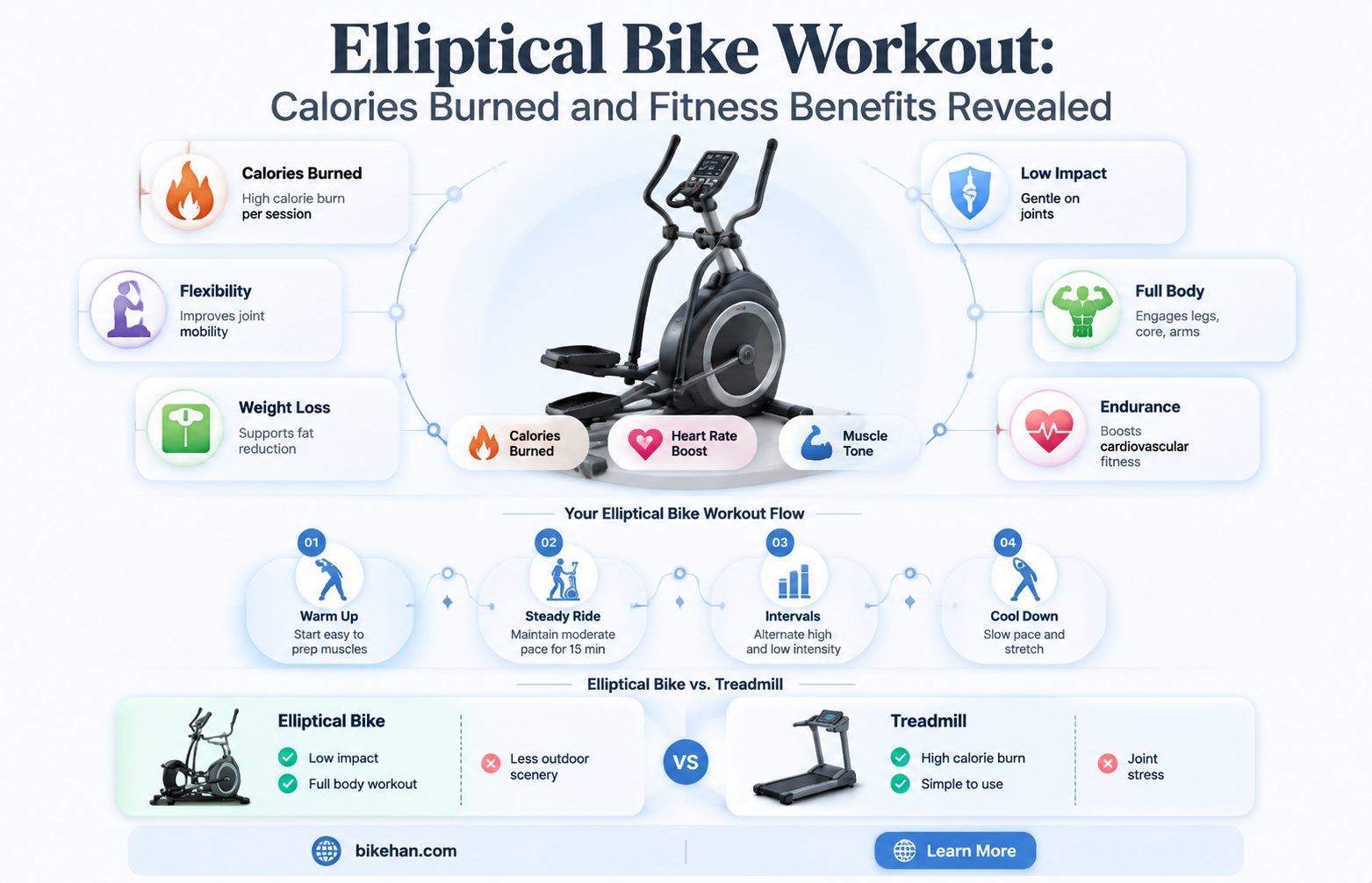
The elliptical bike is a popular piece of cardio equipment that provides a low-impact, full-body workout. It's designed to simulate the motion of cycling while also engaging the upper body, making it an efficient way to burn calories and improve cardiovascular fitness. The number of calories burned on an elliptical bike can vary depending on several factors, including the intensity of the workout, the duration of the session, and the individual's weight and fitness level. On average, a 30-minute elliptical workout can burn anywhere from 200 to 400 calories for a person weighing between 120 and 200 pounds. However, for a more accurate estimate, it's important to consider the specific settings and resistance levels used during the workout, as well as the individual's unique physiological characteristics.
Explore related products


What You'll Learn
- Calorie Burn Rate: Factors influencing calorie burn rate on an elliptical bike, such as intensity and duration
- User Weight Impact: How a user's weight affects the number of calories burned during an elliptical bike workout
- Resistance Levels: The correlation between resistance settings on an elliptical bike and calorie expenditure
- Comparative Analysis: Calorie burn comparison between elliptical bikes and other cardio machines or exercises
- Optimal Workout Duration: Recommendations for workout length on an elliptical bike to maximize calorie burn

Calorie Burn Rate: Factors influencing calorie burn rate on an elliptical bike, such as intensity and duration
The calorie burn rate on an elliptical bike is influenced by several key factors, primarily the intensity of your workout and the duration you spend exercising. Intensity can be measured in terms of resistance levels on the bike and your heart rate. The higher the resistance, the more effort your body has to exert, leading to a higher calorie burn. Similarly, maintaining a higher heart rate throughout your workout indicates that your body is working harder, thus burning more calories.
Duration is another critical factor. The longer you exercise on the elliptical bike, the more calories you will burn. However, it's important to note that simply exercising for a longer period at a low intensity may not be as effective as exercising for a shorter period at a high intensity. High-intensity interval training (HIIT) on an elliptical bike, for example, can significantly increase your calorie burn rate both during and after your workout due to the afterburn effect.
Other factors that can influence your calorie burn rate include your body weight, age, and fitness level. Generally, the more you weigh, the more calories you will burn during an elliptical workout, as your body requires more energy to move. Age can also play a role, as metabolism tends to slow down as we get older, potentially reducing the number of calories burned. Additionally, individuals with a higher fitness level may burn fewer calories at the same intensity as someone who is less fit, as their bodies are more efficient at using energy.
To maximize your calorie burn on an elliptical bike, consider incorporating varied resistance levels and intervals into your workout routine. This can help keep your heart rate elevated and challenge your body, leading to a more effective calorie-burning session. Additionally, tracking your progress and adjusting your workout intensity and duration accordingly can help ensure that you continue to challenge your body and see results.
In summary, the calorie burn rate on an elliptical bike is a complex interplay of factors including workout intensity, duration, body weight, age, and fitness level. By understanding these factors and tailoring your workouts accordingly, you can optimize your calorie burn and achieve your fitness goals more effectively.
Calories Burned on a 20-Mile Bike Ride: A Comprehensive Guide
You may want to see also
Explore related products


User Weight Impact: How a user's weight affects the number of calories burned during an elliptical bike workout
The impact of a user's weight on the number of calories burned during an elliptical bike workout is significant. Heavier individuals tend to burn more calories because their body requires more energy to perform the same amount of work. This is due to the increased demand on the cardiovascular system and the muscles to move the additional weight. For instance, a person weighing 150 pounds may burn approximately 400 calories in a 30-minute elliptical workout, while someone weighing 200 pounds could burn around 530 calories in the same duration.
Several factors contribute to this increased calorie burn. Firstly, the basal metabolic rate (BMR) of a heavier person is generally higher, meaning they burn more calories at rest. Secondly, the energy required to move a heavier body during exercise is greater, leading to a higher overall calorie expenditure. Additionally, the intensity of the workout, as perceived by the individual, can also play a role. A heavier person may find the same workout intensity more challenging, thus burning more calories as a result.
It's important to note that while weight does influence calorie burn, it is not the sole factor. Other variables such as workout intensity, duration, and individual fitness levels also play crucial roles. For example, a lighter individual who works out at a higher intensity may burn more calories than a heavier person exercising at a lower intensity. Therefore, while weight can provide a general guideline for calorie burn, it should not be the only consideration when planning an elliptical bike workout.
In practical terms, understanding the relationship between weight and calorie burn can help individuals tailor their workouts to meet specific fitness goals. For those looking to lose weight, knowing that higher body weight can lead to greater calorie burn may be motivating. Conversely, for individuals who are underweight or looking to maintain their current weight, this information can help them adjust their exercise intensity and duration accordingly.
In conclusion, a user's weight has a notable impact on the number of calories burned during an elliptical bike workout. Heavier individuals tend to burn more calories due to the increased energy demands of moving their body. However, workout intensity, duration, and individual fitness levels also play important roles in determining overall calorie expenditure. By understanding these factors, individuals can better design their elliptical bike workouts to achieve their desired fitness outcomes.
Rev Up Your Metabolism: The Calorie-Burning Power of Air Biking
You may want to see also
Explore related products


Resistance Levels: The correlation between resistance settings on an elliptical bike and calorie expenditure
The resistance level on an elliptical bike is a critical factor in determining the intensity of your workout and, consequently, the number of calories you burn. Higher resistance settings increase the difficulty of pedaling, engaging more muscle groups and requiring more energy expenditure. This results in a higher calorie burn rate. For instance, a user weighing 150 pounds can burn approximately 400 calories in 30 minutes at a moderate resistance level, while the same duration at a high resistance level can increase calorie expenditure to around 600 calories.
To maximize calorie burn, it's essential to understand how different resistance levels impact your workout. Most elliptical bikes offer a range of resistance settings, typically from 1 to 20. Beginners should start at lower resistance levels to build endurance and gradually increase the intensity as their fitness improves. Interval training, which involves alternating between high and low resistance levels, can also be an effective strategy for boosting calorie expenditure and improving cardiovascular fitness.
In addition to resistance levels, other factors such as workout duration, user weight, and overall fitness level also influence calorie burn on an elliptical bike. For example, a longer workout duration at a consistent resistance level will result in more calories burned. Similarly, individuals with higher body weights tend to burn more calories due to the increased energy required to move their bodies.
To get the most out of your elliptical bike workout, it's important to monitor your progress and adjust the resistance levels accordingly. Many elliptical bikes come with built-in displays that show workout metrics, including calories burned, distance traveled, and heart rate. By tracking these metrics, you can ensure that you're challenging yourself effectively and making progress towards your fitness goals.
In conclusion, the resistance level on an elliptical bike plays a significant role in determining calorie expenditure. By understanding how resistance levels impact your workout and incorporating strategies such as interval training, you can maximize your calorie burn and achieve your fitness goals more efficiently.
Torch Calories with Assault Bike: Your Ultimate Fitness Companion
You may want to see also
Explore related products


Comparative Analysis: Calorie burn comparison between elliptical bikes and other cardio machines or exercises
Elliptical bikes are a popular choice for cardio workouts due to their low-impact nature and efficiency in burning calories. When compared to other cardio machines and exercises, elliptical bikes offer a unique combination of upper and lower body engagement, which can lead to higher calorie expenditure. For instance, a 30-minute session on an elliptical bike can burn approximately 200-300 calories for an average person, depending on the intensity level and their body weight.
In comparison, activities like jogging or cycling may burn a similar number of calories, but they often require more time or higher intensity to achieve the same results. Moreover, elliptical bikes provide a full-body workout, engaging both the arms and legs, which can be beneficial for overall fitness and muscle toning. This is in contrast to exercises like swimming or rowing, which primarily target specific muscle groups.
One of the key advantages of elliptical bikes is their ability to provide a high-intensity workout without the high impact on joints. This makes them an excellent option for individuals who are recovering from injuries or those who are looking to avoid joint strain. Additionally, elliptical bikes often come with various resistance levels and workout programs, allowing users to customize their sessions based on their fitness goals and preferences.
When considering the calorie burn potential of elliptical bikes, it's also important to factor in the user's body composition and workout intensity. For example, a person with a higher body weight will generally burn more calories during an elliptical bike session compared to someone who is lighter. Similarly, increasing the resistance level or incorporating interval training can significantly boost calorie expenditure.
In conclusion, elliptical bikes are a versatile and effective cardio option that can provide a comprehensive workout while minimizing joint impact. Their ability to engage multiple muscle groups and offer customizable resistance levels makes them a valuable addition to any fitness routine, particularly for those looking to maximize calorie burn and overall fitness.
Calories Burned in an Hour of Stationary Biking: A Comprehensive Guide
You may want to see also
Explore related products


Optimal Workout Duration: Recommendations for workout length on an elliptical bike to maximize calorie burn
To maximize calorie burn on an elliptical bike, it's essential to understand the optimal workout duration. While longer workouts might seem more effective, the key lies in balancing intensity and duration. Research suggests that high-intensity interval training (HIIT) can significantly boost calorie expenditure both during and after exercise. For an elliptical bike workout, this translates to alternating between periods of vigorous pedaling and recovery phases.
A practical approach is to structure your workout into intervals of 30 seconds to 1 minute of intense effort, followed by 1-2 minutes of moderate pedaling. This pattern can be repeated for 20-30 minutes, depending on your fitness level. The intense intervals should push you to about 80-90% of your maximum heart rate, while the recovery phases allow your heart rate to drop to around 60-70%. This method not only maximizes calorie burn during the workout but also increases excess post-exercise oxygen consumption (EPOC), leading to continued calorie burning after you've finished exercising.
Another strategy is to incorporate circuit training into your elliptical bike routine. This involves combining elliptical intervals with strength training exercises targeting different muscle groups. For example, you could alternate between 5 minutes of elliptical pedaling and 5 minutes of strength exercises like squats, lunges, and push-ups. This approach not only enhances calorie burn but also improves overall fitness and muscle tone.
It's also important to consider your overall weekly exercise routine. Aiming for at least 150 minutes of moderate-intensity aerobic exercise, along with 2-3 days of strength training, can help you achieve a balanced fitness regimen. Elliptical bike workouts can be a significant part of this routine, especially when combined with other forms of exercise and a healthy diet.
In summary, the optimal workout duration on an elliptical bike to maximize calorie burn involves a combination of high-intensity intervals, circuit training, and a balanced weekly exercise routine. By incorporating these strategies, you can effectively increase your calorie expenditure and achieve your fitness goals.
Burn Calories Effortlessly: The Surprising Benefits of Standing Bikes
You may want to see also
Frequently asked questions
On average, a 30-minute elliptical bike workout can burn between 200 to 400 calories, depending on your weight, intensity level, and overall fitness.
Yes, an elliptical bike can be effective for weight loss as it provides a low-impact, full-body workout that can help you burn a significant number of calories. Combined with a healthy diet and regular exercise, it can contribute to achieving your weight loss goals.
The intensity level directly affects calorie burn on an elliptical bike. Higher intensity workouts, such as interval training or hill climbs, will burn more calories than lower intensity, steady-state workouts. Adjusting the resistance and incline settings can help increase the intensity and calorie burn.
Your body weight plays a significant role in determining the number of calories burned on an elliptical bike. Generally, the more you weigh, the more calories you will burn during a workout, as your body requires more energy to perform the same amount of work.
While an elliptical bike primarily provides a cardiovascular workout, it can also help build muscle, particularly in the lower body, including the glutes, hamstrings, and calves. By adjusting the resistance and focusing on pushing with your legs, you can engage and strengthen these muscle groups.