Megan Blake
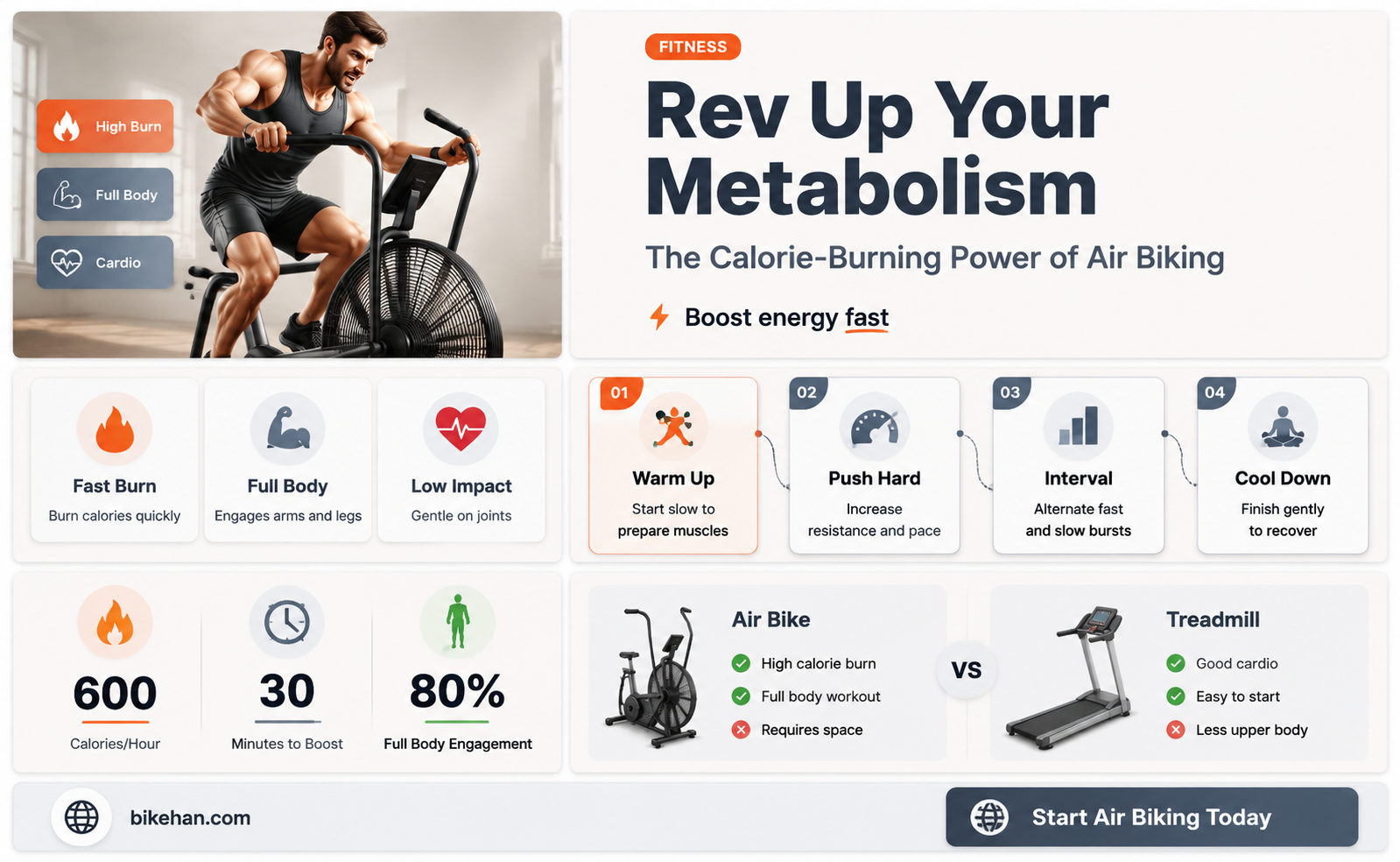
The topic of how many calories are burned on an air bike is an important one for fitness enthusiasts and those looking to incorporate this type of exercise into their workout routine. An air bike, also known as an air resistance bike, is a stationary exercise bike that uses air resistance to provide a challenging workout. The number of calories burned on an air bike can vary depending on several factors, including the intensity of the workout, the duration of the exercise, and the individual's weight and fitness level. On average, a person can burn anywhere from 200 to 600 calories per hour on an air bike, making it a highly effective way to improve cardiovascular health and burn calories.
Explore related products


What You'll Learn
- Calorie Burn Rate: Factors influencing calorie burn rate on an air bike, such as intensity and duration
- Intensity Levels: Different resistance settings and how they impact the workout's difficulty and calorie expenditure
- Duration of Workout: How longer sessions on the air bike can increase total calories burned
- User Weight and Fitness Level: The role of individual weight and fitness level in determining calorie burn
- Comparative Analysis: Calories burned on an air bike versus other forms of exercise, like running or cycling

Calorie Burn Rate: Factors influencing calorie burn rate on an air bike, such as intensity and duration
The calorie burn rate on an air bike is influenced by several key factors, including the intensity of your workout and the duration of your session. Intensity is a critical component because it determines how much energy your body needs to expend to maintain the exercise. The harder you pedal, the more resistance the air bike provides, and the more calories you burn. For instance, a high-intensity interval training (HIIT) session on an air bike can significantly increase your calorie burn rate compared to a steady-state, low-intensity workout.
Duration also plays a significant role in calorie burn. The longer you exercise, the more calories you will burn, assuming the intensity remains constant. However, it's important to note that the body's efficiency can change over time. As you become more accustomed to the exercise, your body may become more efficient at performing the movements, which could slightly reduce the calorie burn rate for the same duration and intensity.
Another factor to consider is your body weight. Generally, the more you weigh, the more calories you will burn during an air bike workout, as your body requires more energy to move the additional weight. Additionally, your fitness level can impact calorie burn. As your cardiovascular fitness improves, your body becomes more efficient at using oxygen, which can lead to a higher calorie burn rate during exercise.
Environmental factors, such as room temperature and humidity, can also influence your calorie burn rate. Exercising in a hot and humid environment can increase your heart rate and breathing, leading to a higher calorie expenditure. Conversely, working out in a cooler environment may result in a slightly lower calorie burn rate.
To maximize your calorie burn on an air bike, consider incorporating varied intensities into your workout routine. This can include intervals of high-intensity pedaling followed by periods of lower intensity or rest. Additionally, gradually increasing the duration of your workouts can help you burn more calories over time. Remember to stay hydrated and maintain a comfortable room temperature to ensure a safe and effective exercise session.
Calories Burned: Unraveling the Mystery of a 15-Mile Bike Ride
You may want to see also
Explore related products


Intensity Levels: Different resistance settings and how they impact the workout's difficulty and calorie expenditure
The intensity level of an air bike workout is directly influenced by the resistance setting, which can significantly impact both the difficulty of the exercise and the number of calories burned. Higher resistance settings increase the effort required to pedal, engaging more muscle groups and elevating the heart rate more effectively. This results in a more challenging workout and a higher calorie expenditure. Conversely, lower resistance settings provide a less strenuous experience, suitable for beginners or those looking to focus on endurance rather than intensity.
To maximize calorie burn, it's essential to understand how different resistance levels affect the body. At higher intensities, the body utilizes more oxygen, leading to increased energy expenditure and calorie burn. This is known as the afterburn effect, where the metabolism remains elevated even after the workout has concluded. Incorporating interval training, which involves alternating between high and low resistance settings, can further enhance calorie burn by keeping the body guessing and preventing it from adapting to a single intensity level.
When setting the resistance on an air bike, it's crucial to consider individual fitness levels and goals. Beginners should start with lower resistance settings to build endurance and gradually increase the intensity as their fitness improves. More experienced users can challenge themselves with higher resistance levels to continue making progress and increasing calorie burn. It's also important to listen to the body and adjust the resistance as needed to avoid injury and ensure a safe and effective workout.
In summary, the resistance setting on an air bike plays a critical role in determining the intensity of the workout and the number of calories burned. By understanding how different resistance levels impact the body and incorporating strategies such as interval training, individuals can optimize their air bike workouts to achieve their fitness goals and maximize calorie expenditure.
Calories Burned in a 3-Mile Bike Ride: A Comprehensive Guide
You may want to see also
Explore related products


Duration of Workout: How longer sessions on the air bike can increase total calories burned
The duration of your workout on an air bike plays a crucial role in determining the total calories burned. As you pedal longer, your body continues to expend energy, leading to a higher calorie burn. This is because the air bike provides a full-body workout, engaging multiple muscle groups simultaneously. As a result, even moderate-intensity sessions can be highly effective in burning calories.
For instance, a 30-minute session on an air bike at a moderate pace can burn approximately 200-300 calories, depending on your weight and intensity level. However, if you extend this session to 60 minutes, you can expect to burn around 400-600 calories. This is because your body's metabolism remains elevated during the workout, and the longer you exercise, the more energy your body needs to replenish.
Moreover, longer workouts on the air bike can also lead to increased cardiovascular benefits, improved muscle strength, and enhanced endurance. As you challenge your body for extended periods, you stimulate adaptations that can improve your overall fitness level. This, in turn, can lead to a higher calorie burn both during and after your workout, as your body becomes more efficient at utilizing energy.
To maximize the calorie burn during your air bike workout, it's essential to maintain a consistent pace and avoid slacking off. You can also incorporate interval training, alternating between high-intensity bursts and recovery periods, to keep your metabolism guessing and boost the overall calorie expenditure. Additionally, staying hydrated and fueling your body with a balanced diet can help support your workout performance and recovery, ultimately leading to more effective calorie burning.
In conclusion, the duration of your air bike workout is a critical factor in determining the total calories burned. By extending your session and maintaining a consistent intensity, you can significantly increase the calorie expenditure and reap the associated health benefits. Remember to listen to your body, stay hydrated, and fuel your workout with a balanced diet to optimize your results.
Calories Burned Biking 9 Miles: A Comprehensive Guide
You may want to see also
Explore related products


User Weight and Fitness Level: The role of individual weight and fitness level in determining calorie burn
The number of calories burned on an air bike is significantly influenced by the user's weight and fitness level. Heavier individuals tend to burn more calories because their bodies require more energy to perform the same amount of work. For example, a person weighing 180 pounds may burn approximately 400-500 calories in a 30-minute air biking session, while someone weighing 120 pounds may burn around 250-300 calories in the same duration. This difference is due to the increased energy expenditure required to move a heavier body.
Fitness level also plays a crucial role in calorie burn. More fit individuals, particularly those with higher muscle mass, may burn fewer calories at rest but can sustain higher intensity workouts, leading to greater overall calorie expenditure. On the other hand, less fit individuals may tire more quickly, resulting in a lower total calorie burn. For instance, an experienced cyclist may be able to maintain a high resistance level for an extended period, burning more calories than a beginner who might need to take frequent breaks or use lower resistance settings.
To maximize calorie burn on an air bike, users should focus on maintaining a consistent workout intensity that challenges their cardiovascular system. This can be achieved by adjusting the resistance level to match their fitness capabilities and gradually increasing it over time as their endurance improves. Additionally, incorporating interval training, where users alternate between high and low resistance levels, can help boost calorie expenditure by keeping the body guessing and preventing it from becoming too accustomed to a single workout intensity.
In summary, individual weight and fitness level are key factors in determining the number of calories burned on an air bike. By understanding these factors and tailoring their workouts accordingly, users can optimize their calorie burn and achieve their fitness goals more effectively.
Rev Up Your Metabolism: The Calorie-Burning Power of Recumbent Biking
You may want to see also
Explore related products


Comparative Analysis: Calories burned on an air bike versus other forms of exercise, like running or cycling
The air bike, also known as an air resistance bike, is a popular piece of exercise equipment that provides a low-impact, full-body workout. When it comes to calorie burn, the air bike is often compared to other forms of exercise such as running and cycling. But how does it stack up against these activities in terms of energy expenditure?
To answer this question, we need to consider several factors, including the intensity of the workout, the duration of the exercise, and the individual's body weight and fitness level. Generally speaking, the air bike can provide a high-intensity workout that engages both the upper and lower body, leading to a significant calorie burn. In fact, some studies suggest that the air bike can burn up to 800-1000 calories per hour for an average-sized individual, depending on the intensity of the workout.
In comparison, running and cycling can also provide a high-intensity workout, but they typically engage different muscle groups and may not provide the same level of full-body engagement as the air bike. Running, for example, primarily engages the lower body and core muscles, while cycling focuses on the lower body and, to a lesser extent, the core. As a result, the calorie burn for these activities may be slightly lower than that of the air bike, with running burning approximately 600-800 calories per hour and cycling burning around 400-600 calories per hour for an average-sized individual.
However, it's important to note that these are general estimates and the actual calorie burn for each activity can vary significantly depending on the individual's body weight, fitness level, and the intensity and duration of the workout. Additionally, other factors such as environmental conditions (e.g., temperature, humidity) and the type of equipment used can also impact the calorie burn.
In conclusion, while the air bike can provide a high-intensity, full-body workout that leads to significant calorie burn, it's important to consider the individual's specific circumstances and goals when comparing it to other forms of exercise like running and cycling. By doing so, one can determine the most effective and enjoyable way to achieve their fitness objectives.
Spin Bike Calorie Burn: Unlocking the Secrets to Effective Indoor Cycling
You may want to see also
Frequently asked questions
On average, a 10-minute session on an air bike can burn approximately 40-60 calories, depending on your weight and the intensity of your workout.
Yes, an air bike can be effective for weight loss as it provides a full-body workout that can help you burn a significant number of calories. Combined with a healthy diet and consistent exercise routine, it can contribute to weight loss.
The resistance on an air bike directly affects calorie burn. Higher resistance levels require more effort and energy, leading to a higher calorie burn during your workout.
Absolutely! An air bike is ideal for interval training because you can easily adjust the resistance and speed. This allows you to alternate between high-intensity bursts and low-intensity recovery periods, which can maximize calorie burn and improve cardiovascular fitness.
An air bike provides a comparable calorie burn to other forms of cardio such as running, cycling, or using an elliptical machine. The exact calorie burn will depend on factors like your weight, workout intensity, and duration. However, air bikes offer the added benefit of being low-impact and easy on the joints.