Ryan Cole
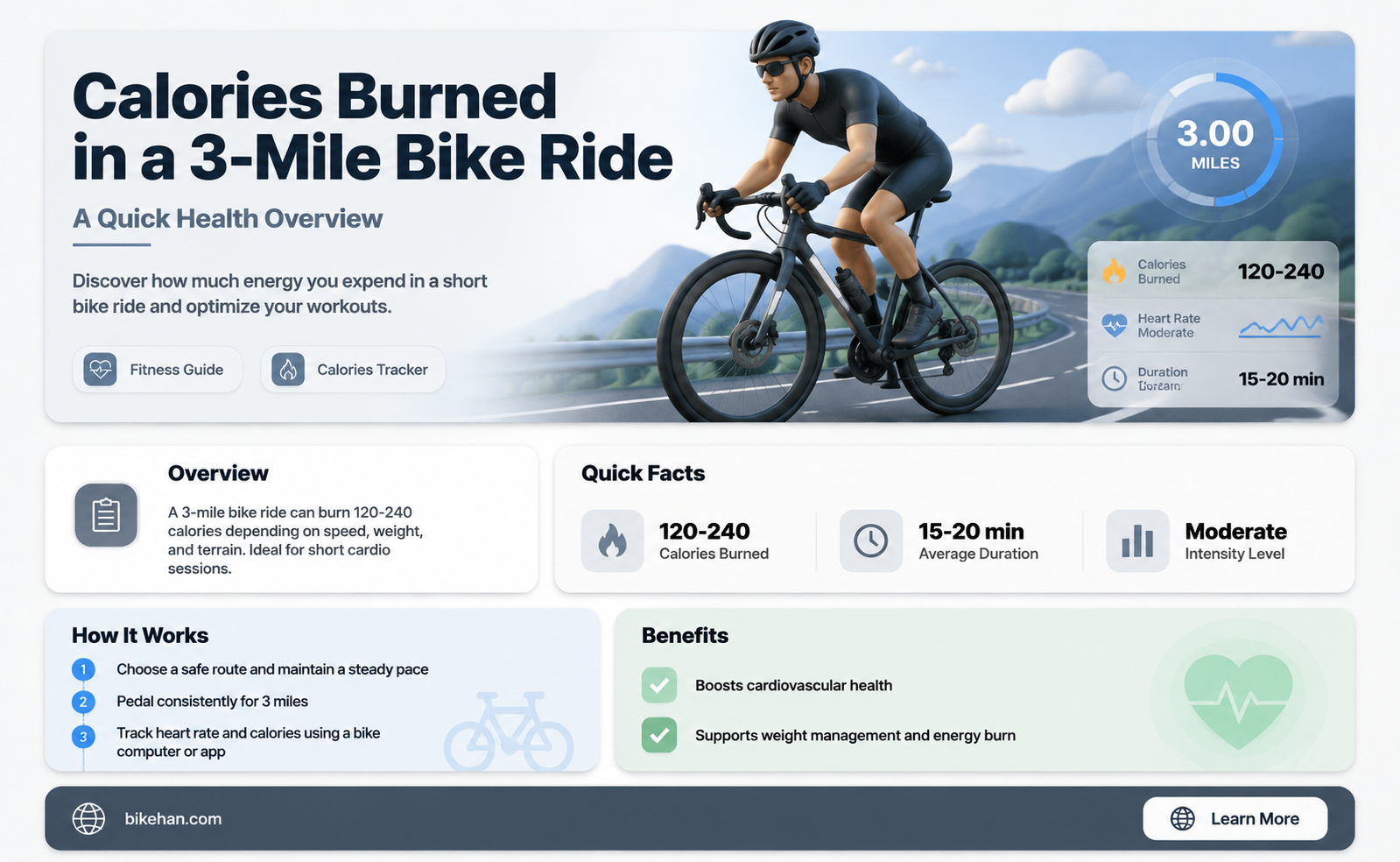
When embarking on a 3-mile bike ride, understanding the caloric expenditure can be both motivating and informative. The number of calories burned during this activity depends on several factors, including the rider's weight, the intensity of the ride, and the terrain. On average, a person weighing 155 pounds (70 kilograms) can expect to burn approximately 140-170 calories during a moderate-intensity 3-mile bike ride. However, if the ride is more vigorous or includes hills, the caloric burn can increase significantly. For instance, a vigorous ride might burn around 200-250 calories for the same distance. Additionally, incorporating interval training or varying the pace can further boost the calorie burn. It's essential to note that these figures are estimates and can vary based on individual factors. Tracking the ride using a fitness app or device can provide a more accurate measure of the calories burned.
Explore related products


What You'll Learn

Factors Affecting Calorie Burn
Several factors can influence the number of calories burned during a 3-mile bike ride. One of the primary factors is the rider's body weight. Generally, the more a person weighs, the more calories they will burn while cycling, as their body requires more energy to move. For instance, a 150-pound person may burn approximately 150-200 calories in 3 miles, while a 200-pound person could burn around 200-250 calories for the same distance.
Another significant factor is the intensity of the ride. The harder the rider pedals, the more calories they will burn. This is because high-intensity cycling requires more energy from the body, leading to a higher calorie expenditure. For example, if a rider maintains a moderate pace of 12-14 miles per hour, they may burn fewer calories compared to someone who cycles at a vigorous pace of 16-18 miles per hour.
The terrain also plays a crucial role in calorie burn. Riding on flat terrain will generally burn fewer calories than cycling uphill or on varied terrain. This is because the body has to work harder to overcome the resistance of inclines, which increases energy expenditure. Additionally, the type of bicycle used can affect calorie burn. A heavier bike or one with more resistance will require more effort to pedal, thus burning more calories.
Environmental factors, such as wind resistance and temperature, can also impact calorie burn. Cycling against a strong headwind or in extreme temperatures can increase the body's energy demands, leading to a higher calorie expenditure. Furthermore, the rider's fitness level and cycling efficiency can influence the number of calories burned. More experienced and efficient cyclists may burn fewer calories for the same distance compared to beginners, as their bodies are better adapted to the activity.
In summary, the number of calories burned in a 3-mile bike ride can vary significantly depending on factors such as body weight, intensity, terrain, type of bicycle, environmental conditions, and the rider's fitness level. Understanding these factors can help individuals tailor their cycling workouts to achieve their specific fitness and weight loss goals.
Calories Burned on a 12-Mile Bike Ride: A Comprehensive Guide
You may want to see also
Explore related products


Average Calorie Burn for 3 Miles
To calculate the average calorie burn for biking 3 miles, several factors need to be considered. These include the cyclist's weight, the intensity of the ride, and the terrain. On average, a person weighing 155 pounds (70 kg) can expect to burn approximately 100-120 calories per mile when biking at a moderate pace. Therefore, for a 3-mile ride, the total calorie burn would be in the range of 300-360 calories. However, this is a rough estimate and actual calorie burn can vary significantly based on individual factors.
For a more accurate calculation, one can use online calorie burn calculators that take into account specific details such as age, gender, weight, height, and the exact intensity of the bike ride. These calculators often use the MET (Metabolic Equivalent Task) system to estimate calorie expenditure. For instance, a leisurely bike ride (less than 10 mph) has a MET value of about 4, while a more vigorous ride (10-12 mph) has a MET value of around 6. By inputting these values along with personal information, a more precise estimate of calorie burn can be obtained.
It's also important to note that the terrain can greatly affect calorie burn. Riding uphill requires more energy and thus burns more calories than riding on flat ground or downhill. Additionally, the type of bike used can influence calorie expenditure. For example, riding a mountain bike on rough terrain will generally burn more calories than riding a road bike on smooth pavement.
In summary, while a general estimate for the average calorie burn for biking 3 miles can be provided, individual factors such as weight, intensity, terrain, and type of bike can significantly impact the actual calorie expenditure. For a precise calculation, using a calorie burn calculator that considers these specific details is recommended.
Rev Up Your Metabolism: The Calorie-Burning Power of Recumbent Biking
You may want to see also
Explore related products


Intensity and Speed Variations
The number of calories burned during a 3-mile bike ride can vary significantly based on several factors, including the rider's weight, the terrain, and the intensity of the ride. Intensity and speed variations play a crucial role in determining the overall caloric expenditure. For instance, a rider who weighs 150 pounds and cycles at a moderate pace of 12 miles per hour will burn approximately 240 calories in 3 miles. However, if the same rider increases their speed to 15 miles per hour, the caloric burn will rise to around 300 calories for the same distance.
One of the key factors influencing caloric burn is the rider's heart rate. As the intensity of the ride increases, the heart rate also rises, leading to a higher caloric expenditure. This is because the body requires more energy to pump blood and oxygen to the muscles during high-intensity exercise. Additionally, the type of terrain can also impact the caloric burn. Riding uphill or on rough terrain requires more effort and energy, resulting in a higher caloric expenditure compared to riding on flat, smooth surfaces.
To maximize the caloric burn during a 3-mile bike ride, riders can incorporate interval training into their routine. This involves alternating between periods of high-intensity cycling and lower-intensity recovery periods. For example, a rider could cycle at a high intensity for 1 minute, followed by a 2-minute recovery period at a lower intensity. This type of training not only increases the overall caloric expenditure but also improves cardiovascular fitness and endurance.
Another factor to consider is the rider's body composition. Individuals with a higher percentage of muscle mass tend to burn more calories during exercise compared to those with a higher percentage of body fat. This is because muscle tissue is more metabolically active than fat tissue, requiring more energy to maintain and function. Therefore, strength training exercises that build muscle mass can also contribute to a higher caloric expenditure during cycling.
In conclusion, the number of calories burned during a 3-mile bike ride is influenced by a combination of factors, including the rider's weight, the terrain, and the intensity of the ride. By understanding these factors and incorporating strategies such as interval training and strength exercises, riders can maximize their caloric expenditure and improve their overall fitness levels.
Pedal Power: Unlocking the Calorie-Burning Potential of Bike Commuting
You may want to see also
Explore related products





Body Weight Influence
The influence of body weight on calorie expenditure during cycling is significant. When cycling 3 miles, a heavier individual will burn more calories than a lighter one due to the increased energy required to move a greater mass. This is because the body must work harder to pedal, maintain balance, and overcome resistance, all of which demand more fuel.
To illustrate this point, consider two cyclists: one weighing 150 pounds and the other 200 pounds. Both cyclists ride 3 miles at a moderate pace of 15 miles per hour. The 150-pound cyclist will burn approximately 150 calories, while the 200-pound cyclist will burn around 200 calories. This difference of 50 calories is directly attributable to the increased body weight.
Furthermore, body weight affects the efficiency of energy use during cycling. Heavier individuals may have a higher resting metabolic rate, which means they burn more calories at rest and during low-intensity activities. However, this does not necessarily translate to greater calorie expenditure during high-intensity cycling, as the increased weight can also lead to greater mechanical efficiency in moving the bike.
In addition to body weight, other factors such as muscle mass, fitness level, and cycling technique also play a role in determining calorie expenditure. For example, a cyclist with more muscle mass will be able to generate more power and maintain a higher speed, which will result in greater calorie burn. Similarly, a well-trained cyclist with good technique will be able to use energy more efficiently and maintain a higher pace over the same distance.
In conclusion, body weight is a key factor in determining how many calories are burned during a 3-mile bike ride. Heavier individuals will generally burn more calories due to the increased energy required to move their body weight. However, other factors such as muscle mass, fitness level, and cycling technique also contribute to calorie expenditure and should be considered when evaluating the overall energy cost of cycling.
Rev Up Your Fitness: Calories Burned Biking for Navy PRT
You may want to see also
Explore related products


Additional Tips for Calorie Burning
To maximize calorie burn during your 3-mile bike ride, consider incorporating interval training. This involves alternating between periods of high-intensity cycling and lower-intensity recovery phases. For instance, you could sprint for 30 seconds, then pedal at a moderate pace for 1-2 minutes before repeating the sprint. This approach not only boosts your cardiovascular fitness but also increases the overall calorie expenditure.
Another effective strategy is to vary your terrain. If you're biking on a flat path, try incorporating hills or inclines into your route. This will engage different muscle groups and require more energy, thus burning more calories. Additionally, you can increase the resistance on your bike if you're using a stationary model, simulating the effect of riding uphill.
Pay attention to your body's hydration and nutrition levels as well. Drinking water before and during your ride can help you maintain optimal performance and prevent dehydration, which can hinder your calorie-burning efforts. Consuming a balanced meal or snack containing carbohydrates and protein before your ride can also provide the necessary fuel for a more intense workout.
Lastly, consider adding strength training exercises to your routine. Building muscle mass through exercises like squats, lunges, and push-ups can increase your resting metabolic rate, meaning you'll burn more calories even when you're not actively exercising. This can be particularly beneficial for cyclists, as stronger leg muscles can lead to more efficient and powerful pedaling.
Calories Burned: Unraveling the Mystery of 1K Bike Rides
You may want to see also
Frequently asked questions
The average person burns about 100-150 calories during a 3-mile bike ride, depending on factors like speed, resistance, and body weight.
Yes, the speed of the bike ride can significantly affect the number of calories burned. A faster ride will generally burn more calories than a slower ride.
Other factors that can influence the calorie burn during a 3-mile bike ride include the rider's body weight, the resistance (such as hills or wind), and the intensity of the ride.
A 3-mile bike ride can be part of an effective weight loss plan, especially when combined with a healthy diet and other forms of exercise. However, the actual weight loss will depend on the individual's overall calorie intake and expenditure.