Megan Blake
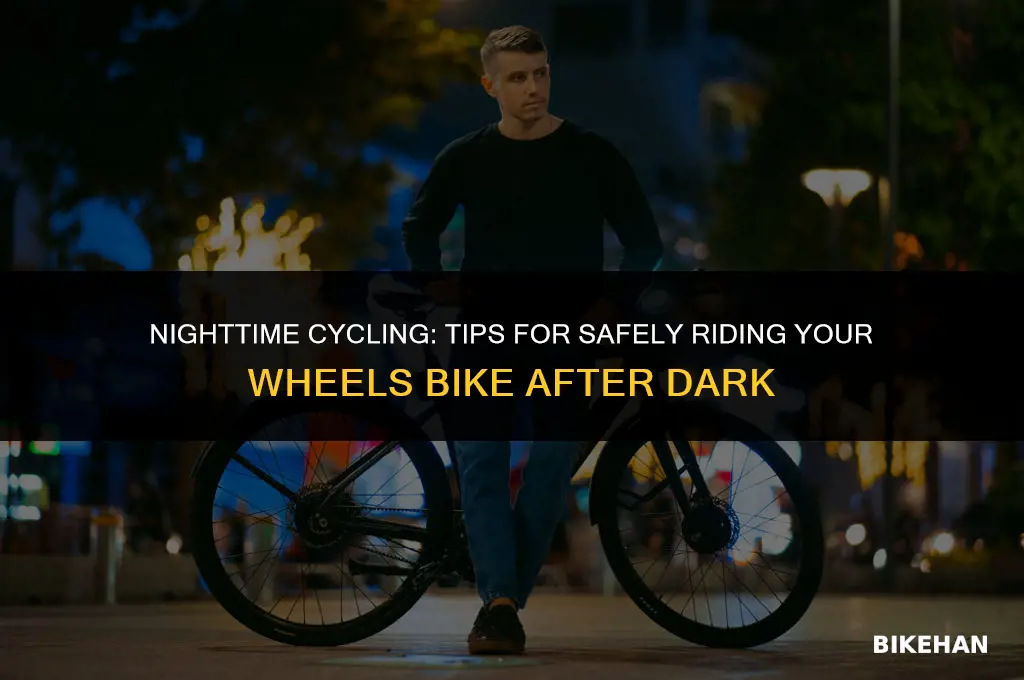
Riding a bicycle at night can be a thrilling yet challenging experience. While it offers a unique perspective on the world around you, it also comes with increased risks due to reduced visibility. To safely navigate the darkness, cyclists must take extra precautions, such as equipping their bikes with proper lighting and wearing reflective gear. Additionally, choosing well-lit routes and being extra vigilant of potential hazards can help ensure a safe and enjoyable nighttime ride.
Explore related products


What You'll Learn
- Safety Gear: Essential equipment for night biking, including helmets, lights, and reflective clothing
- Visibility: Tips on how to ensure you're seen by motorists and pedestrians in low-light conditions
- Route Selection: Choosing well-lit paths and avoiding hazardous areas for a safer night ride
- Bike Maintenance: Pre-ride checks to ensure your bike's brakes, tires, and gears are in good working order
- Legal Considerations: Understanding local laws regarding night biking, such as required lights and right-of-way rules

Safety Gear: Essential equipment for night biking, including helmets, lights, and reflective clothing
Night biking presents unique challenges and risks, making safety gear an absolute necessity. One of the most critical pieces of equipment is a helmet, which can significantly reduce the risk of head injuries in the event of an accident. When choosing a helmet for night biking, look for one that is specifically designed for low-light conditions, with features such as reflective strips or built-in lights to increase visibility.
In addition to helmets, lights are essential for night biking safety. Front and rear lights not only help you see the road ahead, but also make you more visible to other road users. When selecting lights, consider factors such as brightness, beam width, and battery life. Some cyclists opt for additional lights, such as ankle or arm lights, to further increase their visibility from different angles.
Reflective clothing is another important aspect of night biking safety gear. Wearing clothing with reflective elements can make you more visible to motorists, especially in low-light conditions. Look for clothing with strategically placed reflective strips or panels, and consider layering different pieces to maximize your visibility. Some cyclists also choose to wear bright or fluorescent colors during the day to increase their visibility, but this is less effective at night.
Other safety gear to consider for night biking includes gloves, which can provide better grip and protection in case of a fall, and a bell or horn to alert pedestrians and other cyclists of your presence. Additionally, it's important to ensure that your bike is in good working condition, with properly inflated tires and functioning brakes. Regular maintenance checks can help prevent accidents caused by equipment failure.
When it comes to night biking, safety should always be a top priority. By investing in the right safety gear and taking necessary precautions, cyclists can significantly reduce their risk of accidents and injuries, and enjoy a safer and more enjoyable night biking experience.
Urban Adventures: Exploring City Streets on Two Wheels
You may want to see also
Explore related products


Visibility: Tips on how to ensure you're seen by motorists and pedestrians in low-light conditions
Ensuring visibility in low-light conditions is crucial for the safety of cyclists. One effective method is to use reflective materials on your bike and clothing. Reflective tape or stickers can be applied to the frame, wheels, and pedals of your bike, while reflective vests or armbands can be worn to increase your visibility to motorists and pedestrians.
Another important aspect is the use of lights. Front and rear lights are essential for nighttime cycling. The front light should be white and positioned at the center of the handlebars, while the rear light should be red and placed at the back of the bike, either on the seat post or the rear rack. These lights not only make you visible to others but also help you see the road ahead.
In addition to reflective materials and lights, it's important to choose brightly colored clothing. Colors like neon yellow, orange, and green are highly visible in low-light conditions and can help you stand out against the dark background. Avoid wearing dark colors, as they can make you blend into the surroundings and reduce your visibility.
Furthermore, it's crucial to be aware of your surroundings and anticipate the actions of motorists and pedestrians. Make eye contact with drivers whenever possible and use hand signals to indicate your intentions. Stay alert and avoid distractions, such as using headphones or looking at your phone while riding.
Lastly, consider the positioning of your bike on the road. Ride in well-lit areas and avoid riding in the blind spots of larger vehicles. Use bike lanes whenever available and follow traffic rules to ensure your safety and the safety of others.
By following these tips, you can significantly increase your visibility and reduce the risk of accidents while cycling in low-light conditions.
Daily Stationary Bike Riding: Benefits and Considerations for Your Fitness Routine
You may want to see also
Explore related products

$13.29 $14.99


Route Selection: Choosing well-lit paths and avoiding hazardous areas for a safer night ride
Navigating through the city at night on a bike requires careful consideration of your route. Well-lit paths are crucial for visibility, both for you to see the road ahead and for motorists to see you. Start by planning your route in advance, using maps or apps that highlight street lighting and traffic density. Opt for main roads with ample lighting rather than dimly lit alleyways or side streets.
In addition to choosing well-lit paths, it's equally important to avoid hazardous areas. Construction zones, areas with heavy pedestrian traffic, and roads with poor surface conditions can all pose risks. Stay alert to potential hazards such as potholes, debris, or uneven surfaces, which can be more difficult to spot at night. If possible, scout your route during the day to identify any potential issues.
When selecting your route, also consider the presence of bike lanes or paths. Dedicated bike lanes can provide a safer space for riding, away from the flow of vehicular traffic. If bike lanes are not available, choose roads with lower speed limits and less traffic. Avoid busy intersections and opt for routes with fewer turns, as these can increase the risk of accidents.
Another factor to consider is the presence of security cameras and police patrols. Areas with higher surveillance and police presence can deter criminal activity and provide an added layer of safety. Additionally, try to vary your route occasionally to avoid becoming too predictable to potential thieves or vandals.
Finally, always be prepared for the unexpected. Carry a basic repair kit, a charged phone, and some form of identification. Let someone know your planned route and expected arrival time. By taking these precautions and carefully selecting your route, you can significantly reduce the risks associated with night riding and enjoy a safer, more pleasant experience.
Trailblazing on Two Wheels: Road Bikes vs. Mountain Bikes
You may want to see also
Explore related products


Bike Maintenance: Pre-ride checks to ensure your bike's brakes, tires, and gears are in good working order
Before embarking on a nighttime ride, it's crucial to perform a series of pre-ride checks to ensure your bike is in optimal condition. Start by inspecting the brakes; squeeze the brake levers to confirm they engage smoothly and hold the wheels firmly in place. Check for any signs of wear on the brake pads and replace them if necessary. Next, examine the tires for proper inflation and look for any punctures or sidewall damage. Underinflated tires can lead to a loss of control, especially on uneven surfaces.
Moving on to the gears, shift through the entire range to ensure smooth transitions between gears. Listen for any unusual noises or grinding, which could indicate misalignment or wear. Lubricate the chain if it appears dry, as a well-maintained chain is essential for efficient gear shifting. Additionally, check the bike's lights and reflectors to ensure they are clean and functioning correctly, as visibility is paramount during nighttime rides.
It's also important to inspect the bike's frame and fork for any signs of damage or cracks. A compromised frame can pose a significant safety risk. Finally, test the quick-release mechanisms on the wheels to ensure they are secure and functioning properly. By performing these pre-ride checks, you can help guarantee a safe and enjoyable nighttime cycling experience.
Beachside Bliss: Exploring Shores on a Rad City Bike
You may want to see also
Explore related products


Legal Considerations: Understanding local laws regarding night biking, such as required lights and right-of-way rules
Before you embark on a nighttime biking adventure, it's crucial to understand the legal considerations that come into play. Local laws regarding night biking can vary significantly, and being aware of these regulations is essential for your safety and the safety of others on the road. One of the most common legal requirements for night biking is the use of lights. In many jurisdictions, cyclists are required to have a white light on the front of their bike and a red light on the back. These lights not only make you more visible to motorists but also help you see the road ahead.
In addition to lighting requirements, right-of-way rules are another important aspect of night biking legality. In most cases, cyclists have the same right-of-way as motorists, but there may be specific rules that apply to cyclists at night. For example, some jurisdictions require cyclists to yield to pedestrians at crosswalks or to give way to vehicles when turning. It's important to familiarize yourself with these rules to avoid accidents and ensure a smooth ride.
Another legal consideration to keep in mind is the use of reflective gear. While not always required by law, wearing reflective clothing or attaching reflective materials to your bike can significantly increase your visibility to motorists, especially in low-light conditions. This can be a crucial safety measure, as it helps drivers see you from a distance and react accordingly.
When it comes to night biking, it's also important to be aware of any local ordinances that may restrict cycling at night. Some areas may have curfews or other restrictions in place, so it's essential to check with your local authorities to ensure you're not breaking any laws. Additionally, be mindful of any private property restrictions, as some areas may prohibit cycling at night.
Finally, it's worth noting that the legality of night biking can also be influenced by the type of bike you're riding. For example, some jurisdictions may have different rules for electric bikes or bikes with certain modifications. Make sure to check the laws regarding your specific type of bike to avoid any legal issues.
By understanding and adhering to these legal considerations, you can enjoy a safe and enjoyable night biking experience while also ensuring you're in compliance with local laws and regulations.
Gravel Grinding: Can Your Road Bike Handle the Rough Stuff?
You may want to see also
Frequently asked questions
Riding a wheeled bike at night can be safe if you take the necessary precautions. This includes wearing reflective clothing, using front and rear lights on your bike, and sticking to well-lit paths or roads. It's also important to be aware of your surroundings and follow traffic rules.
For night riding, you should use a white front light and a red rear light on your bike. These lights help make you visible to others and also allow you to see the path or road ahead. You can also use additional lights or reflectors on your bike for extra visibility.
Yes, there are specific rules and regulations for riding a bike at night. These vary depending on your location, but generally, you are required to use front and rear lights on your bike, wear reflective clothing, and follow traffic rules. It's important to check the local laws and regulations in your area to ensure you are riding safely and legally.