Eric Johnson
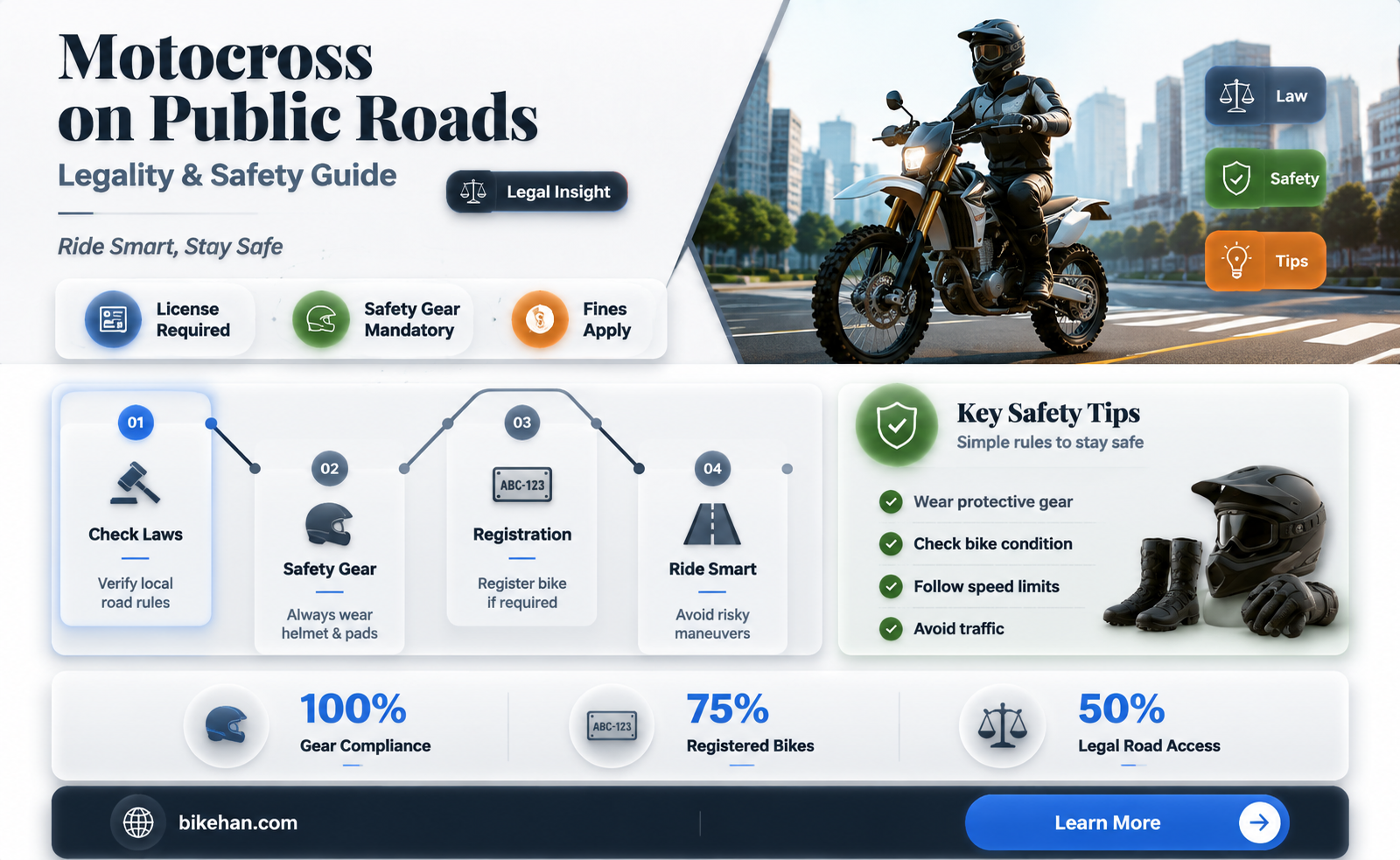
Motocross bikes are specifically designed for off-road racing and riding on rugged terrain, featuring lightweight frames, long-travel suspension, and knobby tires for maximum traction on dirt tracks. While these characteristics make them excel in off-road conditions, they also pose significant challenges and safety concerns when it comes to riding them on paved roads. The lack of street-legal features such as lights, mirrors, and turn signals, combined with their high ground clearance and aggressive riding position, make motocross bikes less suitable and often illegal for road use in many jurisdictions.
Explore related products



What You'll Learn
- Legal Requirements: Check local laws and regulations regarding off-road vehicle use on public roads
- Safety Gear: Essential protective equipment for riding motocross bikes, including helmets, gloves, and body armor
- Bike Modifications: Necessary adjustments to make motocross bikes street-legal, such as adding lights and mirrors
- Riding Techniques: Tips for adapting off-road riding skills to on-road conditions, like maintaining balance and speed control
- Environmental Impact: Considerations for minimizing the environmental footprint while riding motocross bikes on roads

Legal Requirements: Check local laws and regulations regarding off-road vehicle use on public roads
Navigating the legal landscape of off-road vehicle use on public roads requires a keen understanding of local laws and regulations. These can vary significantly from one jurisdiction to another, making it essential for riders to be well-informed. In some areas, off-road vehicles like motocross bikes may be permitted on certain public roads, while in others, they may be strictly prohibited. Riders must familiarize themselves with these rules to avoid legal repercussions.
To begin, riders should consult their local Department of Motor Vehicles (DMV) or equivalent authority to obtain information on the legality of off-road vehicle use on public roads. This may involve reviewing specific statutes, regulations, or ordinances that govern such activities. Additionally, riders should be aware of any permits or licenses required to operate off-road vehicles on public roads, as well as any restrictions on the types of roads where such vehicles are allowed.
Beyond the DMV, riders should also consider consulting with local law enforcement agencies to gain insight into how these laws are enforced. This can help riders understand the practical implications of the regulations and avoid potential conflicts with law enforcement. Furthermore, riders should be aware of any local advocacy groups or off-road vehicle clubs that may be involved in shaping or interpreting these laws, as these organizations can provide valuable guidance and support.
In cases where off-road vehicle use on public roads is permitted, riders must still exercise caution and adhere to all relevant traffic laws. This includes obeying speed limits, yielding to other vehicles, and using appropriate safety gear. Riders should also be mindful of the potential impact of their activities on other road users and the environment, and strive to minimize any negative effects.
Ultimately, the key to navigating the legal requirements for off-road vehicle use on public roads is thorough research and a commitment to compliance. By understanding and respecting the laws and regulations in their area, riders can enjoy their sport while also ensuring the safety and well-being of themselves and others.
Exploring the Rules: Mopeds on Bike Trails - A Comprehensive Guide
You may want to see also
Explore related products

$55.09 $57.99


Safety Gear: Essential protective equipment for riding motocross bikes, including helmets, gloves, and body armor
Motocross bikes are designed for off-road use, and riding them on the road can be dangerous without the proper safety gear. Essential protective equipment includes helmets, gloves, and body armor. Helmets are crucial for protecting the head from impact in case of a fall or collision. Look for helmets that meet safety standards and fit snugly on your head. Gloves provide grip and protect your hands from abrasions and impacts. Choose gloves that are specifically designed for motocross riding, with reinforced palms and fingers. Body armor, such as chest protectors and knee pads, can help prevent injuries to vital organs and joints. When riding on the road, it's also important to wear high-visibility clothing to make yourself more visible to other drivers.
In addition to wearing safety gear, it's important to ensure that your motocross bike is road-legal. Check your local laws and regulations regarding the use of motocross bikes on public roads. Some areas may require additional equipment, such as mirrors, lights, and turn signals. It's also important to ride responsibly and defensively, as other drivers may not be expecting to see a motocross bike on the road. Follow traffic rules, use hand signals to indicate your intentions, and be prepared for sudden stops or changes in traffic.
When choosing safety gear for riding motocross bikes on the road, it's important to consider the specific risks involved. For example, you may want to choose a helmet with a visor to protect your eyes from debris and wind. You may also want to consider wearing a neck brace to protect against whiplash injuries. Additionally, it's important to choose gear that is comfortable and allows for freedom of movement, as this will help you maintain control of your bike.
In conclusion, riding motocross bikes on the road can be a thrilling experience, but it's important to prioritize safety. Wear appropriate safety gear, ensure your bike is road-legal, and ride responsibly to minimize the risks involved. Remember, safety should always come first when riding any type of motorcycle on public roads.
Mini Bike Road Riding: Legal and Safety Considerations
You may want to see also
Explore related products


Bike Modifications: Necessary adjustments to make motocross bikes street-legal, such as adding lights and mirrors
To make motocross bikes street-legal, several modifications are necessary. These adjustments ensure that the bike meets the safety and regulatory requirements for road use. One of the primary modifications is the addition of lights. This includes installing a headlight, taillight, and turn signals. The headlight must be bright enough to illuminate the road ahead, while the taillight and turn signals must be clearly visible to other drivers.
Another essential modification is the addition of mirrors. These mirrors must be positioned in such a way that the rider can see vehicles approaching from behind. The mirrors should be securely attached to the bike and should not vibrate excessively while riding.
In addition to lights and mirrors, other modifications may be necessary depending on the specific requirements of your jurisdiction. For example, some areas may require the installation of a horn, while others may mandate the use of reflective tape or decals. It is important to check the local laws and regulations to ensure that your bike meets all the necessary requirements for street use.
When making these modifications, it is crucial to use high-quality parts that are designed for use on motorcycles. This will ensure that the modifications are reliable and safe. It is also important to have the modifications installed by a qualified mechanic or technician. This will help to ensure that the modifications are installed correctly and that they function properly.
Finally, it is important to note that even with these modifications, motocross bikes may not be ideal for street use. They are designed for off-road riding and may not have the same level of comfort or stability as street bikes. However, if you do decide to ride a motocross bike on the road, these modifications will help to ensure that you are doing so safely and legally.
Conquering Long Distances: The Ultimate Guide to Mountain Bike Touring
You may want to see also
Explore related products


Riding Techniques: Tips for adapting off-road riding skills to on-road conditions, like maintaining balance and speed control
Adapting off-road riding skills to on-road conditions requires a significant shift in technique and mindset. One of the key challenges is maintaining balance on the smoother, often more slippery surfaces encountered on roads. To address this, riders should focus on keeping their weight centered over the bike, using their legs to absorb any bumps or irregularities in the road surface. This technique, known as "active riding," helps maintain stability and control, especially at higher speeds.
Speed control is another critical aspect of on-road riding. Unlike off-road trails, roads often have strict speed limits and require precise throttle control to navigate safely. Riders should practice modulating their throttle input to achieve smooth acceleration and deceleration, avoiding sudden jerks that could lead to loss of control. Additionally, understanding how to use engine braking effectively can help in managing speed, particularly when approaching turns or intersections.
When it comes to cornering, on-road conditions demand a different approach compared to off-road. On roads, riders need to lean into turns more aggressively to counteract the centrifugal force, while also being mindful of the reduced traction. It's essential to look ahead through the turn, anticipate any potential hazards, and adjust the line accordingly. Using reference points, such as road markings or signs, can help in planning and executing turns more accurately.
Another important consideration is visibility. On roads, riders need to be more aware of their surroundings, including other vehicles, pedestrians, and potential obstacles. Positioning on the road is crucial; riders should avoid lingering in blind spots and ensure they are visible to other road users. This may involve using headlights and wearing high-visibility gear, even during daylight hours.
Finally, adapting to on-road conditions means being prepared for different types of road surfaces and weather conditions. Riders should be familiar with how their tires perform on wet roads, gravel, or uneven surfaces, and adjust their riding style accordingly. Regular maintenance of the bike, including checking tire pressure and tread depth, is also vital to ensure optimal performance and safety on the road.
In summary, successfully adapting off-road riding skills to on-road conditions involves mastering balance, speed control, cornering techniques, visibility, and surface adaptability. By focusing on these specific areas and practicing diligently, riders can enhance their safety and enjoyment when taking their motocross bikes onto the road.
Mini Bikes on Sidewalks: A Comprehensive Guide to Safe Riding
You may want to see also
Explore related products


Environmental Impact: Considerations for minimizing the environmental footprint while riding motocross bikes on roads
Riding motocross bikes on the road can have significant environmental impacts, from noise pollution to soil erosion. To minimize these effects, riders should consider several key factors. Firstly, choosing the right location is crucial. Riders should avoid sensitive ecosystems like wetlands or areas with endangered species. Instead, opt for designated trails or tracks that are designed to handle the wear and tear of off-road vehicles.
Secondly, maintaining the bike properly can reduce emissions and noise pollution. Regularly checking and replacing the air filter, ensuring the exhaust system is in good condition, and keeping the engine well-tuned can all help minimize the bike's environmental footprint. Additionally, riders should avoid revving the engine unnecessarily, as this can increase noise levels and emissions.
Thirdly, riders should practice responsible trail riding. This includes staying on marked trails, avoiding shortcuts that can lead to erosion, and not disturbing wildlife. It's also important to respect other trail users, such as hikers and horseback riders, by yielding the right of way and keeping noise levels down.
Finally, riders can offset their environmental impact by participating in trail maintenance and conservation efforts. This can include volunteering with local trail organizations, participating in clean-up events, and supporting conservation initiatives financially. By taking these steps, riders can help ensure that they are minimizing their impact on the environment while still enjoying the thrill of motocross riding on the road.
Mini Bikes on Sidewalks: A Comprehensive Guide to Safe Riding
You may want to see also
Frequently asked questions
Generally, motocross bikes are not designed for road use and may not be street legal in many areas. They lack necessary equipment like mirrors, lights, and turn signals, and their tires are not suitable for paved surfaces.
To make a motocross bike street legal, you would need to add mirrors, front and rear lights, turn signals, a horn, and a license plate holder. You would also need to ensure the tires meet road safety standards and that the bike complies with local noise regulations.
Yes, there are several safety concerns. Motocross bikes are lighter and less stable than road bikes, making them more difficult to control on paved surfaces. They also lack the braking power and suspension designed for road use, which can increase the risk of accidents.
If you want to ride off-road but still need to travel on public roads, consider a dual-sport motorcycle. These bikes are designed for both on-road and off-road use and come equipped with the necessary features for street legality. Another option is to transport your motocross bike to off-road trails using a trailer or truck.