Lauren Kennedy
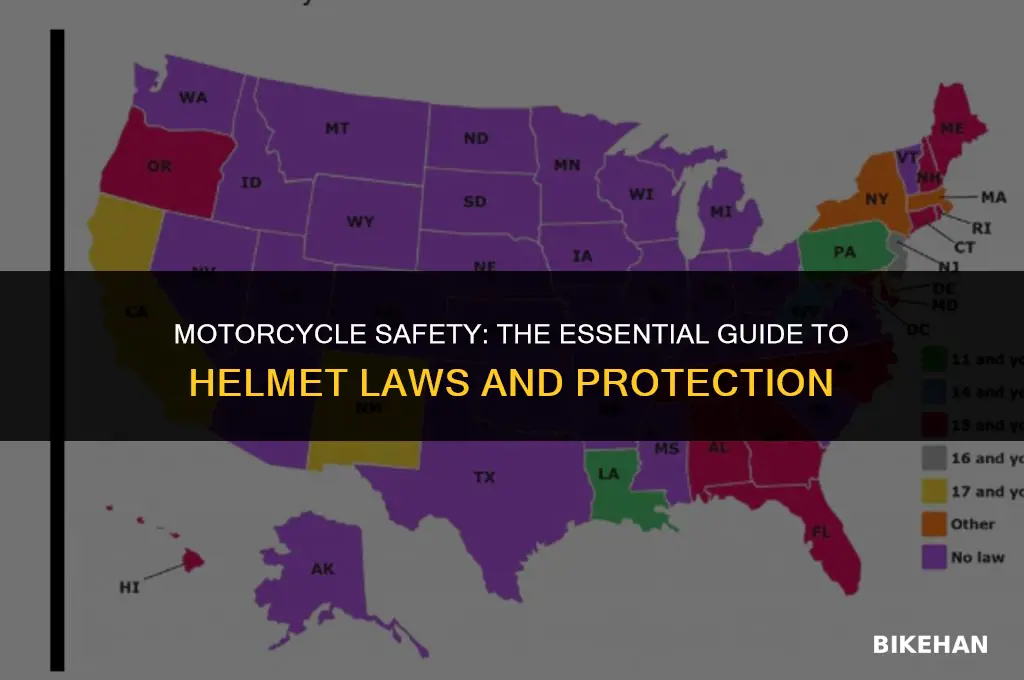
Motorcycle helmets are a crucial safety measure for riders, significantly reducing the risk of head injuries in the event of an accident. While helmet laws vary by jurisdiction, many regions mandate their use for all riders, regardless of age or experience level. Even in areas without strict regulations, wearing a helmet is strongly recommended by safety experts and medical professionals. The effectiveness of helmets in preventing traumatic brain injuries and fatalities has been well-documented, making them an essential piece of gear for anyone operating a motorcycle.
Explore related products


What You'll Learn
- Legal Requirements: Vary by country and state, often mandatory for riders under certain age
- Safety Benefits: Helmets significantly reduce head injuries and fatalities in motorcycle accidents
- Types of Helmets: Full-face, open-face, modular, and half-shell helmets offer different protection levels
- Proper Fit: Ensuring a helmet fits correctly is crucial for optimal protection and comfort
- Common Myths: Debunking misconceptions about helmet use, such as reduced visibility or discomfort

Legal Requirements: Vary by country and state, often mandatory for riders under certain age
Motorcycle helmet laws vary significantly across different countries and states, reflecting diverse approaches to road safety. In many jurisdictions, wearing a helmet is mandatory for all riders, regardless of age or experience. However, some regions have more nuanced regulations, particularly concerning younger riders. For instance, in the United States, while federal law does not mandate helmet use, many states have their own laws requiring helmets for riders under a certain age, typically 18 or 21. These laws aim to protect younger, less experienced riders who may be at higher risk of accidents.
In Europe, the legal requirements for motorcycle helmets are generally more stringent. Most European countries mandate helmet use for all riders, with some, like the United Kingdom, imposing strict standards on the helmets themselves. In Australia, helmet laws also vary by state, but all states and territories require helmets to be worn by riders and passengers. Interestingly, some countries, such as India, have laws that require only the rider to wear a helmet, not the passenger.
The enforcement of these laws can also differ. In some areas, police may issue fines or citations for non-compliance, while in others, riders may face more severe penalties, including license suspension or even criminal charges. Additionally, insurance companies may have their own requirements regarding helmet use, potentially affecting coverage or premiums for riders who do not comply with local laws.
Understanding these legal requirements is crucial for riders, especially those who travel across state or national borders. Failure to comply with local helmet laws can result in legal consequences and may also void insurance coverage. Moreover, wearing a helmet is not only a legal obligation but also a critical safety measure, significantly reducing the risk of head injuries in the event of an accident.
In conclusion, the legal landscape surrounding motorcycle helmet use is complex and varied. Riders must be aware of the specific laws in their region and any areas they plan to travel through. Compliance with these laws is essential not only to avoid legal penalties but also to ensure personal safety on the road.
Boost Your Visibility: The Optimal Color for Your Motorcycle Helmet
You may want to see also
Explore related products


Safety Benefits: Helmets significantly reduce head injuries and fatalities in motorcycle accidents
Motorcycle accidents are a leading cause of traumatic brain injuries and fatalities on the road. However, the use of helmets has been shown to significantly reduce the risk of head injuries and death in these accidents. Studies have consistently demonstrated that helmets are the most effective safety measure for motorcyclists, with some research indicating that they can reduce the risk of fatal head injuries by up to 88%.
The safety benefits of helmets are multifaceted. Firstly, they provide a physical barrier that absorbs the impact of a collision, reducing the force transmitted to the skull and brain. This can prevent or minimize skull fractures and brain contusions, which are common and often life-threatening injuries in motorcycle accidents. Secondly, helmets can help to prevent facial injuries by providing a shield that protects the face from debris and direct impact. This is particularly important for motorcyclists, who are more exposed to the elements and road hazards than car drivers.
In addition to their protective function, helmets can also improve visibility and communication for motorcyclists. Many helmets are equipped with visors that can reduce glare and protect the eyes from wind and dust, enhancing the rider's ability to see the road ahead. Some helmets also have built-in communication systems that allow riders to stay in touch with each other or with emergency services, which can be crucial in the event of an accident.
Despite the clear safety benefits of helmets, many motorcyclists still choose not to wear them. This is often due to misconceptions about comfort, style, or the perceived inconvenience of wearing a helmet. However, modern helmets are designed to be comfortable and stylish, and the inconvenience of wearing one is far outweighed by the potential consequences of not wearing one in the event of an accident.
In conclusion, the safety benefits of helmets for motorcyclists are well-documented and significant. Helmets can reduce the risk of head injuries and fatalities in motorcycle accidents, provide protection from facial injuries, and improve visibility and communication for riders. Given these benefits, it is essential for motorcyclists to wear helmets whenever they ride, not only for their own safety but also for the safety of others on the road.
Riding Unprotected: The Legal Ramifications of Helmetless Motorcycling
You may want to see also
Explore related products


Types of Helmets: Full-face, open-face, modular, and half-shell helmets offer different protection levels
Motorcycle helmets are essential safety gear, and choosing the right type is crucial for riders. Full-face helmets provide the most comprehensive protection, covering the entire head and face with a visor that can be raised or lowered. They are ideal for high-speed riding and offer excellent aerodynamics. Open-face helmets, on the other hand, leave the face exposed, making them suitable for low-speed, urban riding where visibility and communication are important. Modular helmets combine the benefits of full-face and open-face helmets, featuring a chin bar that can be lifted for better visibility and airflow. Half-shell helmets offer minimal coverage, protecting only the top and back of the head, and are often chosen for their lightweight and open design.
When selecting a helmet, riders should consider factors such as riding style, speed, and environment. Full-face helmets are recommended for sport and touring riders who travel at high speeds and need maximum protection. Open-face helmets are preferred by cruiser and standard riders who prioritize comfort and visibility in lower-speed settings. Modular helmets are versatile and can be adapted to various riding conditions, making them a popular choice among adventure and dual-sport riders. Half-shell helmets are typically chosen by riders who prefer a more casual, open-air experience and are willing to sacrifice some protection for increased comfort.
In addition to the type of helmet, riders should also consider the fit, weight, and materials used in construction. A well-fitting helmet is essential for proper protection, and riders should ensure that the helmet sits snugly on their head without causing discomfort. Weight is another important factor, as heavier helmets can cause neck strain during long rides. Materials such as polycarbonate, fiberglass, and carbon fiber offer different levels of protection and durability, with carbon fiber being the lightest and strongest option.
Ultimately, the choice of helmet depends on the rider's individual preferences and riding habits. By understanding the different types of helmets available and their specific benefits, riders can make an informed decision that enhances their safety and comfort on the road.
Top Spots to Sell Your Motorcycle Helmets: A Comprehensive Guide
You may want to see also
Explore related products


Proper Fit: Ensuring a helmet fits correctly is crucial for optimal protection and comfort
Ensuring a helmet fits correctly is crucial for optimal protection and comfort. A well-fitted helmet can significantly reduce the risk of head injuries in the event of an accident. To achieve a proper fit, start by measuring your head circumference with a flexible tape measure, positioning it just above your eyebrows and ears. This measurement will help you select the appropriate helmet size.
When trying on a helmet, make sure it sits snugly on your head without being too tight. The helmet should not move around excessively when you shake your head. Pay attention to the positioning of the chin strap; it should be secure but not so tight that it causes discomfort. Additionally, the helmet's interior padding should conform to the shape of your head, providing a comfortable and secure fit.
It's essential to consider the helmet's weight and balance as well. A well-balanced helmet will not strain your neck during long rides. Look for helmets with adjustable features, such as ventilation systems and visors, to enhance comfort and adaptability to different riding conditions.
Remember that helmet fit can change over time due to factors like weight loss, hair growth, or wear and tear. Regularly check your helmet's fit and replace it if necessary to maintain optimal protection.
In conclusion, a properly fitted helmet is a critical component of motorcycle safety gear. By following these guidelines and prioritizing comfort and security, you can significantly reduce the risk of head injuries and enjoy a safer riding experience.
Essential Guide to Selecting Your Perfect Motorcycle Helmet
You may want to see also
Explore related products


Common Myths: Debunking misconceptions about helmet use, such as reduced visibility or discomfort
Despite the well-documented safety benefits of motorcycle helmets, several myths persist that discourage some riders from wearing them. One common misconception is that helmets reduce visibility. In reality, most modern helmets are designed with wide visors that provide an extensive field of view, often exceeding that of the naked eye. Additionally, helmets with clear visors can be easily cleaned or replaced if they become scratched or fogged, ensuring that visibility remains optimal.
Another myth is that helmets are uncomfortable to wear, especially for long periods. While it's true that some helmets may cause discomfort due to poor fit or design, the majority of high-quality helmets are engineered for comfort. They feature padded interiors, adjustable straps, and ventilation systems that help regulate temperature and reduce sweating. Furthermore, many riders find that the reduced wind noise and protection from the elements provided by a helmet actually enhance their overall riding experience.
Some riders also believe that helmets are not necessary for short trips or when riding at low speeds. However, accidents can happen at any time, regardless of distance or speed. In fact, many motorcycle accidents occur at low speeds, often in urban areas where riders may be more likely to let their guard down. Wearing a helmet is crucial for protecting against head injuries, which can be severe or even fatal, even in low-speed collisions.
Lastly, there's a misconception that helmets are only required for riders, and not for passengers. In many jurisdictions, helmet laws apply to both riders and passengers, and for good reason. Passengers are equally at risk of head injuries in the event of an accident, and wearing a helmet can significantly reduce this risk. Moreover, wearing a helmet as a passenger sets a good example and encourages responsible behavior among all road users.
In conclusion, while there are several myths surrounding helmet use, the facts are clear: helmets are a critical safety measure for all motorcycle riders and passengers. By debunking these misconceptions and promoting the benefits of helmet use, we can help ensure that more riders choose to wear helmets, ultimately reducing the risk of serious injuries and fatalities on the road.
Rev Up Your Safety: The Ultimate Guide to Choosing the Safest Motorcycle Helmet
You may want to see also
Frequently asked questions
No, helmet laws vary by state. Some states require all riders to wear helmets, while others have specific requirements based on age or engine size.
Wearing a helmet significantly reduces the risk of head injuries and fatalities in the event of an accident. It also provides protection from wind, debris, and insects, and can improve visibility by reducing glare.
There are several types of helmets available, including full-face, open-face, modular, and half-shell. Each type offers different levels of protection and comfort, depending on the rider's preferences and needs.
To choose the right helmet, consider factors such as comfort, fit, weight, and ventilation. Look for helmets that meet safety standards, such as those set by the Department of Transportation (DOT) or the Snell Memorial Foundation. Try on different helmets and choose one that fits snugly and comfortably.