Matthew Brooks
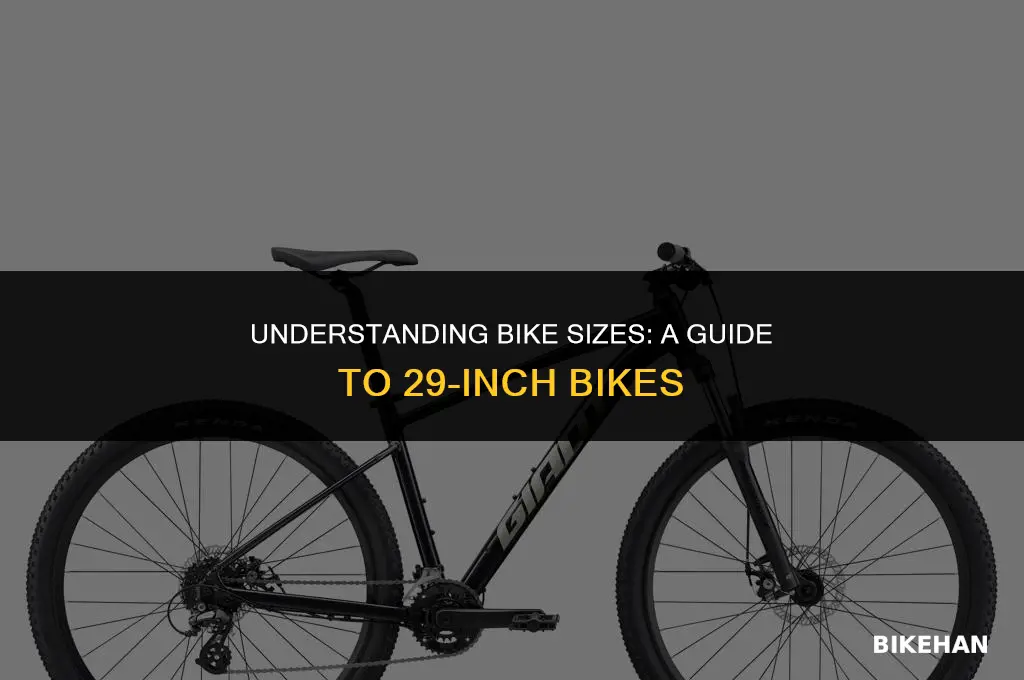
A 29-inch bike refers to a bicycle with wheels that have a diameter of 29 inches. This size has become increasingly popular in recent years, particularly for mountain biking and hybrid bikes, due to its ability to roll over obstacles more easily and provide a smoother ride on rough terrain. The larger wheel size also offers better traction and stability, making it a preferred choice for many cyclists. However, it's important to note that the overall size of the bike, including the frame and seat height, will vary depending on the specific model and brand.
Explore related products




What You'll Learn
- Wheel Diameter: 29 inch bikes feature wheels that measure 29 inches in diameter, providing a larger contact patch
- Frame Size: The frame size of a 29 inch bike typically ranges from small to extra-large, accommodating various rider heights
- Tire Width: Tires on 29 inch bikes are usually wider, offering increased stability and traction on diverse terrains
- Rider Height: These bikes are suitable for riders approximately 5'4 to 6'4 tall, depending on the frame size chosen
- Bike Type: 29 inch bikes are available in various types, including mountain, hybrid, and cruiser, each designed for specific riding styles

Wheel Diameter: 29 inch bikes feature wheels that measure 29 inches in diameter, providing a larger contact patch
The wheel diameter of a 29-inch bike is a critical factor that influences its performance and handling characteristics. A 29-inch wheel measures exactly 29 inches in diameter, which is significantly larger than the traditional 26-inch wheels found on many mountain bikes. This larger diameter provides a number of advantages, particularly in off-road cycling scenarios.
One of the primary benefits of a 29-inch wheel is the increased contact patch it offers. The contact patch refers to the area of the tire that is in contact with the ground at any given time. A larger contact patch means that more of the tire is touching the ground, which can improve traction and stability. This is especially useful when navigating loose or uneven terrain, such as dirt trails, gravel, or sand.
In addition to improved traction, the larger diameter of a 29-inch wheel can also help to roll over obstacles more easily. This is because the increased size of the wheel allows it to approach obstacles at a higher angle of attack, making it less likely to get caught or stuck. This can be a significant advantage when tackling technical trails or rocky terrain.
However, it's important to note that the larger diameter of a 29-inch wheel can also present some challenges. For example, the increased size can make the bike more difficult to maneuver in tight spaces, and it may require more effort to accelerate and decelerate. Additionally, the larger wheels can make the bike taller, which may affect the rider's ability to mount and dismount.
Despite these potential drawbacks, the benefits of a 29-inch wheel diameter often outweigh the negatives, particularly for riders who spend a lot of time on off-road trails. The improved traction, stability, and obstacle-rolling capabilities can make a significant difference in the overall riding experience, allowing riders to tackle more challenging terrain with greater confidence and control.
Understanding Bike Frame Sizes: A Guide to the 20-Inch Frame
You may want to see also
Explore related products


Frame Size: The frame size of a 29 inch bike typically ranges from small to extra-large, accommodating various rider heights
The frame size of a 29-inch bike is a critical factor in determining the right fit for a rider. Typically, these bikes come in a range of sizes from small to extra-large, designed to accommodate various rider heights. This ensures that cyclists of different statures can find a bike that suits their needs, providing both comfort and efficiency while riding.
To understand the importance of frame size, consider the geometry of a 29-inch bike. A larger frame size generally means a longer wheelbase, which can offer more stability at high speeds and on rough terrain. Conversely, a smaller frame size can provide better maneuverability and control, especially in tight spaces or during technical descents. Therefore, selecting the appropriate frame size is essential for optimizing the riding experience and ensuring safety.
When choosing a frame size, riders should consider their height, inseam length, and riding style. Manufacturers often provide sizing charts that correlate rider height with frame size, but these should be used as a starting point rather than a definitive guide. Inseam length is another crucial measurement, as it directly affects the rider's leg extension and pedaling efficiency. Additionally, the type of riding—whether it's cross-country, trail, or downhill—can influence the preferred frame size, as different styles may require varying levels of maneuverability and stability.
To find the perfect fit, riders may need to test multiple bikes and consult with a professional bike fitter. This expert can help adjust the saddle height, handlebar position, and other components to ensure a comfortable and efficient riding posture. Remember, a well-fitted bike can enhance performance, reduce the risk of injury, and make every ride more enjoyable.
In conclusion, the frame size of a 29-inch bike plays a vital role in determining the overall riding experience. By considering factors such as height, inseam length, and riding style, cyclists can select a bike that meets their specific needs. With the right frame size, riders can enjoy improved comfort, control, and performance on every ride.
Choosing the Right Instep Size for Your Child's Guardian Bike
You may want to see also
Explore related products


Tire Width: Tires on 29 inch bikes are usually wider, offering increased stability and traction on diverse terrains
The tire width on 29-inch bikes is a critical factor that contributes significantly to the bike's performance and handling characteristics. Typically, these tires are wider than those found on smaller bikes, which provides several advantages. The increased width offers greater stability, allowing riders to navigate rough and uneven terrains with more confidence. This is particularly beneficial for mountain biking, where the ability to maintain control on rocky trails and loose surfaces is essential.
In addition to stability, wider tires on 29-inch bikes also provide improved traction. The larger contact area between the tire and the ground ensures better grip, which is crucial for climbing steep inclines and cornering at high speeds. This enhanced traction can also contribute to a smoother ride, as it helps to absorb shocks and vibrations from the terrain.
Another aspect to consider is the impact of tire width on rolling resistance. Wider tires generally have higher rolling resistance, which can make pedaling more strenuous, especially on paved surfaces. However, this trade-off is often acceptable for off-road enthusiasts who prioritize the benefits of increased stability and traction.
When selecting tires for a 29-inch bike, it's important to consider the specific riding conditions and personal preferences. For example, riders who frequently tackle muddy trails may opt for tires with more aggressive tread patterns, while those who ride primarily on dry, rocky terrain might prefer tires with a smoother profile.
In summary, the tire width on 29-inch bikes plays a vital role in determining the bike's performance and handling characteristics. Wider tires offer increased stability and traction, which are particularly advantageous for off-road riding. However, they also come with higher rolling resistance, which can affect pedaling efficiency on paved surfaces. Riders should carefully consider their specific needs and preferences when choosing tires for their 29-inch bikes.
Understanding Bike Frame Sizes: A Guide to 19-Inch Frames
You may want to see also
Explore related products


Rider Height: These bikes are suitable for riders approximately 5'4 to 6'4 tall, depending on the frame size chosen
For riders who fall within the 5'4" to 6'4" height range, a 29-inch bike can be an excellent choice, provided the frame size is appropriately selected. This height range is quite broad, encompassing a variety of body types and proportions, which means that the ideal frame size will vary from person to person. Generally, shorter riders in this range may prefer a smaller frame size, while taller riders will benefit from a larger frame.
When selecting a frame size, it's crucial to consider not just the rider's height, but also their inseam length and riding style. A rider with a longer inseam may require a larger frame size to ensure comfortable leg extension while pedaling, even if their overall height is on the shorter side. Conversely, a rider with a shorter inseam might find a smaller frame more suitable, even if they are taller.
The riding style also plays a significant role in frame size selection. For instance, a rider who prefers an aggressive, forward-leaning position may opt for a smaller frame size to achieve the desired posture, while a rider who prefers a more upright, comfortable position might choose a larger frame.
In addition to these factors, it's essential to consider the specific design and geometry of the bike in question. Different manufacturers and models may have varying frame geometries, which can affect the fit and feel of the bike for riders of different heights and body types.
Ultimately, the best way to determine the ideal frame size for a 29-inch bike is to consult with a knowledgeable bike shop professional who can take into account the rider's individual needs and preferences. They may recommend test riding different sizes and models to find the perfect fit, ensuring that the rider can enjoy a comfortable and efficient ride.
Understanding Bike Sizes: A Guide to 16-Inch Bikes for Kids
You may want to see also
Explore related products


Bike Type: 29 inch bikes are available in various types, including mountain, hybrid, and cruiser, each designed for specific riding styles
29-inch bikes come in a variety of types, each tailored to specific riding styles and terrains. Mountain bikes, for instance, are designed with rugged frames and wide tires to handle off-road trails and rough terrain. They often feature suspension systems to absorb shocks from bumps and jumps. Hybrid bikes, on the other hand, are versatile and suitable for both on-road and light off-road use. They combine elements of road and mountain bikes, offering a balance between speed and comfort. Cruiser bikes are designed for casual riding on paved surfaces. They typically have a more upright seating position, wider tires for a smoother ride, and often include features like fenders and racks for added convenience.
When choosing a 29-inch bike, it's important to consider the type of riding you plan to do. If you're an avid mountain biker, a mountain bike with front suspension and knobby tires would be ideal. For commuting or fitness riding, a hybrid bike with a lightweight frame and efficient gearing would be a good choice. If you're looking for a leisurely ride on weekends, a cruiser bike with a comfortable seat and upright handlebars would be perfect.
Each type of bike has its own unique features and benefits. Mountain bikes are built for durability and performance on challenging trails. Hybrid bikes offer versatility and efficiency for a variety of riding conditions. Cruiser bikes prioritize comfort and style for relaxed rides. By understanding the different types of 29-inch bikes available, you can make an informed decision based on your riding preferences and needs.
In addition to the type of bike, it's also important to consider the fit and comfort. A bike that fits well will not only be more enjoyable to ride but also safer and more efficient. Factors like frame size, seat height, and handlebar position all play a role in determining the right fit. It's recommended to test ride different bikes and consult with a professional at a bike shop to find the best fit for your body and riding style.
Ultimately, the right 29-inch bike for you will depend on your specific needs and preferences. Whether you're tackling mountain trails, commuting to work, or cruising around town, there's a bike designed to meet your needs. By understanding the different types of bikes available and considering factors like fit and comfort, you can find the perfect 29-inch bike for your next adventure.
Understanding Bike Frame Sizes: A Guide to the 18-Inch Frame
You may want to see also
Frequently asked questions
A 29-inch bike is typically suitable for riders who are 5'5" (165 cm) or taller. However, the ideal height can vary based on the specific model and design of the bike, as well as the rider's personal preference and riding style.
29-inch bikes offer several advantages, including increased stability and speed due to their larger diameter wheels. They also roll over obstacles more easily and provide a smoother ride on rough terrain. Additionally, the larger wheels can improve traction and braking performance.
Yes, 29-inch bikes are versatile and can be used for various types of cycling. They are particularly popular for mountain biking due to their ability to handle rough terrain, but they are also available in road and hybrid models. The specific design and features of the bike will determine its suitability for different cycling disciplines.
Generally, 29-inch bikes are heavier than their 27.5-inch and 26-inch counterparts due to the larger wheels and frame size. This can make them slightly more challenging to maneuver in tight spaces or when performing technical tricks. However, the increased stability and speed often outweigh these drawbacks, especially for riders who prioritize performance on longer rides or rough terrain.