Lauren Kennedy
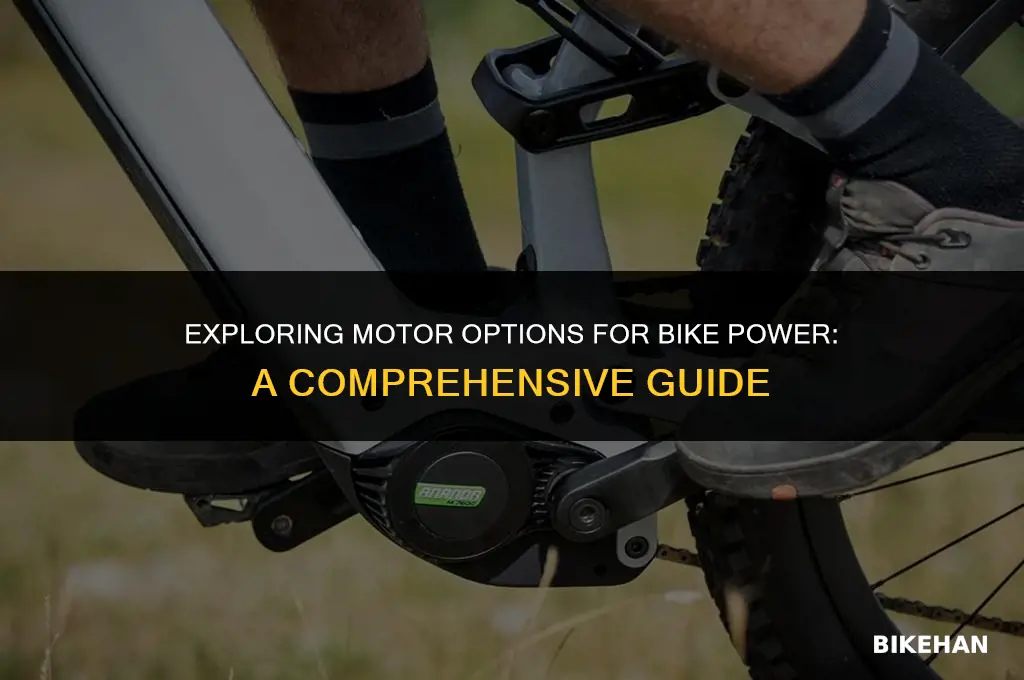
When considering what motor can be used for bike power, several factors come into play. The most common types of motors used in electric bicycles are hub motors and mid-drive motors. Hub motors are typically located in the wheel hubs and are known for their simplicity and ease of installation. They provide direct power to the wheels, which can be advantageous for maintaining balance and control. On the other hand, mid-drive motors are mounted near the bike's bottom bracket and drive the rear wheel through the bike's existing drivetrain. This setup allows for better weight distribution and can provide more power and efficiency, especially when climbing hills. Both types of motors have their own advantages and disadvantages, and the choice often depends on the specific needs and preferences of the rider.
Explore related products


What You'll Learn
- Electric Motors: Compact, efficient electric motors provide smooth power for urban e-bikes
- Hub Motors: Integrated into bike wheels, hub motors offer seamless power delivery
- Mid-Drive Motors: Positioned near the pedals, mid-drive motors enhance bike handling
- Rear-Drive Motors: Mounted near the rear wheel, these motors deliver high torque
- Battery Systems: Advanced battery packs power motors, offering long-range and quick charging

Electric Motors: Compact, efficient electric motors provide smooth power for urban e-bikes
Electric motors have revolutionized the way we think about urban transportation, particularly with the rise of e-bikes. These compact and efficient motors provide a smooth and reliable source of power, making them an ideal choice for city commuters looking for an eco-friendly and convenient mode of transport. Unlike traditional combustion engines, electric motors offer instant torque, which means that riders can enjoy quick acceleration and responsive handling, even in stop-and-go traffic.
One of the key advantages of electric motors for urban e-bikes is their ability to deliver power in a quiet and unobtrusive manner. This is particularly important in densely populated areas where noise pollution can be a significant concern. Additionally, electric motors produce zero emissions, which helps to reduce air pollution and contribute to a cleaner urban environment.
When it comes to efficiency, electric motors are hard to beat. They convert a high percentage of the energy stored in the battery into usable power, which means that riders can travel longer distances on a single charge. This is especially important for urban commuters who may need to cover significant distances during their daily routines. Furthermore, electric motors require minimal maintenance compared to traditional engines, which can save riders time and money in the long run.
In terms of design, electric motors for urban e-bikes are typically compact and lightweight, which helps to keep the overall weight of the bike down. This makes the bike easier to handle and maneuver, especially in tight urban spaces. Additionally, the compact size of the motor allows for more creative design solutions, which can result in bikes that are not only functional but also aesthetically pleasing.
Overall, electric motors provide a compelling solution for urban e-bikes, offering a combination of efficiency, power, and environmental benefits that make them an attractive choice for city commuters. As technology continues to advance, we can expect to see even more innovative applications of electric motors in the realm of urban transportation.
Choosing the Right Lube: A Guide to Bike Chain Lubricants
You may want to see also
Explore related products


Hub Motors: Integrated into bike wheels, hub motors offer seamless power delivery
Hub motors, integrated directly into the wheels of electric bicycles, represent a significant advancement in e-bike technology. Unlike traditional motors mounted on the frame, hub motors provide a more seamless and efficient power delivery system. This integration allows for a more natural riding experience, as the motor's torque is applied directly to the wheel, reducing the strain on the bike's chain and gears.
One of the key benefits of hub motors is their ability to offer a smoother acceleration and deceleration. This is particularly noticeable when starting from a stop or navigating through traffic, where the immediate response of the motor can make a significant difference in safety and maneuverability. Additionally, hub motors tend to be quieter than frame-mounted motors, contributing to a more enjoyable and less intrusive riding experience.
From a maintenance perspective, hub motors can be more challenging to service due to their placement within the wheel. However, this design also means that the motor is less exposed to the elements, potentially increasing its longevity. It's important for riders to ensure that their hub motor is properly maintained, including regular checks on the wheel's bearings and the motor's electrical connections.
When considering the use of hub motors for bike power, it's essential to weigh the advantages against the potential drawbacks. While hub motors offer a sleek and efficient power delivery system, they can also add weight to the wheels, which may affect the bike's handling and climbing capabilities. Riders should carefully evaluate their needs and preferences to determine if a hub motor is the right choice for their electric bicycle.
In conclusion, hub motors provide a unique and effective solution for powering electric bicycles. Their seamless integration into the wheels offers a smooth and efficient riding experience, with the added benefits of reduced noise and maintenance requirements. However, riders should be aware of the potential trade-offs, such as increased wheel weight and the challenges associated with motor maintenance. By carefully considering these factors, riders can make an informed decision about whether a hub motor is the ideal choice for their e-bike needs.
Smooth Shifting: The Ultimate Guide to Bike Cable Lubricants
You may want to see also
Explore related products


Mid-Drive Motors: Positioned near the pedals, mid-drive motors enhance bike handling
Mid-drive motors, strategically positioned near the pedals of an electric bicycle, offer a unique advantage in terms of bike handling and performance. Unlike hub motors located in the wheels, mid-drive motors directly drive the bike's chain, allowing for more efficient power transfer and better weight distribution. This design results in improved traction, especially on steep inclines or slippery surfaces, as the motor's force is applied closer to the point of contact between the tires and the ground.
One of the key benefits of mid-drive motors is their ability to enhance the bike's overall balance and maneuverability. By placing the motor near the pedals, the bike's center of gravity is lowered, which reduces the risk of tipping and makes it easier to navigate tight turns and obstacles. Additionally, mid-drive motors typically provide more torque than hub motors, giving riders the power they need to tackle challenging terrain with confidence.
When it comes to maintenance and repair, mid-drive motors can be more accessible than hub motors, as they are not encased within the wheel. This makes it easier to perform routine checks and address any issues that may arise. However, it's important to note that mid-drive motors can be more complex to install and may require professional assistance, especially for those unfamiliar with bike mechanics.
In terms of battery placement, mid-drive motor systems often allow for more flexibility, as batteries can be mounted on the down tube, seat tube, or even on a rack above the rear wheel. This versatility enables riders to choose a battery configuration that best suits their needs and preferences, whether they prioritize range, weight distribution, or aesthetics.
Overall, mid-drive motors offer a compelling option for those looking to upgrade their bike with electric power. With their superior handling characteristics, efficient power delivery, and flexible battery placement options, mid-drive motors are well-suited for a wide range of riding styles and conditions. Whether you're a daily commuter, a weekend adventurer, or a competitive cyclist, a mid-drive motor can help you tackle your rides with greater ease and enjoyment.
Revving Up Production: The Machinery Behind Harley-Davidson Bikes
You may want to see also
Explore related products


Rear-Drive Motors: Mounted near the rear wheel, these motors deliver high torque
Rear-drive motors are a popular choice for electric bicycles due to their ability to deliver high torque directly to the rear wheel. This configuration allows for efficient power transfer and improved traction, especially when climbing steep hills or accelerating from a stop. One of the key advantages of rear-drive motors is their ability to provide a more natural riding experience, as the weight distribution is similar to that of a traditional bicycle.
When selecting a rear-drive motor for an electric bicycle, it is important to consider factors such as power output, torque, and efficiency. Motors with higher power outputs are generally capable of providing faster acceleration and higher top speeds, but they may also consume more battery power. Torque is another critical factor, as it determines the motor's ability to overcome resistance and provide a smooth, responsive ride. Efficiency is also important, as it affects the overall range and performance of the electric bicycle.
Installation of a rear-drive motor typically requires some technical knowledge and specialized tools. The motor must be properly aligned with the rear wheel and securely mounted to the bicycle frame. Additionally, the motor's electrical connections must be correctly configured to ensure safe and reliable operation. It is recommended to consult the manufacturer's instructions or seek professional assistance when installing a rear-drive motor.
Rear-drive motors are available in a variety of sizes and configurations to suit different types of electric bicycles and riding styles. Some models are designed specifically for off-road use, while others are optimized for urban commuting or long-distance touring. When choosing a rear-drive motor, it is important to consider the specific needs and preferences of the rider, as well as the intended use of the electric bicycle.
In conclusion, rear-drive motors offer a number of advantages for electric bicycles, including high torque, efficient power transfer, and a natural riding experience. However, careful consideration must be given to factors such as power output, torque, efficiency, and installation requirements when selecting a rear-drive motor for a specific application. By choosing the right motor and ensuring proper installation, riders can enjoy the benefits of electric bicycle technology while maximizing performance and reliability.
Post-Extraction Cycling: When Is It Safe to Ride Again?
You may want to see also
Explore related products


Battery Systems: Advanced battery packs power motors, offering long-range and quick charging
Advanced battery packs are the backbone of modern electric bicycles, providing the necessary power to motors for efficient and sustainable transportation. These battery systems have evolved significantly, offering longer ranges and faster charging times than ever before. This makes electric bikes a viable alternative to traditional gasoline-powered vehicles for both short commutes and longer journeys.
One of the key advantages of advanced battery packs is their ability to store more energy in a smaller and lighter package. This is achieved through the use of high-density battery cells, which can provide more power without increasing the overall weight of the bike. As a result, electric bicycles can now travel longer distances on a single charge, making them more practical for everyday use.
Quick charging capabilities are another significant benefit of modern battery systems. Many electric bikes now come equipped with fast-charging technology, which can replenish the battery to 80% capacity in as little as 30 minutes. This drastically reduces the downtime associated with charging, allowing riders to quickly top up their bikes' batteries during breaks or while running errands.
In addition to their practical benefits, advanced battery packs also contribute to the overall performance of electric bicycles. By providing a consistent and reliable source of power, these batteries enable motors to deliver smooth and responsive acceleration, making electric bikes more enjoyable to ride. Furthermore, the integration of battery management systems (BMS) helps to optimize battery performance and longevity, ensuring that electric bikes remain efficient and reliable over time.
Overall, the advancements in battery technology have played a crucial role in the development of electric bicycles, making them a more attractive and practical option for riders looking to reduce their carbon footprint and enjoy a more sustainable mode of transportation.
Safe Cycling After Tooth Extraction: Tips and Precautions
You may want to see also
Frequently asked questions
The best type of motor for powering a bicycle depends on the specific requirements of the project. Common options include brushed DC motors, brushless DC motors, and hub motors. Each type has its own advantages and disadvantages in terms of power, efficiency, and ease of installation.
The power required from a motor to effectively power a bicycle varies based on factors such as the weight of the rider, the terrain, and the desired speed. Generally, a motor with a power output of 250-500 watts is sufficient for most applications. However, more power may be needed for steep hills or high speeds.
Brushed DC motors use a commutator and brushes to transfer power from the stationary wires to the moving rotor, while brushless DC motors use electronic commutation to achieve the same result. Brushless motors are typically more efficient, have a longer lifespan, and require less maintenance than brushed motors, but they can be more expensive and complex to control.
Yes, hub motors can be used to power bicycles. They are installed directly into the wheel hub, which makes them compact and unobtrusive. Hub motors offer several benefits, including ease of installation, low maintenance, and a smooth, quiet ride. They are also highly efficient, as they directly drive the wheel without the need for additional gears or chains.
When choosing a motor for a bicycle power project, it is important to consider factors such as power output, efficiency, weight, size, and ease of installation. Additionally, the type of motor controller and battery system that will be used should be compatible with the chosen motor. It is also important to ensure that the motor is suitable for the specific application, such as on-road or off-road use, and that it complies with any relevant regulations or standards.