Megan Blake

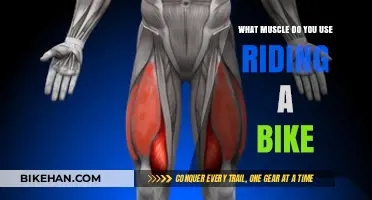
Stationary biking is an excellent form of cardiovascular exercise that engages multiple muscle groups throughout the body. While it primarily targets the lower body muscles, it also provides a full-body workout by involving the upper body and core muscles. The main muscles used during stationary biking include the quadriceps, hamstrings, glutes, calves, and hip flexors in the lower body. Additionally, the core muscles, such as the abdominals and lower back, are engaged to maintain stability and proper posture. The upper body muscles, including the shoulders, arms, and chest, are also utilized to a lesser extent, especially when using handlebars that require pushing and pulling motions. Overall, stationary biking is a comprehensive exercise that can help improve muscle strength, endurance, and overall fitness.
| Characteristics | Values |
|---|---|
| Muscle Groups | Lower body muscles, including quadriceps, hamstrings, glutes, and calves |
| Primary Action | Pedaling motion, which involves concentric and eccentric contractions |
| Secondary Muscles | Core muscles, including rectus abdominis and obliques, for stability |
| Intensity | Moderate to high, depending on resistance and speed |
| Range of Motion | Circular motion of the legs, with the knees bending and extending |
| Equipment Used | Stationary bike with adjustable resistance and seat height |
| Body Position | Seated position with hands on handlebars for support and balance |
| Breathing | Controlled, deep breathing to maintain oxygen levels and endurance |
| Heart Rate | Elevated, typically within the aerobic zone (60-80% of maximum heart rate) |
| Calorie Burn | Varies based on intensity and duration, but generally moderate to high |
| Muscle Endurance | Improved over time with consistent training and increased resistance |
| Muscle Strength | Increased in the lower body muscles due to the repetitive pedaling motion |
| Flexibility | Enhanced in the hip and knee joints through the cycling motion |
| Mental Focus | Required to maintain proper form and pace during the workout |
| Sweat Production | Moderate to high, depending on the intensity and duration of the session |
| Post-Workout Recovery | Stretching and cool-down recommended to prevent muscle soreness and injury |
Explore related products


What You'll Learn
- Leg Muscles: Quadriceps, hamstrings, glutes, and calves are the primary muscles engaged during stationary biking
- Core Muscles: The rectus abdominis, obliques, and lower back muscles help maintain stability and posture while cycling
- Arm Muscles: Biceps, triceps, and forearm muscles are used to grip the handlebars and maintain balance
- Shoulder Muscles: The deltoids and trapezius muscles assist in stabilizing the upper body during intense cycling sessions
- Back Muscles: Latissimus dorsi, rhomboids, and erector spinae muscles support the spine and help maintain an upright position

Leg Muscles: Quadriceps, hamstrings, glutes, and calves are the primary muscles engaged during stationary biking
Stationary biking is an effective way to engage multiple muscle groups in the legs, providing a comprehensive lower body workout. The primary muscles activated during this activity are the quadriceps, hamstrings, glutes, and calves. These muscles work in concert to power the pedaling motion, with each group playing a distinct role in the exercise.
The quadriceps, located at the front of the thigh, are responsible for extending the knee joint. During stationary biking, they contract forcefully to push the pedals downward, generating the majority of the power required for the exercise. The hamstrings, situated at the back of the thigh, act as the primary antagonists to the quadriceps. They flex the knee joint and help to control the speed and intensity of the pedaling motion.
The glutes, or buttocks, are also heavily engaged during stationary biking. These muscles extend the hip joint and contribute to the overall power output of the exercise. The calves, located at the back of the lower leg, play a crucial role in plantarflexion, or pointing the toes downward. This action helps to maintain the foot's position on the pedal and provides additional power to the pedaling motion.
To maximize the engagement of these muscle groups, it's essential to maintain proper form and technique during stationary biking. This includes keeping the knees bent at a 90-degree angle, engaging the core muscles for stability, and avoiding leaning forward or backward excessively. By focusing on these key points, individuals can ensure that they are effectively targeting the quadriceps, hamstrings, glutes, and calves during their stationary bike workouts.
Post-Extraction Cycling: A Guide to Safe Bike Riding After Tooth Removal
You may want to see also
Explore related products


Core Muscles: The rectus abdominis, obliques, and lower back muscles help maintain stability and posture while cycling
The rectus abdominis, obliques, and lower back muscles are crucial for maintaining stability and posture during cycling. These core muscles work in tandem to keep the body upright and balanced, which is essential for efficient pedaling and overall performance on a stationary bike.
The rectus abdominis, often referred to as the "six-pack" muscles, run vertically along the front of the abdomen. They play a key role in flexing the spine and maintaining a stable core. During cycling, these muscles are engaged to keep the torso upright and to transfer power from the legs to the upper body.
The obliques, located on the sides of the abdomen, are responsible for rotating the torso and providing lateral stability. When cycling, the obliques help to maintain proper posture by preventing the body from swaying side to side. They also assist in the transfer of power from the legs to the arms, which is important for maintaining a consistent pedaling rhythm.
The lower back muscles, including the erector spinae and multifidus, are essential for extending the spine and providing support for the lower back. During cycling, these muscles are engaged to maintain a neutral spine position, which helps to prevent lower back pain and injury. They also work in conjunction with the core muscles to stabilize the body and transfer power from the legs to the upper body.
In summary, the rectus abdominis, obliques, and lower back muscles are all important for maintaining stability and posture while cycling on a stationary bike. These core muscles work together to keep the body upright and balanced, which is essential for efficient pedaling and overall performance.
Choosing the Perfect Lube: A Guide to Bike Chain Maintenance
You may want to see also
Explore related products


Arm Muscles: Biceps, triceps, and forearm muscles are used to grip the handlebars and maintain balance
The arm muscles play a crucial role in stationary biking, particularly in maintaining grip and balance. The biceps, located at the front of the upper arm, are responsible for flexing the elbow joint, which helps in gripping the handlebars firmly. The triceps, situated at the back of the upper arm, extend the elbow joint, providing the necessary force to push down on the handlebars and maintain a stable riding position.
In addition to the biceps and triceps, the forearm muscles are essential for a secure grip on the handlebars. These muscles, including the flexors and extensors, work in tandem to control the movement of the wrist and fingers, ensuring that the hands remain steady and in place during the workout.
Proper engagement of these arm muscles not only enhances the effectiveness of the stationary bike workout but also helps in preventing injuries. By maintaining a firm yet relaxed grip on the handlebars, cyclists can avoid strain on the wrists and forearms, reducing the risk of conditions such as carpal tunnel syndrome.
To maximize the benefits of stationary biking, it is important to focus on proper form and technique. Cyclists should ensure that their arms are slightly bent at the elbows, with the wrists in a neutral position, to engage the biceps, triceps, and forearm muscles effectively. This posture helps in distributing the workload evenly across the upper body, promoting a balanced and efficient workout.
In summary, the arm muscles, including the biceps, triceps, and forearm muscles, are integral to the stationary biking experience. By understanding their roles and focusing on proper technique, cyclists can optimize their workouts, improve their performance, and reduce the risk of injury.
Understanding Shark Toothing on Bikes: A Comprehensive Guide
You may want to see also
Explore related products


Shoulder Muscles: The deltoids and trapezius muscles assist in stabilizing the upper body during intense cycling sessions
The deltoids and trapezius muscles play a crucial role in stabilizing the upper body during intense cycling sessions. These muscles, located in the shoulder region, are essential for maintaining proper posture and balance while pedaling at high speeds or tackling challenging terrains on a stationary bike.
The deltoids, commonly referred to as the shoulder muscles, are responsible for lifting the arm away from the body and rotating it. During cycling, they help to keep the shoulders level and prevent them from hunching forward, which can lead to discomfort and inefficiency in pedaling. The trapezius muscles, on the other hand, extend from the back of the neck down to the shoulder blades and are primarily responsible for shrugging the shoulders. In the context of cycling, these muscles work to stabilize the shoulder blades and prevent them from moving excessively, which can cause strain and fatigue.
When cycling at high intensities, it is important to engage these muscles consciously to maintain proper form and prevent injury. One way to do this is by focusing on keeping the shoulders relaxed and down, away from the ears, and the shoulder blades stable and flat against the back. Additionally, incorporating exercises that target the deltoids and trapezius muscles into a regular strength training routine can help to improve overall cycling performance and reduce the risk of injury.
In summary, the deltoids and trapezius muscles are key players in stabilizing the upper body during intense cycling sessions. By maintaining proper posture and engaging these muscles consciously, cyclists can improve their performance and reduce the risk of injury.
Pedal Power: Unveiling the Key Muscles Behind Cycling Strength
You may want to see also
Explore related products





Back Muscles: Latissimus dorsi, rhomboids, and erector spinae muscles support the spine and help maintain an upright position
The latissimus dorsi, rhomboids, and erector spinae muscles play a crucial role in supporting the spine and maintaining an upright position during stationary biking. These muscles work in tandem to stabilize the back, ensuring proper posture and reducing the risk of injury.
The latissimus dorsi, the largest muscle in the back, spans from the lower spine to the upper arms. During stationary biking, this muscle is engaged to maintain an upright posture, especially when leaning forward to grip the handlebars. Strengthening the latissimus dorsi can help improve overall back stability and reduce fatigue during long rides.
The rhomboids, located between the shoulder blades, are responsible for retracting the scapulae and stabilizing the upper back. When riding a stationary bike, the rhomboids are activated to keep the shoulders down and back, preventing hunching and promoting proper alignment.
The erector spinae muscles, running along the spine, are essential for extending and stabilizing the vertebral column. During stationary biking, these muscles are engaged to maintain the natural curve of the lower back, preventing excessive arching or rounding. Strengthening the erector spinae muscles can help alleviate lower back pain and improve overall spinal health.
To effectively target these back muscles during stationary biking, it's essential to maintain proper form and posture. Adjusting the bike seat and handlebars to the correct height can help ensure that the spine is in a neutral position, allowing for optimal muscle engagement. Additionally, incorporating exercises that specifically target the latissimus dorsi, rhomboids, and erector spinae muscles, such as rows and extensions, can help strengthen these muscles and improve overall back health.
Exploring the Unique Window Piston Engine in Motorized Bikes
You may want to see also
Frequently asked questions
The primary muscles engaged while using a stationary bike include the quadriceps, hamstrings, glutes, and calves. These muscles work together to power the pedaling motion.
Increasing the resistance level on a stationary bike engages the muscles more intensely, leading to a more challenging workout. Higher resistance requires more force from the quadriceps, hamstrings, glutes, and calves, promoting muscle strength and endurance.
Yes, using a stationary bike can contribute to building core strength. While pedaling, the core muscles, including the abdominals and lower back, are engaged to stabilize the body, especially when maintaining an upright posture.
The muscle engagement between cycling and using a stationary bike is similar, as both activities involve the quadriceps, hamstrings, glutes, and calves. However, cycling may engage additional muscles, such as those in the arms and shoulders, due to the need for balance and steering.