Matthew Brooks
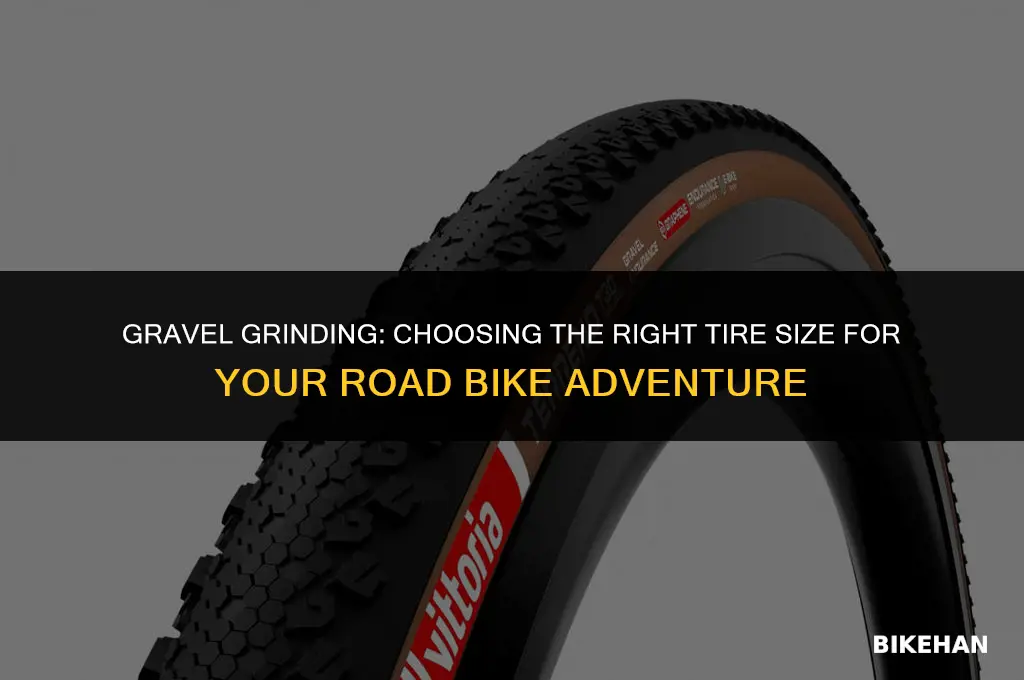
When considering the minimum tire size for a road bike that will be ridden on small gravel, it's important to balance the need for speed and efficiency on paved roads with the requirement for adequate traction and stability on loose surfaces. Road bikes typically feature narrow tires designed for smooth asphalt, but when small gravel is involved, a slightly wider tire can provide better grip and comfort. The ideal minimum tire size would depend on the specific conditions and personal preferences, but generally, a tire width of around 28-32mm can offer a good compromise. This size allows for relatively fast rolling on pavement while still providing enough contact area to navigate small gravel without excessive slipping or vibration.
Explore related products


What You'll Learn

Minimum tire width for road bikes on gravel
Determining the minimum tire width for road bikes on gravel is crucial for ensuring both safety and performance. Gravel surfaces can vary significantly in size and texture, ranging from small, smooth pebbles to larger, rougher stones. For road bikes, which are typically designed for paved surfaces, adapting to gravel requires careful consideration of tire specifications.
One key factor to consider is the increased rolling resistance encountered on gravel. Wider tires can help distribute the bike's weight more evenly, reducing the risk of sinking into softer gravel and providing better traction. Additionally, wider tires can absorb more of the vibrations and shocks from uneven surfaces, leading to a more comfortable ride and reduced fatigue for the cyclist.
However, simply choosing the widest tire available is not always the best solution. Excessively wide tires can negatively impact the bike's handling and aerodynamics, especially on smoother sections of gravel or when transitioning back to paved roads. Therefore, it's essential to strike a balance between width for stability and handling for performance.
Experts generally recommend a minimum tire width of around 28-32mm for road bikes on gravel. This range provides a good compromise between traction, comfort, and handling. Some cyclists may opt for even wider tires, up to 35-38mm, for more extreme gravel conditions or for added comfort on long rides.
Ultimately, the ideal tire width will depend on the specific gravel conditions, the rider's weight, and personal preferences. It's advisable to experiment with different tire widths to find the optimal balance for individual needs and riding styles.
Exploring the Thule 4 Bike Tire Rack: Weight Capacity and More
You may want to see also
Explore related products


Recommended tire pressure for mixed terrain cycling
For mixed terrain cycling, which often involves a combination of paved roads and unpaved trails, finding the right tire pressure is crucial for both performance and safety. The recommended tire pressure will vary depending on several factors, including the type of bike, the rider's weight, and the specific terrain being ridden.
As a general rule of thumb, lower tire pressures are preferred for mixed terrain cycling because they provide better traction and shock absorption on rough surfaces. However, it's important to note that too low of a tire pressure can lead to pinch flats and decreased efficiency on paved roads.
To determine the optimal tire pressure for your mixed terrain cycling needs, start by consulting the manufacturer's recommendations for your specific bike and tire model. These guidelines will typically provide a range of acceptable tire pressures based on the intended use of the bike.
Next, consider the rider's weight and the type of terrain being ridden. For heavier riders or those who frequently ride on rough, unpaved surfaces, a lower tire pressure within the recommended range may be preferable. Conversely, lighter riders or those who spend more time on paved roads may benefit from a higher tire pressure within the recommended range.
Finally, it's important to regularly check and adjust your tire pressure based on your riding conditions. Investing in a high-quality tire pressure gauge and keeping it handy can help ensure that your tires are always properly inflated for the best possible performance and safety on mixed terrain rides.
Discover Your Bike Tire Valve Type: A Comprehensive Guide
You may want to see also
Explore related products


Benefits of wider tires on gravel roads
Wider tires offer several advantages when riding on gravel roads. One of the primary benefits is increased stability. The larger contact patch with the ground provides better traction, which is especially important on loose or uneven surfaces like gravel. This stability can help prevent accidents and make the ride more comfortable for the cyclist.
Another benefit of wider tires is improved shock absorption. Gravel roads can be quite bumpy, and wider tires can help to absorb some of that impact, reducing the amount of vibration that is transmitted to the rider. This can lead to a smoother ride and less fatigue over long distances.
Wider tires also tend to have lower rolling resistance on gravel roads. This is because they can better conform to the irregularities in the surface, reducing the amount of energy that is lost to friction. As a result, cyclists can maintain higher speeds with less effort, which can be a significant advantage on long rides.
However, it is important to note that wider tires may not be suitable for all types of gravel roads. On very smooth or compacted gravel, narrower tires may actually provide better performance. Additionally, wider tires can be more susceptible to punctures from sharp rocks or debris, so cyclists should be prepared to deal with potential flat tires.
In conclusion, wider tires can offer several benefits when riding on gravel roads, including increased stability, improved shock absorption, and lower rolling resistance. However, cyclists should carefully consider the specific conditions of the roads they will be riding on before choosing the optimal tire width.
Understanding Bike Tire Sizes: A Guide to 700c x 40 Width
You may want to see also
Explore related products


Comparison of tire tread patterns for light gravel
When selecting tires for light gravel, it's crucial to consider the tread pattern, as it significantly impacts traction, stability, and overall performance. Two common tread patterns for such conditions are the 'file tread' and the 'knobby tread.' The file tread pattern features small, closely spaced knobs that provide a balance between grip and rolling resistance, making it suitable for light gravel and paved roads. On the other hand, the knobby tread pattern has larger, more widely spaced knobs that offer better traction on loose surfaces but may increase rolling resistance and reduce efficiency on smoother terrain.
Another factor to consider is the tire's width. Wider tires can provide better stability and shock absorption on gravel, but they may also increase the risk of pinch flats and reduce the bike's overall responsiveness. Narrower tires, while more efficient on paved roads, may struggle to provide adequate grip and comfort on light gravel.
In terms of tire size, the minimum recommended size for light gravel is typically 28mm, but this can vary depending on the specific conditions and the rider's preferences. Larger tires, such as 32mm or 35mm, can offer improved traction and comfort, but they may also affect the bike's handling and aerodynamics.
Ultimately, the choice of tire tread pattern and size for light gravel will depend on the rider's priorities and the specific conditions they will be riding in. By carefully considering these factors, cyclists can select the optimal tires for their needs, ensuring a safe and enjoyable ride on both paved roads and light gravel surfaces.
Decoding Tire Sizes for Your Specialized XL Bike: A Comprehensive Guide
You may want to see also
Explore related products


Impact of tire size on bike handling and speed
The impact of tire size on bike handling and speed is a critical consideration for cyclists, especially those navigating mixed terrains like small gravel on road bikes. Larger tires generally provide better traction and stability on loose surfaces, but they also increase rolling resistance, which can slow down the bike. Conversely, smaller tires are faster on smooth pavement but may struggle with grip and control on gravel.
When selecting the minimum tire size for a road bike intended for use on small gravel, it's essential to balance these factors. A tire that is too narrow may not provide enough cushioning or traction, leading to a harsh ride and increased risk of punctures. On the other hand, a tire that is too wide may be sluggish and difficult to maneuver on tighter turns.
For optimal performance, cyclists should consider the specific characteristics of the gravel they will be riding on. Smaller, smoother gravel may allow for slightly narrower tires, while larger, rougher stones will require wider, more robust tires. Additionally, the rider's weight and riding style can influence the ideal tire size, with heavier riders or those who prefer a more aggressive riding stance potentially benefiting from wider tires for added stability.
In terms of speed, the difference in rolling resistance between various tire sizes can be significant. Studies have shown that wider tires can reduce rolling resistance on rough surfaces, leading to faster overall speeds. However, this advantage may be offset by the increased weight and potential aerodynamic drag of larger tires.
Ultimately, the best tire size for a road bike on small gravel will depend on a combination of factors, including the rider's preferences, the specific terrain, and the desired balance between handling and speed. By carefully considering these variables, cyclists can choose the optimal tire size to enhance their riding experience and performance.
The Science Behind Bike Tires: How They Stay Upright
You may want to see also
Frequently asked questions
The minimum tire size recommended for a road bike on small gravel is typically 28mm. However, for better traction and comfort, many riders opt for tires that are 32mm or wider.
While it is technically possible to use smaller tires than 28mm on a road bike for gravel riding, it is not recommended. Smaller tires offer less traction and are more prone to punctures on loose surfaces like gravel.
Wider tires on a road bike for gravel provide several benefits, including improved traction, increased comfort, and better puncture resistance. They also allow for lower tire pressures, which can further enhance grip and stability on uneven surfaces.
Tire size significantly affects the handling of a road bike on gravel. Wider tires offer better stability and control, making it easier to navigate loose and uneven surfaces. Smaller tires, on the other hand, can make the bike feel more twitchy and less predictable on gravel.
Yes, in addition to tire size, you should also consider the tread pattern, tire material, and recommended tire pressure. Tires with a more aggressive tread pattern will provide better grip on gravel, while those made from more durable materials will be less susceptible to punctures. Recommended tire pressure can vary depending on the specific tire and riding conditions, so it's important to consult the manufacturer's guidelines.