Megan Blake
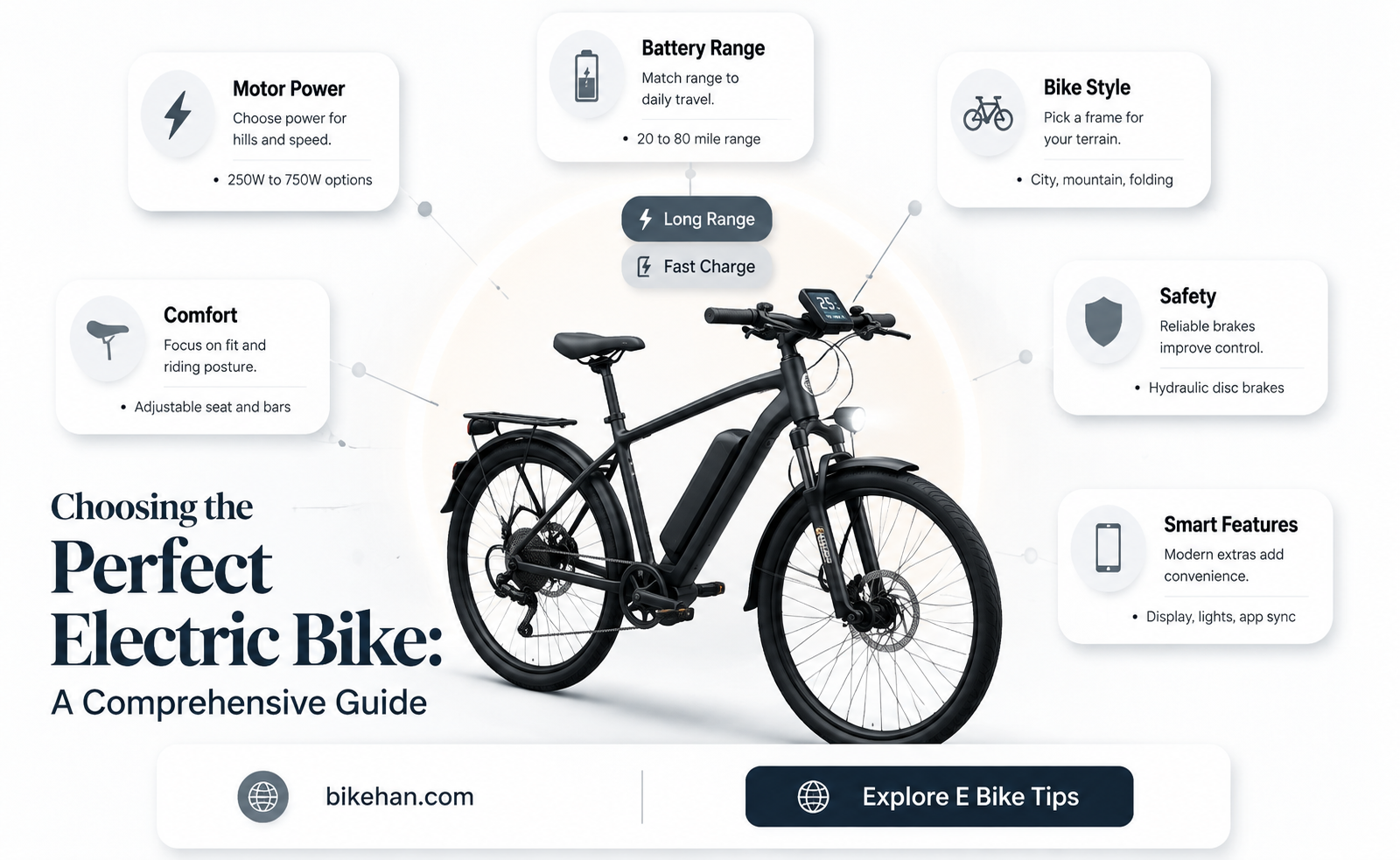
When considering purchasing an electric bike, it's essential to think about several factors to ensure you choose the right one for your needs. Electric bikes come in various styles and configurations, each designed for different types of riding and terrain. For instance, if you plan to use your e-bike primarily for commuting on paved roads, a hybrid or road bike style might be ideal. These bikes typically have a more upright riding position for comfort and visibility in traffic, and they often come with features like fenders and racks for carrying gear. On the other hand, if you're interested in off-road adventures, a mountain bike style with wider tires and more robust suspension would be more suitable. Additionally, consider the motor placement—hub motors are common in the rear wheel for better traction, while mid-drive motors can offer a more balanced feel. Battery life and range are also crucial considerations, as they will determine how far you can travel on a single charge. Finally, think about your budget and the additional features you might want, such as integrated lights, a digital display, or a throttle for easier riding. By carefully evaluating these factors, you can find an electric bike that perfectly matches your lifestyle and preferences.
Explore related products


What You'll Learn
- Purpose and Usage: Consider how you'll use the e-bike: commuting, off-road adventures, leisurely rides, or long-distance travel
- Motor and Power: Choose between hub motors (in the wheels) or mid-drive motors (near the pedals). Power ranges from 250W to 1000W+
- Battery Life and Range: Look for batteries with high watt-hour ratings for longer rides. Ranges vary from 20 to 100+ miles per charge
- Frame and Wheel Size: Select a frame that fits your size and riding style. Wheel sizes typically range from 20 to 29
- Additional Features: Consider extras like suspension, gears, lights, fenders, and racks. These can enhance comfort, safety, and utility

Purpose and Usage: Consider how you'll use the e-bike: commuting, off-road adventures, leisurely rides, or long-distance travel
If you're considering purchasing an electric bike, it's crucial to first determine your primary purpose for using it. This will help you narrow down the type of e-bike that best suits your needs. For instance, if you plan to use the e-bike for commuting, you'll want to prioritize features that make it suitable for urban environments, such as a comfortable riding position, efficient battery life, and the ability to carry cargo.
On the other hand, if you're looking for an e-bike for off-road adventures, you'll need to focus on features that enhance durability and performance on rough terrain. This might include a robust frame, high-quality suspension, and tires designed for traction on uneven surfaces. Additionally, you may want to consider an e-bike with a more powerful motor to help you tackle steep inclines and challenging trails.
For leisurely rides, comfort and ease of use should be your top priorities. Look for an e-bike with a comfortable seat, ergonomic handlebars, and a smooth, quiet motor. You may also want to consider features like a step-through frame for easy mounting and dismounting, and a battery that provides enough range for extended rides without the need for frequent recharging.
Finally, if you're planning to use your e-bike for long-distance travel, you'll need to focus on features that enhance endurance and efficiency. This might include a lightweight frame, aerodynamic design, and a high-capacity battery that can provide enough power for extended trips. Additionally, you may want to consider an e-bike with a regenerative braking system, which can help recharge the battery as you ride, further extending your range.
By carefully considering your intended use, you can select an e-bike that meets your specific needs and provides a safe, enjoyable, and efficient riding experience.
Urban Wheels: Choosing the Perfect Bike for Street Biking Adventures
You may want to see also
Explore related products


Motor and Power: Choose between hub motors (in the wheels) or mid-drive motors (near the pedals). Power ranges from 250W to 1000W+
Hub motors, located within the wheels, offer a sleek and streamlined design, reducing the visual bulk of the bike. They're typically quieter and provide a smoother ride due to their placement. However, they can be more challenging to repair since they're integrated into the wheel assembly. Mid-drive motors, on the other hand, are positioned near the pedals and are known for their efficiency and ability to leverage the bike's existing drivetrain. This setup often results in better torque and hill-climbing capabilities. When choosing between the two, consider your riding needs and preferences. If you prioritize a clean aesthetic and a quiet ride, hub motors might be the better choice. For those who need more power and efficiency, especially for off-road or hilly terrain, mid-drive motors could be the way to go.
The power range of an electric bike motor is a crucial factor in determining its performance and suitability for different types of riding. Motors ranging from 250W to 500W are generally sufficient for casual commuting and light off-road use. They provide a good balance between power and battery life, making them ideal for everyday riders. If you're looking for more power, motors in the 500W to 750W range offer increased performance, better suited for longer commutes or more challenging terrain. For extreme off-road conditions or very long distances, motors with 750W to 1000W+ power outputs are available, providing the highest levels of torque and speed. However, these high-power motors often come with a higher price tag and may require more robust battery systems.
When selecting the power range, it's important to consider not only your current riding needs but also any potential future requirements. If you think you might want to tackle more challenging rides in the future, opting for a higher power motor now could save you from having to upgrade later. Additionally, keep in mind that higher power motors may require more maintenance and could have a shorter lifespan than lower power options.
In conclusion, the choice between hub and mid-drive motors, as well as the power range, depends on your specific riding needs, preferences, and budget. Hub motors offer a sleek design and quiet operation, while mid-drive motors provide efficiency and power. The power range should be chosen based on the type of riding you plan to do, with higher power motors offering better performance for more demanding conditions. By carefully considering these factors, you can select the electric bike motor and power range that best suit your needs.
Choosing the Perfect Bike for Your College Adventures
You may want to see also
Explore related products


Battery Life and Range: Look for batteries with high watt-hour ratings for longer rides. Ranges vary from 20 to 100+ miles per charge
The battery life and range of an electric bike are critical factors to consider when choosing the right model for your needs. A high watt-hour (Wh) rating is essential for longer rides, as it indicates the amount of energy the battery can store. Typically, electric bike batteries range from 200Wh to 1000Wh or more, with higher ratings providing greater range. For instance, a 500Wh battery can generally offer a range of 20-40 miles per charge, depending on various factors such as terrain, rider weight, and assist level.
When evaluating battery life and range, it's important to consider your typical riding habits. If you plan to use your electric bike for daily commuting or long-distance touring, a battery with a higher watt-hour rating will be more suitable. On the other hand, if you only intend to use your bike for short, leisurely rides, a lower watt-hour battery may suffice. Additionally, some electric bikes come with the option to add a secondary battery, which can significantly extend the range.
Another factor to consider is the battery's charging time. While higher watt-hour batteries provide longer range, they also take longer to charge. Most electric bike batteries can be fully charged in 3-6 hours, but some models may require up to 10 hours or more. If you need to charge your bike quickly, look for models with fast-charging capabilities.
It's also worth noting that battery life and range can be affected by external factors such as temperature, age, and maintenance. Cold weather can reduce battery efficiency, while extreme heat can damage the battery. Regular maintenance, such as keeping the battery clean and storing it properly when not in use, can help prolong its lifespan and maintain optimal performance.
In conclusion, when choosing an electric bike, it's essential to carefully consider your riding needs and habits to select a model with the appropriate battery life and range. By understanding the relationship between watt-hour ratings, range, and charging time, you can make an informed decision that will ensure you get the most out of your electric bike.
Choosing the Perfect First Bike for Your 3-Year-Old: A Guide
You may want to see also
Explore related products


Frame and Wheel Size: Select a frame that fits your size and riding style. Wheel sizes typically range from 20 to 29
Selecting the right frame and wheel size for your electric bike is crucial for both comfort and performance. The frame size should be proportional to your height and riding style to ensure optimal control and maneuverability. For instance, a taller rider may prefer a larger frame for a more comfortable riding position, while a smaller rider might opt for a compact frame for easier handling.
Wheel sizes, ranging from 20 to 29 inches, also play a significant role in the bike's performance. Smaller wheels, like 20-inch wheels, are often found on folding bikes and are ideal for urban commuting due to their compact size and ease of storage. On the other hand, larger wheels, such as 29-inch wheels, provide better stability and are suitable for off-road adventures or long-distance rides.
When choosing the wheel size, consider the type of terrain you'll be riding on. For smooth, paved roads, 26 or 28-inch wheels are a good choice, offering a balance between speed and comfort. If you plan to tackle rough trails or uneven surfaces, 27.5 or 29-inch wheels with wider tires will provide better traction and shock absorption.
Additionally, the frame material can impact the bike's weight and durability. Aluminum frames are lightweight and corrosion-resistant, making them a popular choice for many riders. Carbon fiber frames, while more expensive, offer superior strength-to-weight ratio and are often preferred by competitive cyclists.
In conclusion, when selecting an electric bike, pay close attention to the frame size and wheel size to ensure a comfortable and enjoyable riding experience. Consider your height, riding style, and the type of terrain you'll be traversing to make an informed decision.
Choosing the Perfect Bike for the MS150: A Comprehensive Guide
You may want to see also
Explore related products


$20.99


Additional Features: Consider extras like suspension, gears, lights, fenders, and racks. These can enhance comfort, safety, and utility
When selecting an electric bike, it's crucial to consider the additional features that can significantly enhance your riding experience. One such feature is suspension, which can greatly improve comfort, especially on rough terrain. Full suspension systems, which include both front and rear shocks, are ideal for off-road adventures, while hardtail suspension (only at the front) is suitable for less demanding trails and urban environments.
Gears are another important aspect to consider. While many electric bikes come with a single-speed drivetrain, having multiple gears can provide better control over your speed and power output, particularly when tackling steep hills or varying terrain. For those who prefer a more automated experience, some e-bikes offer continuously variable transmissions (CVTs) that adjust the gear ratio seamlessly.
Lighting is a critical safety feature, especially if you plan to ride in low-light conditions or at night. Look for e-bikes equipped with bright LED headlights and taillights, as well as reflectors on the wheels and pedals. Some bikes even come with integrated turn signals for added visibility.
Fenders can be a valuable addition, particularly if you live in an area with frequent rain or wet roads. They help protect you from splashes and keep your clothes cleaner. Similarly, racks can enhance the utility of your e-bike, allowing you to carry groceries, bags, or other cargo. Front racks are useful for lighter items, while rear racks can handle heavier loads.
Lastly, consider the type of battery and its placement. Batteries mounted on the downtube or integrated into the frame tend to provide a more balanced weight distribution, while those mounted on the rear rack can affect the bike's handling. Look for high-quality batteries with a good warranty and consider the charging time and range when making your decision.
By carefully evaluating these additional features, you can choose an electric bike that not only meets your basic needs but also provides a comfortable, safe, and enjoyable riding experience tailored to your specific preferences and requirements.
Choosing the Perfect Bike for UC Davis: A Comprehensive Guide
You may want to see also
Frequently asked questions
For city commuting, consider a hybrid or road-style electric bike. These bikes are designed for efficiency and comfort on paved surfaces, and they often come with features like fenders, lights, and racks for carrying gear. Look for a bike with a moderate battery range (around 40-60 miles) and a motor that provides sufficient assistance for stop-and-go traffic.
For off-road adventures, a full-suspension mountain bike with a powerful motor and wide, knobby tires is ideal. These bikes are built to handle rough terrain, and the suspension helps absorb shocks from bumps and obstacles. Choose a bike with a longer battery range (60-100 miles) to ensure you can cover longer trails without needing to recharge.
To choose the right size electric bike, consider your height and inseam length. Most electric bikes come in a range of sizes, typically from small to extra-large. Use the manufacturer's size chart to determine the best fit for your body. Additionally, consider the bike's standover height, which is the distance from the ground to the top of the frame—this should be comfortable for you to straddle when stopped.
For fitness purposes, look for an electric bike with a lightweight frame, a responsive motor, and multiple riding modes. A bike with a cadence sensor can help you maintain a consistent pedaling rhythm, while a heart rate monitor can track your exertion levels. Consider a bike with a shorter battery range (20-40 miles) and a lower top speed to encourage more physical effort.
A hub motor is located in the wheel hub and provides direct assistance to the wheel, while a mid-drive motor is mounted near the pedals and cranks, providing assistance to the drivetrain. Hub motors are generally quieter and require less maintenance, but they can make the bike feel heavier and less balanced. Mid-drive motors offer better weight distribution and can provide more natural pedaling assistance, but they can be noisier and require more maintenance.