Samantha Lee
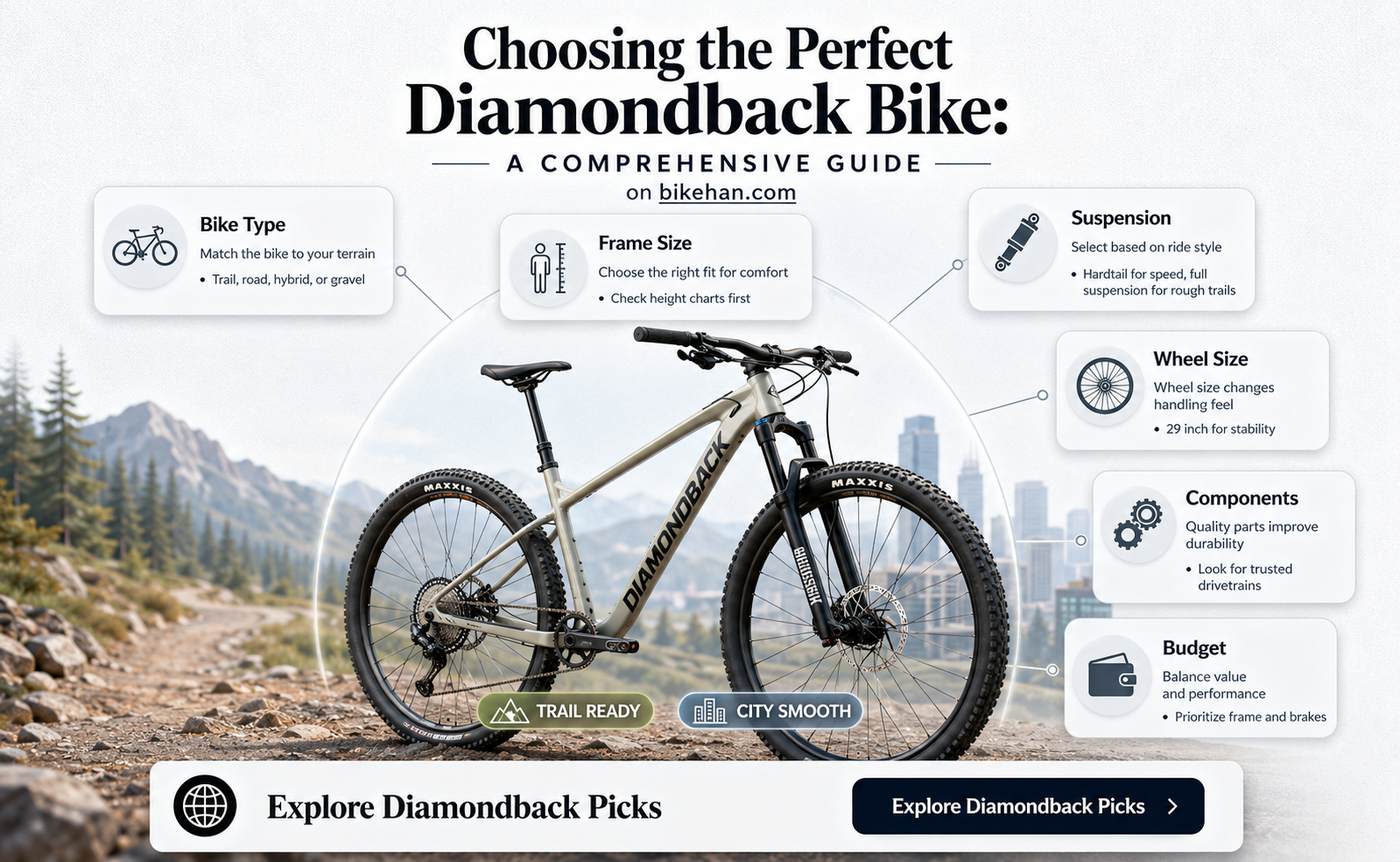
When considering which Diamondback bike to purchase, it's essential to think about your specific needs and preferences. Diamondback offers a wide range of bicycles, from mountain bikes designed for rugged trails to road bikes built for speed and efficiency. Start by identifying the type of riding you'll be doing most often. If you're an off-road enthusiast, look into their mountain bike models, which feature durable frames and suspension systems to handle rough terrain. For city commuting or leisurely rides, a hybrid or cruiser bike might be more suitable, offering a comfortable ride and practical features like racks and fenders. Additionally, consider your budget, as Diamondback bikes vary in price based on their components and build quality. Researching reviews and comparing models can help you find the best value for your money. Ultimately, the right Diamondback bike for you will depend on a combination of your riding style, experience level, and personal preferences.
Explore related products


What You'll Learn
- Purpose and Usage: Consider how you'll use the bike—for commuting, racing, or casual riding
- Frame Material: Choose between aluminum, carbon fiber, or steel frames based on your needs
- Wheel Size: Decide on wheel size—26, 27.5, or 29—depending on your height and riding style
- Suspension Type: Select the right suspension—hardtail, full suspension, or dual suspension—for your terrain
- Budget and Features: Determine your budget and prioritize features like gears, brakes, and accessories accordingly

Purpose and Usage: Consider how you'll use the bike—for commuting, racing, or casual riding
When selecting a Diamondback bike, it's crucial to align your choice with the primary purpose of your cycling activities. For commuting, you'll want a bike that offers a balance of comfort, durability, and efficiency. Diamondback's commuter bikes, such as the Haanjo series, are designed with features like a lightweight frame, puncture-resistant tires, and multiple gears to handle urban terrain and varying loads, such as a backpack or groceries.
If racing is your goal, Diamondback offers performance-oriented bikes like the Podium series. These bikes are engineered for speed and agility, featuring aerodynamic frames, high-performance gearing systems, and lightweight wheels. The geometry of these bikes is aggressive, promoting an aerodynamic riding position that reduces wind resistance and allows for quick acceleration and maneuverability in competitive settings.
For casual riding, Diamondback's hybrid bikes, such as the Clarity series, provide a versatile option. These bikes combine elements of road and mountain bikes, offering a comfortable upright riding position, wide tires for stability on various surfaces, and a range of gears suitable for leisurely rides through parks, neighborhoods, or light trails. The focus here is on comfort and ease of use, making them ideal for riders who prioritize enjoyment and relaxation over speed or technical performance.
In addition to considering the purpose, think about the terrain you'll be riding on. If you plan to tackle rough trails or off-road conditions, a mountain bike like the Diamondback Catch series would be more appropriate. These bikes are built with robust frames, suspension systems, and wide, knobby tires to absorb shocks and provide traction on uneven surfaces.
Ultimately, the right Diamondback bike for you will depend on a combination of factors, including your riding style, the type of terrain you'll encounter, and your personal preferences. By carefully evaluating these aspects, you can choose a bike that not only meets your needs but also enhances your overall cycling experience.
Choosing the Perfect Commute Bike: A Comprehensive Guide
You may want to see also
Explore related products


Frame Material: Choose between aluminum, carbon fiber, or steel frames based on your needs
When selecting a Diamondback bike, the frame material is a critical decision that impacts the bike's performance, durability, and overall riding experience. Aluminum frames are a popular choice for their lightweight properties and corrosion resistance, making them ideal for casual riders and those who prioritize ease of handling. Carbon fiber frames, on the other hand, offer superior strength-to-weight ratio and vibration damping, catering to serious cyclists and racers who demand top-tier performance. Steel frames, while heavier, provide a smooth and stable ride, often preferred by touring and commuting cyclists for their durability and comfort over long distances.
Consider your riding style and frequency when choosing a frame material. If you're an occasional rider who enjoys leisurely rides on paved paths, an aluminum frame may be the perfect fit. However, if you're a competitive cyclist who tackles challenging terrains and requires a bike that can keep up with your pace, a carbon fiber frame is likely the better investment. Steel frames are well-suited for those who use their bike for daily commuting or long-distance touring, as they can withstand the rigors of varied road conditions and heavy loads.
Additionally, think about your budget and maintenance preferences. Aluminum frames are generally more affordable and require less maintenance than carbon fiber or steel frames. Carbon fiber frames are the most expensive option but offer the best performance and lowest maintenance needs. Steel frames fall somewhere in between in terms of cost and maintenance, providing a good balance for riders who want a durable bike without breaking the bank.
Ultimately, the choice of frame material comes down to your specific needs and priorities as a cyclist. By carefully considering factors such as riding style, frequency, budget, and maintenance preferences, you can select the ideal frame material for your Diamondback bike, ensuring a comfortable and enjoyable riding experience.
Choosing the Perfect Bike Post-Knee Replacement: A Comprehensive Guide
You may want to see also
Explore related products


Wheel Size: Decide on wheel size—26, 27.5, or 29—depending on your height and riding style
Choosing the right wheel size for your Diamondback bike is crucial as it affects the bike's handling, comfort, and overall performance. The three common wheel sizes available are 26 inches, 27.5 inches, and 29 inches. To decide which one is best for you, consider your height and riding style.
For shorter riders, typically under 5'6", a 26-inch wheel size is often recommended. This size provides a more comfortable riding position and easier handling due to the lower center of gravity. The smaller wheels also allow for quicker acceleration and maneuverability, making them ideal for technical trails and urban riding.
Riders between 5'6" and 6' may find the 27.5-inch wheel size to be the perfect middle ground. This size offers a balance between the agility of 26-inch wheels and the stability of 29-inch wheels. It's a popular choice for all-mountain and trail bikes, providing a versatile performance on various terrains.
Taller riders, usually over 6', may benefit from the larger 29-inch wheel size. These wheels provide a higher center of gravity, which can improve stability and confidence on descents. The larger wheels also roll over obstacles more easily, making them suitable for cross-country and enduro riding.
In addition to height, consider your riding style. If you prefer a more aggressive, fast-paced ride, smaller wheels may be more suitable. Conversely, if you enjoy a more relaxed, stable ride, larger wheels might be the better choice.
Ultimately, the best wheel size for your Diamondback bike depends on your individual preferences and needs. Test riding different sizes can help you determine which one feels most comfortable and performs best for your specific riding style.
Choosing the Perfect Bike Chain: A Comprehensive Guide
You may want to see also
Explore related products


Suspension Type: Select the right suspension—hardtail, full suspension, or dual suspension—for your terrain
Selecting the right suspension type for your Diamondback bike is crucial as it significantly impacts your riding experience and safety. The three main suspension types to consider are hardtail, full suspension, and dual suspension. Each type is suited for different terrains and riding styles.
Hardtail bikes feature a front suspension fork but lack rear suspension. They are ideal for smooth trails, cross-country riding, and climbing. Hardtails are lighter and more efficient for pedaling on flat or uphill sections. However, they can be less comfortable on rough terrain due to the lack of rear shock absorption.
Full suspension bikes, on the other hand, have both front and rear suspension. They are designed for more challenging trails with bumps, rocks, and steep descents. The rear suspension helps absorb shocks, providing a smoother ride and better control. Full suspension bikes are heavier and less efficient for climbing but offer superior comfort and handling on rough terrain.
Dual suspension bikes are a hybrid between hardtails and full suspension bikes. They feature a front suspension fork and a rear shock absorber but with less travel than full suspension bikes. Dual suspension bikes are versatile and suitable for a variety of terrains, offering a balance between efficiency and comfort. They are ideal for riders who encounter a mix of smooth and rough trails.
When choosing a suspension type, consider the terrain you will be riding on most frequently. If you plan to ride on smooth trails and prioritize efficiency, a hardtail might be the best choice. For more challenging trails and a focus on comfort and control, a full suspension bike is recommended. If you need a versatile bike that can handle a mix of terrains, a dual suspension bike could be the perfect fit.
Choosing the Perfect Bike for Burning Man: A Comprehensive Guide
You may want to see also
Explore related products


Budget and Features: Determine your budget and prioritize features like gears, brakes, and accessories accordingly
When selecting a Diamondback bike, your budget plays a crucial role in determining the features you can prioritize. Start by assessing your financial capacity and then align it with your cycling needs and preferences. For instance, if you're an avid mountain biker, you might want to allocate more funds towards a bike with a robust suspension system and durable tires. Conversely, if you're a casual rider, you might prioritize comfort features like an ergonomic seat and handlebars.
Next, consider the importance of gears and brakes. For hilly terrains, a bike with a wide range of gears will be more suitable, allowing you to tackle steep inclines with ease. On the other hand, if you primarily ride on flat surfaces, you might opt for a bike with fewer gears to simplify your riding experience. As for brakes, disc brakes offer superior stopping power and are ideal for off-road biking, while rim brakes are sufficient for urban commuting.
Accessories can also enhance your biking experience, but they should be chosen based on your specific needs. For example, if you plan to use your bike for commuting, investing in a sturdy rack and panniers for carrying your belongings would be wise. If you're into long-distance rides, consider adding a water bottle holder and a repair kit to your list of accessories.
Remember, it's essential to strike a balance between your budget and the features you desire. You might need to make some compromises, but by prioritizing your needs, you can find a Diamondback bike that offers the best value for your money. Take your time to research and test ride different models to ensure you make an informed decision that aligns with your cycling goals and budget constraints.
Choosing the Perfect First Bike for Your 3-Year-Old: A Guide
You may want to see also
Frequently asked questions
When selecting a Diamondback bike, consider factors such as your riding style, the terrain you'll be riding on, your budget, and your physical measurements for the right fit.
Yes, Diamondback offers a range of bikes suitable for beginners, including hybrid and mountain bikes that are designed to be user-friendly and provide a comfortable ride for those new to cycling.
A hardtail mountain bike from Diamondback has a rigid frame with no rear suspension, making it lighter and more efficient for climbing. In contrast, a full-suspension mountain bike features both front and rear suspension, providing better shock absorption and control on rough descents.
To find the correct size for a Diamondback bike, measure your inseam length and compare it to the manufacturer's size chart. Additionally, consider your height and arm length to ensure a comfortable and ergonomic riding position.