Samantha Lee
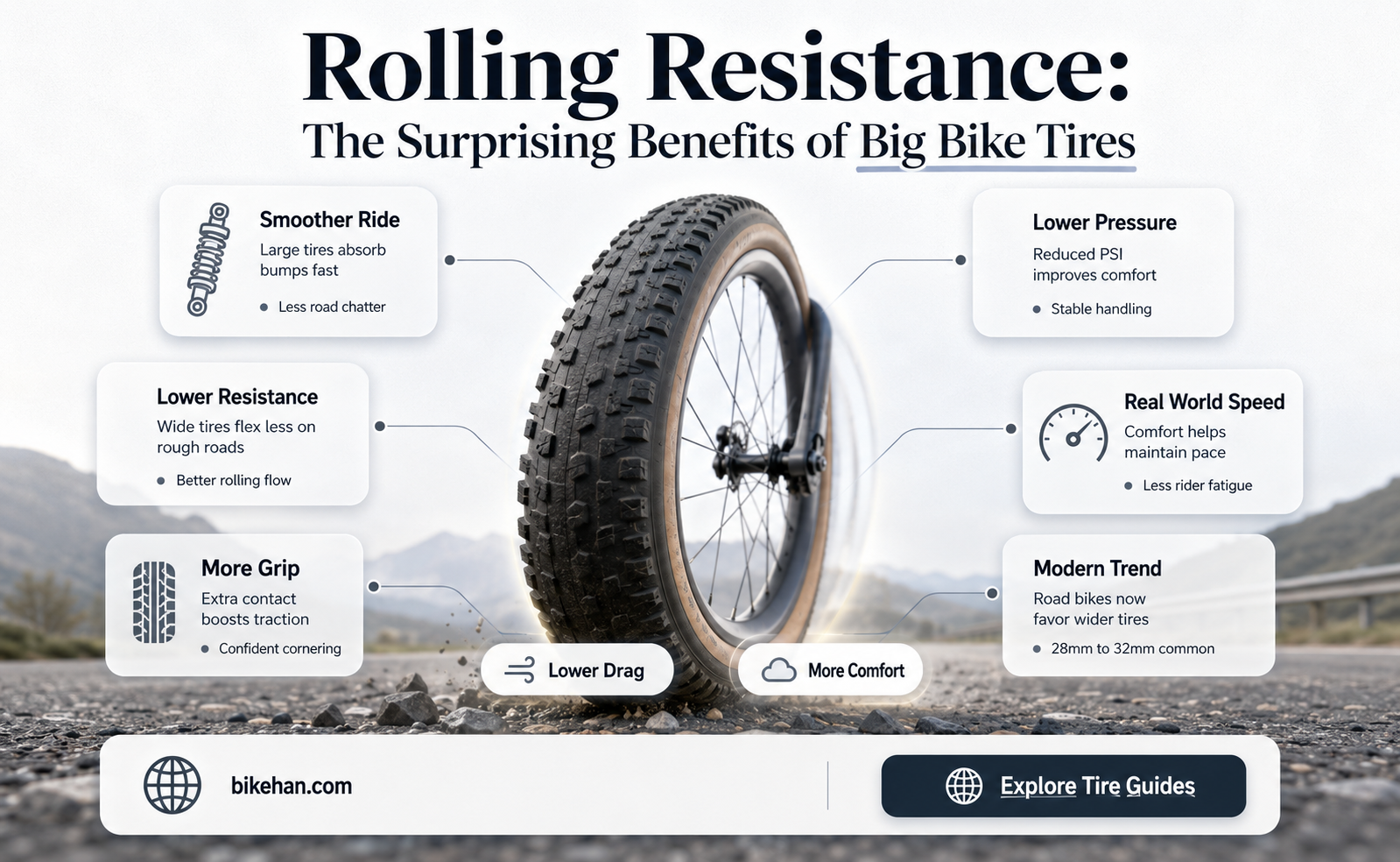
Big bike tires, also known as fat bike tires, have gained popularity in recent years due to their unique design and versatility. These tires are characterized by their wide width, typically ranging from 3.5 to 5 inches, and their low pressure, which allows them to conform to various terrains. The point of big bike tires is to provide enhanced stability, traction, and comfort, making them ideal for riding on challenging surfaces such as sand, snow, mud, and gravel. Additionally, their large contact area with the ground helps to distribute the rider's weight more evenly, reducing the risk of sinking into soft or loose terrain. This makes fat bikes equipped with big tires an excellent choice for adventure cyclists and those seeking to explore off-road environments.
| Characteristics | Values |
|---|---|
| Tire Width | Wider tires provide better stability and traction on various terrains. |
| Rolling Resistance | Larger tires have lower rolling resistance, making it easier to pedal on rough surfaces. |
| Shock Absorption | Big tires can absorb more shock from bumps and obstacles, offering a smoother ride. |
| Air Volume | Increased air volume in larger tires helps with better shock absorption and a more comfortable ride. |
| Traction | The larger contact patch of big tires improves grip on loose or slippery surfaces. |
| Stability | Wider tires offer greater lateral stability, reducing the risk of tipping over. |
| Comfort | The added cushioning from larger tires enhances rider comfort during long rides. |
| Durability | Big bike tires are often more durable and resistant to punctures and tears. |
| Weight | Larger tires tend to be heavier, which can affect the overall weight of the bike. |
| Compatibility | Not all bikes are compatible with big tires; frame and fork clearance must be sufficient. |
| Terrain Suitability | Big tires are ideal for off-road, gravel, and rough urban surfaces. |
| Inflation Pressure | Lower inflation pressures are typically used for big tires to achieve optimal performance. |
| Cost | Larger tires can be more expensive due to increased material usage and specialized construction. |
| Maintenance | Big tires may require more frequent checks and adjustments to maintain proper inflation and performance. |
| Rider Preference | Some riders prefer the feel and performance of big tires, while others may find them too heavy or cumbersome. |
Explore related products



What You'll Learn
- Improved Traction: Wider tires provide better grip on various surfaces, enhancing stability and control
- Enhanced Comfort: Larger tires absorb shocks and vibrations, offering a smoother ride over rough terrain
- Increased Durability: Thicker tires are more resistant to punctures and wear, extending their lifespan
- Better Load Capacity: Wider tires distribute weight more evenly, allowing for heavier loads without compromising performance
- Aesthetic Appeal: Big bike tires contribute to a distinctive look, often associated with specific cycling styles or preferences

Improved Traction: Wider tires provide better grip on various surfaces, enhancing stability and control
Wider tires on bicycles significantly enhance traction, providing better grip on a variety of surfaces. This improvement in traction directly contributes to increased stability and control, which are crucial for safe and efficient cycling. The enhanced grip allows cyclists to navigate through different terrains with greater confidence, reducing the risk of slipping or losing control, especially in wet or uneven conditions.
The science behind this lies in the increased contact patch that wider tires offer. A larger contact area with the ground distributes the cyclist's weight more evenly, which improves the tire's ability to grip the surface. This is particularly beneficial when cornering, as the wider tire can maintain a consistent contact patch throughout the turn, providing better grip and reducing the likelihood of skidding.
Moreover, wider tires can absorb more of the road's imperfections, leading to a smoother ride. This is because the increased volume of air in the tire acts as a natural cushion, dampening vibrations and shocks from potholes, gravel, or other debris. As a result, cyclists experience less fatigue and can maintain better control over their bicycles, even over long distances or rough terrain.
In addition to these benefits, wider tires can also improve braking performance. With a larger contact area, the tire can provide more friction against the road surface when the brakes are applied, leading to shorter stopping distances and more predictable braking behavior. This is especially important in emergency situations where quick and reliable stopping power is essential.
Overall, the improved traction offered by wider bicycle tires is a critical factor in enhancing the safety, comfort, and performance of cycling. By providing better grip on various surfaces, wider tires allow cyclists to ride with greater confidence and control, making them an invaluable upgrade for anyone looking to improve their cycling experience.
Understanding Bike Tire Gauges: The Essential Nut Component
You may want to see also
Explore related products


Enhanced Comfort: Larger tires absorb shocks and vibrations, offering a smoother ride over rough terrain
Larger bike tires are engineered to provide enhanced comfort, particularly when navigating rough terrain. The increased surface area and volume of these tires allow them to absorb shocks and vibrations more effectively than their smaller counterparts. This results in a smoother ride, reducing the impact on the rider's body and making long-distance cycling more enjoyable.
The ability of larger tires to absorb shocks is due to their lower air pressure, which allows them to deform more easily when encountering obstacles. This deformation acts as a natural suspension system, cushioning the rider from the jolts and bumps of uneven surfaces. Additionally, the wider contact patch of larger tires distributes the rider's weight more evenly, further reducing the stress on any single point of the tire and enhancing overall comfort.
In terms of practical applications, larger tires are particularly beneficial for riders who frequently encounter rough roads, gravel paths, or cobblestone streets. They are also advantageous for cyclists who carry heavy loads, as the increased tire volume can better support the additional weight without compromising comfort. Furthermore, larger tires can be a game-changer for riders with joint issues or those recovering from injuries, as they minimize the transmission of vibrations to the body, reducing pain and discomfort.
However, it's important to note that larger tires may not be suitable for all types of cycling. For instance, they can be less efficient on smooth, paved roads due to increased rolling resistance. Additionally, they may not fit all bike frames, and riders may need to make modifications to their bicycles to accommodate larger tires. Despite these considerations, the enhanced comfort provided by larger tires makes them a compelling choice for many cyclists, especially those who prioritize a smooth and enjoyable ride over rough terrain.
Unpoppable: The Quest for the Ultimate Puncture-Resistant Bike Tire
You may want to see also
Explore related products


Increased Durability: Thicker tires are more resistant to punctures and wear, extending their lifespan
Thicker bike tires are renowned for their increased durability, which is a critical advantage for cyclists who prioritize longevity and reliability in their equipment. The enhanced resistance to punctures and wear is primarily due to the additional material used in the tire's construction. This extra rubber provides a protective barrier against sharp objects and rough surfaces, reducing the likelihood of a puncture. Moreover, the increased thickness distributes the rider's weight more evenly across the tire's surface, minimizing wear and tear in high-stress areas.
One of the key benefits of this increased durability is the extended lifespan of the tires. Cyclists who use their bikes frequently or for long distances can significantly reduce the frequency of tire replacements, leading to cost savings and less downtime. Additionally, the improved puncture resistance can enhance safety, as it decreases the risk of a sudden blowout while riding, which could potentially lead to accidents.
The durability of thicker tires also makes them particularly suitable for off-road cycling and rough terrain. In these conditions, the risk of encountering sharp rocks, thorns, and other debris is higher, and the extra protection provided by thicker tires can be invaluable. Furthermore, the enhanced wear resistance ensures that the tires maintain their performance and traction over time, even when subjected to the abrasive forces of gravel and dirt.
However, it is important to note that the increased durability of thicker tires comes with some trade-offs. Thicker tires are generally heavier and may have a higher rolling resistance, which can make pedaling more strenuous and reduce overall speed. Cyclists must therefore weigh the benefits of increased durability against these potential drawbacks when choosing the appropriate tire thickness for their needs.
In conclusion, the increased durability of thicker bike tires offers significant advantages in terms of puncture resistance, wear reduction, and extended lifespan. These benefits are particularly pronounced for cyclists who ride frequently, cover long distances, or navigate challenging terrain. While there are some trade-offs to consider, such as increased weight and rolling resistance, the enhanced durability of thicker tires makes them a valuable option for many cycling enthusiasts.
Exploring the Unique Features of Folding Bead Fat Bike Tires
You may want to see also
Explore related products


Better Load Capacity: Wider tires distribute weight more evenly, allowing for heavier loads without compromising performance
Wider tires on bicycles significantly enhance load capacity by distributing the weight more evenly across the tire's surface. This is particularly beneficial for cyclists who need to carry heavy loads, such as commuters, delivery riders, or touring cyclists. The increased contact patch of wider tires reduces the pressure on any single point, which not only improves the bike's ability to handle heavier weights but also minimizes the risk of tire damage or punctures.
For instance, a standard road bike tire might be around 23-25mm wide, while a wider tire could be 32mm or more. This increase in width can allow for an additional 10-20% load capacity without affecting the bike's overall performance. Moreover, wider tires can also improve traction and stability, especially on uneven or loose surfaces, further enhancing the bike's capability to handle heavier loads safely.
In practical terms, this means that a cyclist using wider tires can carry more gear on long trips, transport groceries more efficiently, or even use their bike for light cargo delivery without worrying about overloading their tires. The even weight distribution also leads to a smoother ride, reducing the strain on both the bike and the rider.
It's important to note that while wider tires offer better load capacity, they may also have some drawbacks. For example, they can create more rolling resistance, which might slow down the bike slightly, and they may not fit on all bike frames or rims. However, for those who prioritize load capacity and comfort, the benefits of wider tires far outweigh these potential downsides.
In conclusion, wider bike tires are a valuable upgrade for anyone looking to increase their bike's load capacity. They provide a practical solution for carrying heavier loads while maintaining performance and safety, making them an essential consideration for serious cyclists.
Understanding Mini Bike Tire Brakes: A Comprehensive Guide
You may want to see also
Explore related products


Aesthetic Appeal: Big bike tires contribute to a distinctive look, often associated with specific cycling styles or preferences
Big bike tires have a unique aesthetic appeal that contributes to a distinctive look, often associated with specific cycling styles or preferences. This visual impact is one of the primary reasons why many cyclists opt for larger tires, even if they may not provide the same level of efficiency or speed as thinner options. The bold, chunky appearance of big tires can make a statement and set a bike apart from others, reflecting the rider's personality and style.
One of the most notable examples of this aesthetic appeal is in the world of mountain biking, where large, knobby tires are not only functional for off-road terrain but also serve as a symbol of the rugged, adventurous spirit of the sport. These tires are designed to be eye-catching, with aggressive tread patterns and vibrant colors that match the daring nature of mountain biking. Similarly, in urban cycling, big tires can be a fashion statement, with some riders choosing oversized options to create a unique, retro look that stands out in the cityscape.
The aesthetic appeal of big bike tires also extends to the realm of customization and personalization. Many cyclists enjoy modifying their bikes to reflect their individual tastes, and larger tires can be a key component of this process. By choosing tires with specific colors, patterns, or designs, riders can create a one-of-a-kind look that expresses their creativity and passion for cycling. This customization aspect is particularly popular among younger riders and those involved in cycling communities, where showcasing a unique bike can be a source of pride and camaraderie.
Furthermore, the distinctive look of big bike tires can have a psychological impact on both the rider and others on the road. For the rider, the bold appearance of their bike can boost confidence and create a sense of identity, making them feel more connected to their cycling experience. For others, the sight of a bike with large tires can be intimidating or impressive, depending on the context, which can influence how the rider is perceived and treated by fellow cyclists or motorists.
In conclusion, the aesthetic appeal of big bike tires is a significant factor in their popularity, as they contribute to a distinctive look that can reflect a cyclist's style, personality, and preferences. Whether used for functional purposes or purely for visual impact, larger tires offer a unique way for riders to express themselves and make a statement on the road or trail.
Decoding Bike Tire Sizes: A Comprehensive Guide for Cyclists
You may want to see also
Frequently asked questions
Big bike tires offer several advantages, including improved traction and stability, better shock absorption, and the ability to roll over obstacles more easily. They are particularly beneficial for off-road cycling and riding on uneven terrain.
Big bike tires can potentially slow down a bicycle due to increased rolling resistance. However, this effect is often minimal and can be offset by the improved traction and control they provide, especially in off-road conditions.
Big bike tires are not suitable for all types of cycling. They are best suited for off-road and mountain biking, where the extra traction and shock absorption are beneficial. For road cycling, narrower tires are generally preferred as they reduce rolling resistance and improve speed on paved surfaces.
Some common types of big bike tires include mountain bike tires, fat bike tires, and plus-size tires. Mountain bike tires typically range from 2.1 to 2.5 inches wide, fat bike tires are usually 3.8 to 5.0 inches wide, and plus-size tires are wider than standard mountain bike tires but narrower than fat bike tires, typically ranging from 2.6 to 3.0 inches wide.